- Historical breakthrough: one of the first major arcade LaserDisc games and a key spark for the format boom.
- Visual spectacle: blended filmed footage with live game overlays in a way that felt futuristic in 1982–83.
- Arcade theater: cockpit cabinet options, larger display, and vibrating seat made it feel like an event.
- Legacy power: part prototype, part commercial hit, part cultural bridge to later interactive movie games.
“Not yet the final future — but one of the moments arcades first saw it.”
Astron Belt is fascinating because it feels like a promise, a product, and a turning point all at once.
The LaserDisc Dream Arrives in the Arcade
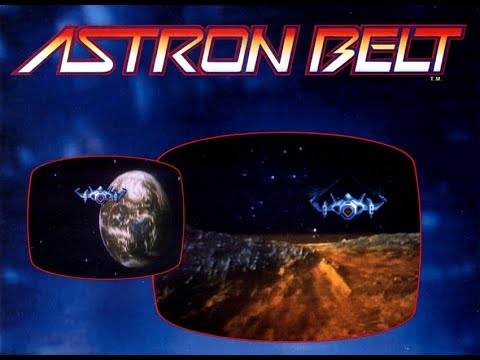
Astron Belt is one of those games that matters not only because of how it plays, but because of what it represented when it appeared. In the early 1980s, arcades were already crowded with excellent action games, but Astron Belt tried to look like tomorrow. Instead of relying only on conventional sprite backgrounds, it combined LaserDisc full-motion footage with real-time computer-generated overlays, turning a straightforward space shooter into a futuristic audiovisual showpiece. Even now, that mixture of ambition and experimentation gives the game a distinctive historical electricity.
Game Data
| Title | Astron Belt |
| Release Year | 1983 |
| Developer | Sega |
| Publisher | Sega (JP), Taitel Electronics (EU), Bally Midway (NA) |
| Platform | Arcade |
| Later Port | MSX (Japan, 1984) |
| Genre | Rail shooter / space combat |
| Players | Single-player |
| Arcade System | Sega Laserdisc |
| Core Loop | Fly forward, destroy waves, dodge hazards, survive command ships |
Forward-scrolling space combat, FMV backgrounds with 2D overlays, timed play, obstacle avoidance, wave clearing, and command-ship encounters.
A lone spacecraft fights through enemy formations, mines, trench-like sequences, and command ships in a stylized, cinematic space war.
Astron Belt became famous for combining LaserDisc footage and real-time hit detection with sprite overlays, creating one of the earliest high-profile arcade “movie game” illusions.
Review / Why It Still Fascinates
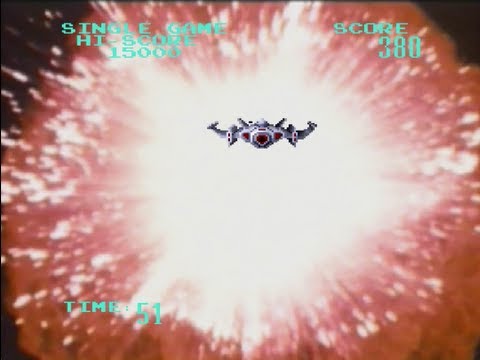
Even now, Astron Belt makes sense first as an audiovisual shock. The player sees filmed space scenes, large-scale explosions, trench runs, and enemy formations that feel more cinematic than many conventional arcade backdrops of the time. This was part of its power in 1982–83: it did not just offer another shooter, but the impression that arcade games were becoming more theatrical.
HOW IT PLAYSUnderneath the spectacle, the game is fairly direct. You control a spacecraft, shoot hostile targets, avoid obstacles, and survive through successive waves until command ships are destroyed. The gameplay structure is easier to understand than the machine’s technology, which is exactly why the format worked at all. Astron Belt needed a design simple enough that the presentation could take center stage.
WHERE IT SHOWS ITS AGEThe game is historically thrilling, but it is also a reminder that innovation can outrun refinement. Compared with later arcade shooters, Astron Belt can feel rougher, more rigid, and less mechanically elegant. Some of that comes from the constraints of synchronizing footage, overlays, hit detection, and control response. It is not always as fluid as its futuristic image suggests.
WHY IT IS STILL WORTH PLAYINGWhat keeps Astron Belt alive is not that it solved everything, but that it attempted something huge and visible. It is a game about the industry imagining the next leap. You can feel Sega trying to turn a cabinet into a kind of science-fiction ride. For players who care about arcade history, that ambition is half the experience.
FINAL VERDICTAstron Belt is not the cleanest arcade shooter of its era, nor the most mechanically perfect. But it is one of the most revealing. It captures the moment when arcades began chasing cinematic scale, hybrid media, and experiential spectacle. As a design object, it is important. As a historical machine, it is unforgettable.
Why Historically Important
Astron Belt is historically important because it was one of the first major arcade games to push LaserDisc presentation into the mainstream conversation. Its 1982 showings created enormous interest, and the game became one of the key titles associated with the arcade industry’s brief but influential obsession with LaserDisc spectacle. That matters even beyond Sega, because it helped normalize the idea that arcade games could borrow the language of film and merge it with interactive overlays.
It also mattered commercially, especially in Japan, where it became a top-grossing upright/cockpit arcade game for multiple months in 1983. That success gave Sega proof that this new presentation style could sell. The game’s reception was not identical in every territory, but its impact as a technological statement was undeniable. It turned trade-show curiosity into a recognizable arcade phenomenon.
Most importantly, Astron Belt belongs to the lineage that led toward later interactive movie games and LaserDisc attractions. It is not simply “an old Sega shooter.” It is a threshold title: one foot in classic arcade design, the other in a cinematic future that developers were still trying to understand.
Timeline / Key Milestones
Astron Belt is unveiled at Tokyo’s Amusement Machine Show and then shown at AMOA in Chicago, where it helps ignite LaserDisc arcade excitement.
Sega launches the arcade game in Japan, where it becomes a major upright/cockpit success.
Released in Europe, where it is notable as the first LaserDisc arcade game to reach the region.
Bally Midway releases the game in North America after delays, by which point other LaserDisc games had already reached the market.
Astron Belt is ported to the MSX in Japan, extending its identity beyond the original arcade hardware.
The game’s influence is felt across the LaserDisc arcade boom, including titles that pushed the “interactive movie” pitch even harder.
Where to Play / Collect Today
MAME / LaserDisc preservation setups
The most realistic modern access usually comes through preservation communities and specialized emulation setups that keep early LaserDisc arcade history alive.
MODERN OPTIONOriginal Sega cabinet
On authentic hardware, especially the cockpit version, Astron Belt feels less like a normal cabinet and more like an arcade event machine.
COLLECTOR ROUTEMSX version / archival comparison
The later MSX adaptation is worth exploring as a comparison point for how the game’s identity changed away from its original arcade presentation.
SEE VERSION