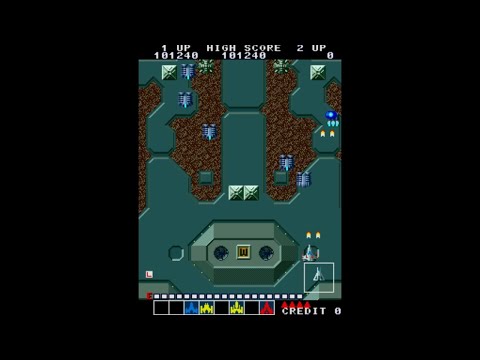
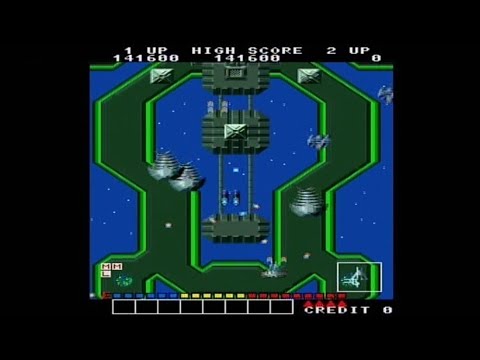
- Distinct weapon logic: Alpha Mission separates air and ground threats in a way that gives its shooting rhythm real personality.
- Pure arcade tension: dying means losing hard-earned upgrades, so every recovery push feels dangerous and dramatic.
- Early SNK identity: you can already feel the studio’s love of pressure, firepower, and score-driven intensity.
- Historical weight: it stands as one of SNK’s key pre-Neo Geo arcade shooters and led to Alpha Mission II years later.
“Not elegant in the soft sense — elegant in the arcade sense.”
Alpha Mission is harsh, mechanical, and memorable for exactly the reasons a 1985 shooter should be.
An Early SNK Shooter With Teeth
Alpha Mission belongs to that exciting arcade period when scrolling shooters were still defining how aggressive, how technical, and how cruel they wanted to be. It borrows from the broader mid-1980s shooter language, but it does not feel anonymous. Its split between air-to-air fire and ground-target missiles gives every second a subtle layer of tactical reading, and its upgrade system makes survival feel less like endurance and more like maintaining a fragile machine under pressure.
Game Data
| Title | Alpha Mission |
| Japanese Title | ASO: Armored Scrum Object |
| Release Year | 1985 |
| Developer | SNK |
| Publisher | SNK / Tradewest (NA arcade release) |
| Designer | Koji Obata |
| Platform | Arcade; later NES / Famicom |
| Genre | Vertical scrolling shoot ’em up |
| Players | Single-player |
| Core Loop | Advance, target, upgrade, survive, recover |
Air-versus-ground targeting, power-up collection, weapon transformation, boss fights, spacing control, and survival through escalating projectile density.
In the Tetranova galaxy, a warlike alliance threatens Earth, and the player pilots the fighter SYD against the Seven Stars Alliance in a desperate defensive campaign.
Alpha Mission stands out for separating aerial and ground attack logic, forcing the player to read threats on multiple combat layers instead of simply firing straight ahead.
Review / Why It Still Hits Hard
Alpha Mission does not charm the player with softness. It grabs attention through urgency. Enemies crowd the screen, ground installations matter, and the weapon split immediately asks the player to think in layers. This is not just “move and shoot.” It is move, choose, prioritize, and keep the machine alive long enough to become dangerous.
WHY THE WEAPON SYSTEM WORKSOne of the game’s smartest ideas is how naturally it builds complexity out of simple categories. Air enemies and ground targets do not blur together. They demand different attention. That design choice adds a primitive but very effective kind of tactical weight. You are not merely surviving waves; you are maintaining control over the field in two directions at once.
THE POWER AND THE PAINLike many great arcade shooters, Alpha Mission understands that power only feels good if it can be taken away. Upgrades matter because death hurts. Once the player loses an advanced configuration, the game becomes immediately more threatening, and that creates a cycle of tension that still works beautifully. Recovery is never just a reset. It is a test of composure.
WHERE AGE SHOWSThis is still a mid-1980s shooter, so players coming from later refinements may find it rougher, more abrupt, and less visually legible than the genre’s 1990s peaks. But its roughness is part of the archive value. Alpha Mission feels like a genre in motion — already recognizable, but not yet domesticated into later conventions.
FINAL VERDICTAlpha Mission remains compelling because it combines early shooter simplicity with just enough systems friction to feel serious. It may not be the most lavish vertical shooter in history, but it is absolutely one of those titles that reveals how much SNK already understood about pressure, punishment, and reward.
Why Historically Important
Alpha Mission is historically important because it captures SNK in an earlier phase of identity formation, before the Neo Geo years would define the company for many players. Here, you can already see a taste for intensity, dense pressure, and aggressive arcade structure. It is not yet the later SNK legend, but it is very clearly on the road toward one.
It also matters within shooter history because of how it handles combat layering. The distinction between aerial and ground attacks gives the game a strong systemic identity and helps separate it from more generic vertical shooters of the period. That alone gives it archive value far beyond “another 1985 shooter.”
Finally, Alpha Mission’s later ports, reissues, and sequel underline that it was not a historical dead end. It became part of a continuing SNK lineage. For players interested in how arcade shooters evolved from early mechanical severity into later spectacle, Alpha Mission is an excellent checkpoint.
Timeline / Key Milestones
Alpha Mission debuts in arcades as SNK’s vertical shooter ASO, later known internationally as Alpha Mission.
The game reaches the Famicom, translating its arcade systems into home form and expanding its visibility beyond dedicated arcade spaces.
The North American NES version arrives and becomes the form many console players know best, supported by memorable box art and strong SNK branding.
The series receives a more famous sequel on Neo Geo, helping retroactively pull more attention toward the original game.
Alpha Mission reappears digitally as part of SNK’s retro reissue efforts, showing that the game still held enough legacy value to preserve.
Hamster’s Arcade Archives brings the game back to modern platforms, renewing its visibility for contemporary shooter fans and collectors.
Alpha Mission stands as a respected archive piece for players tracing SNK’s arcade history before the company’s most famous decade.
Where to Play / Collect Today
Arcade Archives / modern reissues
The easiest modern route is typically through later digital reissues, where the arcade version is preserved with cleaner access than original cabinet hunting.
MODERN OPTIONArcade board or faithful emulation
For the most authentic experience, the arcade release remains the ideal version — especially if you want the pacing, pressure, and presentation as originally built.
ARCADE ROUTENES version comparison
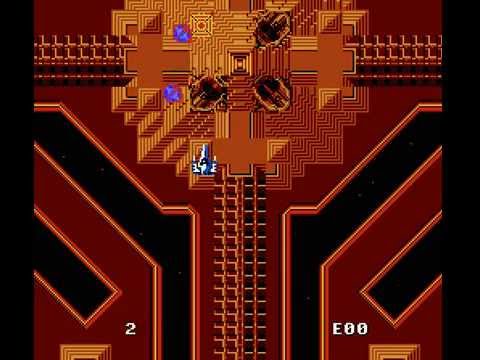
The NES version is valuable as a historical comparison point, showing how SNK’s arcade design was adapted into the home-console space of the late 1980s.
SEE VERSION