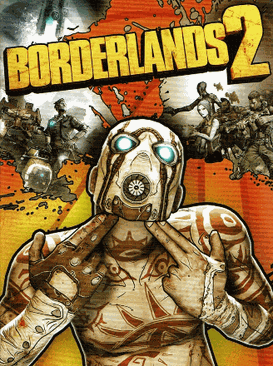
- Genre fusion: Borderlands made loot obsession feel natural inside a full first-person shooter shell.
- Co-op electricity: solo play works, but the game’s real magic appears when friends turn Pandora into a shared scavenger war.
- Art identity: the cel-shaded comic-book style gave the series a look that instantly separated it from brown-gray shooters of its era.
- Series foundation: the first game is rougher than its sequels, but it established almost everything the franchise would later refine.
“Mad Max trash-world, Diablo loot brain, FPS trigger finger.”
Borderlands works because all three instincts hit at once.
Pandora, Loot Fever, and the Birth of a Modern Hybrid
Borderlands matters because it arrived at exactly the right moment to mutate the shooter. In 2009, big first-person games often chased cinematic realism or military swagger. Borderlands went the other way. It was dusty, cartoonish, vulgar, and mechanically greedy. Every firefight was also a slot machine. Every mission was also a gear ladder. Every co-op session was also a story about the absurd gun somebody just found. That combination gave the game a strange magnetism that still reads clearly today.
Game Data
| Title | Borderlands |
| Release Year | 2009 |
| Developer | Gearbox Software |
| Publisher | 2K |
| Original Platforms | PlayStation 3 / Xbox 360 / Windows |
| Genre | Action RPG / first-person shooter |
| Players | 1–4 players (online co-op, plus console split-screen) |
| Original Format | Disc / digital |
| Core Loop | Shoot, loot, level, repeat |
Procedural gun drops, class-based action skills, quest-hub wandering, vehicle traversal, elemental damage, and co-op chaos across Pandora.
Four Vault Hunters arrive on Pandora chasing the legendary Vault, following clues from the mysterious Guardian Angel while fighting bandits, corporations, wildlife, and the Crimson Lance.
Borderlands sold its identity through “bazillions” of guns and procedural loot variation, turning weapon drops into the game’s psychological engine.
Review / Why It Still Feels So Addictive
The first Borderlands still makes a strong opening impression because it announces its tone fast. Pandora is not a noble frontier. It is a trash planet full of scavengers, psychos, rusted metal, bad jokes, and gunfire. That roughness matters. Borderlands feels like a game that wants you to get dirty, not admire its polish from a distance. It is a scavenger fantasy with a first-person trigger glued to it.
WHY THE LOOT LOOP WORKSBorderlands’ biggest achievement is not simply “lots of guns.” It is that the game makes guns into anticipation. Every chest, corpse, and vendor has the potential to alter your tempo. A slightly better shotgun, an elemental revolver, a weird rifle with absurd stats — all of them create forward momentum. Even when the mission design is modest, the loot chase keeps the experience alive.
CO-OP AS AMPLIFIERSolo Borderlands can be atmospheric and satisfying, but co-op is where its full personality emerges. The humor lands better, the firefights become messier and more memorable, and the loot economy turns social. Players brag, compare, trade, and race toward rare drops. That transformation from private grind to shared story is one of the game’s most important strengths.
THE FIRST GAME’S ROUGH EDGESBorderlands is not perfect, and part of understanding it honestly means admitting that some of its later reputation comes from what the sequels improved. The original game can feel sparse, its mission structure repeats, and its narrative is lighter and rougher than what came later. But none of that cancels its power. In some ways, the first game is fascinating precisely because you can feel the full series trying to burst out of it.
FINAL VERDICTBorderlands remains one of the key genre hybrids of its era. It helped turn loot from an accessory into a central emotional engine for shooter design, wrapped that loop inside a memorable art style, and made co-op progression feel more chaotic and more personal. It is not the cleanest entry in the series, but it may still be the most historically electric.
Why Historically Important
Borderlands mattered because it made a first-person shooter behave like a loot game without losing its immediacy. Earlier shooters had item progression, but Borderlands made random weapon obsession central to the experience. It encouraged players to think not only about what they were shooting, but about what they might be carrying five minutes later.
It also gave the late-2000s shooter landscape a much stronger visual identity than many of its contemporaries. The stylized comic-book look, thick outlines, dirty color palette, and wasteland humor meant the game never disappeared into the military-brown crowd. That artistic pivot was a major part of why the series became recognizable so quickly.
Most of all, Borderlands helped normalize the looter-shooter as a viable mainstream format. Later games across multiple franchises would chase the same fusion of guns, rarity tiers, build optimization, and co-op progression. Borderlands did not invent every ingredient, but it was one of the clearest packages to make the hybrid stick in popular memory.
Timeline / Key Milestones
Gearbox develops Borderlands as an FPS-RPG fusion — often summarized internally as a shooter meeting a loot-driven action RPG mindset.
Borderlands launches on PlayStation 3 and Xbox 360, with the Windows version arriving days later, establishing Pandora and the first four Vault Hunters.
Four add-ons expand the original game’s life: The Zombie Island of Dr. Ned, Mad Moxxi’s Underdome Riot, The Secret Armory of General Knoxx, and Claptrap’s New Robot Revolution.
The sequel arrives and refines the formula, but it does so on the foundation created by the first game’s loot-shooter blueprint.
Borderlands returns in remastered form with visual upgrades and quality-of-life improvements, reintroducing the original to a newer generation.
Through collections, re-releases, and franchise bundles, the first Borderlands remains visible as the beginning of the series’ long commercial and cultural life.
Where to Play / Collect Today
GOTY Enhanced / Pandora’s Box
The easiest modern route is usually Borderlands: Game of the Year Enhanced or a broader franchise bundle, which makes the original much friendlier to revisit.
MODERN OPTIONPS3 / Xbox 360 / launch-era PC
If you want the rougher 2009 texture — the exact launch-era pacing, visuals, and original atmosphere — the first console and PC versions still have real archival value.
COLLECTOR ROUTEMove straight into Borderlands 2
The strongest immediate comparison is the sequel, which keeps the same DNA but sharpens pacing, villain presence, and overall structural confidence.
SEE SEQUEL