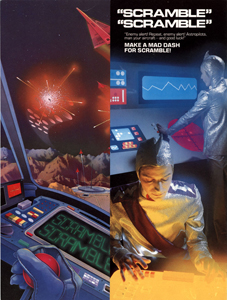
Defender (1981)
Defender is Williams Electronics’ landmark 1981 arcade shoot ’em up. It combined blistering speed, a wide scrolling battlefield, and a unique rescue objective—protecting humanoids from alien abduction—into one of the most demanding, influential action games of the early arcade era.
Game Data
| Release Year | 1981 |
| Developer | Williams Electronics |
| Publisher | Williams Electronics (JP distribution: Taito) |
| Platform | Arcade |
| Genre | Scrolling Shooter / Arcade Action |
| Players | 1–2 (alternating) |
| Original Media | Arcade Cabinet |
Gameplay:
Fly left/right across a long landscape, shoot alien waves, and rescue falling humanoids after freeing them from
abductors. Key tools include Smart Bombs (screen-clear) and risky Hyperspace jumps—great for escapes, dangerous
for survival.
Story:
Minimal arcade narrative: defend the planet and its people from relentless alien forces. The real “plot” is the
player-driven drama of choosing between chasing points, staying alive, and saving humans.
Trivia:
Defender’s complex controls (joystick + multiple buttons) were notorious in 1981—many players bounced off at
first, but mastery became a badge of honor.
Defender helped define what “high-skill arcade action” could be: fast, information-dense, and punishing—yet endlessly replayable. The radar/minimap, rescue mechanic, and bidirectional scrolling made it feel bigger and more tactical than many contemporaries.


Screenshots / Media


Timeline / Versions
Why Defender Was Historically Important
Defender raised the bar for arcade shooters: speed, difficulty, and tactical decision-making all escalated at once. Its bidirectional scrolling world, radar awareness, and rescue mechanic created a new style of action game that felt larger than a single screen—and it became a blueprint for the horizontal scrolling shoot ’em up that followed.