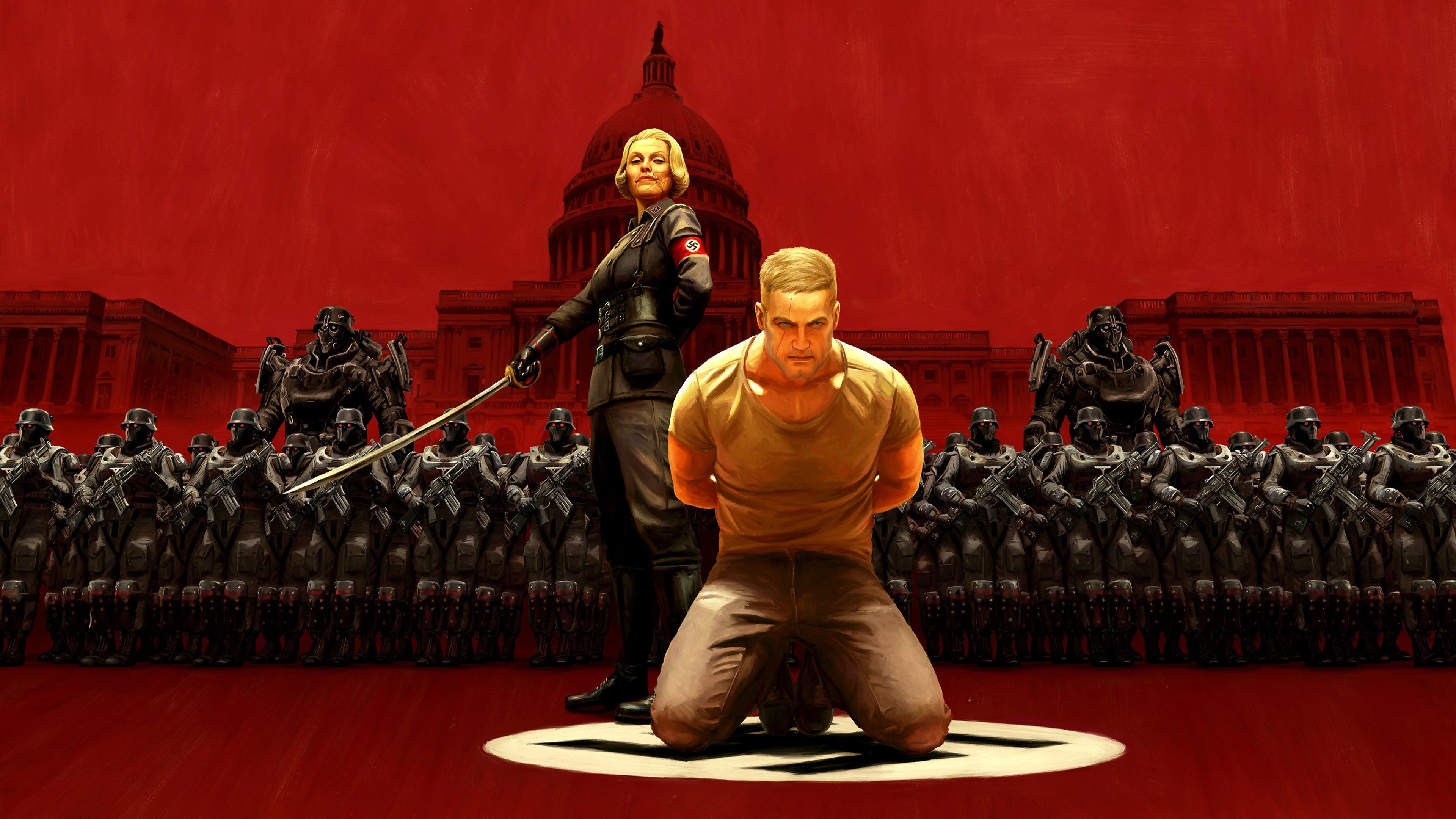
- Narrative force: it blends grief, rage, pulp spectacle, and dark humor into one of the boldest FPS stories of its decade.
- Combat identity: dual-wielding, aggressive mobility, and chunky weapon feedback make every firefight feel fierce and physical.
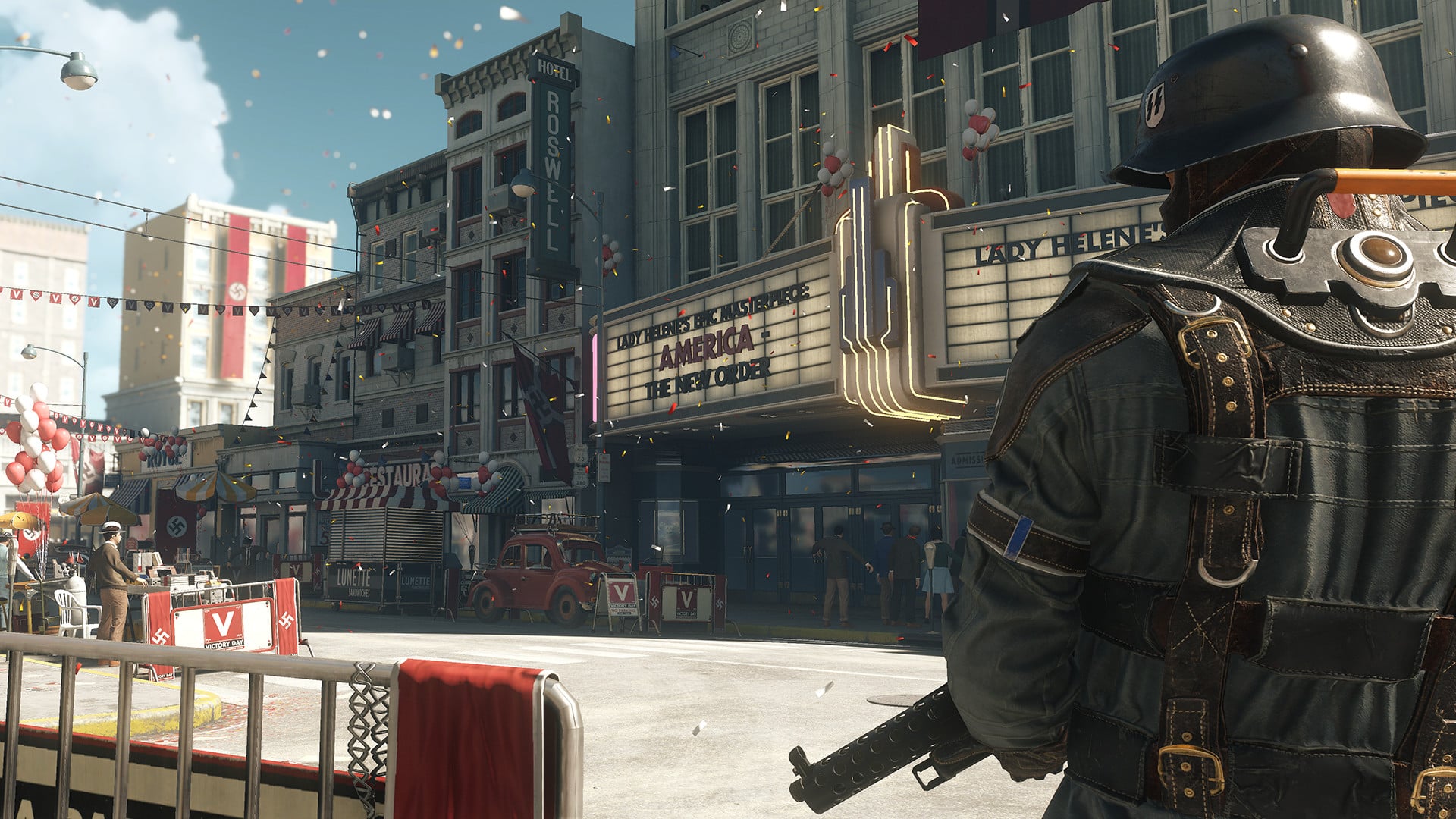
- World design: Nazi-controlled America gives the sequel a sharper thematic identity than most big-budget shooters manage.
- Series importance: it represents the MachineGames formula pushed to its loudest, most theatrical, and most politically explicit form.
“A furious shooter, a bruised character drama, and a pulp revolution all at once.”
Not subtle, not calm, not interested in neutrality — and that is exactly why it is memorable.
The MachineGames Formula at Full Volume
Wolfenstein II: The New Colossus is the kind of sequel that does not try to play smaller or safer. It takes the emotional foundation of The New Order and pushes everything outward: more personal pain, more grotesque villains, more alternate-history satire, more speed, more violence, more theatricality. The result is not always elegant, but it is unmistakably alive. This is a blockbuster shooter with convictions, style, and enough nerve to be messy in public rather than polished into anonymity.
Game Data
| Title | Wolfenstein II: The New Colossus |
| Release Year | 2017 |
| Developer | MachineGames |
| Publisher | Bethesda Softworks |
| Platform | Windows / PlayStation 4 / Xbox One / Nintendo Switch |
| Genre | First-person shooter |
| Players | Single-player |
| Original Format | Blu-ray Disc / digital download / Switch cartridge |
| Core Loop | Push forward, dismantle patrols, dual-wield heavy weapons, gather upgrades, ignite the revolution |
Fast gunfights, dual-wielding, stealth openings, perk progression, weapon upgrades, semi-open combat spaces, and highly scripted story momentum.
America, 1961. B.J. Blazkowicz returns to a Nazi-dominated United States to unite resistance leaders and spark a second American Revolution after the events of The New Order.
The sequel doubles down on aggressive dual-wield combat and uses occupied America as its defining thematic stage — turning the campaign into both action spectacle and alternate-history provocation.
Review / Why It Hits So Hard
The New Colossus makes an immediate statement through tone. This is not a military sandbox pretending to be sober. It is operatic, angry, and highly stylized. The game wants every room, villain, and speech to matter as drama, not merely as setup for the next firefight. That gives it a voltage many big-budget shooters lack. The campaign feels authored in thick strokes rather than assembled from safe components.
WHY THE SHOOTING WORKSMachineGames understands that Wolfenstein does not need elegant tactical fragility. It needs force. Weapons crack loudly, enemies absorb and return pressure, and dual-wielding transforms many encounters into moments of deliberate excess. You are encouraged to push through chaos rather than tiptoe around it forever. The result is a combat rhythm that feels savage without becoming mindless.
THE STORY AS ENGINEWhat elevates the game is how deeply it commits to B.J. as more than a gun platform. The New Colossus frames him as exhausted, damaged, stubborn, and haunted. It also surrounds him with a resistance cast that gives the world emotional texture. The cutscenes are often extravagant, but the emotion inside them is not fake. The game genuinely believes that personal pain and political violence belong in the same frame.
WHERE IT STUMBLESThe game’s appetite can occasionally outrun its discipline. Some sequences feel overextended, some tonal pivots are intentionally jarring, and some players will bounce off its eagerness to be both grotesque pulp and intimate drama in the same minute. Yet even those rough edges are part of the game’s identity. This is not cautious design. It is maximal design.
FINAL VERDICTWolfenstein II: The New Colossus remains one of the most distinctive single-player FPS campaigns of the modern era because it dares to be loud in every direction: politically loud, emotionally loud, aesthetically loud, mechanically loud. It is not a modest game. It is a memorable one — and that matters more.
Why Historically Important
The New Colossus is historically important because it arrived at a time when many blockbuster shooters had become cautious about single-player identity. MachineGames went in the opposite direction. The game insists on being authored, topical, narratively dense, and mechanically forceful. It treats the FPS campaign not as a side dish to a service platform, but as a central event with voice and shape.
It also matters within Wolfenstein specifically. The New Order reintroduced the series with surprising emotional depth, but The New Colossus makes that ambition public and undeniable. It expands the alternate-history setting into occupied America, pushes the political imagery much harder, and turns B.J.’s story into something closer to wounded myth than simple military heroism.
Beyond franchise history, the game is one of the clearest examples of a late-2010s shooter willing to be intensely anti-fascist without flattening itself into generic moral wallpaper. That gives it a different kind of legacy: not just as a strong sequel, but as proof that the mainstream FPS can still carry style, anger, and narrative conviction at full scale.
Timeline / Key Milestones
MachineGames relaunches Wolfenstein with The New Order, rebuilding the series around stronger character writing, heavier emotion, and modern FPS momentum.
The standalone prequel sharpens the studio’s command of pulp horror, retro echoes, and tightly driven campaign design.
The New Colossus is formally revealed, positioning Nazi-controlled America as the sequel’s core stage and thematic escalation.
Wolfenstein II launches on Windows, PlayStation 4, and Xbox One and quickly becomes one of the era’s most discussed single-player shooters.
Post-launch DLC expands the game’s universe with side stories that continue the resistance framing around alternate playable heroes.
The Nintendo Switch edition brings the campaign to handheld form, widening the audience for one of the generation’s most aggressive story shooters.
The next chapter shifts toward B.J.’s daughters and a co-op structure, making The New Colossus feel even more like the peak of the MachineGames single-player formula.
For many players, it remains the loudest and most emblematic expression of what the modern Wolfenstein revival wanted to be.
Where to Play / Collect Today
PC or modern console version
The most straightforward way to experience the full campaign today is still the standard PC or console release, where the game’s audiovisual punch and performance profile land best.
MAIN VERSIONPlay after The New Order
The sequel hits much harder when played in sequence, because B.J.’s emotional arc, the resistance cast, and the world-state all carry real momentum from the prior game.
START EARLIERNintendo Switch edition
The Switch version is historically interesting because it brought an unusually intense, story-heavy shooter to a portable platform without abandoning the core campaign identity.
SEE PORT