Decades of Gaming
A curated overview of each decade — the vibe, the breakthroughs, and the rankings hub. Pick a decade, then jump straight into the Top 30 lists — or open the Lexicon deep dives for the longform “museum labels”.
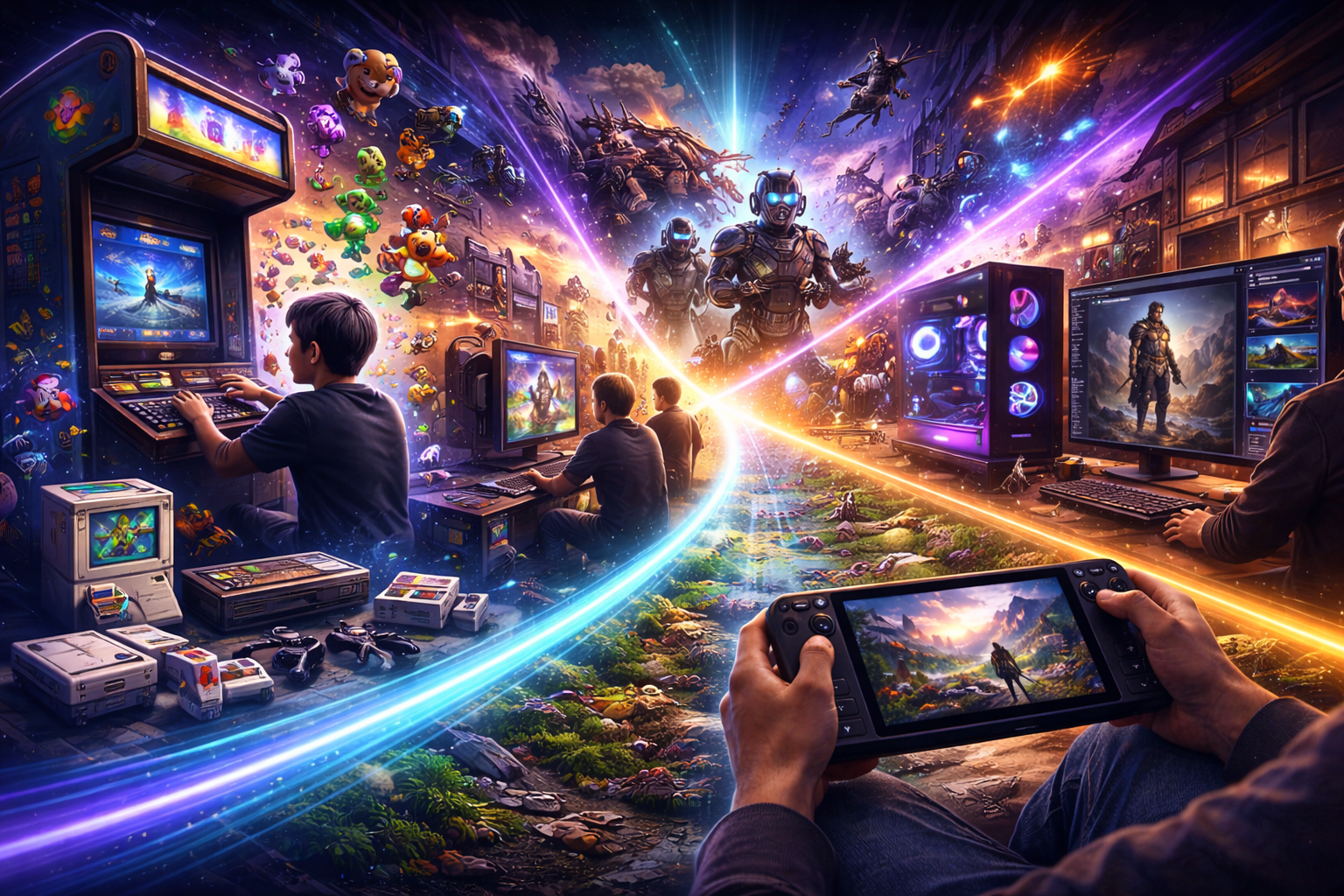
1970s – Birth of Video Games (Arcades → Home)
The spark decade: cabinets turn games public, early home systems make play a living-room idea. Theme: rules + repetition — simple mechanics, endless mastery.
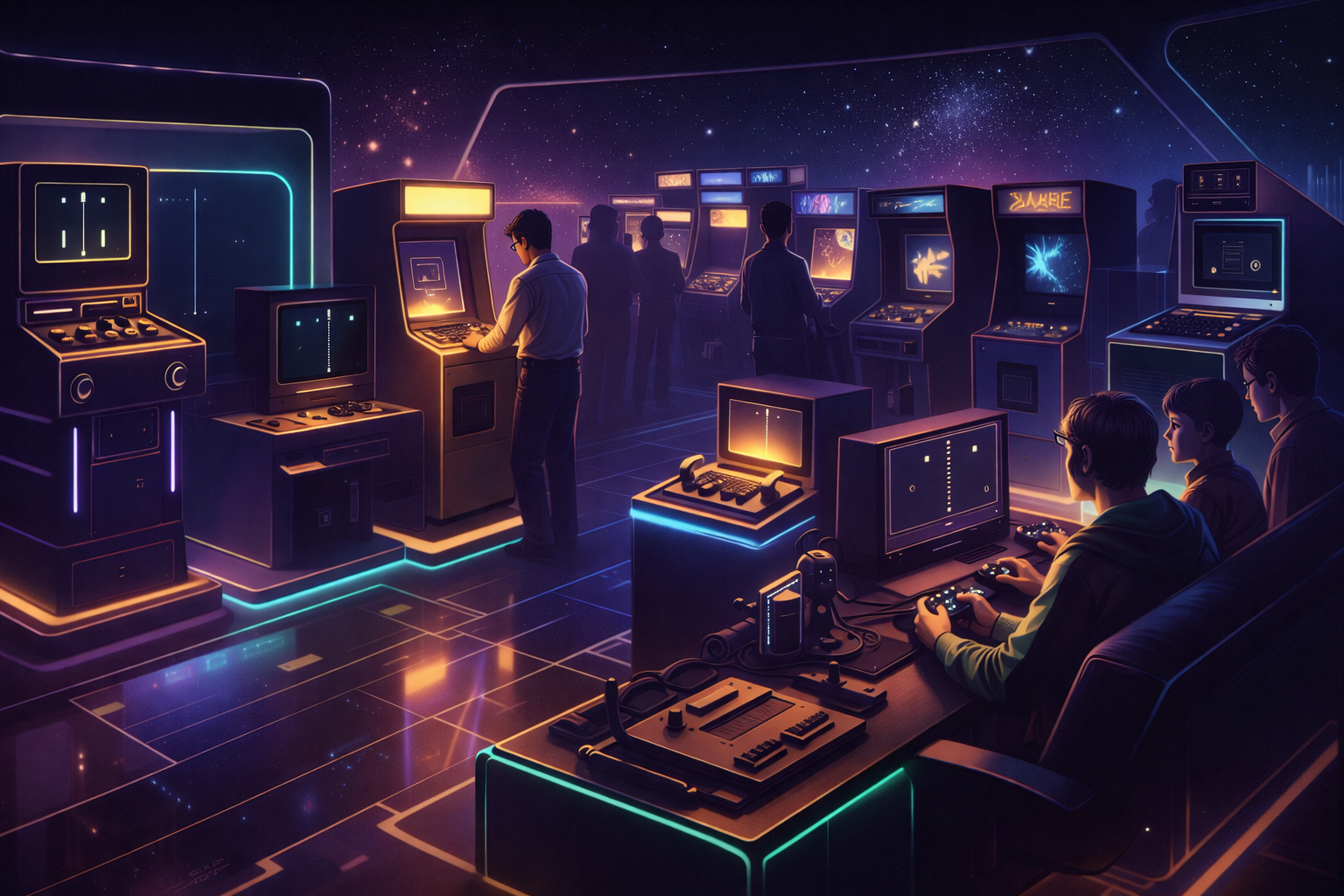 SPARK DECADE
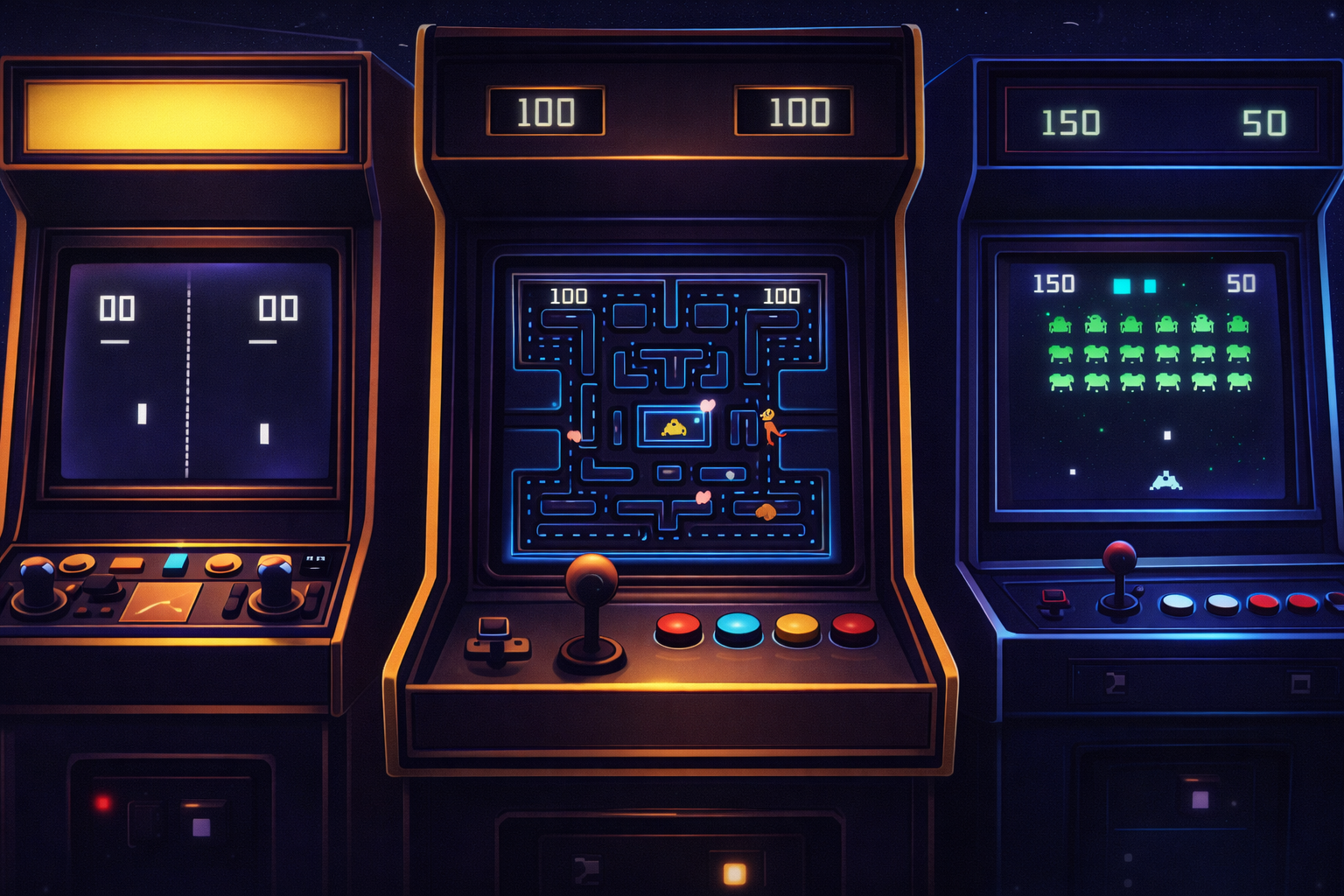
Arcade Grammar: how “video game language” was born
Why cabinets needed instant clarity — and how that still shapes modern onboarding, tutorials, and difficulty curves.
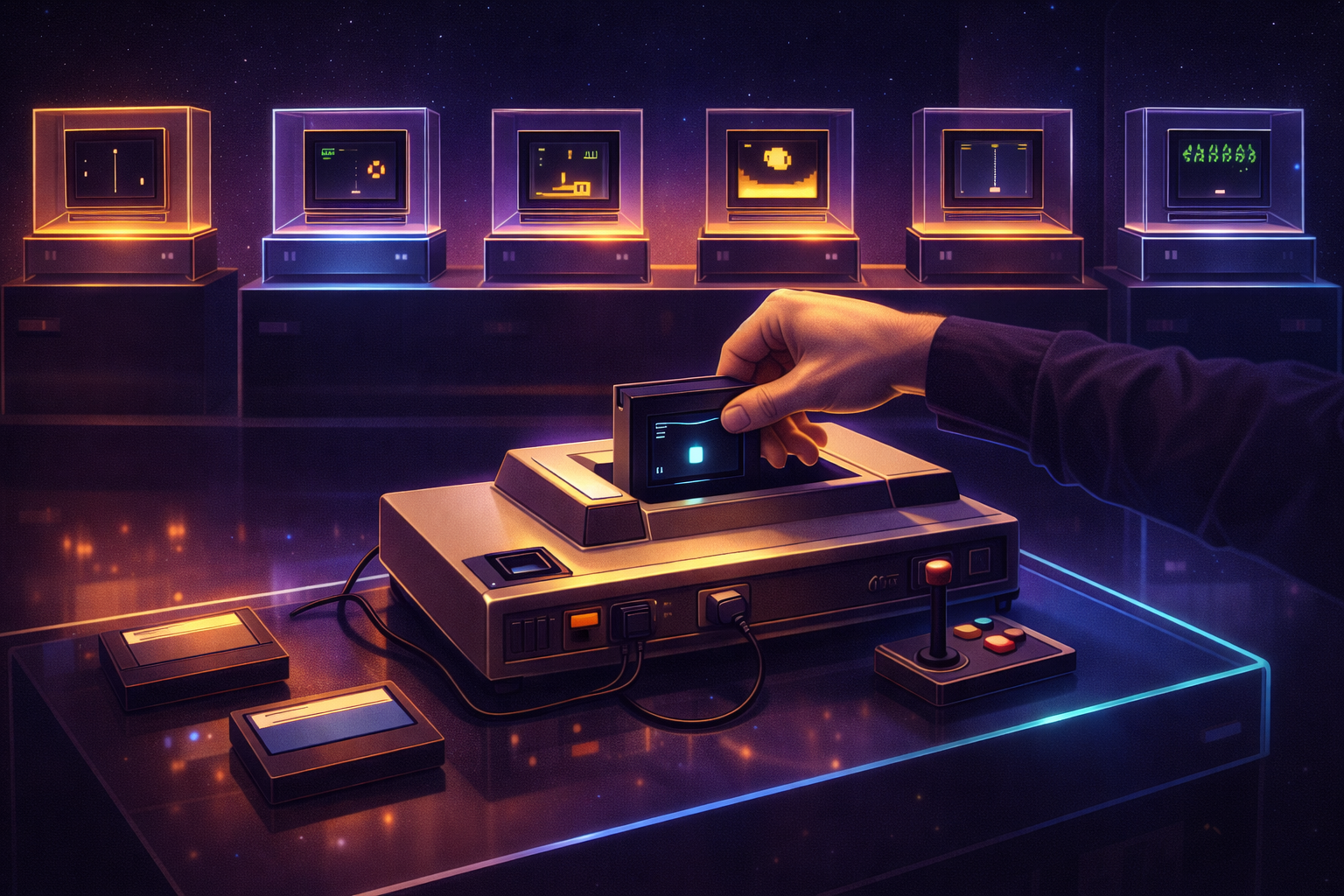
The Cartridge Shift: from hardware toy to software platform
Cartridges turned consoles into libraries. This is the start of “ecosystems”, catalogs, and collecting.
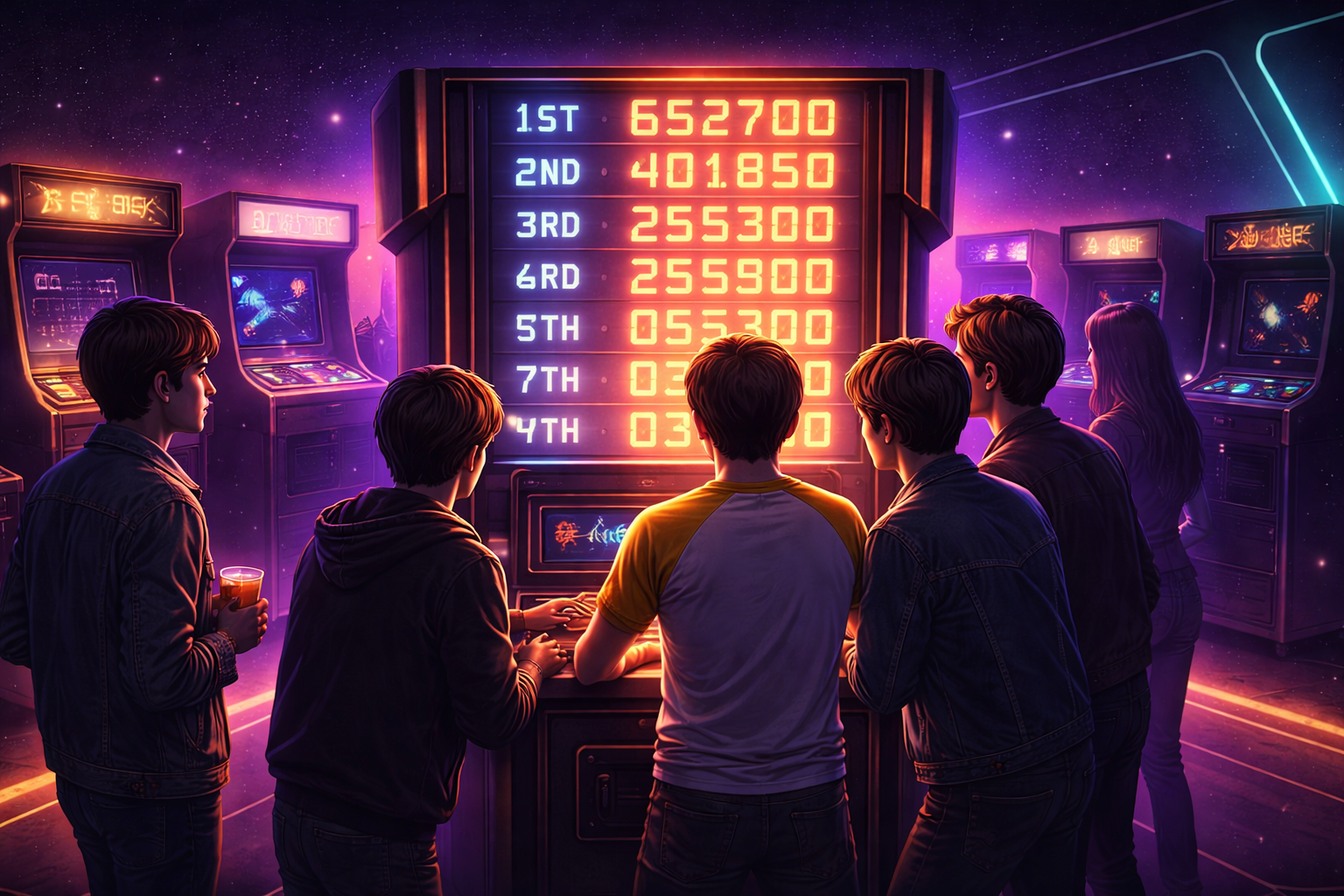
High Score Culture: competition before the internet
Leaderboards are older than online play. The 70s discovered the addictive magic of measurable improvement.
1980s – Golden Age & Crash (8-bit, arcades, home computers)
A rollercoaster decade: arcade superstardom, the 1983 crash, and a controlled rebirth. Theme: identity — mascots, genres, and iconic sound.
 IDENTITY ERA
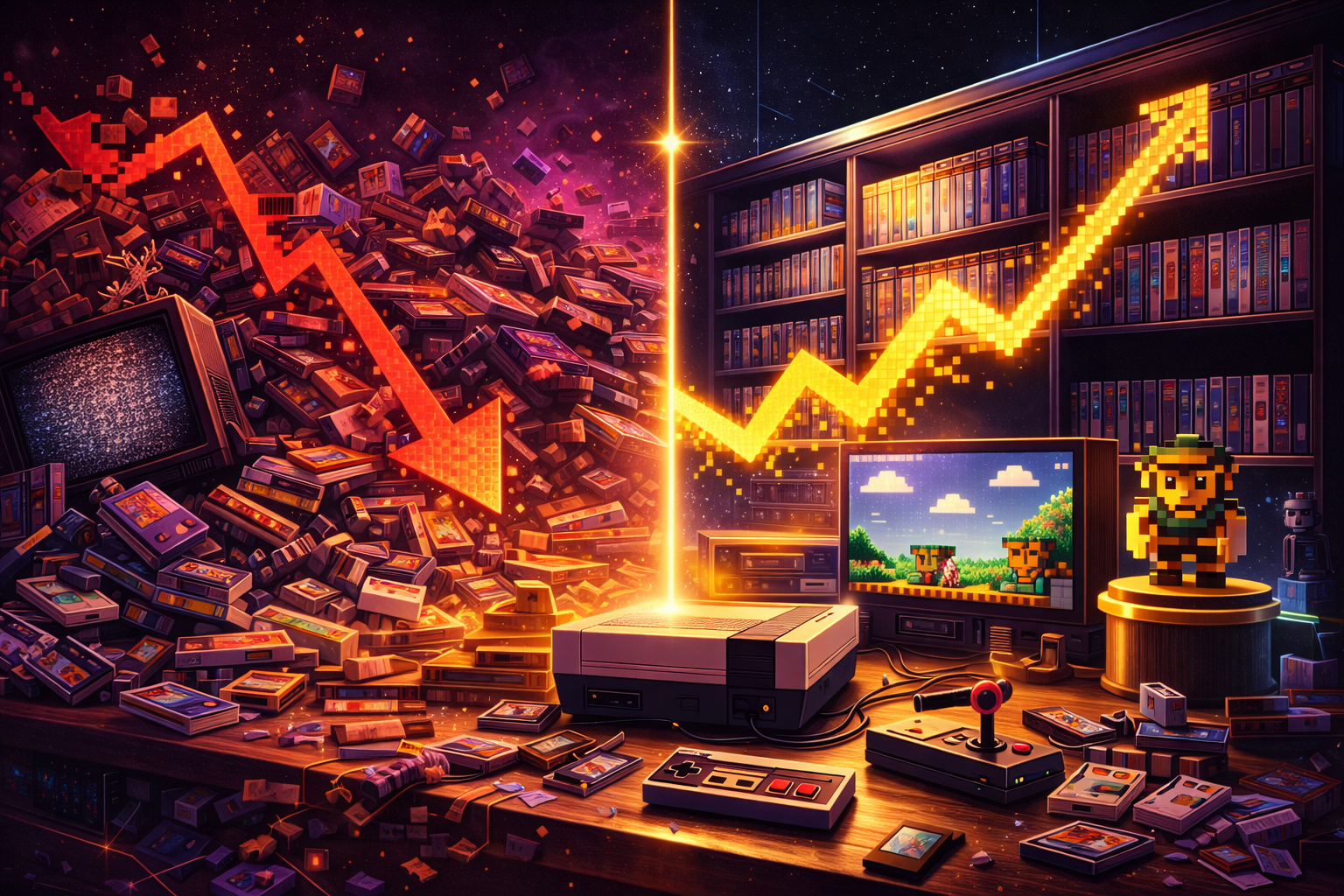
The Crash & the Rebuild: how trust got engineered
Oversupply, weak quality control, and the lesson: platforms need curation, branding, and confidence.
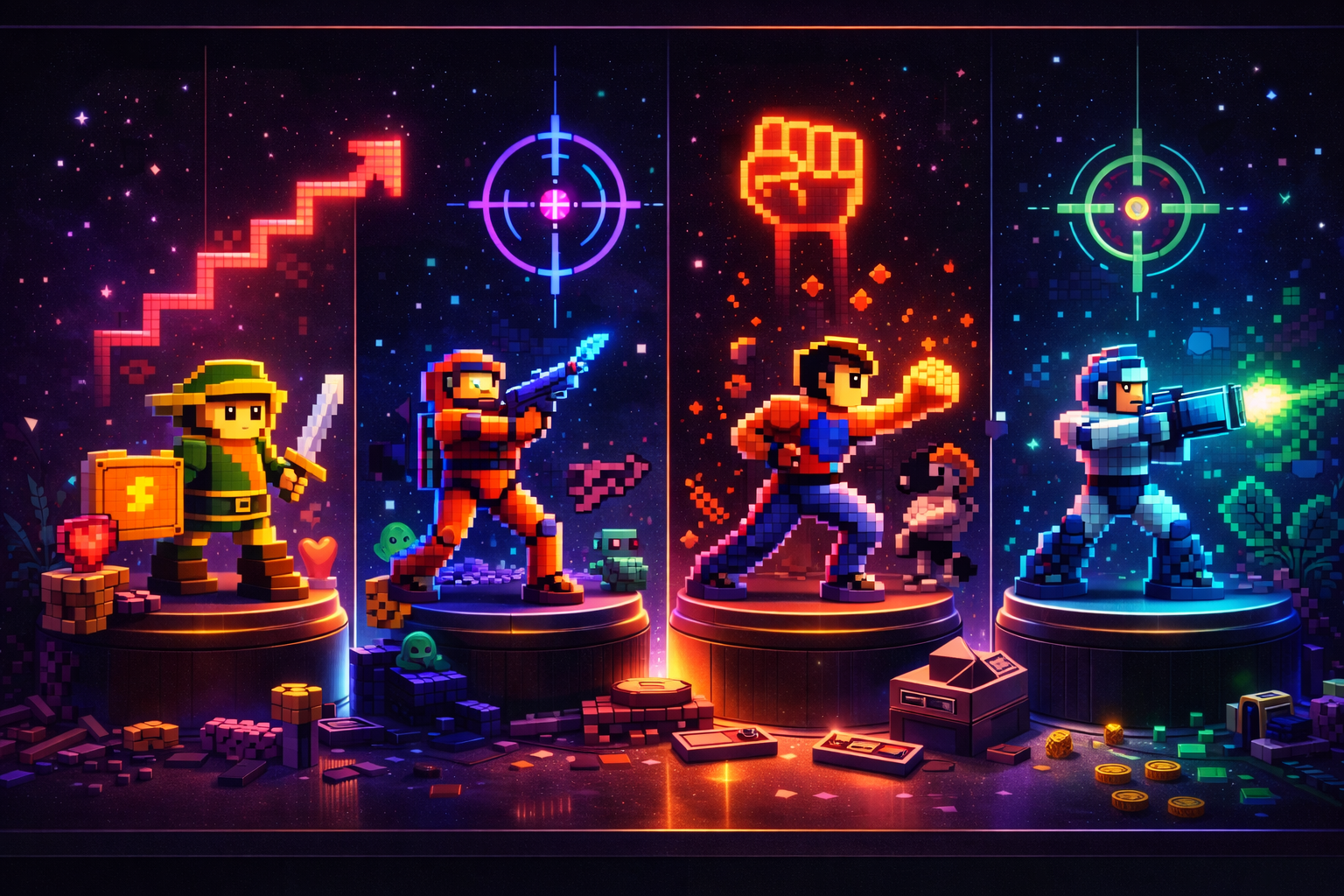
Mascots & Genres: the decade that “named the fun”
Platformers, shooters, beat ’em ups: the 80s crystallized category language and iconic faces.
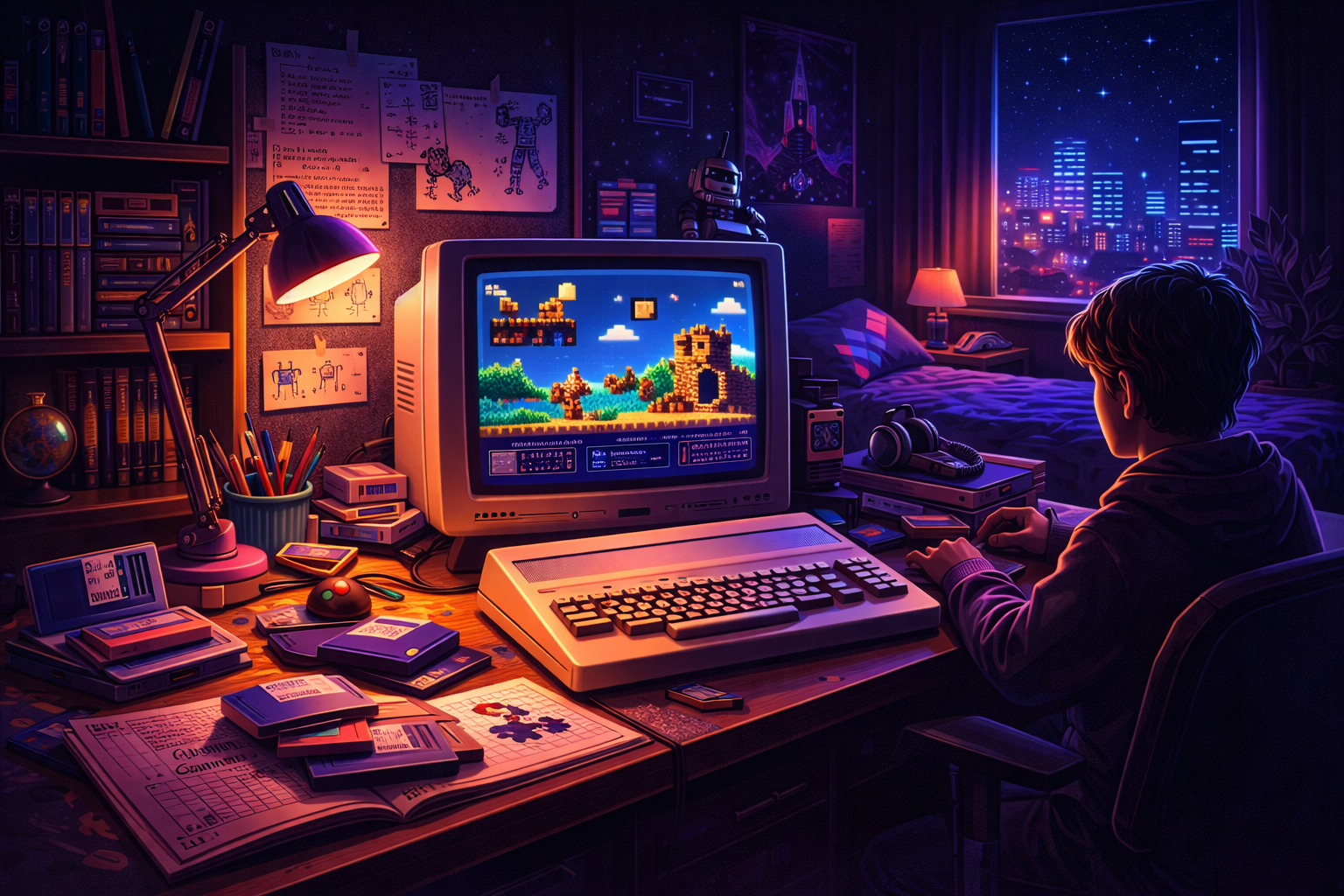
Bedroom Coding: when players became developers
Home computers made games editable. Demos, mods, shareware DNA — long before online distribution.
1990s – The 3D Revolution (CD-ROM, polygons, new genres)
The decade that rewired game grammar: 3D camera thinking, bigger worlds via CD-ROM, and a surge of cinematic ambition. Theme: space — navigation, perspective, immersion.
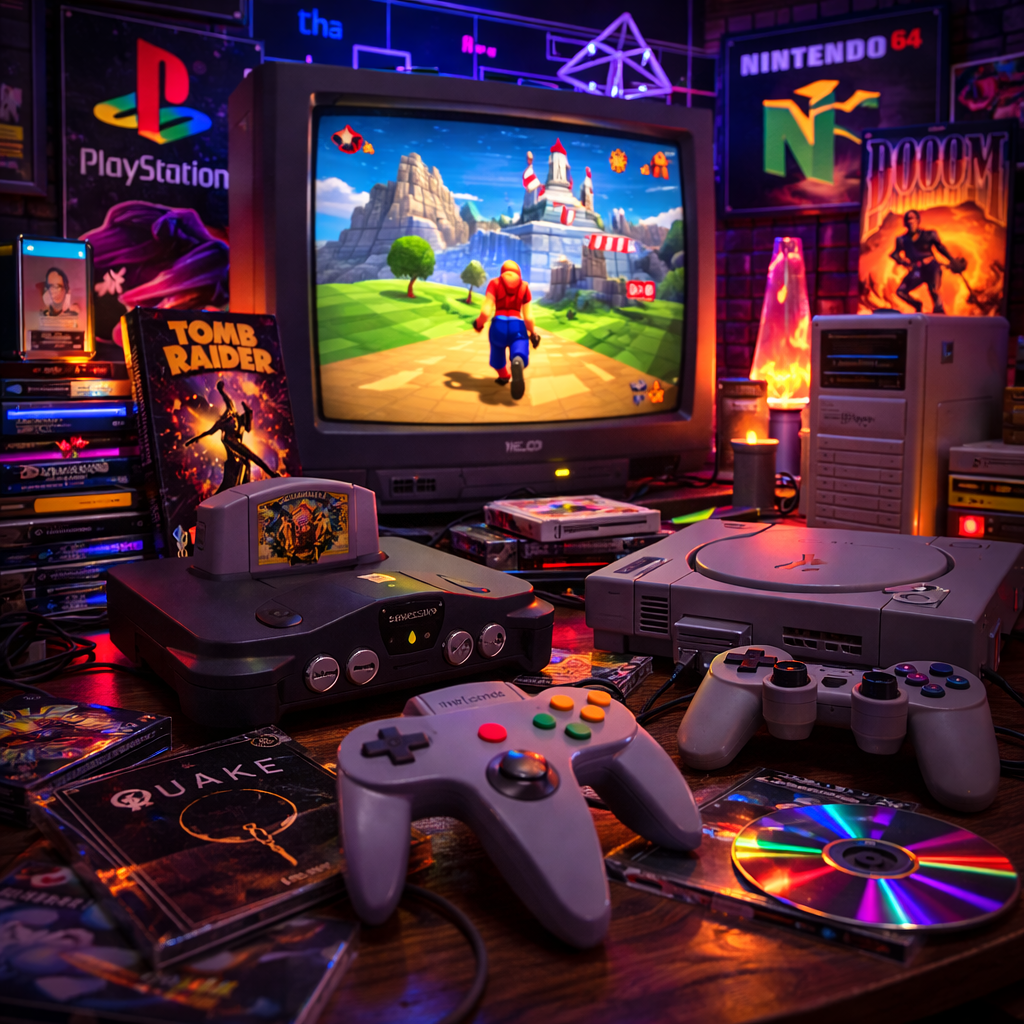 3D REVOLUTION
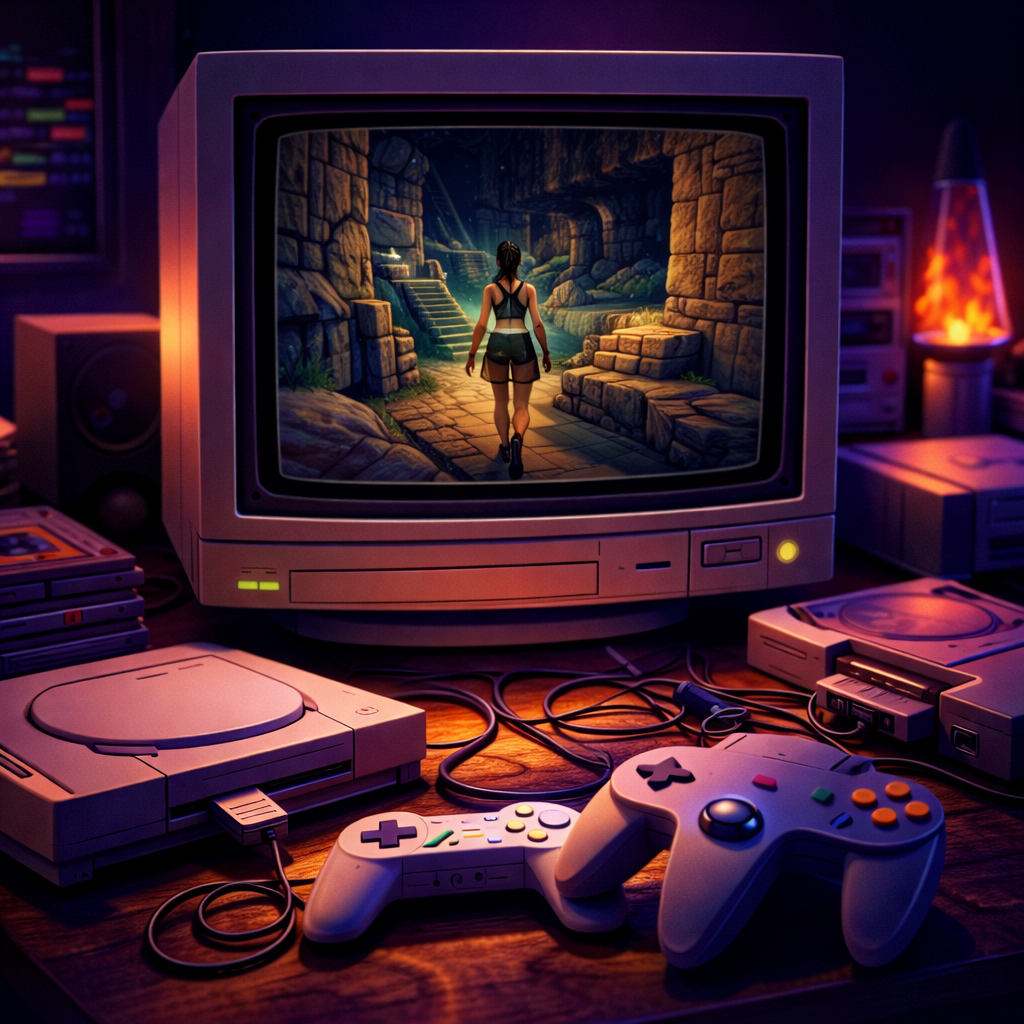
Camera Language: the invisible controller
How the 90s learned to frame action, guide attention, and keep players oriented in 3D space.
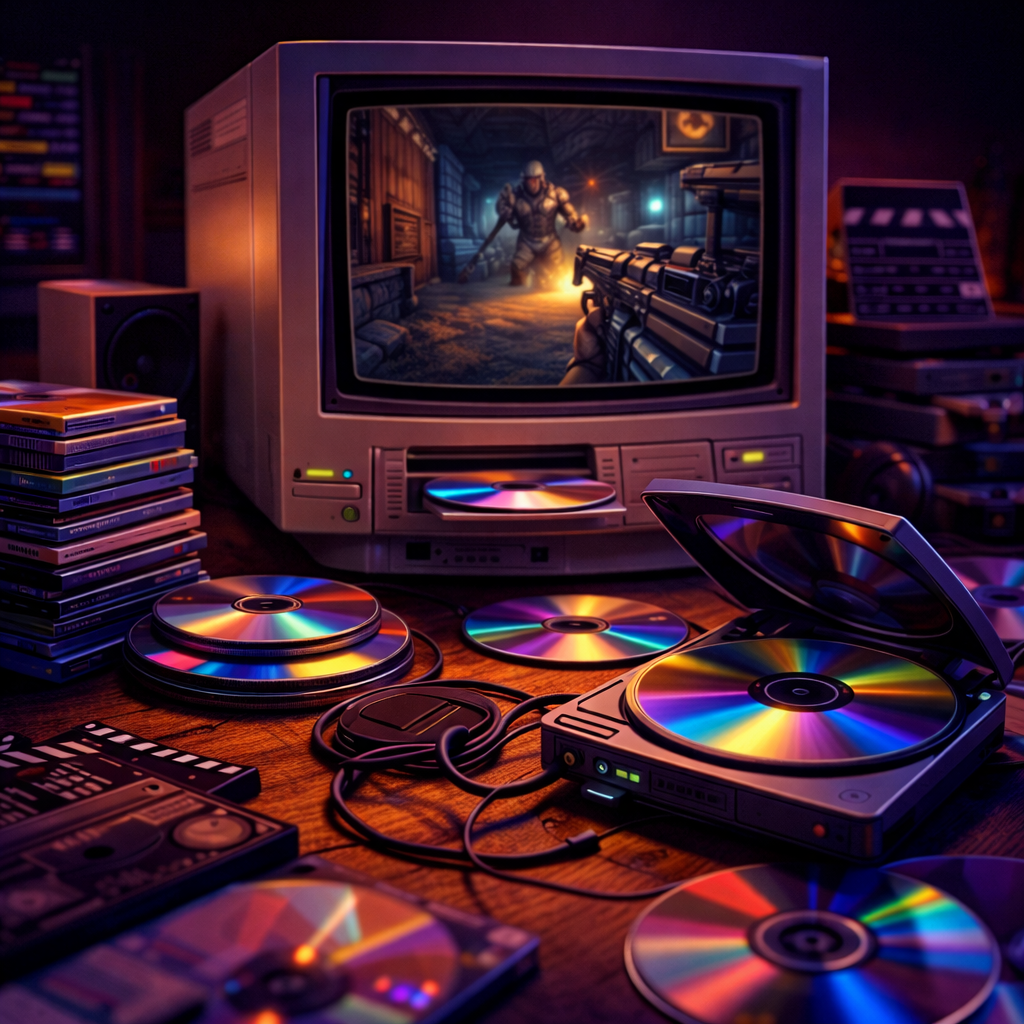
CD-ROM Scale: voices, music, and “bigger worlds”
Storage made narrative bolder and presentation richer — and pushed games toward cinema.
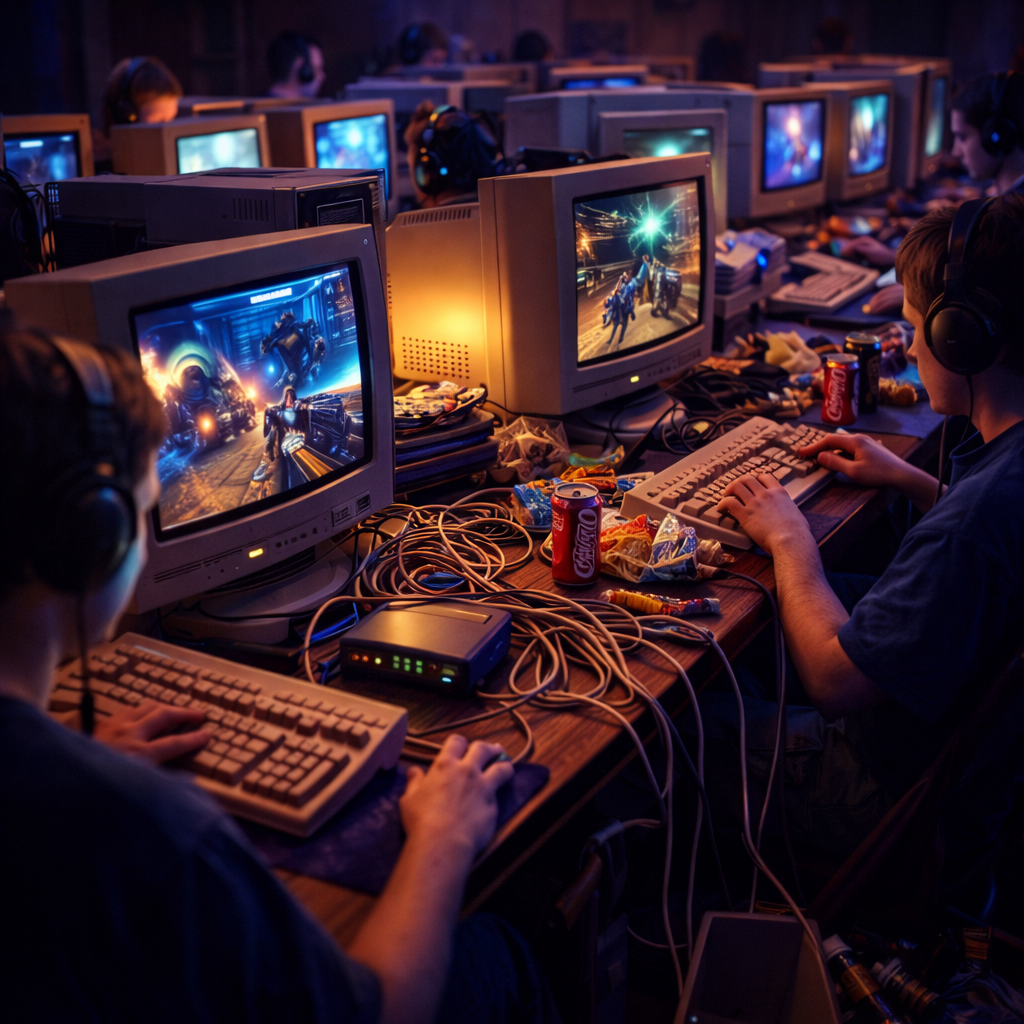
LAN Culture: the proto-esports decade
Before matchmaking was normal, people carried PCs, cables, and CRTs to play together — and compete.
2000s – Online Becomes Standard (bigger worlds, digital beginnings)
Consoles go online for real, PCs refine live multiplayer, and open worlds turn into living cities. Theme: connection — services, identity, and persistence.
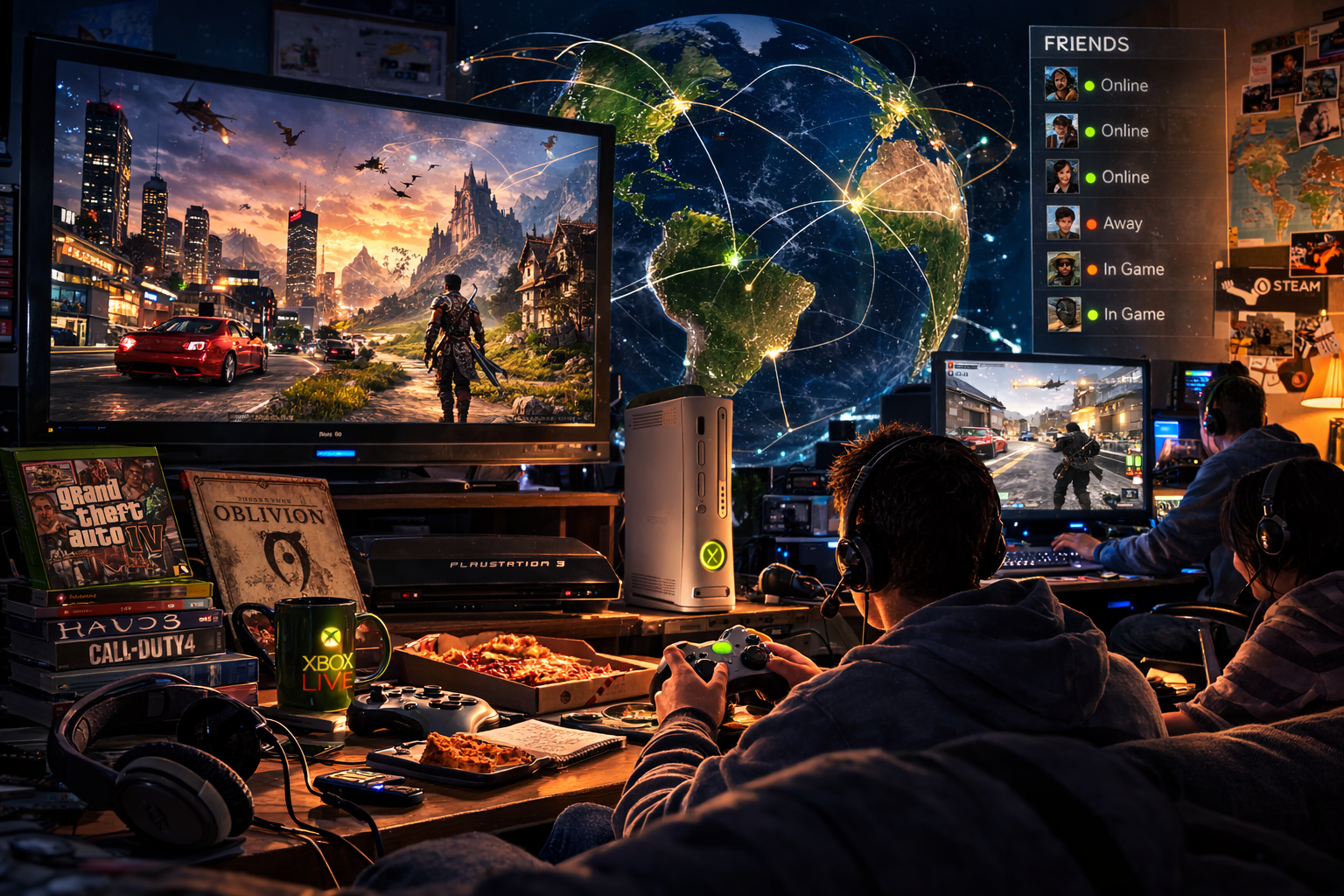 CONNECTED ERA
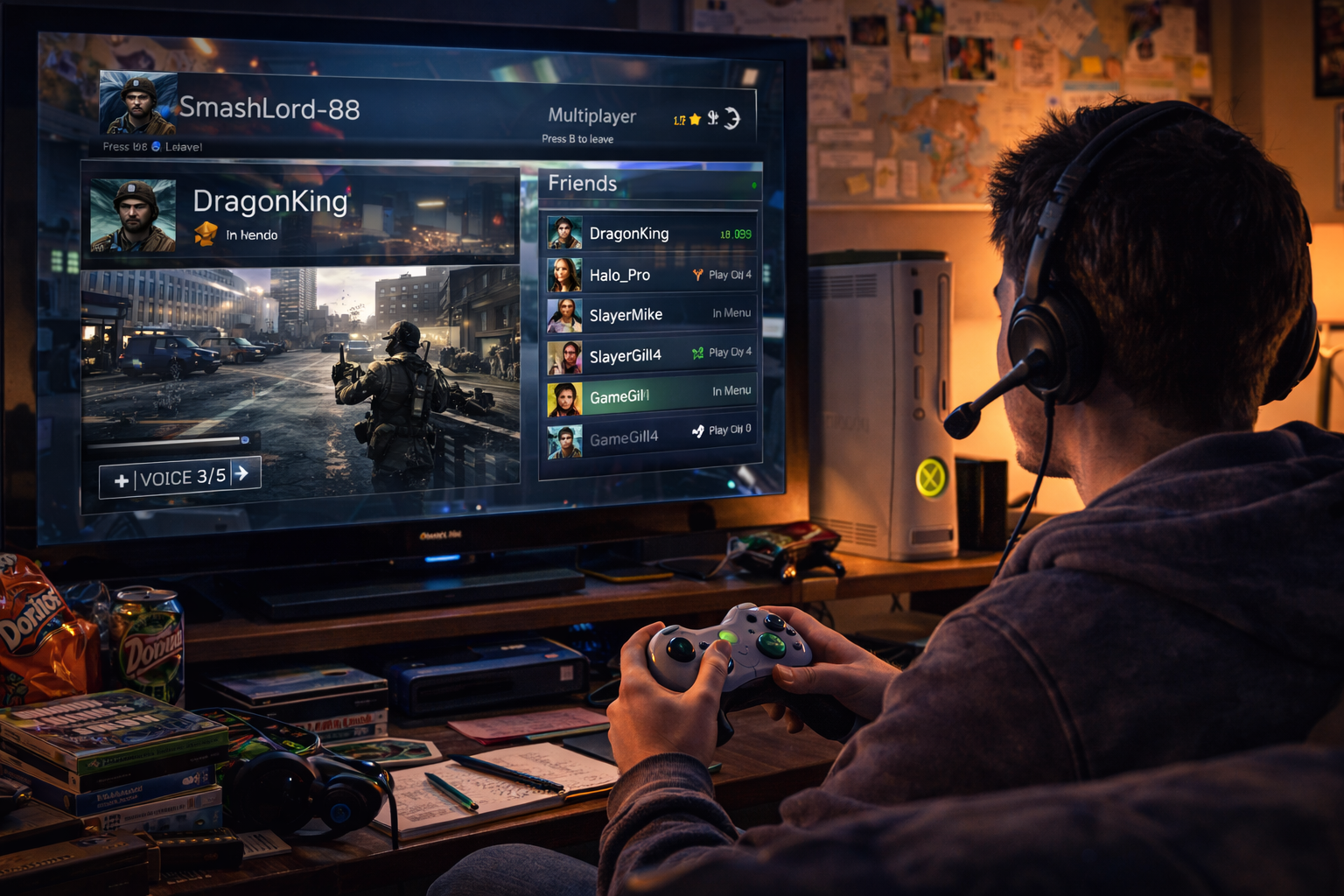
Online Identity: the gamertag becomes “you”
Friends lists, profiles, achievements — how services created persistent identity across games.
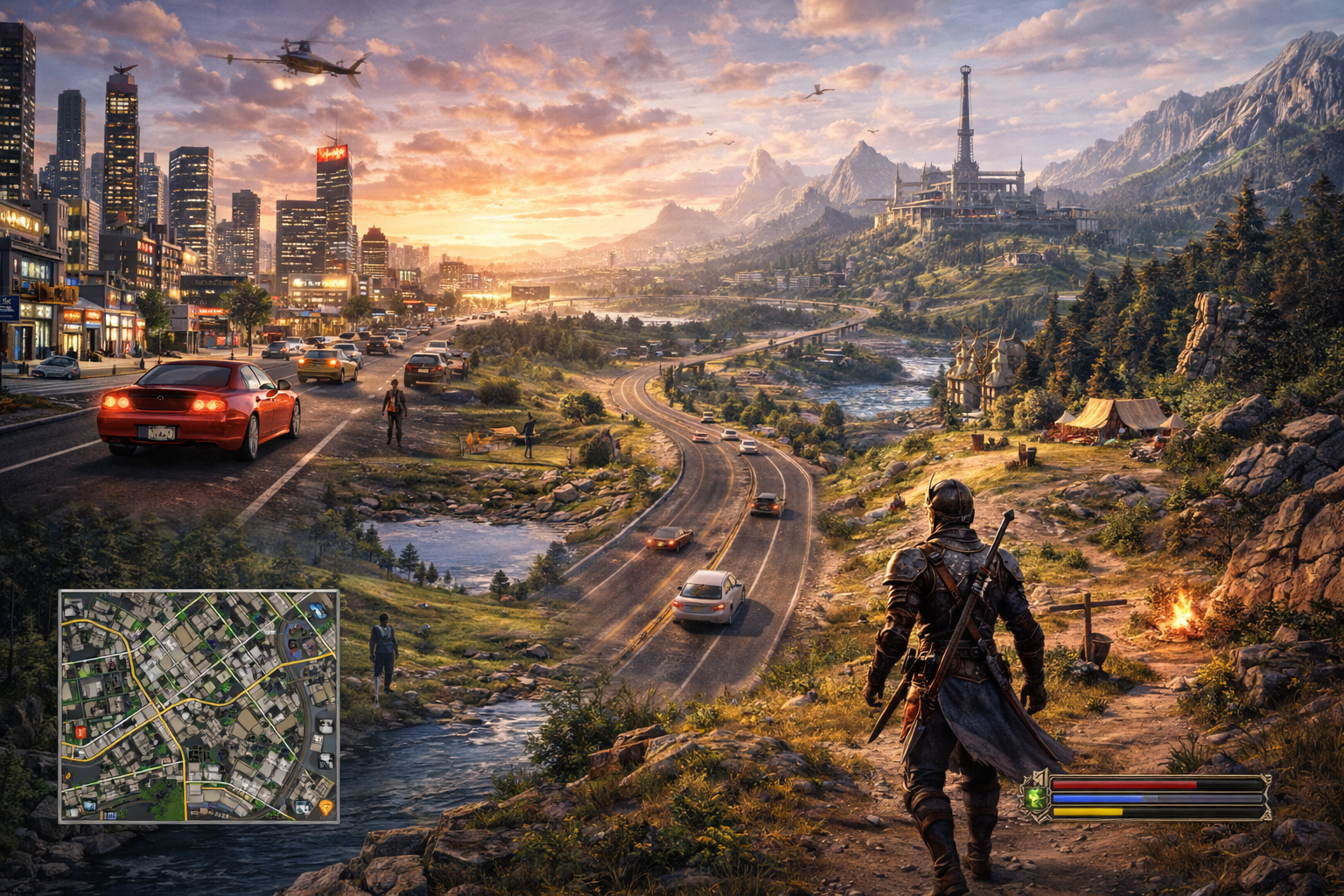
Open Worlds: from levels to places
Streaming tech and mission design evolved until cities felt like systems, not stages.
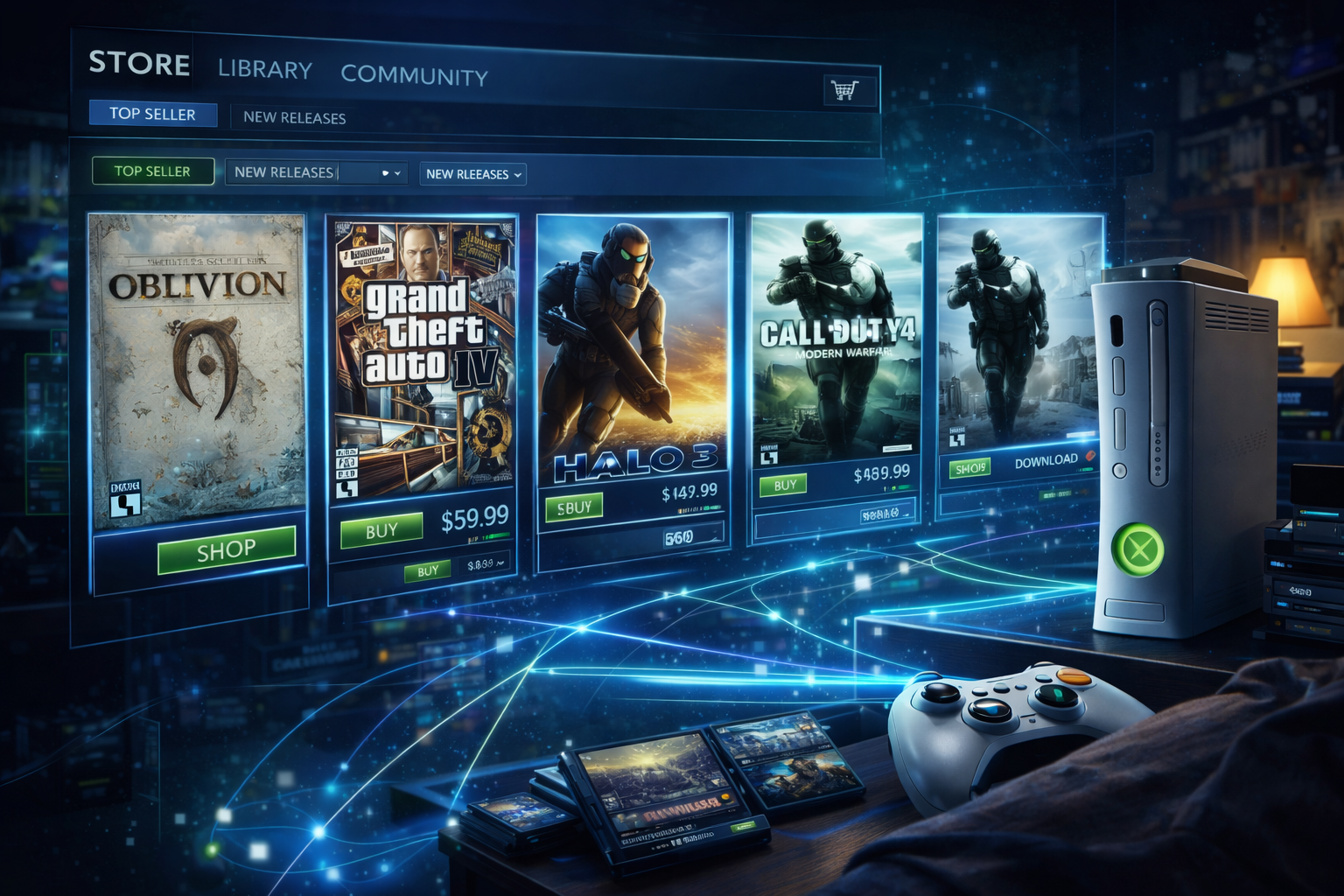
Digital Storefronts: the beginning of “always available”
Patches, DLC, and instant access reshaped how games are sold, updated, and preserved.
2010s – Streaming, Indie Renaissance & Games-as-a-Service
Distribution becomes frictionless, indies explode in variety, and long-term services dominate. Theme: ecosystems — audiences, creators, and platforms co-evolve.
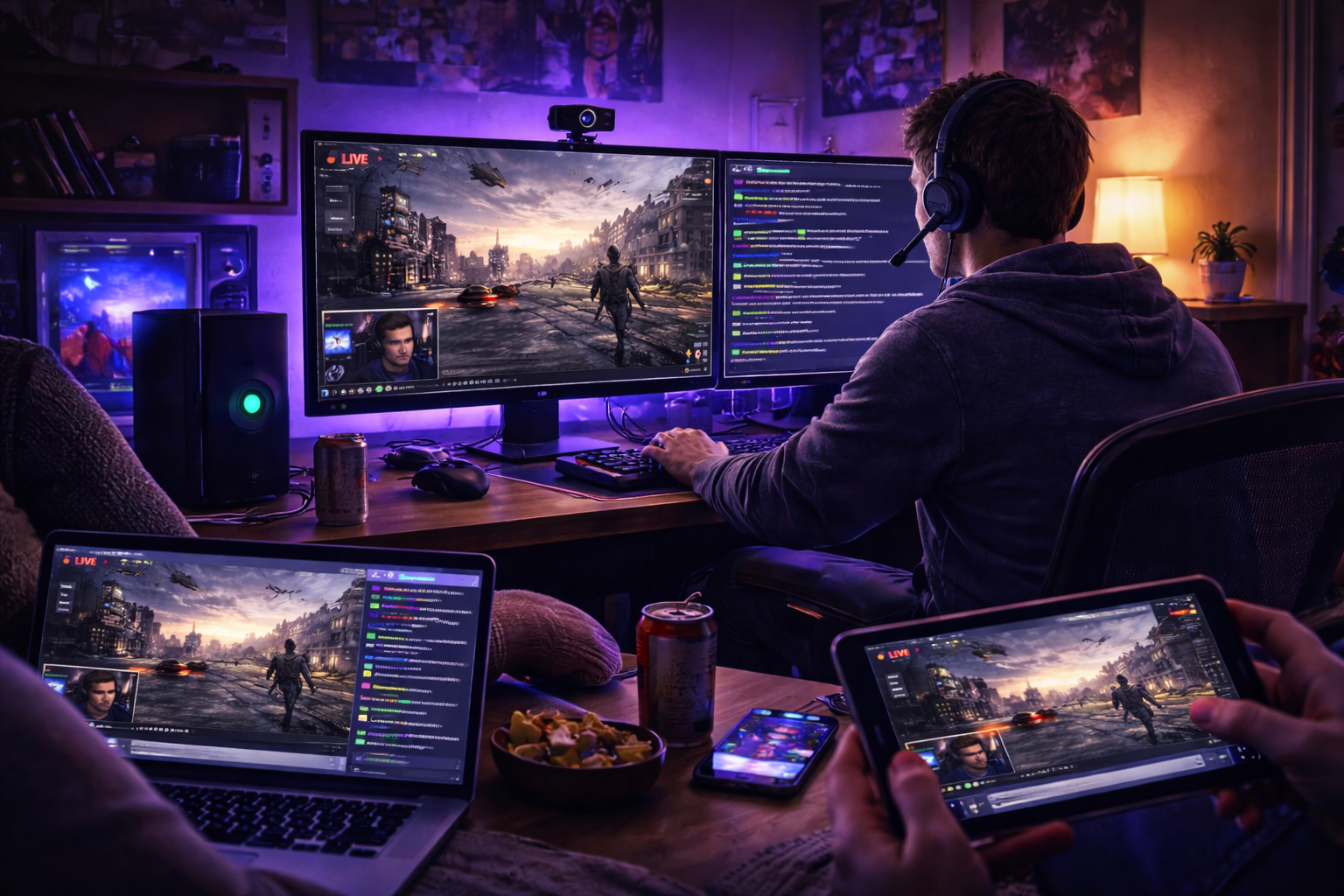 ECOSYSTEMS
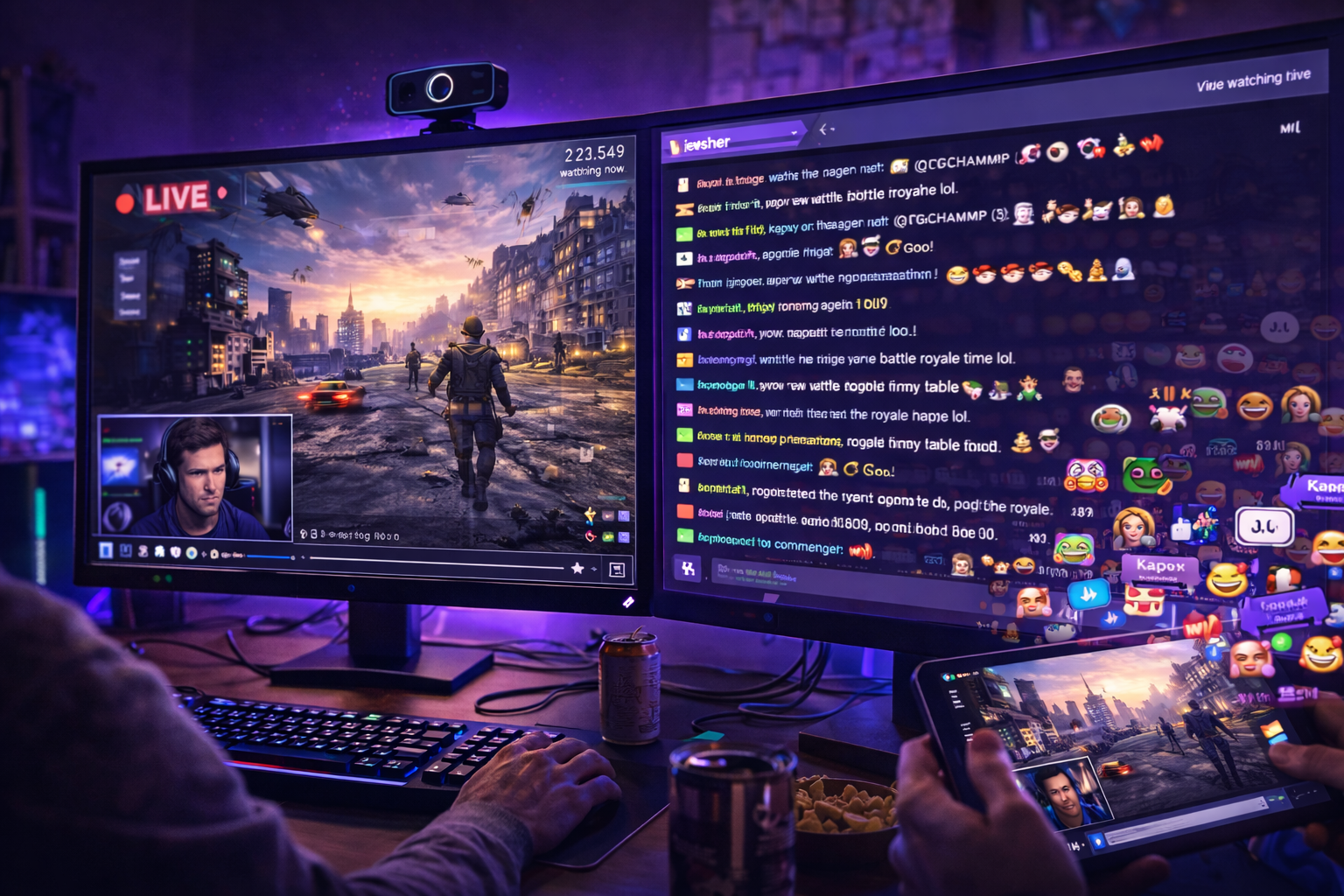
Streaming Influence: design meets spectatorship
Readable games travel further. “Shareable moments” become a design target.
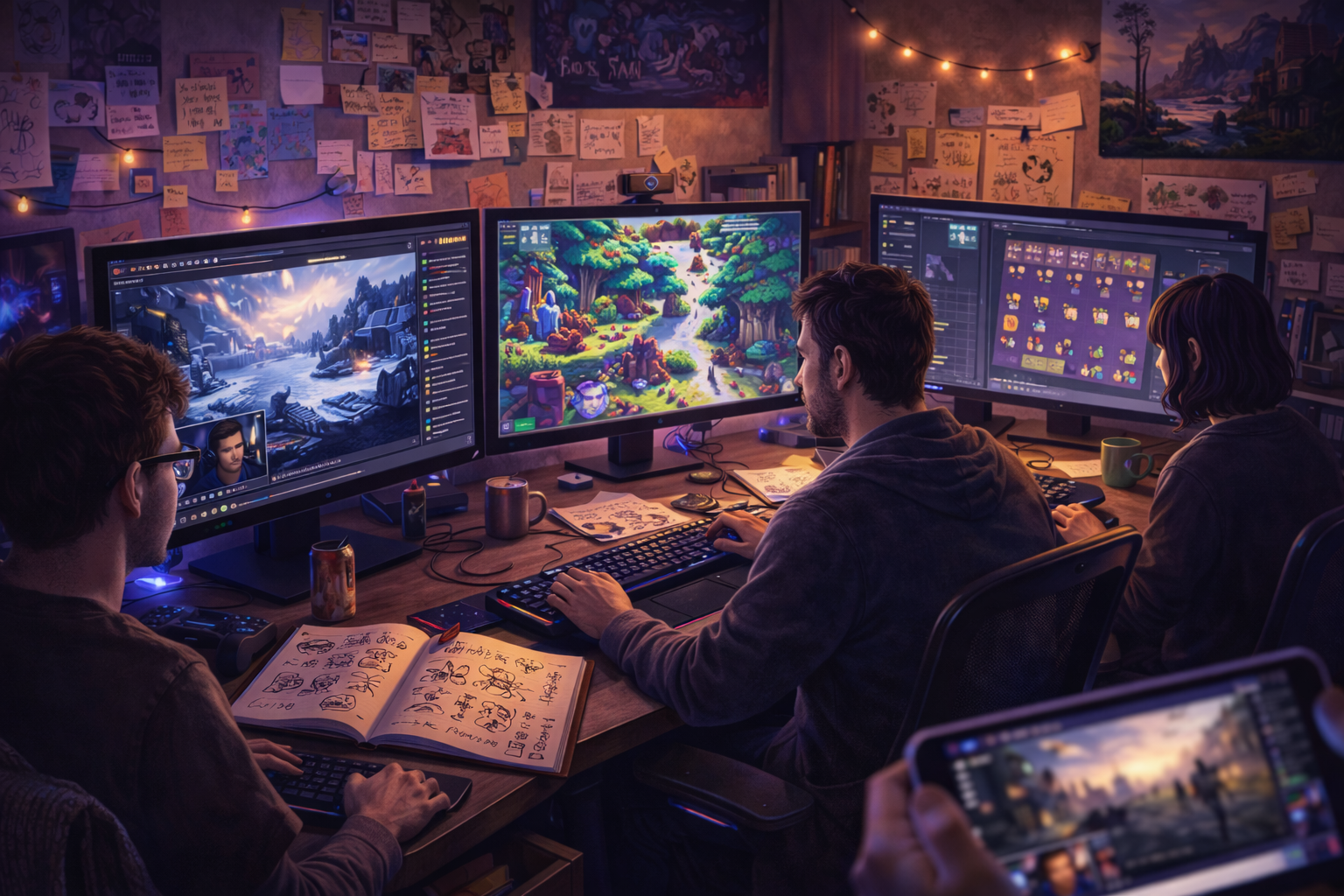
Indie Renaissance: small teams, huge impact
Digital storefronts and new tools let niche become mainstream — and styles diversify.
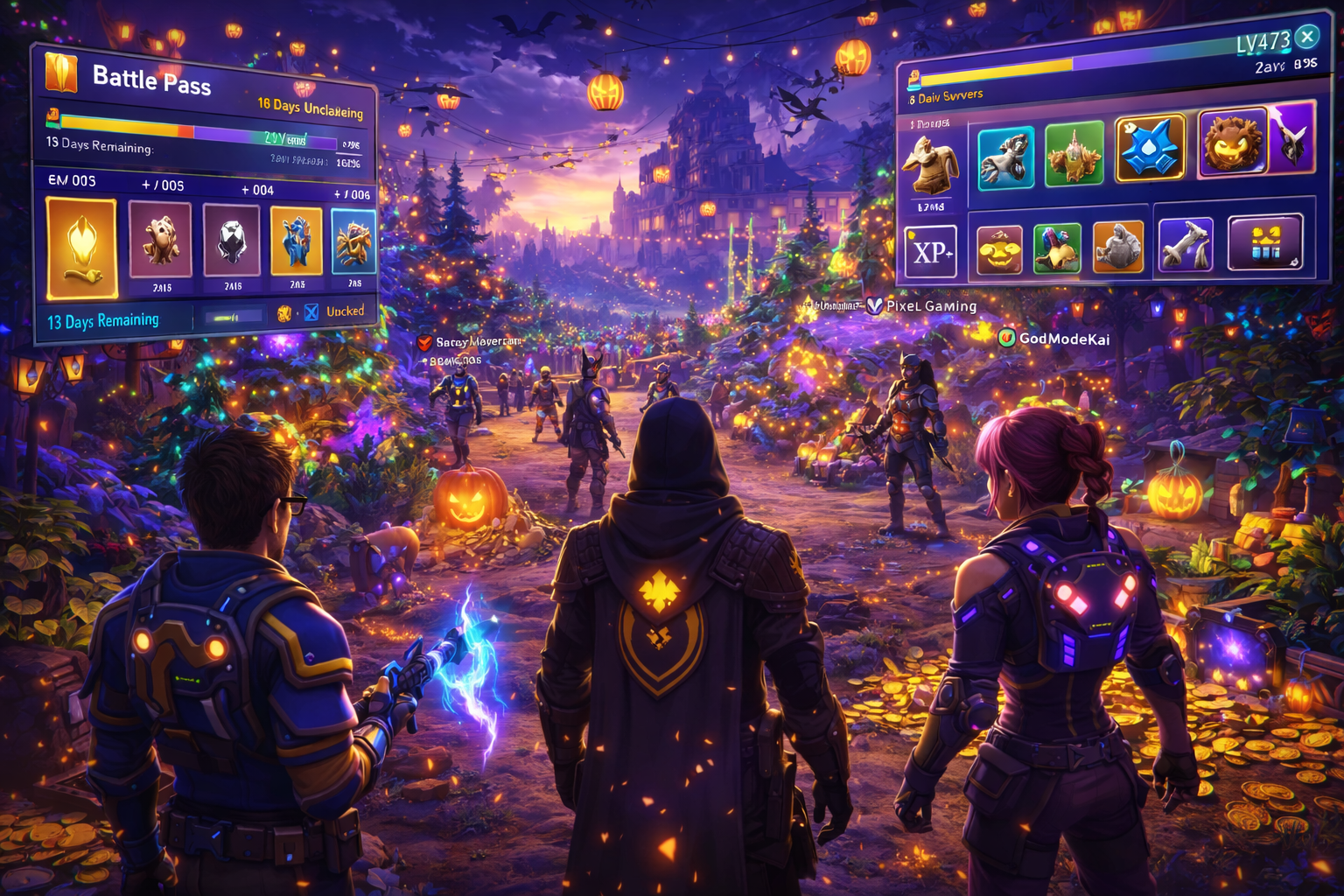
Games-as-a-Service: the decade of persistence
Seasons, events, battle passes — a new contract between players and platforms.
2020s – Hybrid Power, Ray Tracing & AI Tooling
Performance leaps meet portability, visuals become “reconstructed” by upscaling, and production changes as AI tools enter pipelines. Theme: acceleration.
 ACCELERATION
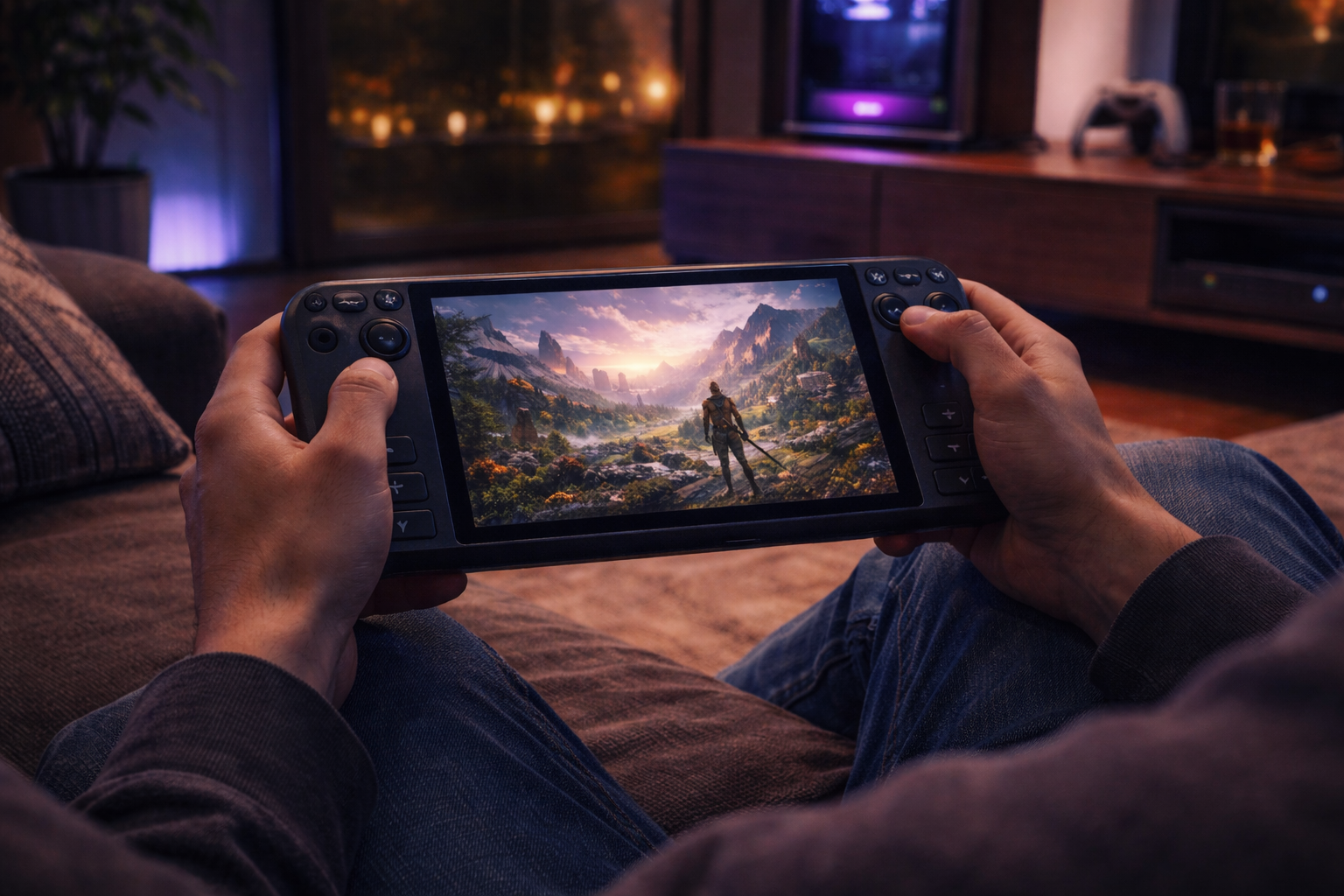
Hybrid AAA: portable power returns
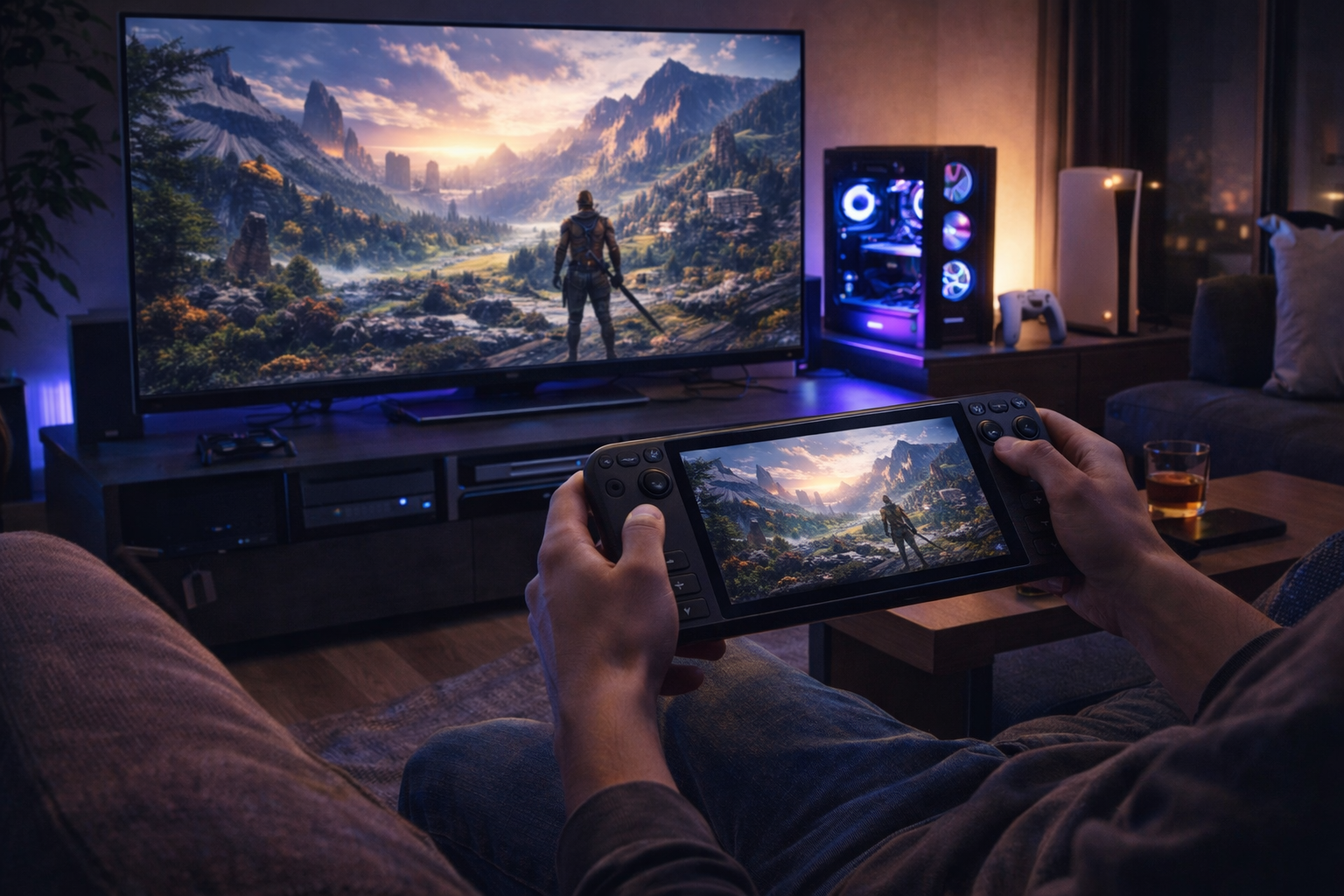
Handheld PCs and hybrid consoles reshape play habits: couch, desk, commute — same library.

Ray Tracing + Upscaling: “reconstructed reality”
Why native pixels matter less — and how quality is now a pipeline, not a single setting.
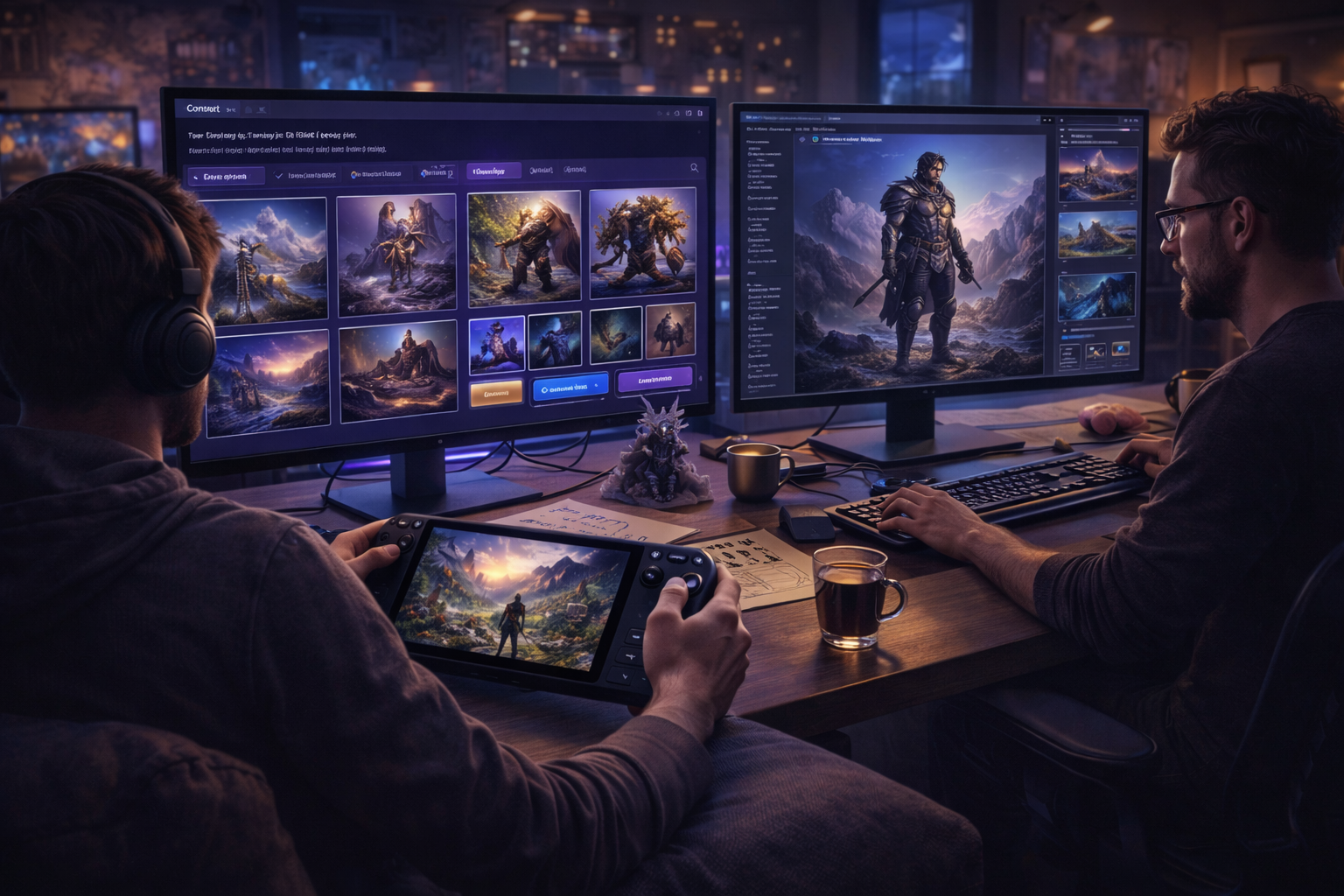
AI Pipelines: acceleration in creation
From concept art to localization — where AI helps, where it breaks, and what changes for teams.