ArcanaThe Future Is in the Cards
A strange, atmospheric SNES RPG where heroes, monsters, magic, and fate are framed through cards: part dungeon crawler, part fantasy storybook, part HAL Laboratory deep cut — and one of the system’s most singular role-playing curiosities.
Why this SNES deep cut still feels unusual
- Instant identity: the card framing makes every ally, spirit, monster, and spell feel like part of one coherent fantasy ritual.
- Dungeon pressure: first-person exploration, town-based safety, limited visibility, and unforgiving battles give the adventure real bite.
- HAL curiosity: Arcana reveals a more serious, experimental side of a studio often remembered for brighter Nintendo-linked work.
- Collector appeal: box, cart, manual, Japanese Card Master material, and the dramatic HAL America packaging make it a strong SNES shelf piece.
“A dungeon crawler disguised as a deck of enchanted cards.”
Arcana looks inviting at first glance — then the corridors tighten, the save points matter, and the cards start to feel fragile.
A Storybook Dungeon Crawl with Teeth
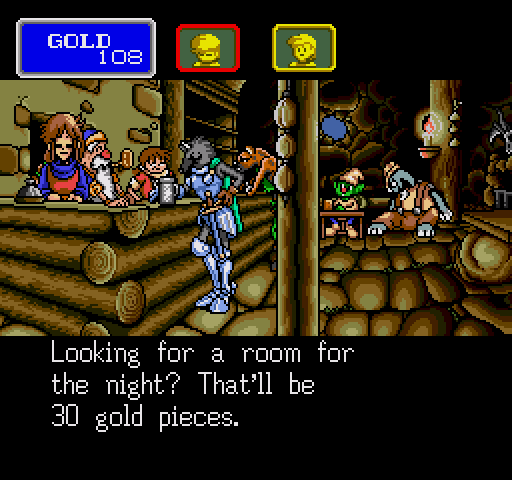
Arcana is one of those SNES games that becomes more interesting the longer you look at it. At first, the presentation is the obvious hook: party members, monsters, spirits, and magical power are all treated like cards placed onto a fantasy table.
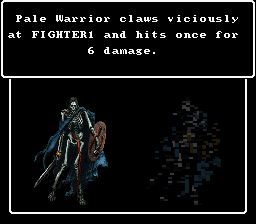
But the real character of the game emerges once the dungeons begin pressing in. Visibility is limited. Routes demand memory. Towns feel like genuine safe spaces because leaving them means committing to danger. Arcana is not a soft RPG in cute clothes — it is an old-school dungeon crawler wearing one of the strangest visual masks in the Super Nintendo library.
At a glanceBest experienced as a visually distinctive SNES dungeon RPG: bright card fantasy on the surface, strict first-person structure underneath, and an atmosphere that feels more ceremonial than cozy.
Game Data
| Title | Arcana |
| Japanese Title | Card Master: Rimusaria no Fuuin |
| Japanese Release | March 27, 1992 |
| North American Release | May 1992 |
| Developer | HAL Laboratory |
| Publisher | HAL Laboratory / HAL America |
| Platform | Super Nintendo Entertainment System / Super Famicom |
| Genre | First-person dungeon-crawling RPG |
| Players | Single-player |
| Core Loop | Explore dungeons, fight turn-based battles, manage spirits, return to town, prepare, push deeper |
Gameplay pillars
First-person dungeon navigation, turn-based combat, elemental spirits, card-themed spells, town recovery, limited safety, and carefully paced dungeon progression.
Story
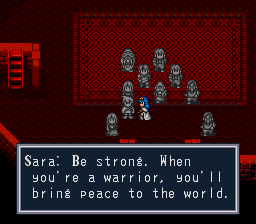
Rooks, the last surviving Card Master, sets out to stop Galneon and prevent the return of the ancient evil Empress Rimsala, moving through sealed power, ruined places, spirits, and a kingdom whose future is literally held in cards.
Most famous design fact
Despite its card-heavy imagery, Arcana is not a card battler. It is a traditional dungeon RPG whose entire world, UI, and character logic are framed through cards.
Review / The Beautiful Card Game That Wasn’t a Card Game
Arcana immediately separates itself from many SNES RPGs through presentation. The first-person view is already uncommon on the system, but the card framing pushes the game into stranger territory. Party members feel like magical identities being placed on a table rather than ordinary sprites walking through a map.
That gives the game a ceremonial quality. You are not simply moving through a fantasy world. You are handling it. Every ally has the fragility of an object, every spirit feels invoked, and every encounter is staged like a card drawn from somewhere dangerous.
Why the dungeons workThe dungeons are not built around spectacle. They are built around commitment. You see only what is in front of you, routes can become mentally slippery, and the game often makes you feel farther from town than you expected. Safety has distance, and distance has cost.
Arcana’s card theme is not just decorative. It shapes the way the player reads the world. Characters can feel contained, spirits feel summoned, and the visual language makes magic seem like something invoked, sealed, and at risk of breaking.
Where it shows its ageArcana can be abrupt and restrictive by modern standards. Saving is constrained. Encounters can be sharper than expected. Inventory and preparation matter. But that harshness is also part of why the game remains memorable.
Final verdictArcana is not the definitive SNES RPG, but it is absolutely one of the system’s most distinctive. In a library crowded with giants, it earns its place by being unmistakably itself: a first-person fantasy dungeon crawler where fate is dealt in cards.
Why It Matters
Arcana matters because it represents a very specific branch of console RPG design at a moment when the genre was rapidly broadening. While many early-1990s console RPGs moved toward larger overworlds, richer party drama, and more cinematic storytelling, Arcana folded inward into dungeons, systems, and first-person pressure.
It is also historically interesting as a HAL Laboratory production outside the company’s most familiar mainstream identity. Players often associate HAL with Kirby and Nintendo-adjacent charm; Arcana shows another side: a studio willing to build a serious fantasy RPG with a bold visual concept.
Most importantly, Arcana reminds us that the SNES library was not only great because of its most celebrated classics. It was great because it allowed odd, specific works like this to exist — games that stood between genres, between eras, and between player expectations.
Why it mattered then
It brought a first-person dungeon-crawling structure to SNES in a form that felt visually inviting and conceptually distinct.
Why it matters now
It remains one of the clearest examples of a console RPG using interface, aesthetics, and fiction to reinforce one central idea.
What it changed
It did not reshape the RPG genre, but it proved the SNES could host stranger, more stylized dungeon crawlers than the canon usually remembers.
Timeline / Key Milestones
The game debuts in Japan as Card Master: Rimusaria no Fuuin, establishing the card-master concept even more explicitly than the later Western title.
HAL America brings the game to North America as Arcana, giving the SNES library one of its more unusual first-person RPG imports.
Arcana receives early-1990s magazine coverage, including strategy and review presence, helping frame it as a notable RPG side road rather than just an obscure release.
Collectors and retro RPG players begin revisiting Arcana as a system deep cut: not a lost mainstream masterpiece, but a memorable experiment with real atmosphere.
Arcana survives as a respected oddity — the kind of title players mention when discussing the hidden breadth of the SNES RPG library.
The future was in the cards — but the box, cart, manual, Japanese Card Master material, magazine coverage, and shelf presentation are the artifacts.
Arcana belongs in the collector lane because it connects SNES RPG collecting, HAL Laboratory history, unusual fantasy packaging, Japanese title variants, and one of the most visually distinct dungeon-RPG identities of the 16-bit era.
Where to Play / Collect Today
Collecting Arcana means collecting a very specific kind of SNES RPG identity.
Loose cartridges are the practical entry point, but complete-in-box copies, clean manuals, Japanese Card Master material, and magazine coverage are what make the title feel like a proper shelf artifact. As always, condition, authenticity, label quality, and seller photos matter more than the title alone.
A curated starting point for Arcana collectors: SNES carts and complete copies first, Japanese Card Master variants and manuals second, and broader retro RPG media for context.
eBay Collector Search
The strongest route for loose cartridges, complete-in-box copies, manuals, Japanese Card Master material, and unusual SNES RPG collector listings.
- Best chance for original Arcana physical items.
- Watch label condition, manual completeness, and box wear.
- Search both “Arcana SNES” and “Card Master Rimusaria no Fuuin”.
Prepared as a 4NERDS collector search route for Arcana and its Japanese Card Master identity.
Amazon Search
Useful for broader SNES collecting accessories, retro RPG books, protective cases, display materials, and occasional third-party listings connected to Arcana.
- Better for context items than rare original copies.
- Good for storage, protection, shelves, and retro RPG books.
- Use as a secondary collector route after eBay listings.
Replace YOURAMAZONTAG-20 once the final approved Amazon Associates tag is ready.
Etsy Collector Route
Potentially useful later for handmade cartridge displays, fantasy-card-inspired shelf labels, retro RPG décor, and SNES collection presentation pieces.
- Better suited for display objects than original game media.
- Keep separate from preservation-grade collecting.
- Ready to activate once the Etsy strategy is finalized.
Placeholder route kept disabled until a final Etsy affiliate or curated shop strategy is available.