Astron BeltSega’s LaserDisc Future Shock
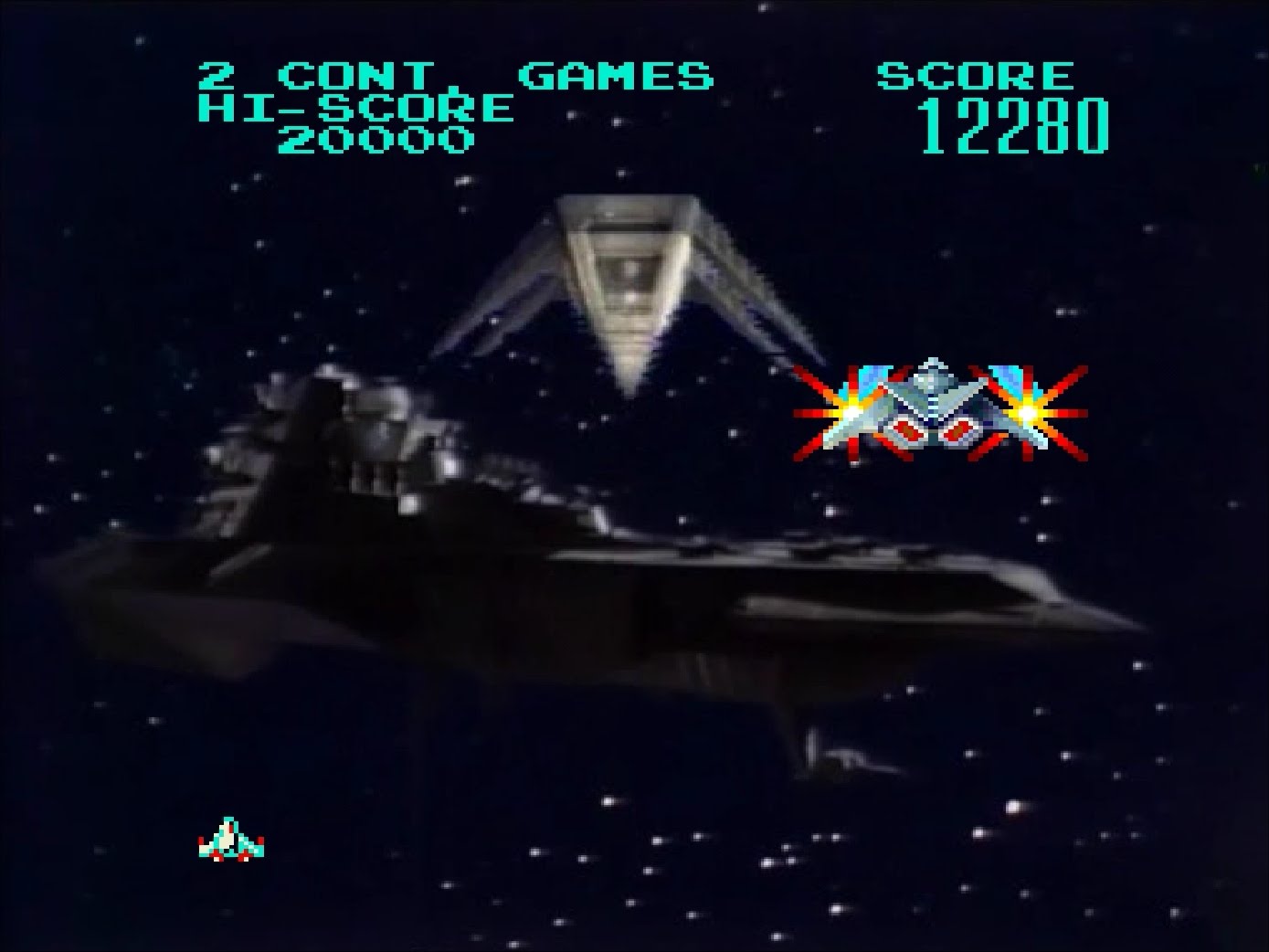
One of the earliest great arcade “future shock” machines: filmed space-combat footage, real-time computer overlays, cockpit-style presentation, and a sense that the next era of arcade spectacle was arriving in front of the player’s eyes.
Why this LaserDisc experiment still matters
- Historical breakthrough: one of the key early arcade LaserDisc titles and a spark for the format boom.
- Visual spectacle: it blended filmed space footage with live game overlays in a way that felt futuristic in 1982–83.
- Arcade theater: cockpit cabinet options, large-screen presentation, and hardware novelty made it feel like an event.
- Legacy power: part prototype, part commercial product, part bridge toward interactive movie arcade design.
“Not yet the final future — but one of the first times arcades saw it coming.”
Astron Belt is fascinating because it feels like a promise, a product, and a turning point all at once.
The LaserDisc Dream Arrives in the Arcade
Astron Belt is one of those arcade games that matters not only because of how it plays, but because of what it represented when it appeared. In the early 1980s, arcades were already crowded with excellent action games, but Astron Belt tried to look like tomorrow.
Instead of relying only on conventional sprite backgrounds, it combined LaserDisc full-motion footage with real-time computer-generated overlays. That turned a straightforward space shooter into a futuristic audiovisual showpiece — a cabinet that seemed to promise cinema, hardware theater, and arcade interaction at the same time.
At a glanceBest understood as both a playable rail shooter and a landmark in the arcade industry’s rush toward cinematic presentation.
Game Data
| Title | Astron Belt |
| Arcade Release | 1983 |
| Developer | Sega |
| Publishers | Sega in Japan; Taitel Electronics in Europe; Bally Midway in North America |
| Platform | Arcade |
| Later Port | MSX, Japan, 1984 |
| Arcade System | Sega LaserDisc |
| Genre | Rail shooter / space combat / LaserDisc arcade game |
| Players | Single-player |
| Core Loop | Fly forward, destroy waves, dodge hazards, survive command ships |
Gameplay pillars
Forward-scrolling space combat, FMV backgrounds with 2D overlays, timed play, obstacle avoidance, wave clearing, and command-ship encounters.
Story
A lone spacecraft fights through enemy formations, mines, trench-like sequences, and command ships in a stylized cinematic space war.
Most famous design fact
Astron Belt became famous for combining LaserDisc footage and real-time hit detection with sprite overlays, creating one of the earliest high-profile arcade “movie game” illusions.
Review / Why Astron Belt Still Fascinates
Even now, Astron Belt makes sense first as an audiovisual shock. The player sees filmed space scenes, large-scale explosions, trench runs, and enemy formations that feel more cinematic than many conventional arcade backdrops of the time.
How it playsUnderneath the spectacle, the game is fairly direct. You control a spacecraft, shoot hostile targets, avoid obstacles, and survive through successive waves until command ships are destroyed. The gameplay structure is simple enough that the presentation can take center stage.
Why the cabinet mattersAstron Belt was never only a screen. The cockpit cabinet, joystick, colorful panel artwork, sci-fi marquee, and LaserDisc hardware all helped sell the illusion that this was not just another shooter, but a small arcade attraction.
The game is historically thrilling, but it is also a reminder that innovation can outrun refinement. Compared with later arcade shooters, Astron Belt can feel rougher, more rigid, and less mechanically elegant. Some of that comes from the challenge of synchronizing footage, overlays, hit detection, and control response.
Why it is still worth playingWhat keeps Astron Belt alive is not that it solved everything, but that it attempted something huge and visible. It is a game about the industry imagining the next leap. You can feel Sega trying to turn a cabinet into a science-fiction ride.
Final verdictAstron Belt is not the cleanest arcade shooter of its era, nor the most mechanically perfect. But it is one of the most revealing. As a design object, it is important. As a historical machine, it is unforgettable.
Why It Matters
Astron Belt is historically important because it pushed LaserDisc presentation into the mainstream arcade conversation. Its trade-show presence and later commercial release helped normalize the idea that arcade games could borrow the language of film and merge it with interactive overlays.
It also mattered because it made the arcade cabinet feel more like theater. The game’s cinematic sequences, large sci-fi artwork, cockpit version, and hardware identity all worked together to suggest that arcade games could become bigger experiences than standard sprite action alone.
Most importantly, Astron Belt belongs to the lineage that led toward later interactive movie games and LaserDisc attractions. It is not simply an old Sega shooter. It is a threshold title: one foot in classic arcade design, the other in a cinematic future that developers were still learning how to control.
Why it mattered then
It made LaserDisc arcade gaming feel commercial, spectacular, and exciting rather than merely experimental.
Why it matters now
It remains one of the clearest examples of arcades transitioning toward cinematic presentation and hybrid media design.
What it changed
It helped ignite LaserDisc fever and influenced the broader interactive movie wave that followed in the 1980s.
Timeline / Key Milestones
Astron Belt is shown to the arcade industry and helps ignite interest in LaserDisc-based coin-op spectacle.
Sega launches the arcade game in Japan, where the upright and cockpit presentation become central to its identity.
The game reaches Europe and becomes part of the region’s early LaserDisc arcade story.
Bally Midway brings the game to North America, giving it a distinct flyer, marquee, and cabinet identity for collectors.
Astron Belt receives a Japanese MSX version, extending the name beyond the original arcade hardware.
The game remains a reference point for LaserDisc arcade history, interactive movie design, and early cinematic arcade ambition.
The LaserDisc spectacle became the memory — but the cockpit cabinet, upright cabinet, marquee, flyer, control panel, disc hardware, and MSX version are the artifacts.
Astron Belt belongs in the collector lane because its identity is unusually tied to hardware: LaserDisc playback, cabinet form, monitor presentation, and operator materials all matter as much as the software itself.
Where to Play / Collect Today
Collecting Astron Belt means collecting a fragile piece of LaserDisc arcade history.
Original cabinets, control panels, marquees, flyers, LaserDisc hardware, player boards, operator materials, and MSX-related items all tell different parts of the story. Because LaserDisc hardware can be delicate, preservation status and working condition matter more here than with many standard arcade boards.
A curated starting point for Astron Belt collectors: cabinet and operator artifacts first, LaserDisc hardware context second, and display material only when it supports the archive shelf.
eBay Collector Search
The strongest route for original flyers, cabinet parts, control panels, marquees, LaserDisc-related hardware, operator materials, and MSX companion items.
- Best chance for original arcade and Bally Midway/Sega-era material.
- Search cabinet, control panel, marquee, flyer, and LaserDisc items separately.
- For hardware listings, verify photos, working status, and completeness carefully.
4NERDS collector search for Astron Belt arcade artifacts, LaserDisc material, and MSX-related items.
Amazon Search
Useful for Sega history books, arcade history books, retro display supplies, LaserDisc context, and preservation-related storage or media accessories.
- Better for context and display support than rare arcade originals.
- Good for books, shelf protection, and broader Sega/arcade history.
- Use as a secondary route after eBay collector searches.
Replace YOURAMAZONTAG-20 once the final approved Amazon Associates tag is ready.
Etsy Collector Route
Potentially useful later for custom LaserDisc-era arcade-room décor, Sega-inspired shelf labels, sci-fi marquee reproductions, and display objects that support the archive shelf.
- Better suited for display objects than preservation-grade collecting.
- Keep separate from original cabinet and hardware collecting.
- Ready to activate once the Etsy strategy is finalized.
Placeholder route kept disabled until a final Etsy affiliate or curated shop strategy is available.