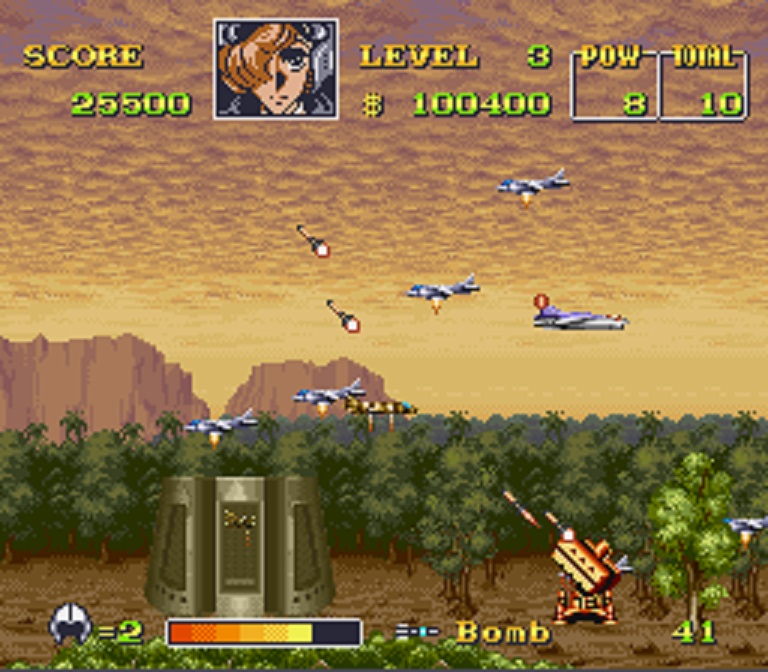
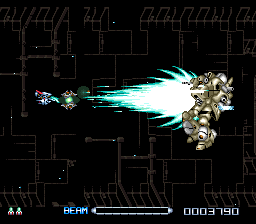
AxelayKonami’s 16-Bit Shooter Showcase
A Super Nintendo shooter that still feels distinct decades later: cinematic Mode-7 depth, alternating vertical and horizontal stages, deliberate weapon loadouts, dramatic boss staging, and that polished early-1990s Konami confidence that turns six stages into a real campaign.
Why Axelay still feels like a premium SNES shooter
- Visual identity: the Mode-7 vertical stages still feel dramatic, strange, and unusually grand for the system.
- Rhythm variety: alternating horizontal and vertical missions makes the campaign feel authored instead of repetitive.
- Weapon strategy: pre-stage loadout selection rewards planning, not only reflexes.
- Konami prestige: it belongs to that early-1990s run where presentation, music, pacing, and mechanical confidence met perfectly.
“A shooter that feels less like a corridor and more like a campaign.”
Axelay does not only look advanced for its time — it still feels staged, varied, and proudly dramatic.
A 16-Bit Shooter with Real Scale and Personality
Axelay is one of those games that immediately signals ambition. Even before the systems reveal themselves, the presentation suggests that Konami wanted a shooter to feel larger than a flat lane of incoming enemies. Its vertical stages use the Super Nintendo’s visual personality to create depth and sweep, while the horizontal stages return the player to tighter, more familiar shooter pressure.
That alternating structure is the secret to the game’s longevity. Axelay keeps changing how it speaks to the player. One moment it is a cinematic plunge across planets and skies; the next it is a precise side-view duel against dense formations and boss patterns. Few SNES shooters feel as curated.
At a glanceBest experienced as both a technical SNES showcase and a still-strong shooter built around stage variety, weapon planning, audiovisual drama, and the compact elegance of a six-stage campaign.
Game Data
| Title | Axelay |
| Original Release | 1992 |
| Developer | Konami |
| Publisher | Konami |
| Platform | Super Nintendo Entertainment System / Super Famicom |
| Genre | Scrolling shoot ’em up / hybrid horizontal and vertical shooter |
| Players | 1 player |
| Original Format | Cartridge |
| Producer | Kazumi Kitaue |
| Music | Taro Kudo, with additional credited sound and remix work |
| Cover Art | Tom duBois credited for the North American / European cover artwork |
| Core Loop | Select loadout, adapt to stage type, survive, learn, optimize, defeat the Armada of Annihilation |
Gameplay pillars
Alternating vertical and horizontal stages, weapon loadout strategy, boss memorization, precise positioning, dramatic Mode-7 perspective, and audiovisual spectacle.
Story
In the Illis solar system, an invading alien force devastates the defensive fleet. The D117B Axelay prototype becomes the last serious counterattack against the Armada of Annihilation.
Most famous design fact
Instead of relying only on in-stage power-ups, Axelay gradually expands your available weapons and lets you choose tools before missions, turning preparation into part of the strategy.
Review / Why Axelay Still Feels Special
The first thing Axelay communicates is scale. Even if you have played many horizontal and vertical shooters, the opening impression feels different because the game aims for depth rather than clutter. In the vertical missions, the world seems to drop beneath the ship, creating a sensation of speed and danger that was unusually memorable in 1992.
Why the structure mattersMany shooters succeed by refining one rhythm until it becomes demanding and elegant. Axelay chooses a different path. It varies perspective and pressure. Horizontal stages ask for lane reading and boss discipline; vertical stages create the feeling of cinematic forward advance.
Weapon selection as designAxelay’s loadout system is one of its strongest ideas. You are not only reacting to what appears on screen; you are preparing for what you think the next stage will demand. That makes the game feel more tactical and less dependent on random mid-stage recovery.
Konami’s early-1990s console work often had a distinct confidence: strong visual composition, dramatic pacing, and the sense that every stage wanted to leave a memory. Axelay absolutely belongs in that lineage. The art, music, and boss presentation all support the feeling that this is not filler software.
Where it pushes backAxelay is demanding. It expects pattern learning, weapon knowledge, and careful positioning. Some perspective effects can take time to read, and certain loadout choices make stages noticeably easier or harder. But that challenge is part of the game’s identity rather than a flaw.
Final verdictAxelay remains one of the SNES shooters players return to because it offers more than technical nostalgia. It still feels designed with taste. It has shape, contrast, and personality. Some shooters are remembered because they are difficult. Axelay is remembered because it is difficult, beautiful, thoughtful, and distinct.
Why It Matters
Axelay matters because it is one of the clearest examples of the Super Nintendo being used not simply as a platform for arcade translation, but as a stage for reinterpretation. It uses the console’s visual features, especially perspective effects and Mode-7 drama, to create a specific sense of motion and depth.
It also stands as an important Konami work from a period when the company’s console output felt unusually concentrated and assured. The game shares creative DNA with the broader Konami prestige wave of the era, and that confidence shows in its visual composition, weapon design, stage pacing, and soundtrack atmosphere.
Historically, Axelay is significant because it shows that the shoot ’em up genre could evolve by changing structure rather than only increasing chaos. Alternating horizontal and vertical stages may sound simple on paper, but in execution it helps the game feel like a deliberate campaign.
Why it mattered then
It showed that the SNES could deliver a shooter with atmosphere, depth illusion, and prestige production values — not just basic competence.
Why it matters now
It remains one of the clearest playable examples of how 16-bit hardware could shape a shooter through presentation and structure.
What it represents
A high-confidence Konami design philosophy: technical flourish, memorable staging, smart pacing, and mechanics that reward planning as much as reflex.
Timeline / Key Milestones
Axelay releases as a Konami-developed shooter and quickly becomes one of the standout home-console shmups of the 16-bit era.
Players and magazines highlight its visuals, music, weapon system, and the unusual alternation between horizontal and vertical stages.
As the shooter genre becomes more fragmented on consoles, Axelay remains one of the SNES titles retro players continue to single out.
Digital re-release routes help a new audience revisit the game as both a technical showcase and a genre classic.
Another download-service appearance keeps Axelay visible as part of Nintendo and Konami’s 16-bit back-catalogue memory.
The planned but unrealized Axelay 2 becomes part of the game’s long afterlife among Konami and shooter fans.
The 16-bit spectacle became the memory — but the SNES box, cartridge, manual, Japanese packaging, magazine ad, soundtrack history, and digital re-releases are the artifacts.
Axelay belongs in the collector lane because it is both a playable shooter classic and a physical SNES showpiece. Its packaging, cartridge label, Konami branding, and dramatic cover art are part of why the game still feels premium on a shelf.
Where to Play / Collect Today
Collecting Axelay means collecting one of the SNES shooter canon’s prestige objects.
The strongest routes are boxed SNES / Super Famicom copies, manuals, cartridge variants, Japanese packaging, North American box art, magazine advertisements, soundtrack-related material, and later digital preservation context. For boxed copies, region and completeness are especially important.
A curated starting point for Axelay collectors: original SNES and Super Famicom material first, Konami-era context second, and display support only where it helps preserve the game’s shooter legacy.
eBay Collector Search
The strongest route for original Axelay cartridges, boxed copies, manuals, Super Famicom versions, magazine ads, inserts, and Konami-era collector material.
- Best chance for boxed SNES and Super Famicom copies.
- Search cart, CIB, manual, Super Famicom, and ad terms separately.
- Check label wear, box crushing, manual condition, region, and reproduction warnings carefully.
4NERDS collector search for Axelay SNES, Super Famicom, CIB, cartridge, and manual listings.
Amazon Search
Useful for SNES history books, Konami retrospectives, cartridge protection, archival storage, shelf display material, and retro-gaming context.
- Better for storage and context than rare original Axelay copies.
- Good for cartridge protectors, retro books, and display support.
- Use as a secondary route after eBay collector searches.
Replace YOURAMAZONTAG-20 once the final approved Amazon Associates tag is ready.
Etsy Collector Route
Potentially useful later for custom SNES shelf labels, sci-fi shooter display objects, cartridge stands, and retro game-room presentation pieces.
- Better suited for display objects than preservation-grade collecting.
- Keep separate from original cartridges, boxes, and manuals.
- Ready to activate once the Etsy strategy is finalized.
Placeholder route kept disabled until a final Etsy affiliate or curated shop strategy is available.