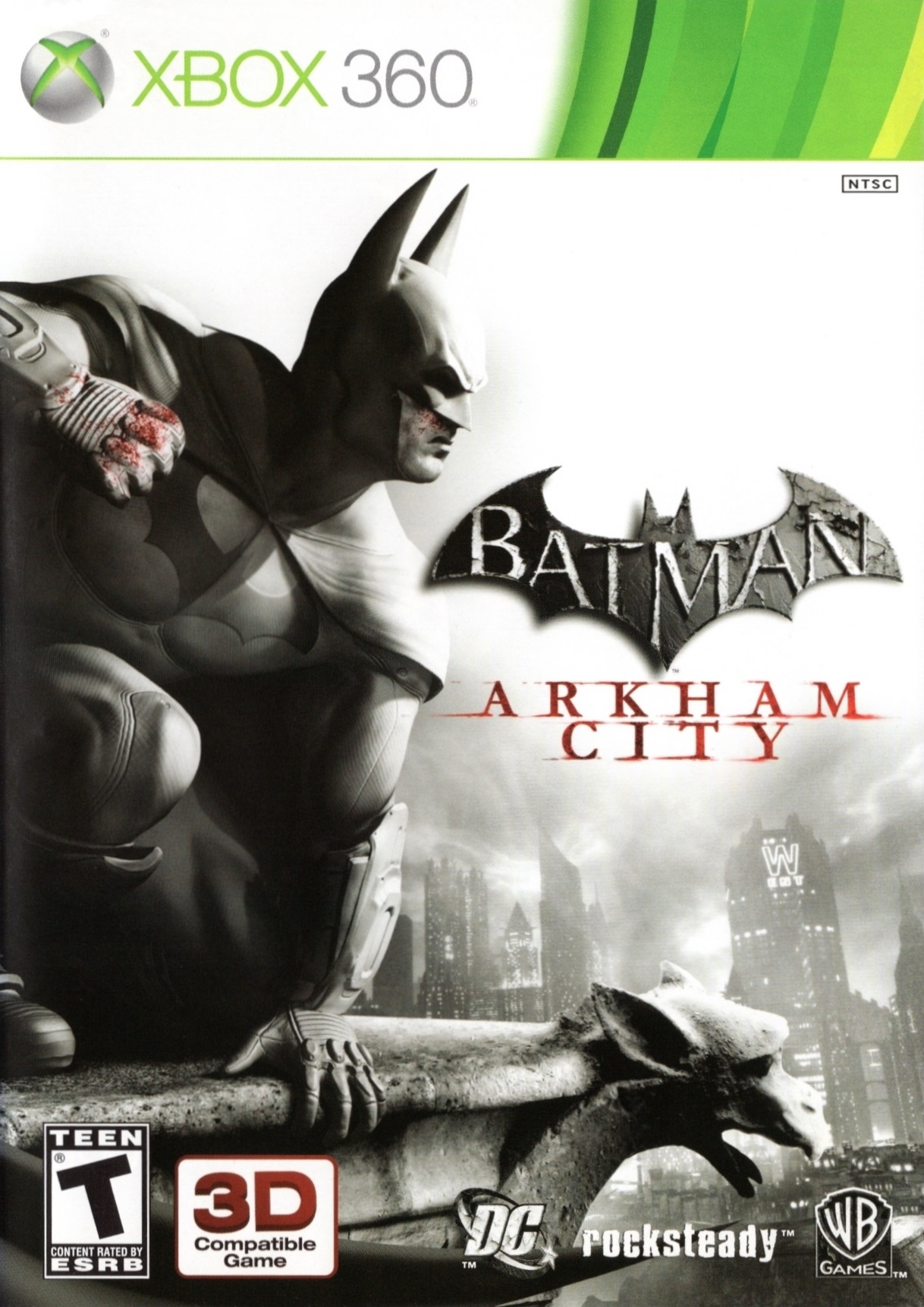
Batman: Arkham AsylumThe Night Superhero Games Grew Up
Rocksteady’s breakthrough action-adventure turned a licensed superhero game into a prestige event: Freeflow combat, predator stealth, detective work, gadget progression, gothic atmosphere, and one of the tightest single-location game worlds of its generation.
Why Arkham Asylum changed superhero games
- Combat blueprint: Freeflow made hand-to-hand superhero combat readable, stylish, rhythmic, and deeply satisfying.
- Predator fantasy: stealth arenas let Batman feel outnumbered physically but dominant psychologically.
- Focused world: Arkham Island is compact, gothic, interconnected, and memorable without open-world bloat.
- Licensed-game reset: it proved a comic-book game could be excellent as game design, not just fan service.
“The moment superhero games stopped feeling like excuses — and started feeling like events.”
Arkham Asylum did not only deliver Batman. It delivered a playable design language for being Batman.
A Licensed Game with Real Authorship
Batman: Arkham Asylum arrived at a time when licensed superhero games were still treated with caution. Rocksteady answered that doubt with something unusually disciplined: a dense, atmospheric action-thriller built around one haunted island, one escalating takeover, and one perfectly focused fantasy.
The genius of Arkham Asylum is that it understands Batman as method, not only iconography. He fights with rhythm, stalks from darkness, reads spaces through detective vision, uses gadgets as progression tools, and turns fear into a weapon. Every major system bends back toward the same idea: the player should feel prepared, dangerous, and in control.
At a glanceBest experienced as a tightly authored action-adventure where combat rhythm, stealth control, environmental tone, gadget utility, and villain staging all reinforce the Batman fantasy.
Game Data
| Title | Batman: Arkham Asylum |
| Original Release | 2009 |
| Developer | Rocksteady Studios |
| Publisher | Eidos Interactive / Warner Bros. Interactive Entertainment |
| Original Platforms | PlayStation 3, Xbox 360, Windows |
| Later Versions | Mac OS X, PlayStation 4, Xbox One, Nintendo Switch via later editions / collections |
| Genre | Action-adventure / stealth / third-person combat |
| Players | 1 player |
| Engine | Unreal Engine 3 |
| Writer | Paul Dini |
| Music | Nick Arundel and Ron Fish |
| Core Loop | Investigate, stalk, strike, upgrade, explore, solve, contain Joker’s takeover |
Gameplay pillars
Freeflow combat, predator stealth rooms, detective vision, gadget progression, Metroid-style backtracking, Riddler secrets, villain encounters, and challenge maps.
Story
After Joker is seemingly captured, Batman escorts him into Arkham Asylum. The transfer becomes a trap: the island is sealed, the inmates take over, and Batman has to restore control before Joker’s plan consumes Gotham.
Most famous design fact
The Freeflow combat system became one of the most influential crowd-melee templates of its era, while predator rooms helped define the series’ power-fantasy stealth identity.
Review / Why It Still Plays So Well
Arkham Asylum makes a tremendous opening impression because it understands ceremony. Escorting Joker through the asylum corridors feels like entering a powder keg while pretending everything is under control. The game does not drop the player into noise. It walks the player into a trap.
Why the Batman fantasy worksMany older superhero games let you use a recognizable character. Far fewer let you inhabit their methodology. Arkham Asylum gets the distinction right. Batman is not simply strong; he is prepared. He reads rooms, exploits fear, deploys tools, studies evidence, and punishes mistakes with frightening efficiency.
Freeflow as a languageThe combat system remains influential because it is built on rhythm, clarity, and movement between threats. Hits land hard, counters are legible, and crowd control feels expressive without becoming unreadable chaos. It transforms melee into a visual sentence structure.
The island setting is one of the game’s greatest strengths. Arkham is not open-world bloat. It is concentrated identity: medical wings, botanical spaces, industrial corridors, gothic towers, filthy tunnels, and a constant sense that the institution itself is sick.
Where it shows its ageA few boss designs are less graceful than the rest of the package, and later Arkham games would expand traversal, combat options, side content, and city scale. But Arkham Asylum still wins on focus. It is compact, moody, and intensely authored.
Final verdictBatman: Arkham Asylum remains one of the most important superhero games ever made because it earned that status mechanically. It understood combat rhythm, environmental tone, villain staging, and player fantasy at the same time. It did not merely prove Batman could work in games. It proved a licensed character could anchor top-tier action design.
Why It Matters
Batman: Arkham Asylum changed the conversation around licensed games. Before it, major comic-book adaptations often carried an asterisk: fun for fans, maybe, but rarely essential game design in their own right. Arkham Asylum broke that pattern with confidence.
Its influence is especially visible in combat design. Freeflow became a major reference point for readable, crowd-based melee, while predator stealth rooms offered a new way to frame asymmetrical power fantasy: the player is physically outnumbered, yet psychologically dominant.
The game also mattered because it fused strong authorship with mass appeal. Paul Dini’s writing, Rocksteady’s environmental direction, the return of iconic voice talent from Batman animation, and the asylum’s oppressive visual character all helped the project feel prestige-level rather than disposable.
Why it mattered then
It proved a superhero game could win on design, atmosphere, and critical respect — not only on brand recognition.
Why it matters now
It still stands as one of the cleanest examples of focused action-adventure pacing and character-authentic game design.
What it changed
It reset expectations for licensed games and established a combat-and-stealth formula echoed across a generation.
Timeline / Key Milestones
Batman: Arkham Asylum launches on PlayStation 3 and Xbox 360, with the Windows version following shortly after, and immediately becomes a critical standout.
Reviewers and players treat the game not as a good licensed product, but as a genuinely elite action-adventure.
A Game of the Year version extends the package and reinforces the game’s prestige status after its award-winning reception.
The sequel broadens the design into a larger prison-city structure, but the original remains the concentrated blueprint.
Remastered console releases keep the original visible for a new generation and preserve the early Arkham identity.
The game appears again as part of the broader Arkham Trilogy legacy, showing how long the original’s influence has lasted.
The Batman fantasy became the memory — but the PS3 and Xbox 360 originals, PC box, Collector’s Edition, GOTY release, artbook material, discs, and later collections are the artifacts.
Arkham Asylum belongs in the collector lane because it marks a genuine turning point: a licensed superhero game that became a design reference, a franchise foundation, and a shelf-worthy late-2000s action landmark.
Where to Play / Collect Today
Collecting Arkham Asylum means collecting the moment licensed superhero games became prestige action design.
The strongest collector routes include original PS3 and Xbox 360 copies, PC retail versions, Game of the Year Edition, Collector’s Edition objects, artbook / soundtrack material, later Return to Arkham collections, and Arkham Trilogy versions for modern shelf continuity.
A curated starting point for Batman: Arkham Asylum collectors: original seventh-generation copies first, special editions and later collections second, and display support where it preserves the game’s historical turning-point status.
eBay Collector Search
The strongest route for original copies, Game of the Year releases, Collector’s Edition items, manuals, discs, steelbook-style variants, artbooks, and later Arkham collection releases.
- Best chance for original 2009 PS3 / Xbox 360 / PC-era material.
- Search standard, GOTY, Collector’s Edition, Return to Arkham, and Trilogy terms separately.
- Check region, disc condition, manual presence, DLC voucher status, and completeness carefully.
4NERDS collector search for Batman: Arkham Asylum originals, GOTY releases, Collector’s Edition items, and later collections.
Amazon Search
Useful for modern Arkham collections, strategy guides, display storage, artbooks, comic context, controller accessories, and broader Batman game history.
- Better for guides, books, modern releases, and storage than rare originals.
- Good for artbook-adjacent material and shelf protection supplies.
- Use as a secondary route after eBay collector searches.
Replace YOURAMAZONTAG-20 once the final approved Amazon Associates tag is ready.
Etsy Collector Route
Potentially useful later for custom Arkham-style shelf labels, controller stands, display plaques, game-room signs, and gothic superhero shelf presentation.
- Better suited for display objects than preservation-grade collecting.
- Keep separate from original discs, boxes, and special-edition artifacts.
- Ready to activate once the Etsy strategy is finalized.
Placeholder route kept disabled until a final Etsy affiliate or curated shop strategy is available.