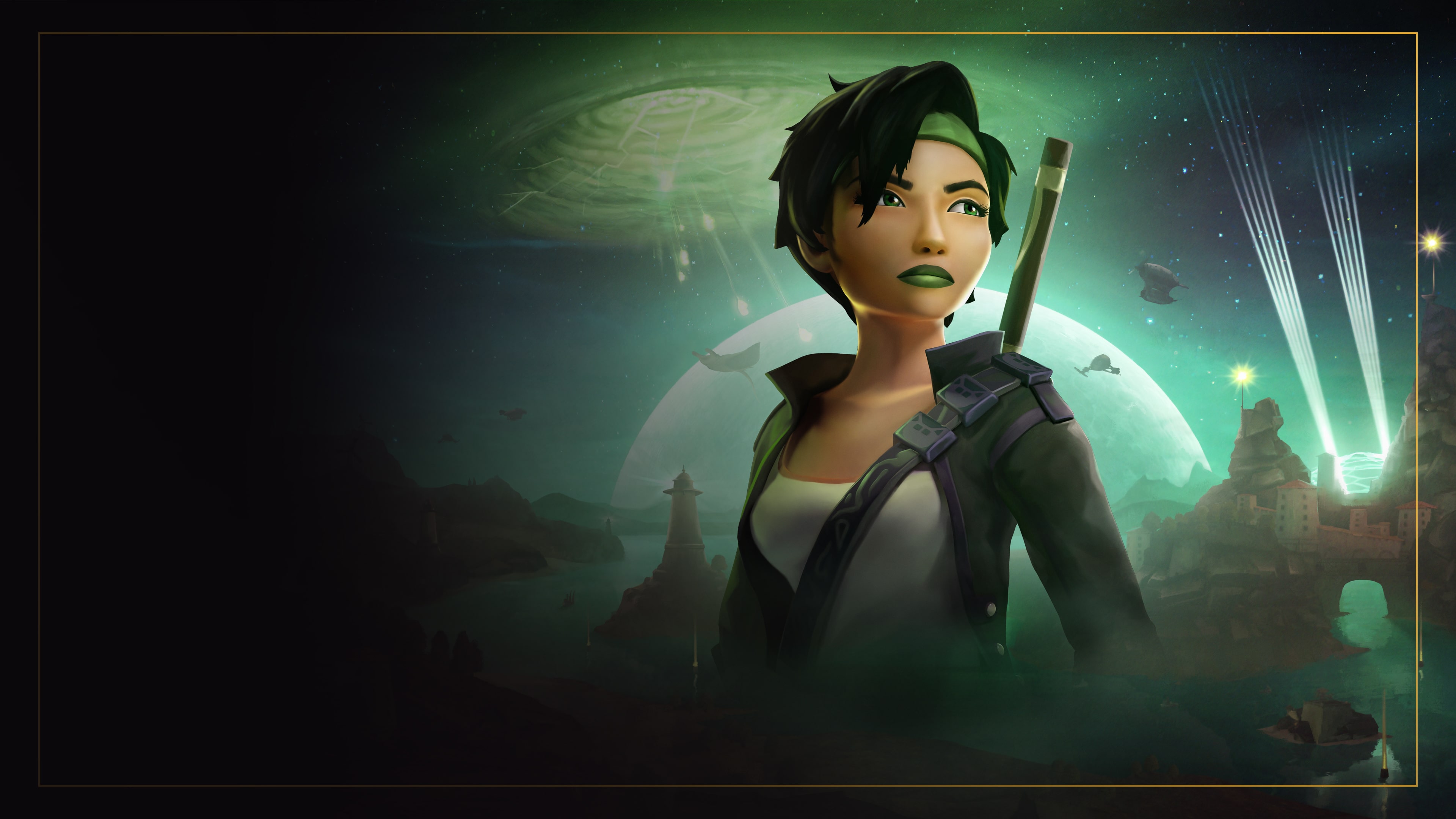
Beyond Good & EvilThe Cult Classic with a Human Heart
Ubisoft Montpellier’s sci-fi conspiracy adventure blends stealth, combat, hovercraft racing, wildlife photography, journalism, and emotional worldbuilding into one of the most beloved cult games of the early 2000s.
Why Beyond Good & Evil still matters
- Jade is the core: a capable, curious, warm protagonist whose camera makes truth-seeking part of play.
- Genre blend: stealth, combat, hovercraft travel, photography, puzzles, and story missions form one distinct rhythm.
- Worldbuilding with heart: Hillys feels endangered, lived-in, funny, strange, and emotionally real.
- Cult-classic weight: its reputation grew stronger with time because players remembered its voice, not its scale.
“A conspiracy thriller, a road trip, and a small act of resistance.”
Beyond Good & Evil is remembered not just for ideas, but for tone: tender, adventurous, political, and quietly unforgettable.
The Cult Classic That Never Felt Like Everyone Else
Beyond Good & Evil stands out because it feels authored in a very particular way. It is not a power fantasy, not a pure children’s adventure, and not a grim sci-fi thriller. It is some rare combination of all three: humane, strange, conspiratorial, playful, and emotionally grounded.
You photograph wildlife, sneak through hostile facilities, race hovercrafts, fight strange creatures, investigate propaganda, and slowly realize that the world around you is being manipulated. What should be an awkward mixture becomes the game’s identity.
At a glanceBest experienced as a compact, story-rich adventure with cult-classic soul: stylish, warm, politically charged, and full of memorable detours.
Game Data
| Title | Beyond Good & Evil |
| Original Release | 2003 |
| Developer | Ubisoft Montpellier |
| Publisher | Ubisoft |
| Original Platforms | PlayStation 2, Xbox, Nintendo GameCube, Windows |
| Later Versions | HD edition, 20th Anniversary Edition, modern console and PC releases |
| Genre | Action-adventure / stealth / exploration |
| Players | 1 player |
| Perspective | Third-person |
| Engine | Jade |
| Setting | Planet Hillys |
| Core Loop | Explore, photograph, infiltrate, expose, survive |
Gameplay pillars
Exploration, stealth, staff combat, wildlife photography, hovercraft travel, environmental puzzles, conspiracy evidence, and story-driven infiltration.
Story
Jade, a freelance reporter and caretaker on Hillys, investigates the DomZ attacks and the Alpha Sections’ suspicious military protection. Her camera becomes a tool for truth, resistance, and public exposure.
Most famous design fact
Photography is not a side gimmick. It teaches the player to observe, document, earn currency, identify life, and participate in the story’s truth-seeking identity.
Review / Why It Still Feels Special
The first thing that still feels refreshing is tone. Beyond Good & Evil opens with threat and vulnerability, but not with macho posturing. Jade is caring for children, improvising under pressure, and trying to keep a fragile life together before the adventure becomes grand.
The camera makes the world feel realObservation itself becomes play. Photographing creatures on Hillys turns exploration into something gentler and more curious than simple item hunting. It gives Jade a believable profession, gives the player a reason to look closely, and makes the world feel studied instead of merely consumed.
A genre blend that should not work — but doesThe game moves between stealth missions, boss fights, puzzle rooms, hovercraft races, platforming, photography, and quieter travel beats with remarkable confidence. Because the whole journey is concise, it rarely overstays its welcome in any one mode.
Jade remains one of the most naturally endearing protagonists of her era. She is competent without becoming cold, brave without becoming invincible, and expressive without turning into caricature. Her relationship with Pey’j gives the whole story warmth and humor.
Where age showsNot every piece has aged perfectly. Combat is simple by modern standards, some stealth beats are more timing-based than systemic, and a few transitions between mechanics can feel abrupt. But those rougher edges rarely break the spell because the identity is so strong.
Final verdictBeyond Good & Evil remains one of the clearest examples of a game earning cult status honestly. It has style, emotional warmth, political intrigue, memorable characters, and a structure that still feels pleasantly unlike the mainstream formulas around it.
Why It Matters
Beyond Good & Evil matters historically because it proved that an action-adventure game could feel cinematic, playful, political, and emotionally sincere at the same time without losing its identity. It did not simply imitate Zelda, stealth games, or character-action games. It borrowed ingredients from several traditions and turned them into something distinct.
It also gave players one of the most memorable protagonists of the early 2000s. Jade stood apart in an era full of louder archetypes because she was a reporter, caretaker, fighter, and witness. The emphasis on truth, documentation, and resistance made her role feel different from standard adventure heroes.
Finally, Beyond Good & Evil became one of gaming’s defining cult classics. Its reputation kept growing because players recommended it not merely as an old Ubisoft game, but as a rare work with heart, personality, and atmosphere.
Why it mattered then
It offered a fresh blend of action, stealth, exploration, journalism, and narrative warmth in a compact adventure.
Why it matters now
It remains a benchmark cult classic for character-driven adventure design, tonal confidence, and authored worlds.
What it changed
It helped define what players mean when they call a game ahead of its time: voice, empathy, structure, and identity over raw scale.
Timeline / Key Milestones
Beyond Good & Evil launches across PlayStation 2, Xbox, GameCube, and Windows-era platforms, introducing Jade, Pey’j, Hillys, and one of Ubisoft’s most distinctive worlds.
Word of mouth steadily strengthens the game’s reputation, especially among players who see it as one of Ubisoft’s most personal and underrated works.
Beyond Good & Evil HD helps keep the game visible for a new generation and reframes it as a modern classic worthy of rediscovery.
Franchise attention rises again as Ubisoft publicly pushes a new Beyond Good & Evil project into broader conversation.
The anniversary release refreshes the adventure with improved visuals, audio, quality-of-life features, speedrun support, and gallery material.
Beyond Good & Evil remains one of the defining cult adventures of the 2000s: beloved not for size, but for heart, mood, and identity.
The camera became the memory — but the PS2, Xbox, GameCube and PC originals, HD release, Anniversary Edition, manuals, discs, soundtrack material, and Jade key art are the artifacts.
Beyond Good & Evil belongs in the collector lane because it is not only a cult game: it is a compact example of character-led action-adventure design whose reputation kept growing long after launch.
Where to Play / Collect Today
Collecting Beyond Good & Evil means collecting one of Ubisoft’s most beloved cult adventures.
Strong collector routes include original console copies, PC big-box or jewel-case variants, manuals, regional cover art, HD-era material, the 20th Anniversary Edition, soundtrack releases, promotional art, and shelf pieces centered on Jade and Hillys.
A curated starting point for Beyond Good & Evil collectors: original 2003 platform copies first, modern Anniversary access second, and display support where it preserves the game’s cult-classic identity.
eBay Collector Search
The strongest route for original PS2, Xbox, GameCube, and PC copies, complete-in-box listings, manuals, regional variants, HD-era releases, and collector display material.
- Best chance for original 2003 physical releases and regional variants.
- Search PS2, Xbox, GameCube, PC, CIB, manual, and Anniversary terms separately.
- Check disc condition, manual presence, region, inserts, and reproduction listings carefully.
4NERDS collector search for original Beyond Good & Evil copies, CIB listings, manuals, and Anniversary Edition material.
Amazon Search
Useful for Anniversary Edition copies, platform gift cards, storage, retro-gaming books, disc protection, controller accessories, and broader Ubisoft history context.
- Better for modern access and storage than rare original copies.
- Good for shelf protection and broader retro-collecting supplies.
- Use as a secondary route after eBay collector searches.
Replace YOURAMAZONTAG-20 once the final approved Amazon Associates tag is ready.
Etsy Collector Route
Potentially useful later for custom Jade/Hillys-inspired shelf labels, display plaques, game-room signs, soundtrack-style display pieces, and sci-fi adventure presentation.
- Better suited for display objects than preservation-grade collecting.
- Keep separate from original discs, boxes, and manuals.
- Ready to activate once the Etsy strategy is finalized.
Placeholder route kept disabled until a final Etsy affiliate or curated shop strategy is available.