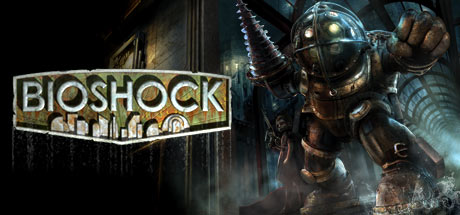
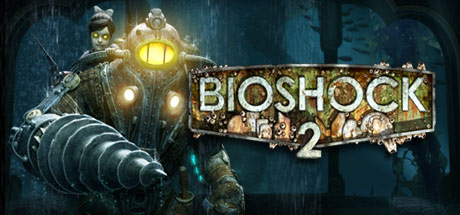
BioShock Infinite:Burial at Sea
Irrational Games’ two-part return to Rapture blends BioShock Infinite’s reality-bending legacy with the haunted glamour of Andrew Ryan’s city before collapse — part noir reunion, part stealth tragedy, and part farewell to an entire BioShock era.
Why Burial at Sea still works
- Rapture return: seeing the city before its full collapse is the expansion’s great hook — and it still lands.
- Two-part contrast: Episode One plays like noir BioShock Infinite; Episode Two becomes more intimate, vulnerable, and stealth-driven.
- Fan-service with purpose: it reconnects Infinite to the original BioShock mythos more directly than many expected.
- Historical weight: for many players, it feels like the final curtain call on Irrational’s BioShock legacy.
“A beautiful return to Rapture — and a mournful goodbye.”
Less revolutionary than BioShock itself, but far more emotionally loaded than ordinary DLC.
One Last Walk Through Rapture
Burial at Sea is compelling because it is built on tension. It wants to be a reunion with Rapture, a continuation of BioShock Infinite, and a bridge back to the original BioShock all at once. That can make it messy, but it also makes it unusually magnetic.
Episode One leans into style, atmosphere, noir performance, and fan recognition. Episode Two goes inward, lets Elizabeth carry the emotional center, and changes the feel of the experience by turning survival into something quieter and more fragile.
At a glanceBest experienced as a premium epilogue to Infinite and a reflective return to BioShock’s most iconic setting.
Game Data
| Title | BioShock Infinite: Burial at Sea |
| Release Window | Episode One: 2013 / Episode Two: 2014 |
| Developer | Irrational Games |
| Publisher | 2K |
| Parent Game | BioShock Infinite |
| Original Platforms | Windows, PlayStation 3, Xbox 360, OS X, Linux |
| Later Versions | BioShock Infinite: The Complete Edition, BioShock: The Collection |
| Genre | First-person shooter / stealth narrative expansion |
| Players | Single-player |
| Structure | Two-part downloadable story campaign |
| Setting | Rapture before the events of BioShock |
| Core Loop | Investigate, improvise, survive, connect the lore |
Gameplay pillars
Plasmid-and-gun combat, tighter resource pressure, environmental mood, noir-flavored exploration, and an Episode Two shift toward stealth, scouting, and avoidance.
Story
Booker and Elizabeth reunite in Rapture on the eve of disaster, searching for Sally and uncovering connective tissue between Columbia, Suchong, Atlas, Little Sisters, and the original BioShock timeline.
Most famous design fact
Episode Two changes the feel of the whole project by making Elizabeth the playable lead and steering the experience toward stealth instead of pure firefights.
Review / Why It Fascinates More Than It Perfects
Episode One is powered almost entirely by the thrill of recognition. Booker as a private detective, Elizabeth as a femme-fatale client, neon-lit Rapture before its final collapse — all of it is engineered to make BioShock fans lean forward.
Where the first episode stumblesThe first half of Burial at Sea feels more alive than the back half. Once the DLC narrows into more conventional fighting and plot delivery, some of that early mystique fades. Episode One never fully resolves whether it wants to be a full chapter, a nostalgia return, or a lore-sealing bridge.
Why Episode Two is strongerEpisode Two sharpens the concept by changing the player perspective and the rhythm. Elizabeth is not Booker, and the DLC wisely does not pretend otherwise. The stealth emphasis, vulnerability, and more deliberate pacing immediately make the experience feel more distinct.
Returning to Rapture gives Burial at Sea an emotional charge that few DLC expansions can match, but it also sets the bar brutally high. The project benefits from the city’s beauty, melancholy, and symbolism, yet it is constantly compared against one of gaming’s greatest settings.
A bridge, not just an encoreThe expansion is strongest when it treats continuity as consequence rather than trivia. Its best moments feel less like fan-service and more like a series turning around to examine what its own mythology cost.
Final verdictBurial at Sea is not the most mechanically complete BioShock experience, nor the most radically original one. But it is one of the most emotionally loaded. By the time it ends, it feels less like extra content and more like a deliberate closing statement.
Why It Matters
Burial at Sea is historically important less because it changed the medium and more because it reframed a major series. It takes BioShock Infinite, a game defined by Columbia, and bends it back toward Rapture, using DLC not merely as extra combat but as retrospective interpretation.
It also matters as one of the clearest examples of a story expansion being treated as a genuine authorial coda. Episode Two in particular feels like a closing statement on Elizabeth, on the BioShock multiverse, and on Irrational’s version of the franchise.
Beyond fandom, Burial at Sea helped reinforce the idea that blockbuster DLC could be tonally ambitious, structurally different, and mechanically willing to pivot. It was not just more of the same.
Why it mattered then
It showed that a premium story DLC could serve as a serious narrative epilogue rather than a side snack.
Why it matters now
It remains the key closing chapter for players trying to understand how Infinite and classic BioShock were stitched together.
What it changed
It pushed late-era BioShock from pure sequel territory into reflective franchise self-interpretation.
Timeline / Key Milestones
Burial at Sea debuts with a Booker-and-Elizabeth noir setup in pre-fall Rapture, instantly attracting fans through setting alone.
The second half arrives with Elizabeth as the playable lead, a stronger stealth emphasis, and a more conclusive emotional arc.
Burial at Sea is folded into BioShock Infinite: The Complete Edition, confirming it as core companion material rather than optional filler.
BioShock: The Collection preserves Burial at Sea for newer hardware and helps lock it into the standard modern BioShock package.
For many players, Burial at Sea now reads as the last major narrative statement of the Ken Levine / Irrational BioShock era.
The final return to Rapture became the memory — but the Complete Edition, BioShock: The Collection, DLC codes, digital storefront versions, art books, Rapture key art, and Elizabeth-focused material are the artifacts.
Burial at Sea belongs in the collector lane because it is more than DLC: it is the bridge between Columbia and Rapture, and the closing museum label for Irrational’s BioShock era.
Where to Play / Collect Today
Collecting Burial at Sea means collecting the connective tissue of the BioShock mythos.
Strong collector routes include BioShock Infinite: The Complete Edition, BioShock: The Collection, original seventh-generation copies paired with DLC access, art books, steelbooks, Rapture posters, Elizabeth key art, and franchise display pieces that place Columbia and Rapture side by side.
A curated starting point for Burial at Sea collectors: Complete Edition and Collection routes first, then original platform context, art books, Rapture display material, and Elizabeth-focused shelf pieces.
eBay Collector Search
The strongest route for physical BioShock Infinite editions, Complete Edition variants, BioShock: The Collection, steelbooks, art books, guides, posters, and Rapture / Elizabeth display material.
- Best chance for Complete Edition, Collection releases, steelbooks, art books, and older physical copies.
- Search Burial at Sea, Complete Edition, BioShock Collection, Elizabeth, Rapture, and steelbook terms separately.
- Check DLC inclusion, region, platform, code status, disc condition, manual presence, and loose-disc listings carefully.
4NERDS collector search for Burial at Sea, Complete Edition, BioShock Collection, art books, steelbooks, and Rapture display material.
Amazon Search
Useful for BioShock Infinite Complete Edition, BioShock: The Collection, art books, franchise guides, shelf protection, controller accessories, storage, and display-friendly collector support.
- Better for modern access and storage than rare DLC-specific artifacts.
- Good for Collection releases, art books, and franchise context material.
- Use as a secondary route after eBay collector searches.
Replace YOURAMAZONTAG-20 once the final approved Amazon Associates tag is ready.
Etsy Collector Route
Potentially useful later for Rapture-inspired shelf labels, noir-style display plaques, Elizabeth / Booker display stands, game-room signs, and art-deco underwater presentation pieces.
- Better suited for display objects than preservation-grade collecting.
- Keep separate from original DLC access, discs, boxes, manuals, and complete editions.
- Ready to activate once the Etsy strategy is finalized.
Placeholder route kept disabled until a final Etsy affiliate or curated shop strategy is available.