Sid Meier’s CivilizationOne More Turn Begins Here
MicroProse’s empire-building landmark made history feel playable: found a city in 4000 BC, explore the map, race up the tech tree, build world wonders, negotiate, conquer, and guide a civilization from a tribal beginning toward global dominance or the stars.
Why Civilization still matters
- 4X grammar: explore, expand, exploit, and exterminate become legible inside one elegant loop.
- One-more-turn power: science, cities, wonders, diplomacy, and war constantly feed each other.
- Historical imagination: it turns the sweep of human development into a playable systems toybox.
- Genre foundation: it remains one of the clearest origin points for modern long-form turn-based strategy.
“A map, a tech tree, and the birth of endless empire.”
Civilization is not merely influential because it is early — it is influential because its structure still feels alive.
The Game That Made World History Addictive
Sid Meier’s Civilization still feels special because it does something few games manage cleanly: it takes vast historical scope and reduces it to understandable, tempting decisions. Where do you settle? What do you research first? Do you build a wonder, fortify your borders, or expand recklessly while the map is still open?
Every answer creates new possibilities, and that constant chain of possibility is why Civilization became so enduring. It is not just a strategy game — it is a machine for turning curiosity into commitment.
At a glanceBest experienced as both a foundational strategy monument and a still-playable lesson in how systems can create narrative without scripted drama.
Game Data
| Title | Sid Meier’s Civilization |
| Original Release | September 1991 |
| Developer | MicroProse |
| Publisher | MicroProse |
| Designers | Sid Meier, Bruce Shelley |
| Original Platform | MS-DOS |
| Major Later Platforms | Amiga, Macintosh, Atari ST, Windows, SNES, PlayStation, Sega Saturn and more |
| Genre | Turn-based strategy / 4X |
| Players | Single-player |
| Original Format | Floppy-disk PC release |
| Core Loop | Settle, expand, research, build, negotiate, wage war, outlast rivals |
Gameplay pillars
City placement, terrain optimization, scientific research, wonder races, diplomacy, government choice, military timing, exploration, and long-form strategic planning over millennia.
Story
There is no single scripted story. You choose a civilization, begin in 4000 BC, and write alternate history through expansion, invention, rivalry, trade, war, and survival.
Most famous design fact
Civilization helped solidify the technology tree, world-wonder race, and long-form civilization-building loop into one of gaming’s most durable strategic frameworks.
Review / Why Civilization Still Feels So Foundational
Civilization still makes a remarkable first impression because it wastes almost no time on confusion. You begin with a settler, a small patch of world, and a set of possibilities that immediately feel enormous. Found a city. Scout. Choose a research path. Decide whether your future lies in expansion, defense, infrastructure, or conquest.
Why the loop worksAlmost every system feeds every other system. Better terrain management means stronger cities. Stronger cities mean faster production and research. Faster research means better units, governments, buildings, and wonders. Nothing is decorative.
The technology treeCivilization’s technology tree turns abstract progress into strategic identity. Your empire is not just strong or weak — it is shaped by what it knows, when it knows it, and what it chooses to build first.
Wonders of the World deepen the entire loop. They are not mere trophies. They are tempo plays, strategic declarations, and sometimes the clearest sign that the match’s balance has shifted.
Where it shows its ageModern players will notice older interface conventions, slower information flow, and a presentation style that feels closer to a systems skeleton than a dramatized world. But that skeleton is exactly why the game still matters.
Final verdictCivilization remains one of the most important strategy games ever made because it does not merely simulate empire-building. It makes empire-building legible, tempting, replayable, and dangerously hard to put down.
Why It Matters
Civilization is historically important because it gathered exploration, settlement, research, diplomacy, infrastructure, military development, and long-horizon planning into one structure that felt intuitive enough to attract huge audiences and deep enough to sustain decades of imitation and refinement.
It also helped define the modern 4X conversation. While the genre’s roots are older, Civilization made the model unusually readable and persuasive: start small, reveal the world, build upward, outmaneuver rivals, and translate historical development into concrete decisions.
Beyond pure design, Civilization changed how games could frame historical scale. Instead of presenting history as a fixed sequence, it turned history into a flexible systems playground: nations rose differently, technology arrived in unexpected order, diplomacy broke, wars rewrote borders, and the future could belong to science, conquest, or sheer endurance.
Why it mattered then
It made large-scale civilization building readable, replayable, and commercially undeniable on home computers.
Why it matters now
It remains one of the clearest playable origin points for modern 4X and long-form turn-based strategy design.
What it changed
It turned the tech tree, wonder race, world exploration, empire pacing, and “one more turn” effect into permanent strategy language.
Timeline / Key Milestones
Sid Meier’s Civilization launches for MS-DOS and quickly becomes one of the major landmarks in turn-based strategy.
The game spreads across Amiga, Macintosh, Atari ST and other platforms, expanding its audience beyond the original DOS market.
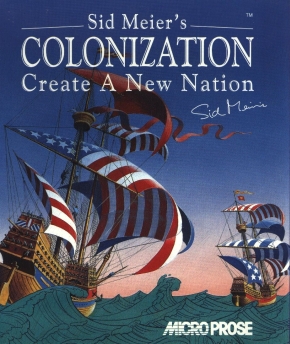
Sid Meier’s Colonization redirects Civilization-style design toward a more focused historical and economic strategy frame.
Sid Meier’s CivNet reworks the original for multiplayer-era PC use, showing how durable the underlying design had become.
A major sequel refines the interface, expands the feature set, and proves the series is a durable strategy institution rather than a one-off hit.
Sid Meier’s Alpha Centauri carries the Civilization design imagination into science fiction, reinforcing the first game’s enormous conceptual legacy.
The original remains a standard reference whenever players and designers discuss 4X design, tech trees, replay value, historical scale, and the “one more turn” effect.
The settler, world map, tech tree, advisors, wonders, diplomacy screens, floppy disks, thick manual, MicroProse box, CivNet, Civilization II, Colonization, and Alpha Centauri became the memory — but the big boxes, disks, manuals, reference cards, ports, and sequel lineage are the artifacts.
Civilization belongs in the collector lane because it is more than a PC strategy classic: it is the moment the empire-builder became a mass-market design language.
Where to Play / Collect Today
Collecting Civilization means collecting the birth of modern 4X strategy.
Strong collector routes include original DOS big boxes, complete floppy sets, manuals, reference cards, Amiga and Macintosh versions, CivNet, Civilization II, Colonization, Alpha Centauri, MicroProse catalog material, and strategy-guide shelf context.
A curated starting point for Civilization collectors: DOS big-box originals first, manuals and disk sets second, then CivNet, Civilization II, Colonization, Alpha Centauri, and broader MicroProse PC strategy context.
eBay Collector Search
The strongest route for physical Civilization material: original DOS big-box releases, manuals, reference cards, floppy disks, Amiga and Macintosh ports, CivNet, Civilization II, and MicroProse strategy lots.
- Best chance for big boxes, disk sets, manuals, tech charts, reference cards, and early MicroProse strategy bundles.
- Search Civilization DOS big box, Sid Meier Civilization manual, CivNet, Civilization II big box, and MicroProse strategy separately.
- Check disk condition, box wear, manual completeness, included charts, platform version, language, and reproduction listings carefully.
4NERDS collector search for Civilization DOS big-box copies, manuals, floppy sets, CivNet, MicroProse lots, and early sequel context.
Amazon Search
Useful for Civilization strategy books, retro PC storage, display protection, external drives, shelf supplies, PC-gaming history reading, and modern accessories for a strategy collection.
- Better for books, storage, display protection, and modern PC accessories than rare original big-box copies.
- Good for strategy reading, shelf organization, floppy-style display setups, and broader MicroProse context.
- Use as a secondary route after eBay collector searches.
Replace YOURAMAZONTAG-20 once the final approved Amazon Associates tag is ready.
Etsy Collector Route
Potentially useful later for Civilization-style shelf labels, tech-tree display cards, MicroProse desk plaques, strategy-room wall pieces, and big-box display stands.
- Better suited for display objects than preservation-grade collecting.
- Keep separate from original boxes, disks, manuals, reference cards, and official releases.
- Ready to activate once the Etsy strategy is finalized.
Placeholder route kept disabled until a final Etsy affiliate or curated shop strategy is available.