Columns (1989)
Columns is a classic match-three puzzle game that helped Sega build a recognizable answer to the late-80s / early-90s falling-piece craze. You rotate and drop stacks of three jewels, aiming to align matching colors horizontally, vertically, or diagonally—simple to learn, surprisingly tactical, and perfect for quick “one more round” sessions.
Game Data
| Release Year | 1989 (computer origins) / 1990 (arcade + Sega consoles) |
| Designer / Developer | Jay Geertsen |
| Publisher | Sega |
| Platform | Arcade / Genesis-Mega Drive / Game Gear (and more) |
| Genre | Puzzle / Match-Three |
| Players | 1–2 (varies by version) |
| Original Media | Arcade PCB / Cartridge |
Gameplay:
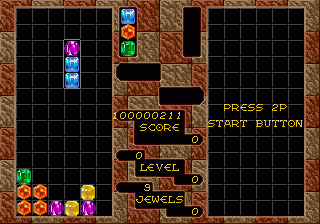
A “column” of three jewels falls into a tall well. Move it left/right and rotate the jewel order as it drops.
Match 3+ identical jewels in a line (including diagonals) to clear them, chain reactions for big scores,
and survive as the speed ramps up.
Story:
No narrative—Columns is all about pattern recognition, tempo control, and keeping the stack clean under pressure.
Trivia:
Columns became a signature Sega puzzle series and was a major early “pick-up-and-play” staple on Sega hardware—
especially as a pack-in era title on handheld/console lineups.
While often compared to Tetris, Columns plays differently: rotating the internal jewel order matters as much as placement, and diagonal matches create clever setups that feel closer to modern match-three logic.
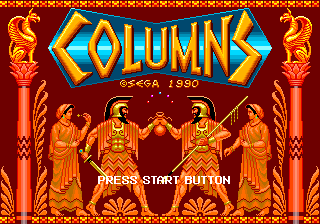
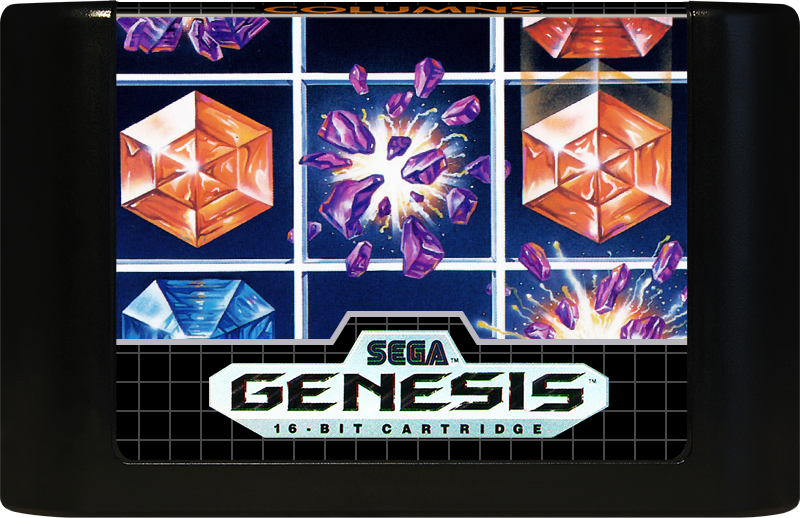
Screenshots / Media
Timeline / Versions
Why Columns Was Historically Important
Columns helped cement the “match-three” idea in the mainstream puzzle space years before the genre’s mobile boom. It also showed how a console publisher could build a recognizable in-house puzzle brand: approachable rules, fast sessions, and a scoring/chaining system that rewards planning—not just reflexes.