Deathbringer (1991)
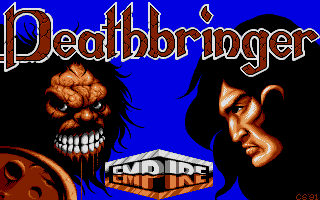
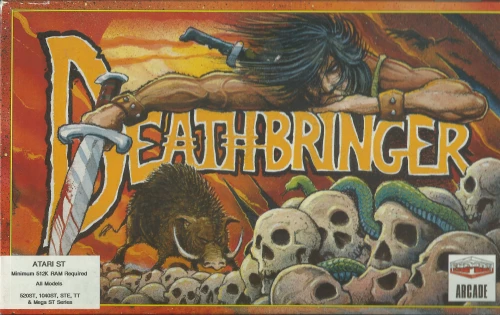
Deathbringer is a 1991 side-scrolling fantasy action game (Amiga / DOS / Atari ST) developed by Oxford Digital Enterprises and published by Empire. You play Karn the Barbarian, bound to a demon sword that demands souls—forcing constant combat to keep a draining meter alive while you push through richly layered parallax worlds.
Game Data
| Release Year | 1991 |
| Developer | Oxford Digital Enterprises |
| Publisher | Empire |
| Platform | Amiga / DOS / Atari ST |
| Genre | Action / Side-Scrolling Fantasy |
| Players | 1 |
| Original Media | Floppy Disk |
Gameplay:
Non-linear levels (start in the middle, push left or right to reach exits and bosses), heavy melee combat,
and a signature “soul meter” mechanic: your sword drains over time and must be refilled by killing enemies.
When the meter runs low, control can become erratic—because the blade “takes over”.
Story:
Evil wizards forged the demon sword Deathbringer to kill Karn—but he claims it and turns it back on them.
To survive, Karn must feed the blade with souls while hunting the wizards across hostile realms.
Trivia:
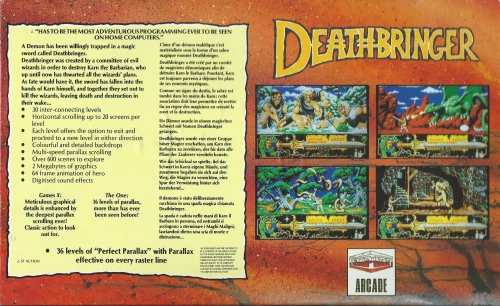
The game was marketed around its extreme multi-layer parallax scrolling—one of its most cited technical showpieces
on 16-bit home computers.
Deathbringer’s hook is pure pressure: even if you can “run past” danger, the sword’s hunger forces you to engage. That simple meter turns a standard side-scroller into a constant risk/reward loop—fight to live, but fight smart.


Screenshots / Media

Timeline / Versions
Why Deathbringer Was Historically Important
Deathbringer is remembered less for reinventing the genre and more as a “tech + hook” time capsule: it pushed home-computer presentation with aggressive parallax layering, while the soul-meter mechanic added a constant tension layer that discouraged passive play. It’s a neat example of how one systemic constraint can reshape the rhythm of a straightforward action side-scroller.


