Dig Dug (1982)
Dig Dug is Namco’s 1982 arcade classic that turned the maze genre vertical: dig tunnels, control space, and defeat Pookas and Fygars using an air pump (inflate to pop) or by crushing them with falling rocks. It’s simple to learn, but deeply strategic because every tunnel you carve changes the battlefield.
Game Data
| Release Year | 1982 |
| Developer | Namco |
| Publisher | Namco (JP/EU) / Atari (NA) |
| Platform | Arcade |
| Genre | Action / Maze |
| Players | 1–2 (alternating) |
| Original Media | Arcade Cabinet |
Gameplay:
Dig for positioning, bait enemies into rocks, and choose between quick pump pops or safer crush setups.
Enemies can “ghost” through dirt, so the best routes are the ones that still give you exits.
Story:
Minimal arcade premise: you’re Taizo Hori, clearing underground stages of monsters to survive and score big.
Trivia:
The game famously ends with a “kill screen” behavior in the original arcade due to an overflow at Round 256,
making high-level play a legendary challenge.
Dig Dug’s genius is how it makes the player responsible for the maze. Every tunnel is a tactical choice: convenience now vs. danger later. That “digging = level design” idea echoes through decades of action and puzzle games.


Screenshots / Media
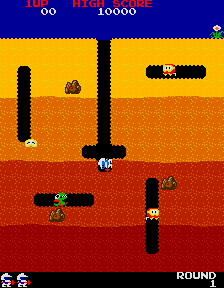


%20and%20Pooka%20characters.png?width=1200)

Timeline / Versions
Why Dig Dug Was Historically Important
Dig Dug helped evolve maze games from fixed corridors into dynamic spaces the player actively creates. By turning digging into both offense and defense (and letting enemies “ghost” through the earth), it introduced a layered, emergent strategy loop that influenced countless arcade action designs and later “terrain-as-gameplay” concepts.


