Donkey Kong 64 (1999)
Donkey Kong 64 is Rare’s 1999 3D platform adventure for Nintendo 64. It expands the Donkey Kong universe into large hub-based worlds packed with exploration, puzzle-solving, and a massive “collect-a-thon” loop—featuring multiple playable Kongs, each with unique moves, weapons, and gadgets.
Game Data
| Release Year | 1999 |
| Developer | Rare |
| Publisher | Nintendo |
| Platform | Nintendo 64 |
| Genre | 3D Platformer / Action-Adventure |
| Players | 1 (Main) / 2–4 (Multiplayer mini-games) |
| Original Media | N64 Cartridge (Expansion Pak included) |
Gameplay:
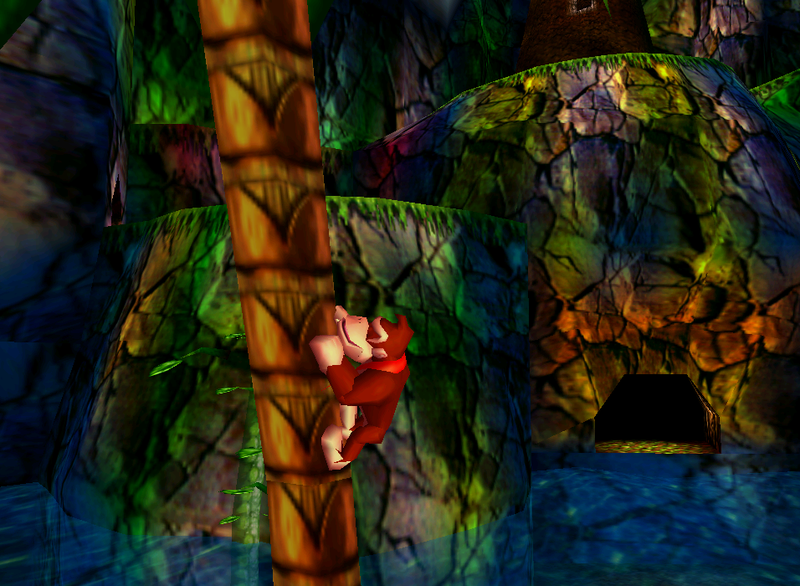
Explore worlds like Jungle Japes and Frantic Factory, collect Golden Bananas, Banana Medals, blueprints, and keys,
and swap between five Kongs (DK, Diddy, Tiny, Lanky, Chunky). Progress often depends on character-specific moves
(barrels, instrument powers, weapons, and traversal upgrades), creating a layered “route planning” feel inside
each level.
Story:
King K. Rool launches an assault on DK Island with the “Blast-o-Matic,” stealing the Kongs’ banana stash and
imprisoning allies. The team infiltrates Kremling operations across multiple themed zones, ultimately confronting
K. Rool in a multi-phase showdown.
Trivia:
DK64 shipped with the Nintendo 64 Expansion Pak in many regions—making it one of the most high-profile titles
tied to the system’s memory upgrade, and a technical showcase for bigger levels and richer visuals.
Donkey Kong 64 is famous for its scale: huge stages, tons of collectibles, and constant character-switching. It’s also a time capsule of the late-90s 3D platform boom—when “more secrets, more items, more everything” was the design philosophy.


Screenshots / Media



Timeline / Versions
Why Donkey Kong 64 Was Historically Important
Donkey Kong 64 captured the late-90s 3D platformer mindset at maximum scale: big worlds, dense secret-hunting, and an almost encyclopedic checklist of goals. It also helped cement Rare’s reputation for ambitious N64-era adventures—bridging the gap between character platforming (Banjo-style design) and the Donkey Kong universe, while popularizing multi-character “ability gating” inside a single game world.


