Donkey Kong CountryThe Jungle Shockwave That Rebuilt Donkey Kong
Rare’s pre-rendered 16-bit spectacle made the SNES look impossibly modern, revived Donkey Kong as a headlining franchise, and wrapped sharp platforming, animal buddies, barrel-cannon rhythm, jungle atmosphere, and thunderous music into one of the defining games of the 1990s.
Why Donkey Kong Country still hits
- Visual shock: its pre-rendered look was one of the biggest technical flexes of the 16-bit era.
- Pure momentum: rolling, bouncing, barrel-cannon routing, mine carts, and animal buddy flow give it a real physical pulse.
- Audio identity: the soundtrack remains one of platform gaming’s most atmospheric and beloved achievements.
- Historical weight: it revived Donkey Kong, strengthened the late SNES era, and helped define Rare’s golden age.
“The jungle got louder, weirder, faster — and suddenly 16-bit felt new again.”
Donkey Kong Country is not just a graphics milestone. It is a beautifully paced platformer with one of the strongest moods in the genre.
The Rare Shockwave That Rebuilt Donkey Kong
Donkey Kong Country landed with the force of an event. In 1994, it did not merely look good — it looked almost confrontationally advanced for the Super Nintendo. The glossy pre-rendered characters, dense jungle atmosphere, and dramatic lighting made the game feel like it had arrived from a newer generation.
But what keeps it alive is that the spectacle actually supports the game rather than replacing it. Donkey Kong’s heavy roll, Diddy’s nervous speed, the animal buddy transformations, mine-cart panic, rope-vine rhythm, hidden bonus rooms, and barrel-cannon routes all combine into a platformer that is more tactile and musical than its reputation for graphics alone suggests.
At a glanceBest experienced as both a late-SNES technical landmark and a still-excellent platformer with genuine rhythm, mood, replay pull, and one of the most confident franchise revivals of the 1990s.
Game Data
| Title | Donkey Kong Country |
| Original Release | 1994 |
| Developer | Rare |
| Publisher | Nintendo |
| Directors | Tim Stamper, Chris Stamper |
| Designer / Writer | Gregg Mayles |
| Original Platform | Super Nintendo Entertainment System |
| Later Versions | Game Boy Color, Game Boy Advance, Virtual Console, Nintendo Switch Online |
| Genre | Side-scrolling platform game |
| Players | 1 player; 2-player team / contest modes |
| Original Format | SNES cartridge |
| Composers | David Wise, Eveline Novakovic / Fischer, Robin Beanland |
| Core Loop | Run, roll, barrel, explore, collect, improvise |
Gameplay pillars
Kong-switching, barrel cannons, mine carts, rope traversal, animal buddies, hidden bonus rooms, world-map progression, banana collection, and momentum-heavy platforming.
Story
Donkey Kong and Diddy Kong set out across Donkey Kong Island to recover the stolen banana hoard taken by King K. Rool and the Kremlings.
Most famous design fact
Donkey Kong Country used pre-rendered 3D models converted into sprites, giving the SNES a then-shocking pseudo-3D look that became central to its identity and marketing.
Review / Why Donkey Kong Country Still Has Real Force
Donkey Kong Country made its reputation on first sight, and that reputation was deserved. Huge characters, glossy textures, dramatic lighting, and rich environments made it feel like something from a different hardware future. Rare did not simply build a tech demo, though. It built a platformer with internal rhythm.
Why the movement worksDonkey Kong Country does not feel like Mario, and that is one of its strengths. Donkey is heavier, Diddy is quicker, rolling has commitment, and barrel movement gives the game its own kinetic language. Once the player reads the game on Rare’s terms, the movement clicks.
Level design, music, and atmosphereThe game’s best trick is how completely its aesthetic and mechanical identities line up. Jungle rhythms, caves, underwater calm, factory tension, mine-cart panic, and barrel-cannon choreography all feel part of one island personality.
Some rough edges remain. Collision can feel harsher than expected, some enemy placements are more punitive than elegant, and hidden bonus hunting can blur into repetition. The physics also take adjustment if you arrive expecting Nintendo EAD softness.
Why the flaws do not break itThose flaws sit inside a game with unmistakable energy. Its best stages still bite, the soundtrack still rules, and the visual swagger still explains why the 1990s console wars felt theatrical.
Final verdictDonkey Kong Country deserves to be remembered as more than “the game with those graphics.” It is a crucial franchise revival, a mood-heavy platform classic, and one of Rare’s first giant statements of identity.
Why It Matters
Donkey Kong Country is historically important because it re-established Donkey Kong as a major Nintendo property after a long period in which the character was more important as part of Mario history than as the face of an active blockbuster series.
Rare’s reinterpretation gave Donkey Kong a new visual identity, a new supporting cast, a new villain structure, and effectively a new franchise language. It was also a major late-generation statement for the Super Nintendo: proof that 16-bit hardware could still surprise players as the industry looked toward 32-bit transitions.
Beyond visuals, the game helped cement Rare as one of Nintendo’s most important external creative partners of the decade. Its success led directly into a trilogy, stronger Rare-Nintendo ties, and a wave of confidence in platformers built around atmosphere, collectibles, music, and setpiece identity.
Why it mattered then
It revived Donkey Kong, gave the SNES a late-generation blockbuster, and helped Nintendo answer the era’s style war with force.
Why it matters now
It remains a key reference point for 1990s platformer identity, game-music atmosphere, and Rare’s rise as a powerhouse studio.
What it changed
It proved that a dormant classic character could be reinvented into a full modern franchise with fresh mechanics, mood, and spectacle.
Timeline / Key Milestones
Donkey Kong Country launches on Super Nintendo and becomes one of the year’s defining releases, driven by heavy marketing, visual buzz, and Rare’s new interpretation of the franchise.
The game becomes a huge commercial success and solidifies the rebooted Donkey Kong identity as a major Nintendo force.
Donkey Kong Country 2: Diddy’s Kong Quest follows quickly and expands the series with a darker pirate tone, new mechanics, Dixie Kong, and one of the SNES’s strongest sequels.
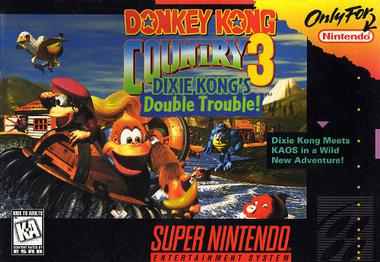
Donkey Kong Country 3: Dixie Kong’s Double Trouble! rounds out the original SNES trilogy and confirms the series as one of Rare’s flagship platform brands.
Game Boy Color and Game Boy Advance versions bring the game to handheld audiences and keep the original alive for a new generation.
Virtual Console and later Nintendo Switch Online re-releases preserve Donkey Kong Country as a central part of the SNES canon.
The pre-rendered jungle, Donkey and Diddy pairing, barrel cannons, mine carts, animal buddies, banana hoard, King K. Rool, David Wise soundtrack, SNES box art, GBC and GBA ports, trilogy identity, Virtual Console history, and Nintendo Switch Online access became the memory — but the cartridges, boxes, manuals, ports, compilations, controllers, and collector routes are the artifacts.
Donkey Kong Country belongs in the collector lane because it is more than a famous SNES platformer: it is the moment Donkey Kong became a modern franchise again and Rare became one of Nintendo’s defining 1990s creative partners.
Where to Play / Collect Today
Collecting Donkey Kong Country means collecting one of the SNES generation’s loudest comeback stories.
Strong collector routes include original SNES cartridges, complete-in-box copies, manuals, regional Super Donkey Kong variants, Player’s Choice versions, Game Boy Color and Game Boy Advance ports, Donkey Kong Country 2 and 3, Rare-era promotional material, Nintendo Power coverage, soundtrack references, and Switch Online preservation context.
A curated starting point for Donkey Kong Country collectors: original SNES material first, complete box and manual condition second, then handheld variants, trilogy companions, Rare-era context, and modern display or storage supplies.
eBay Collector Search
The strongest route for physical Donkey Kong Country material: original SNES cartridges, complete-in-box copies, manuals, Player’s Choice variants, Super Donkey Kong imports, GBC and GBA ports, trilogy lots, and Rare-era collector material.
- Best chance for original carts, CIB copies, manuals, regional variants, handheld ports, sequel bundles, and SNES-era promotional items.
- Search Donkey Kong Country SNES CIB, Donkey Kong Country manual, Super Donkey Kong SFC, Donkey Kong Country GBA, and Donkey Kong Country trilogy separately.
- Check label condition, battery-free cartridge authenticity, box wear, insert completeness, region, repro boxes, and seller photos carefully.
4NERDS collector search for Donkey Kong Country SNES, CIB copies, manuals, GBC / GBA ports, trilogy lots, and Rare-era Nintendo material.
Amazon Search
Useful for SNES cartridge storage, display protection, retro controllers, Nintendo history books, shelf organization, and modern accessories for a Donkey Kong Country collection.
- Better for storage, display supplies, books, controller options, and preservation accessories than rare original CIB copies.
- Good for cartridge sleeves, retro shelf organization, SNES-style controller options, and Nintendo / Rare history reading.
- Use as a secondary route after eBay collector searches.
Replace YOURAMAZONTAG-20 once the final approved Amazon Associates tag is ready.
Etsy Collector Route
Potentially useful later for Donkey Kong Country-style shelf labels, SNES cartridge stands, jungle-themed game-room displays, Rare-era wall cards, and trilogy presentation pieces.
- Better suited for display objects than preservation-grade collecting.
- Keep separate from original cartridges, boxes, manuals, official ports, and verified Nintendo releases.
- Ready to activate once the Etsy strategy is finalized.
Placeholder route kept disabled until a final Etsy affiliate or curated shop strategy is available.