Earthworm Jim (1994)
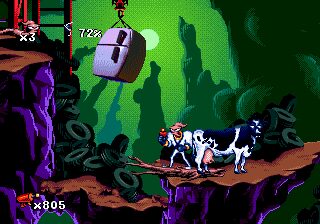
Earthworm Jim is a 1994 run-and-gun platformer famous for its absurd humor, expressive hand-drawn animation, and constantly shifting level gimmicks. It stood out in the 16-bit era by feeling like a playable Saturday-morning cartoon—loud, weird, and surprisingly tight to control.
Game Data
| Release Year | 1994 |
| Developer | Shiny Entertainment |
| Publisher | Playmates Interactive |
| Platform | Genesis / SNES (plus later ports) |
| Genre | Run and Gun / Platformer |
| Players | 1 |
| Original Media | Cartridge |
Gameplay:
Jump-and-shoot platforming with a twist: Jim’s worm body doubles as a whip and grappling tool for swinging,
grabbing, and smacking enemies. Levels frequently change rules (bungee segments, escort chaos, set-piece comedy),
keeping the pace unpredictable.
Story:
A regular earthworm accidentally gets a super-suit and becomes an unlikely hero. Jim battles bizarre villains
to rescue Princess What’s-Her-Name and stop the lunacy spread by Psy-Crow and friends.
Trivia:
The game became a poster child for “Western cartoon” animation in games—leaning hard into squash-and-stretch
expressiveness rather than the typical mascot platformer vibe of the time.
Earthworm Jim’s big legacy is tone: it proved that a platformer could be hilarious, visually elastic, and packed with animation personality—without sacrificing responsive controls. It’s weird in the best way: the jokes land, the action moves fast, and every level tries to surprise you.


Screenshots / Media








Timeline / Versions
Why Earthworm Jim Was Historically Important
Earthworm Jim helped prove that “animation personality” could be a major selling point in games. While many 16-bit platformers chased speed or mascot branding, Jim leaned into expressive cartoon motion, slapstick timing, and constant gag-driven set pieces—more like interactive comedy than a typical run-to-the-right platformer. That approach influenced later action platformers to invest more in character animation, humor, and surprise mechanics as a core design pillar.


