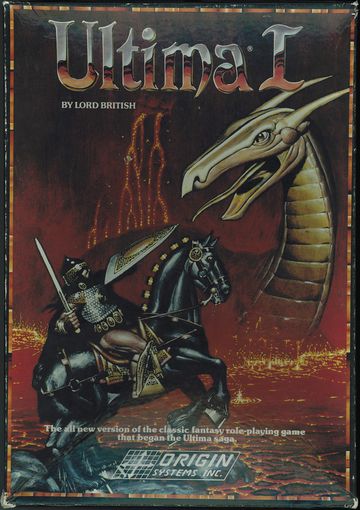
- Series leap: this is where Ultima becomes a richer, more confident RPG instead of just a promising fantasy framework.
- Party revolution: the jump to a four-character party changes both combat and adventure design in a major way.
- Genre foundation: tactical battles, broader world interaction, and stronger presentation helped shape later RPG traditions.
- Historical reach: Ultima III is one of the most important bridges between very early CRPG experimentation and the form that later legends refined.
“The point where Ultima stopped being merely adventurous and started becoming foundational.”
Rough by modern standards, yes — but the design leap underneath it is still easy to feel.
The Moment Ultima Grew Up
Ultima III: Exodus still matters because it feels like a visible evolutionary jump. Earlier role-playing games often have the fascination of first drafts — ambitious, creative, but still unstable in what they want to become. Ultima III feels different. It widens the world, expands the player’s agency, and most importantly rethinks the very structure of adventure by giving you a four-character party and a dedicated tactical battle layer. Suddenly the game is not just about surviving a hostile fantasy map. It is about building a group, planning engagements, navigating clues, and treating the world as a place with more texture and more mystery.
Game Data
| Title | Ultima III: Exodus |
| Release Year | 1983 |
| Developer | Origin Systems |
| Publisher | Origin Systems |
| Designer | Richard Garriott |
| Original Platform | Apple II |
| Early Ports | Commodore 64, Atari 8-bit, IBM PC |
| Later Ports | Macintosh, Amiga, Atari ST, NES/Famicom and more |
| Genre | Role-playing / party-based CRPG |
| Players | Single-player |
| Original Format | Floppy disk |
| Core Loop | Build party, explore Sosaria, solve clues, survive tactical battles |
Party creation, tactical turn-based combat, dungeon exploration, clue-driven progression, ship travel, spell use, and open-ended wandering inside a hostile fantasy world.
The Stranger returns to Sosaria to stop Exodus, the offspring and legacy-threat left behind by Mondain and Minax. The quest leads through cities, shrines, dungeons, Ambrosia, and finally the Isle of Fire.
Exodus is not simply defeated by brute force. The endgame’s notorious four-card solution gives the finale a strange proto-techno-fantasy identity that made the game feel unusual even inside its own series.
Review / A Primitive Masterpiece of Expansion
What still stands out in Ultima III is not polish in the modern sense, but scope with purpose. The screen layout is denser, the world feels more layered, and the game has a stronger sense of being a place you must gradually decode rather than merely survive. Early CRPGs can often feel like systems rubbing against each other. Ultima III feels more like systems beginning to speak the same language.
THE PARTY CHANGES EVERYTHINGThe biggest shift is the move from a single adventurer to a full four-character party. That one change alters the identity of the game. Suddenly character creation matters in a new way. Class balance matters. Spell access matters. Recovery, positioning, and survival all become more layered. It is not just “more characters” — it is a richer way of thinking about role-playing structure itself.
TACTICAL COMBAT AS A REAL STEP FORWARDThe separate tactical battle screen is one of the great breakthroughs here. Earlier Ultima combat was simpler and less expressive. In Ultima III, battles become small strategy problems. Range matters. Spell choice matters. Who acts, where they stand, and how enemies close distance matter. It is still early and occasionally clunky, but the jump in ambition is unmistakable.
WORLD, MYSTERY, AND MOODSosaria is still abstract by later standards, yet the game gives it more texture through clues, hidden requirements, strange places, and puzzle-like progression. It feels like a world with secrets rather than simply a map with monsters. That distinction is crucial. A lot of the game’s lasting charm comes from how much it invites note-taking, attention, and gradual understanding.
WHERE AGE SHOWSAge does show, of course. Interface friction is real. Guidance can be opaque. Grinding and trial-and-error are more central than many modern players will love. But those limitations are attached to a game that is expanding the language of its genre in nearly every direction at once. It is easier to forgive roughness when the foundation underneath it is this important.
FINAL VERDICTUltima III: Exodus remains essential because you can still feel its design leap in motion. This is not only a respected ancestor. It is a game where party-based CRPG logic becomes recognizably powerful. Even now, the mixture of tactical combat, exploratory mystery, and systemic breadth gives it more life than many other early landmarks retain.
Why Historically Important
Ultima III: Exodus is historically important because it represents one of the clearest early moments where the computer RPG substantially widened its vocabulary. It introduced a four-character party, gave combat its own tactical layer, deepened the world’s sense of place, and pushed the series beyond the more raw exploratory framework of its earliest entries.
It also mattered inside the history of Ultima itself. This was the first Ultima published by Origin Systems, and it helped define the company’s identity at the exact moment the series was becoming something much larger than a cult curiosity. It was not just another sequel. It was a statement that the line between hobbyist fantasy design and major RPG craftsmanship was beginning to shift.
Its influence stretches far beyond its own box. Ultima III is regularly cited as a foundational work in the development of role-playing games, including later console RPG traditions. When people trace the lines from early computer role-playing to larger party-driven adventures and more tactical fantasy structures, Ultima III is one of the names that keeps reappearing for good reason.
Timeline / Key Milestones
Ultima III: Exodus launches and quickly establishes itself as the first Origin Systems-published Ultima and a major leap beyond the earlier games.
Ports to other home computer platforms help turn the game from a single-system success into a broader CRPG point of reference.
Macintosh, Atari ST, and Amiga versions bring stronger presentation and help keep the game alive across changing computer hardware.
Ultima IV follows and pushes the series in a more philosophical direction, but Ultima III remains the key bridge that made that expansion possible.
The later Famicom/NES version radically reshapes the presentation, showing how adaptable — and how influential — the core game had become.
Ultima III still stands as one of the most important early reference points for both computer RPG evolution and the wider history of party-based fantasy design.
Where to Play / Collect Today
GOG bundle route
The easiest current legal entry point is typically the bundled PC re-release route, especially through the Ultima 1+2+3 package for modern systems.
MODERN OPTIONApple II / C64 original hardware
For the most historically authentic experience, original computer hardware with the proper documentation and map still gives the game its fullest period atmosphere.
COLLECTOR ROUTEBoxed edition with map and manuals
As a collector object, Ultima III is especially strong when found with its cloth map, reference materials, and original packaging ephemera intact.
SEE VERSION