- Genre grammar: party building, world map travel, towns, dungeons, crystal mythology, and airship escalation all land here in foundational form.
- Player authorship: choosing your four-character lineup from six classes gives the adventure its own personal flavor from minute one.
- Atmosphere: even in 8-bit form, the game sells the feeling of a grand fantasy pilgrimage better than most of its era.
- Historical weight: it launched Final Fantasy itself and helped set the long-term identity of console RPG design.
“A simple quest structure, a huge feeling of journey, and the birth of a legend.”
Final Fantasy still works because it understands how to turn progression into wonder.
The JRPG Template Becomes a Legend
Final Fantasy is one of those rare first entries that already feels like a complete worldview. Four Warriors of Light step into a fading world, restore the crystals, defeat the fiends, and slowly transform a local problem into a planetary, then temporal, myth. What keeps the game alive is not just history. It is the sense of expanding possibility: towns open into caves, caves open into continents, continents open into vehicles, and vehicles open into the sky. That widening horizon is still one of the great pleasures of early RPG design.
Game Data
| Title | Final Fantasy |
| Release Year | 1987 (Japan) / 1990 (North America) |
| Developer | Square |
| Publisher | Square |
| Platform | Famicom / Nintendo Entertainment System |
| Genre | Role-playing game |
| Players | Single-player |
| Original Format | Cartridge |
| Party Setup | Four heroes chosen from six starting classes |
| Core Loop | Explore, battle, upgrade, travel, restore the crystals |
Class-based party creation, turn-based battles, town-and-dungeon progression, spell economy, world map travel, and late-game vehicle escalation.
Four Warriors of Light, each bearing a darkened crystal, set out to defeat the four Elemental Fiends, restore balance to the world, and ultimately break a time-looped evil.
You choose your four-character party at the very start from Fighter, Thief, Black Belt, Red Mage, White Mage, and Black Mage — a simple decision with lasting identity.
Review / Why It Still Feels Like a Real Adventure
Final Fantasy begins with one of the most elegant setups in the genre: choose your party, step into a kingdom in trouble, and learn its logic through action rather than over-explanation. The opening feels modest, but that modesty is part of the trick. The game earns its grandeur gradually. What begins as a rescue and a bridge becomes ships, canals, caves, airship routes, ancient civilizations, and eventually a confrontation with time itself. That sense of swelling scale remains one of its strongest qualities.
PARTY BUILDING AS IDENTITYOne reason the game still feels special is that it gives the player authorship immediately. Choosing four heroes from six classes means every run develops a slightly different tone. A Fighter-heavy party feels grounded and brute-force. A magic-rich party feels tactical and fragile. Even before later Final Fantasy games made jobs and roles more elaborate, this first entry already understood that party composition can be a big part of the fantasy.
THE STRUCTURE OF WONDERThe game’s world design is not just about geography. It is about escalation. Travel evolves from walking to sailing to airborne freedom, and each step makes the world feel larger without becoming incomprehensible. Towns, dungeons, keys, language barriers, special items, and fiend lairs all stack into a loop that feels archetypal now because it was so influential then. Final Fantasy teaches the player to think in layers: what looks like a boundary now may become a route later.
WHERE IT SHOWS ITS AGEThe biggest friction is the era itself. Random encounters can be heavy, grinding is sometimes unavoidable, and the interface belongs to an older school of patience. But even those rough edges reveal something valuable: how much mood and ambition the game could communicate with very limited means. When it works, it works not because it is modern, but because its underlying sense of adventure is strong enough to survive its age.
FINAL VERDICTFinal Fantasy remains historically essential and genuinely playable because it does more than introduce a franchise. It establishes a way of dreaming through RPG structure: classes, crystals, continents, fiends, mythic transport, and a rising scale of possibility. The first game in the series already feels like a world inviting you to believe in it.
Why Historically Important
Final Fantasy helped codify a huge amount of console RPG language. Party classes, elemental crystals, turn-based side-view battles, town-to-dungeon progression, airship liberation, and a world map that slowly unfolds into freedom all became central reference points not only for the series itself but for the broader JRPG tradition. It did not invent every part of that grammar, but it brought them together with unusual confidence.
It is also historically vital because it created one of gaming’s largest long-term series identities. Even in this first entry, you can already feel traits that would echo through decades of Final Fantasy: high fantasy mixed with strange technology, dramatic music, party specialization, crystal mythology, and a sense that the adventure should grow from local problem to cosmic resolution.
Beyond franchise history, Final Fantasy mattered because it made the console RPG feel sweeping. The game’s appeal is not only mechanical; it is emotional. You start with four anonymous youths and end in a myth. That transformation — from small beginning to legendary scale — is one of the deepest pleasures the genre still chases.
Timeline / Key Milestones
Final Fantasy launches in Japan and introduces the Warriors of Light, the crystal quest structure, and the first mainline entry in what will become one of gaming’s defining RPG series.
The game reaches the NES audience outside Japan and becomes a key early contact point for console fantasy role-playing in the West.
The first major remake refreshes the game visually and begins a long tradition of revisiting the original adventure for new hardware generations.
PlayStation and Game Boy Advance versions make the game easier to revisit and help reposition the original as a preserved classic rather than a relic.
A lavish portable remake gives the game one of its most polished pre-Pixel-Remaster presentations and deepens its role as a legacy pillar.
The Pixel Remaster version arrives first on PC and mobile, then on Switch and PS4, and later on Xbox, giving the original quest a broad modern platform presence.
Final Fantasy remains the place where the franchise’s central grammar first cohered: classes, crystals, airships, fiends, mythic escalation, and party-driven fantasy.
Where to Play / Collect Today
Final Fantasy Pixel Remaster
The cleanest modern route is the Pixel Remaster version, which preserves the original adventure while making it accessible across today’s major console, PC, and mobile ecosystems.
MODERN OPTIONOriginal Famicom / NES hardware
For the most historically faithful experience, original hardware still delivers the exact pacing, visual texture, and old-school friction that defined the first journey.
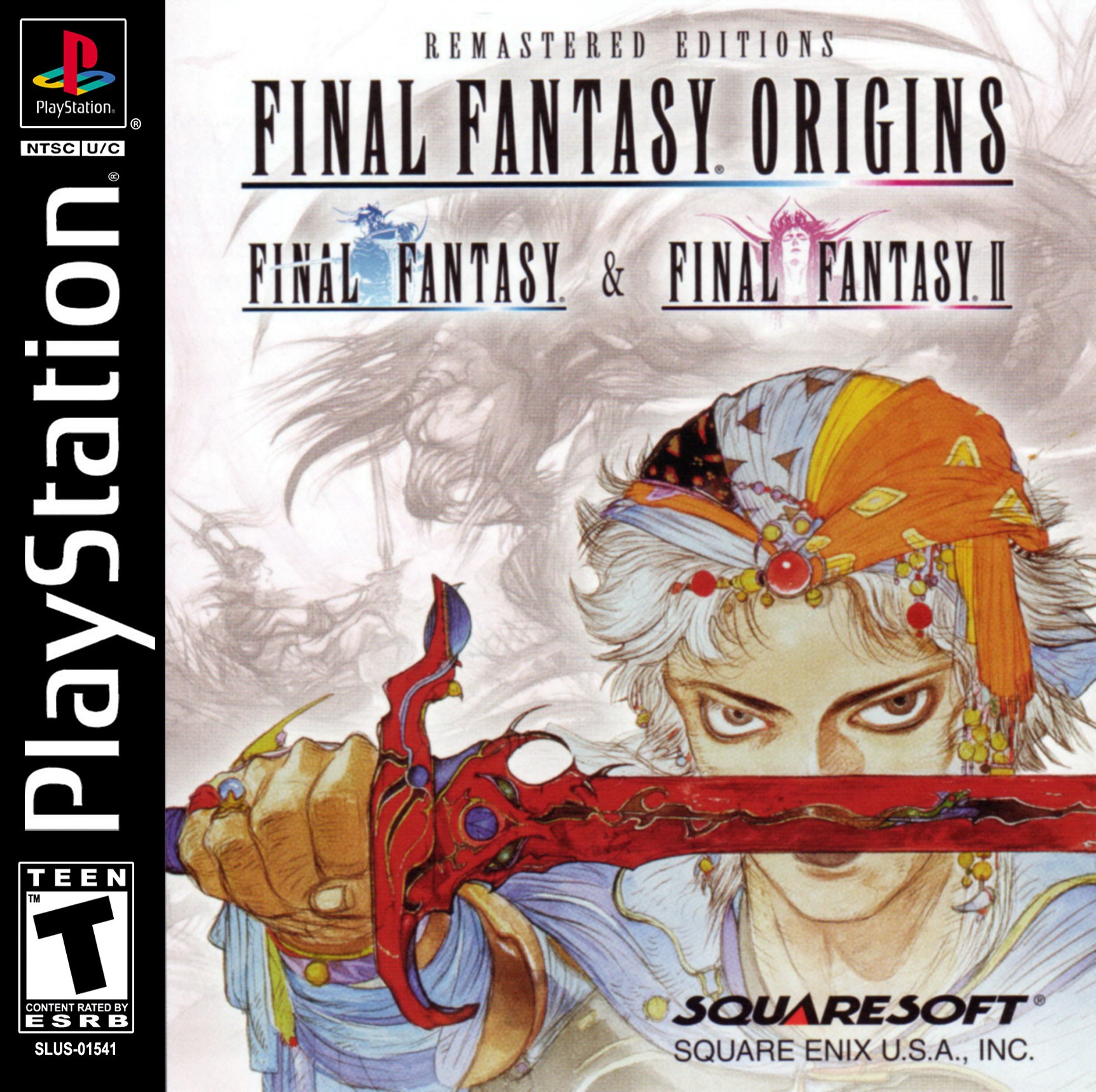
COLLECTOR ROUTEOrigins / Dawn of Souls / PSP
If you want a more comfortably remade version without jumping straight to the newest release, the PlayStation, GBA, and PSP editions remain strong alternate doors into the same legend.
SEE VERSIONS