Garou: Mark of the WolvesSNK Precision at the Edge
SNK’s late-era Neo Geo masterpiece: a lean, fiercely expressive fighter that strips the series down to spacing, timing, animation brilliance, Just Defend nerve, and one of the sharpest risk-reward systems of the 2D era.
Why Garou still hits
- System elegance: Just Defend, T.O.P. and Breaking create constant tension without bloating the ruleset.
- Combat feel: movement, normals, anti-airs and hit-confirm windows all feel razor-clean and intentional.
- Roster philosophy: smaller cast, stronger identities — almost every character feels handcrafted for depth.
- Legacy power: one of SNK’s most respected fighters and a bridge between old-school fundamentals and modern competitive taste.
“A smaller roster, sharper ideas, and pure fighting-game confidence.”
Not just a cult favorite because it is rare — a cult favorite because its design still feels precise and alive.
SNK Precision at the End of an Era
Garou: Mark of the Wolves feels like a statement game: confident enough to trim excess, disciplined enough to trust fundamentals, and stylish enough to leave an immediate impression decades later. It arrives as the spiritual next chapter after Fatal Fury, but it does not play like a nostalgia exercise.
Instead of going louder, Garou goes sharper. Every jump, block, anti-air, feint, break and punish feels like part of a deliberate competitive language. The result is a game whose cult status is not built on obscurity alone, but on the unusual clarity of its design.
At a glanceBest experienced as a fundamentals-heavy fighter with brilliant animation, active defense, tense T.O.P. placement, and a roster built for long-term mastery.
Game Data
| Title | Garou: Mark of the Wolves |
| Original Release | 1999 |
| Original Platform | Neo Geo MVS arcade; Neo Geo AES home route |
| Developer | SNK |
| Publisher | SNK |
| Arcade System | Neo Geo MVS |
| Series Context | Fatal Fury / new-generation sequel |
| Genre | 2D fighting game |
| Players | 1–2 players |
| Key Mechanics | Just Defend, T.O.P. System, Breaking, Feints, Super / Potential Power |
| Story Frame | Rock Howard, raised by Terry Bogard, enters Maximum Mayhem in Second Southtown |
| Important Ports | Dreamcast, PlayStation 2, Xbox 360, PlayStation 4 / Vita, Steam, ACA NEOGEO platforms |
| Modern Access | Steam, ACA NEOGEO on Switch / PS4 / Xbox / Windows / mobile, and other digital releases |
| Core Loop | Control space, bait reactions, defend cleanly, convert hard |
Gameplay pillars
Just Defend timing, T.O.P. placement strategy, Breaking, feint pressure, sharp anti-air play, lane control, and momentum swings earned through nerve rather than chaos.
Story / setup
Set after Geese Howard’s fall, the game follows a new generation in South Town as Kain R. Heinlein’s Maximum Mayhem tournament draws in Rock Howard, Terry Bogard, and a cast caught between legacy and ambition.
Most famous design fact
Instead of going bigger, Garou went tighter: a smaller roster paired with Just Defend, T.O.P. and exceptional frame feel created one of the most expressive competitive systems SNK ever built.
Review / Why It Still Feels So Sharp
Garou makes a rare first impression for a fighting game: it feels immediately clean. The characters move with authority, normals carry believable weight, and every exchange seems readable even when the pace rises. That sense of clarity matters because the game does not overwhelm with gimmick density.
The beauty of Just DefendJust Defend turns blocking into an active test of nerve and knowledge. A player who understands timing can reduce pressure, regain rhythm, and swing momentum without flattening the importance of spacing or neutral. Defense becomes a performance skill rather than a waiting state.
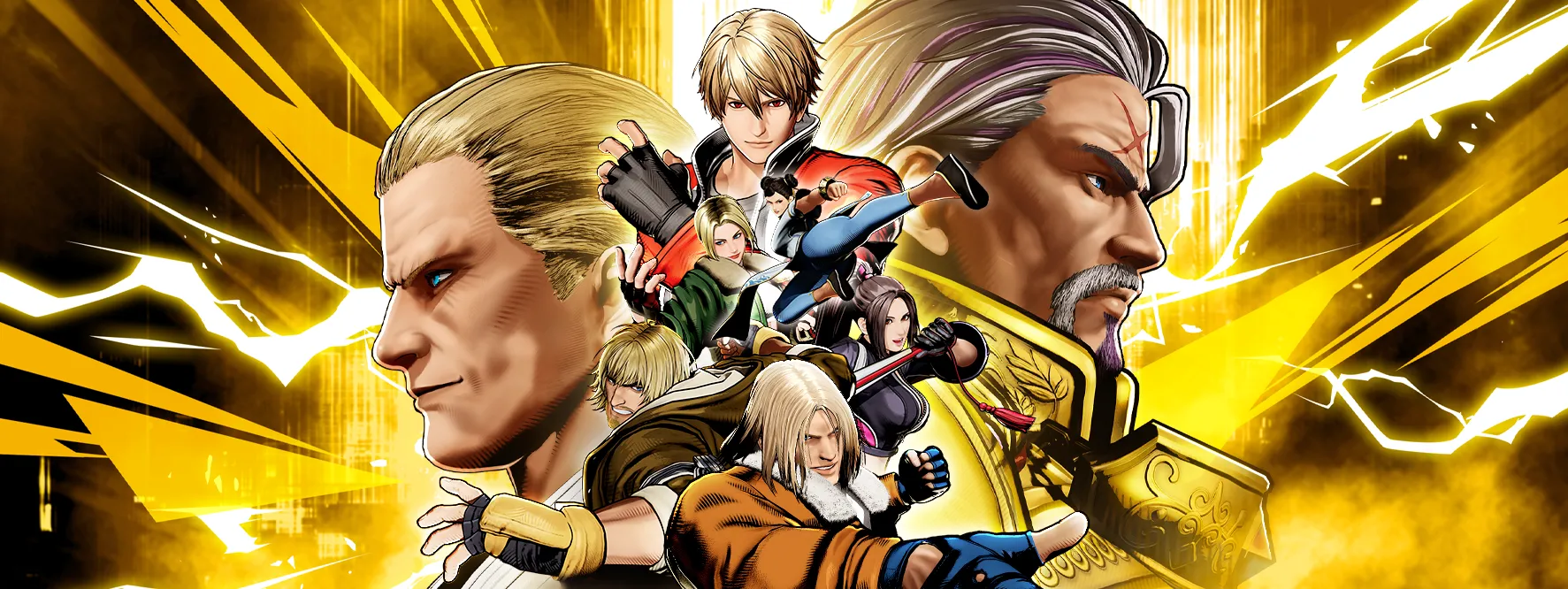
Small roster, big depthGarou’s roster is smaller than many genre giants, but that compactness is one of its strengths. Rock Howard is accessible without being shallow. Gato is frighteningly direct. B. Jenet brings mobility and swagger. Tizoc feels theatrical and real at the same time. Because the cast is tighter, matchup knowledge becomes richer rather than diluted.
Visually, Garou is one of SNK’s most impressive late-era achievements. The animation is fluid, charismatic, and filled with personality, but never at the expense of clarity. Hits feel sharp. Characters feel distinct from stance to recovery. There is a seriousness to the art direction that makes the game feel mature and unusually self-assured.
Where it shows its ageGarou can feel demanding because it expects clean spacing, system understanding, matchup knowledge, and precise defensive timing. Its strengths are not spectacle overload or casual chaos. They are discipline, pressure, and reward for study.
Final verdictGarou: Mark of the Wolves earns its reputation because it understands restraint. It does not need endless subsystems or oversized rosters to create depth. It creates depth through timing, spacing, character identity, and player decision-making. That makes it one of the most satisfying 2D fighters to revisit.
Why It Matters
Garou: Mark of the Wolves stands as one of the most respected late-period SNK arcade works because it shows what happens when a long-running series is refined instead of merely extended. Rather than stacking sequel logic on top of sequel logic, Garou rethinks Fatal Fury with a cleaner competitive lens: fewer characters, stronger fundamentals, clearer risk-reward, and presentation polished to an almost luxurious degree.
It also matters as a historical marker for the Neo Geo itself. By 1999, the platform had already become a symbol of a certain arcade-first design philosophy, and Garou feels like one of its final great declarations. It carries the confidence of 1990s SNK craftsmanship while pointing toward a more modern understanding of serious 2D fighters: elegant, readable, system-rich, and built for long-term study.
Its long afterlife matters too. Garou became one of those games that competitive players kept returning to, collectors kept praising, and newer generations kept rediscovering through re-releases, tournament footage, and the eventual return of Fatal Fury with City of the Wolves.
Why it mattered then
It showed SNK could evolve a legacy fighting series into something sleeker, more competitive, and more mature without losing identity.
Why it matters now
It remains a benchmark for building depth through fundamentals, character specificity, defensive timing, and disciplined system design.
What it changed
It helped define the cult ideal of the “lean but deep” fighter: smaller roster, stronger core mechanics, and unusually high expressiveness.
Timeline / Key Milestones
SNK refines the Fatal Fury line one more time before Garou takes the series into a more mature new-generation direction.
Garou: Mark of the Wolves releases as a major late Neo Geo fighting-game statement from SNK.
The Dreamcast version helps the game build prestige beyond dedicated arcade and Neo Geo circles.
Xbox Live Arcade and later digital releases keep the game visible for a new generation of serious fighting-game players.
Steam, PlayStation, Switch, Xbox and ACA NEOGEO routes make Garou easier to recommend and study without original hardware.
Fatal Fury: City of the Wolves revives the line after decades, making Garou’s legacy central to SNK’s modern fighting-game story.
Garou remains one of SNK’s most admired fighters and a standard answer whenever players discuss elegant 2D combat design.
The Just Defend timing, T.O.P. placement, Breaking system, Rock Howard story, Terry legacy, Kain tournament, Neo Geo MVS origin, Dreamcast route, Steam revival, ACA NEOGEO access, City of the Wolves connection, and cult tournament reputation became the memory — but the MVS carts, AES copies, Dreamcast discs, ports, art, manuals, and modern releases are the artifact trail.
Garou belongs in the collector lane because it is more than a famous fighter: it is one of the clearest physical and digital artifacts of SNK’s late Neo Geo excellence.
Where to Play / Collect Today
Collecting Garou means collecting one of SNK’s crown-jewel fighters.
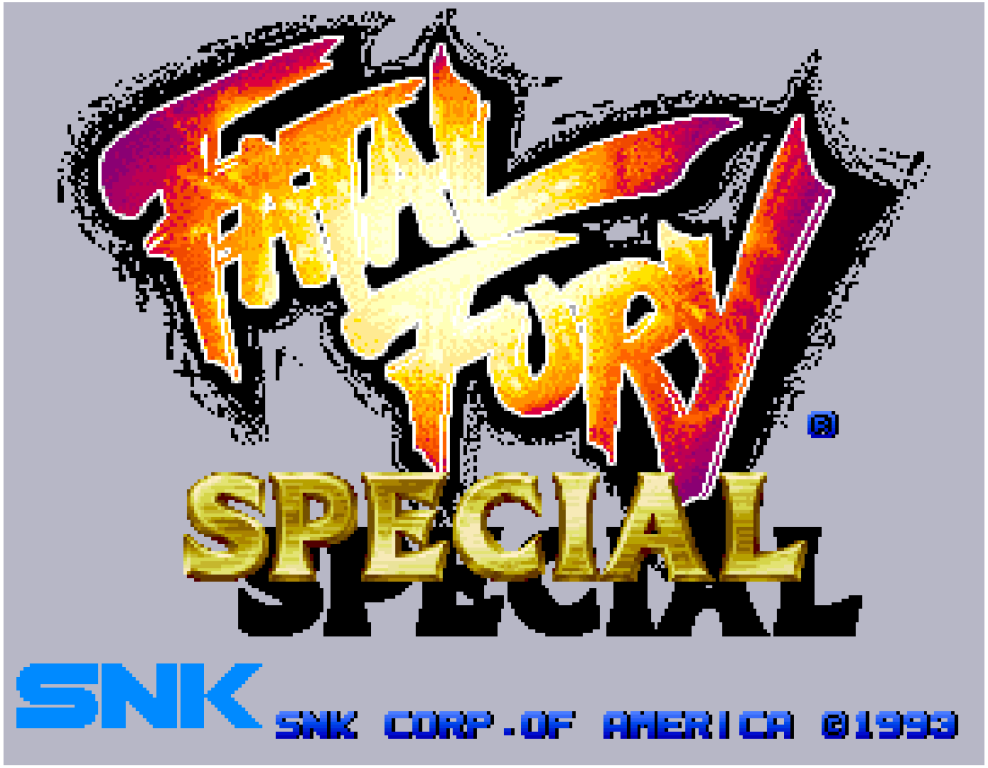
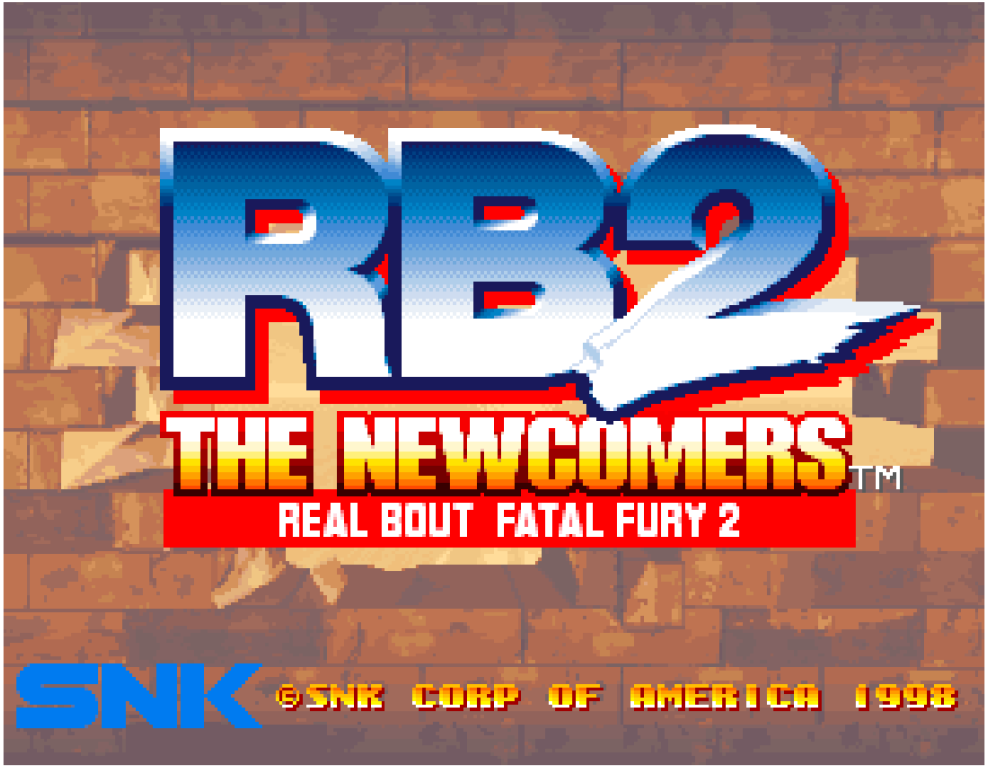
Strong collector routes include original Neo Geo MVS carts, AES copies, Dreamcast versions, PlayStation 2 releases, modern digital versions, ACA NEOGEO access, manuals, inserts, soundtracks, art material, and Fatal Fury lineage pieces such as Fatal Fury Special, Real Bout Fatal Fury 2, and City of the Wolves.
A curated starting point for Garou collectors: original Neo Geo material first, Dreamcast and PS2 routes second, modern digital access third, then storage, display, art, soundtrack, and Fatal Fury context pieces.
eBay Collector Search
The strongest route for physical Garou collecting: MVS cartridges, AES copies, Dreamcast discs, PS2 versions, manuals, inserts, soundtrack material, SNK fighting-game lots, and Fatal Fury family pieces.
- Best chance for Neo Geo MVS carts, AES copies, Dreamcast versions, manuals, inserts, and regional variants.
- Search Garou MVS, Garou AES, Mark of the Wolves Dreamcast, Garou PS2, Fatal Fury Mark of the Wolves, and SNK Neo Geo lots separately.
- Check authenticity, cartridge shell, label state, serials, boards, manual presence, disc condition, region, and seller photos carefully.
4NERDS collector search for Garou, Mark of the Wolves, Neo Geo MVS / AES, Dreamcast, PS2, manuals, and Fatal Fury lots.
Amazon Search
Useful for fight sticks, controller adapters, retro-game storage, display cases, cartridge protectors, SNK / fighting-game books, and shelf organization around a Garou / Neo Geo collection.
- Better for accessories, display supplies, fight sticks, storage, books, and modern collection tools.
- Good for cartridge sleeves, disc protectors, arcade-stick routes, and Neo Geo display basics.
- Use as a secondary route after eBay collector searches.
Replace YOURAMAZONTAG-20 once the final approved Amazon Associates tag is ready.
Etsy Collector Route
Potentially useful later for Garou-style shelf labels, Neo Geo display plaques, Fatal Fury dividers, arcade-room wall pieces, and fighting-game collection signage.
- Better suited for display objects than preservation-grade collecting.
- Keep separate from original carts, discs, manuals, official ports, boards, and verified SNK releases.
- Ready to activate once the Etsy strategy is finalized.
Placeholder route kept disabled until a final Etsy affiliate or curated shop strategy is available.