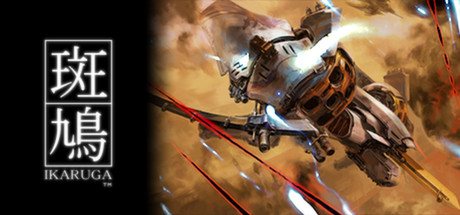
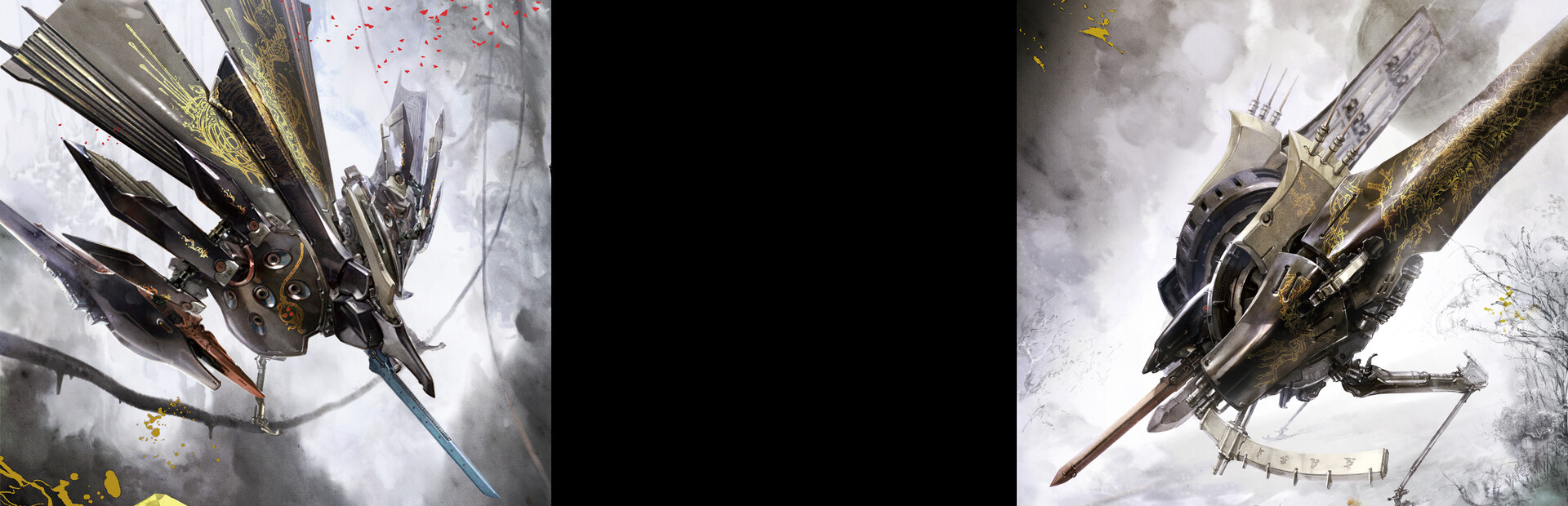
- Core idea: the polarity system turns enemy fire into both danger and resource.
- Design identity: it is a shooter built as much on route memory and scoring logic as raw survival.
- Presentation: austere visuals, grand music, and geometric bullet patterns make it feel almost ritualistic.
- Historical weight: it became one of Treasure’s defining works and one of the most respected shmups of its era.
“A shooter where getting hit can be the correct decision.”
Not just difficult for the sake of difficulty — difficult because its rules create a totally distinct kind of mastery.
The Shooter That Turned Contrast into Philosophy
Ikaruga is one of the rare shoot ’em ups that feels conceptually pure from the first few seconds. The rules are simple to describe and extremely hard to exhaust. Your ship flips between black and white polarity. Bullets of the same color can be absorbed. Bullets of the opposite color will kill you. That alone would be enough for a memorable gimmick, but Ikaruga builds an entire game — movement, offense, defense, scoring, rhythm, and spectacle — around that one idea. The result is not just a hard shooter. It is a highly disciplined one.
Game Data
| Title | Ikaruga |
| Release Year | 2001 |
| Developer | Treasure |
| Publisher | Treasure / Infogrames / later digital partners |
| Director | Hiroshi Iuchi |
| Original Platform | Sega NAOMI arcade hardware |
| Genre | Vertically scrolling shoot ’em up |
| Players | 1 player or 2-player co-op |
| Original Format | Arcade board |
| Core Loop | Switch polarity, absorb bullets, chain enemies, survive impossible patterns |
Polarity switching, bullet absorption, homing laser charge, same-color chain scoring, route memorization, and boss encounters built like high-speed pattern exams.
Rebel pilot Shinra fights against the Horai using the experimental fighter Ikaruga, a machine capable of switching between black and white energy polarities.
Ikaruga’s central trick is that matching enemy bullet color is safety, not death — a reversal that changed how players read space, danger, and scoring in a shooter.
Review / Why It Still Feels So Singular
Ikaruga is intimidating because it looks impossible before it becomes legible. The screen fills with enemy fire, but the game is not built on chaos. It is built on classification. Color matters. Route matters. Timing matters. The first genuine thrill of Ikaruga is not simply surviving a pattern, but understanding it. Once you realize that some projectiles should be absorbed instead of feared, the entire experience changes shape. The game stops reading like a panic test and starts reading like a ruthless system.
THE POLARITY GENIUSThe polarity mechanic is what makes Ikaruga more than a beautiful hard shooter. It collapses offense and defense into a single decision space. Your current color affects what can kill you, what you can safely absorb, and how much damage you do to enemies. That creates constant tension. You are not merely steering around danger. You are choosing your relation to danger. It is an elegant mechanic because it changes everything without requiring bloated complexity.
SCORING AS PUZZLEAnother reason Ikaruga remains so admired is that its scoring system feels almost like a parallel game layered on top of the survival run. Destroying three enemies of the same polarity in a row creates chain bonuses, which turns optimal play into a sophisticated route puzzle. It is one thing to finish a stage. It is another to finish it correctly. That distinction is what gives Ikaruga such longevity among score-focused players. It can be learned, but it can never really be “used up.”
STYLE, MUSIC, AND TEMPOTreasure gives the game a strange kind of nobility. It is visually clean but emotionally intense. The art direction avoids clutter even when patterns become dense. The soundtrack gives the action a ceremonial momentum rather than arcade chaos. Boss fights feel less like set-pieces and more like confrontations with perfect machines. That tone is a major part of why Ikaruga lingers in memory. It feels severe in a way few shooters do.
FINAL VERDICTIkaruga is one of those games whose reputation survives because the design is truly distinctive, not because fans merely repeated the legend. It takes a minimal set of rules and turns them into a full philosophy of play: absorb, invert, commit, chain, survive. For the right player, it is not just a great shooter. It is one of the sharpest system-design statements ever made in the genre.
Why Historically Important
Ikaruga matters because it redefined what a high-level shoot ’em up could emphasize. Many shooters build their drama around density, speed, and dodging stress. Ikaruga certainly has those things, but it filters them through a stricter design idea: polarity. This makes the game feel less like a pure reflex contest and more like a system that demands analysis, route study, and deliberate decision-making under pressure. That shift helped it stand apart even among strong contemporaries.
It also matters as one of Treasure’s signature works. The studio already had a reputation for distinctive, mechanically bold games, and Ikaruga became one of the clearest examples of that identity. It arrived first in arcades, then became a cult sensation through the Dreamcast import scene before reaching a wider western audience on GameCube. That journey gave it an unusual status: part arcade artifact, part collector legend, part modern digital evergreen.
Its legacy remains powerful because players still use it as a reference point whenever the conversation turns to elegant difficulty, scoring purity, or mechanically transformative core ideas. Ikaruga is not just historically important because it is difficult or famous. It is important because it proved that a shooter could be rigorous, abstract, puzzle-like, beautiful, and uncompromising all at once.
Timeline / Key Milestones
Ikaruga launches in Japanese arcades on Sega NAOMI and immediately stands out for its black/white polarity system.
The Japan-only Dreamcast release becomes a famous import title and helps the game build an international cult following.
The GameCube version gives Ikaruga broader visibility in North America and Europe and locks in its reputation among console shooter fans.
Xbox 360 and later Steam bring the game to a wider modern audience, adding leaderboards and easier access for score chasers.
Switch and PS4 releases keep Ikaruga active for a new generation, confirming its status as a living classic rather than a museum piece.
Where to Play / Collect Today
Steam digital version
For most players, the easiest modern route is the Windows release, which preserves the core experience while making practice and replay far more convenient.
MODERN OPTIONSwitch / PS4 digital access
Modern console versions keep Ikaruga readily available and are ideal for players who want its hard-edged purity without hunting older hardware.
CONSOLE ROUTEDreamcast or GameCube
The original cult console path still has enormous appeal for collectors, especially if you want the version history that shaped the game’s reputation.
COLLECTOR ROUTE