King’s KnightSquare Before Final Fantasy
A strange and fascinating Square artifact from before Final Fantasy: part fairy-tale rescue quest, part vertical shooter, part proto-party adventure, and still one of the most unusual fantasy action experiments of the 8-bit era.
Why it still matters
- Concept fusion: it mixes fantasy quest storytelling with vertically scrolling shooter structure in a genuinely unusual way.
- Four-hero design: Ray Jack, Kaliva, Barusa, and Toby each matter, giving the game a party-adventure flavor.
- Hidden depth: upgrades, caves, spells, and final-stage requirements create more system layering than expected from 1986.
- Historical weight: it is an early Square work tied to Hironobu Sakaguchi and Nobuo Uematsu before their names became legendary.
“A fantasy rescue quest disguised as a relentless vertical shooter.”
King’s Knight is not fully polished, but it is absolutely memorable — and far more ambitious than its mixed reputation suggests.
The Shooter That Dreamed of Being an RPG
King’s Knight is one of those early games that becomes more interesting the more context you give it. On the surface, it is a vertically scrolling fantasy shooter: dodge, shoot, survive, and keep moving forward. But under that shell is an awkwardly ambitious idea.
Four heroes have to be powered up across separate stages, hidden items need to be uncovered, spell elements must be preserved, and the final assault only really works if the whole team arrives prepared. That blend of shooter immediacy and party-based fantasy logic gives King’s Knight its identity: strange, imperfect, and historically rich.
At a glanceBest experienced as a fascinating Square prototype: a fantasy action experiment that hints at later ambitions while still speaking in pure 8-bit arcade language.
Game Data
| Title | King’s Knight |
| Original Release | 1986 in Japan / 1989 in North America |
| Developer | Square |
| Publisher | Square / Squaresoft |
| Designer | Hironobu Sakaguchi |
| Composer | Nobuo Uematsu |
| Platforms | Famicom / NES, MSX, later Sharp X1 and NEC PC-8801mkII SR as King’s Knight Special |
| Genre | Fantasy vertical scrolling shooter |
| Players | 1 player |
| Original Format | Cartridge / computer media |
| Core Loop | Shoot terrain, uncover upgrades, keep the party alive, reach the final castle |
Gameplay pillars
Constant forward pressure, destructible scenery, hidden power-ups, caves, stage memorization, character-specific strengths, and a punishing final-team requirement.
Story
Princess Claire of Olthea has been kidnapped in the Kingdom of Izander. Four heroes — Ray Jack, Kaliva, Barusa, and Toby — must survive their individual journeys and unite to defeat the dragon Tolfida.
Most famous design fact
The first four stages are preparation runs for four different heroes, and the fifth stage only truly works if the entire party has been kept viable and properly supplied.
Review / Why It Still Fascinates
King’s Knight looks straightforward at first. The screen scrolls upward, enemies and hazards fly in, terrain can be destroyed, and survival depends on reading pressure quickly. But almost immediately the game reveals that it is not satisfied with being a simple shooter.
Houses, rocks, and terrain hide upgrades. Caves matter. Character growth matters. Spell items matter. Even the sequence of stages matters more than it first appears.
The four-hero ideaWhat really separates King’s Knight from more conventional shooters is the party framework. Ray Jack, Kaliva, Barusa, and Toby are not just cosmetic swaps. They imply a broader fantasy structure, and the game wants the player to think in terms of preparation, not only reflex.
The reason it does not land as an all-time classic is that its ambition often outruns its clarity. Hidden requirements, punishing damage, awkward opacity, and the final-stage dependency on earlier performance can make the experience feel harsher than elegant.
What still worksAnd yet, a lot still works. The fantasy skin is distinctive. The music already hints at Uematsu’s melodic instincts. The stage-by-stage sense of building toward a combined climax is structurally exciting. Even the roughness has archival value, because it shows Square experimenting in real time.
Final verdictKing’s Knight is not a polished masterpiece, but it is absolutely worth preserving and studying. It captures a company in transition, a genre being bent into unusual new shapes, and a set of design ambitions that would later resurface in much more famous forms.
Why It Matters
King’s Knight matters because it captures Square before the company’s identity was fixed in the public imagination. Later, Square would become synonymous with role-playing games, cinematic fantasy, and prestige JRPG storytelling. Here, in 1986, the studio is still experimenting — and experimenting loudly.
It also matters because of the names involved. Hironobu Sakaguchi designed it for the Famicom, and Nobuo Uematsu composed the score. King’s Knight does not look like Final Fantasy yet, but it already feels like a studio trying to fuse systems, characters, and fantasy atmosphere into something bigger than a simple arcade loop.
On the business side, it later became Square’s first North American release under the Squaresoft label, which gives it a small but meaningful place in the company’s international history too. It may not be the game that made Square famous, but it is one of the clearest early windows into what Square was trying to become.
Why it mattered then
It offered a fantasy shooter with party structure and hidden progression at a time when most action games were far more straightforward.
Why it matters now
It is one of the most revealing early Square titles for understanding Sakaguchi, Uematsu, and the company’s pre-Final Fantasy experimentation.
What it changed
It helped demonstrate that even a shooter could be shaped around character identity, fantasy premise, and multi-stage preparation logic.
Timeline / Key Milestones
King’s Knight launches on Famicom in Japan as one of Square’s earliest notable action releases.
An MSX version follows in Japan, giving the game a parallel home-computer identity with technical and visual differences.
Revised versions arrive on NEC PC-8801mkII SR and Sharp X1 in Japan under the title King’s Knight Special.
The game reaches North America on NES and becomes Square’s first release there under the Squaresoft label.
Wii, then later 3DS and Wii U re-releases keep King’s Knight accessible to a new generation of curious retro players.
King’s Knight: Wrath of the Dark Dragon reimagines the concept as a mobile title tied to the broader Final Fantasy XV era.
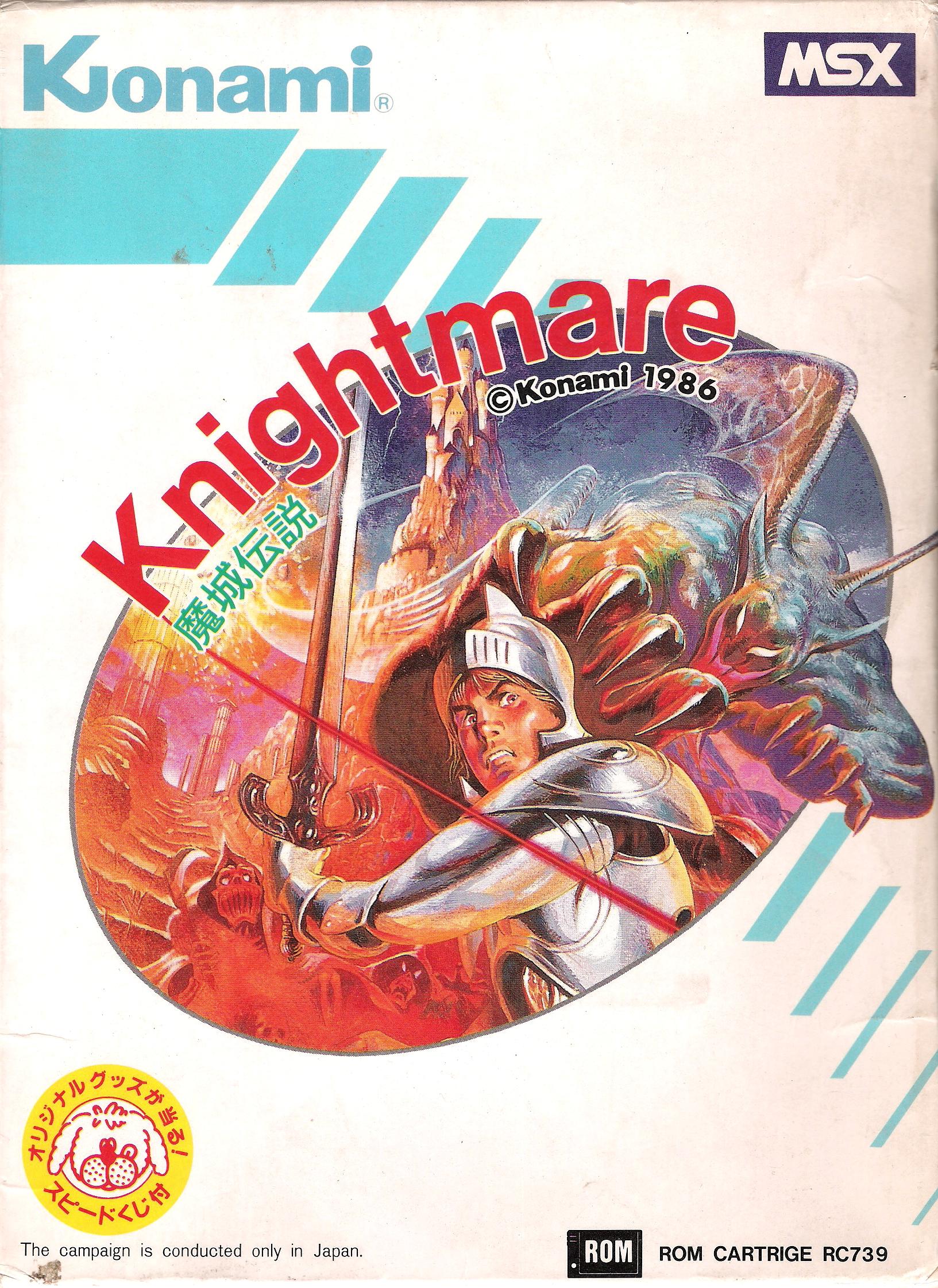
The fantasy shooter became the curiosity — but the NES box, Famicom version, MSX release, manuals, cartridge, and early Squaresoft history are the artifacts.
King’s Knight belongs in the collector lane because it connects early Square history, pre-Final Fantasy experimentation, Sakaguchi and Uematsu completism, NES and Famicom collecting, regional box art, MSX preservation, and the fascinating moment before Square’s RPG identity fully formed.
Where to Play / Collect Today
An early Square artifact with strong NES, Famicom, MSX, and pre-Final-Fantasy collector appeal.
For collectors, King’s Knight is especially interesting because it spans multiple lanes: early Square history, North American Squaresoft presence, Famicom and NES variants, MSX and computer versions, Sakaguchi / Uematsu completism, and the unusual fantasy-shooter identity that makes it stand apart.
Amazon notice: As an Amazon Associate I earn from qualifying purchases.
A curated access point for King’s Knight fans: original NES and Famicom copies, manuals, boxed editions, MSX and computer releases, Square history books, retro accessories, and future handmade display objects.
Shop original King’s Knight copies
Browse current King’s Knight NES offers on eBay — useful for loose cartridges, boxed copies, manuals, regional variants, and early Squaresoft collector pieces.
- Original NES and Famicom-era copies
- Boxed versions, manuals, and bundle listings
- Condition, region, and price comparison
Paid partner link / Werbung — availability, seller terms, shipping, and pricing depend on individual eBay sellers.
Browse related Square finds
Explore Amazon for King’s Knight-related items, retro gaming books, Square Enix history, NES accessories, display-friendly extras, and broader 8-bit fantasy-gaming collectibles.
- Books, guides, accessories, and merch
- Gift ideas and retro display extras
- Broader Square and NES-themed browsing
Paid partner link / Werbung — as an Amazon Associate, 4NERDS Gaming may earn from qualifying purchases.
Curated Etsy picks coming soon
Planned for handmade fantasy-retro art, NES display pieces, shelf decor, cartridge stands, posters, and museum-style collectibles that match the 4NERDS archive aesthetic.
- Wall art and display-focused pieces
- Handmade and fan-crafted style items
- Added once the setup is ready
Etsy affiliate integration will be added after the tracking setup is approved and tested.