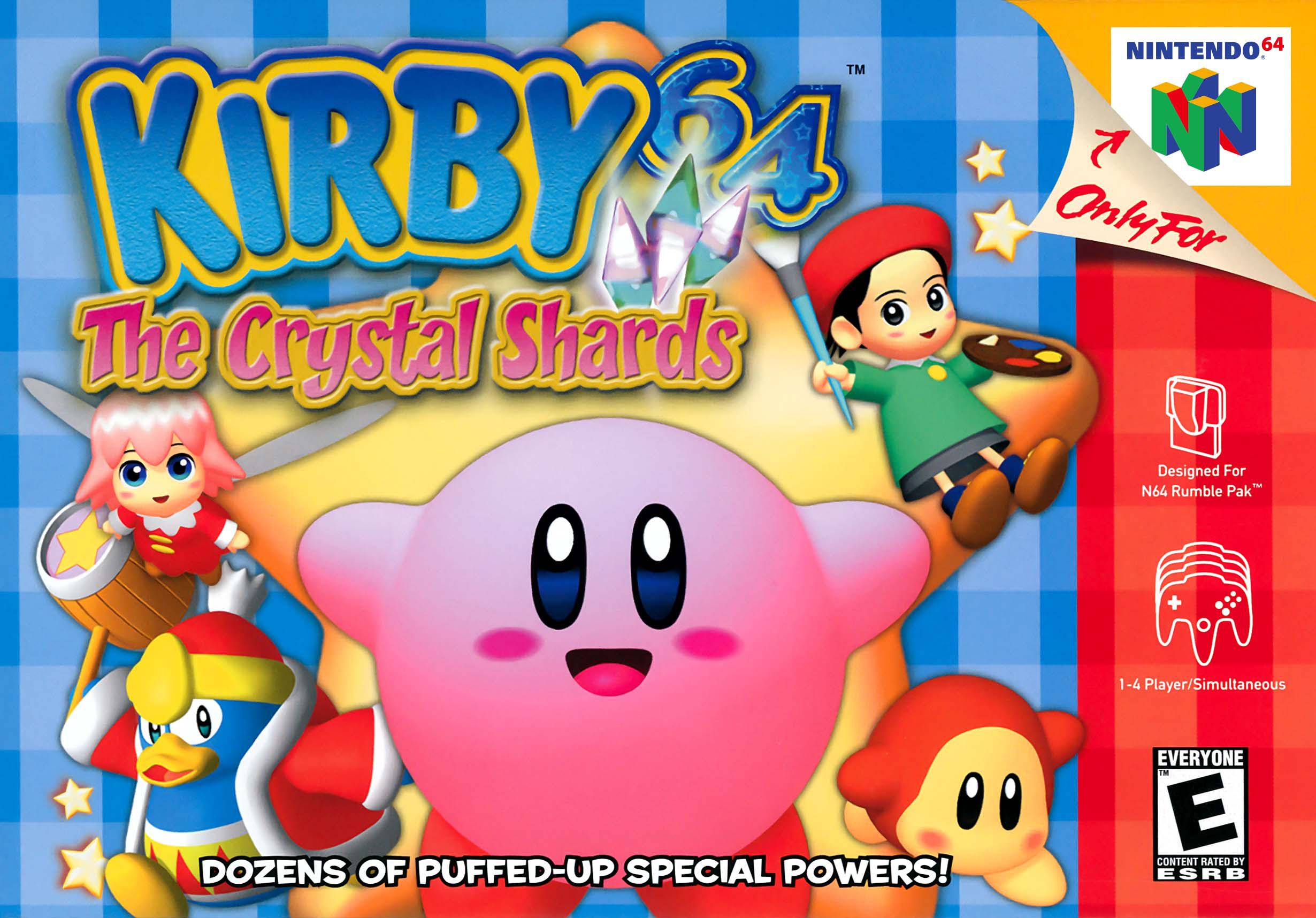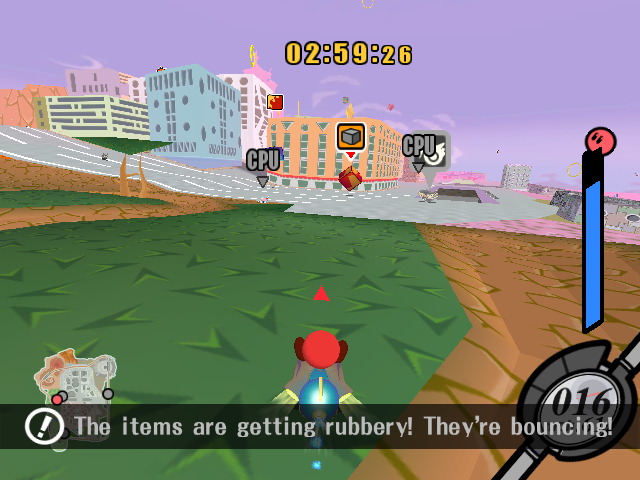
- Radical simplicity: the controls are stripped down to steering plus charge-and-release timing.
- City Trial magic: the sandbox build-up before the random stadium event is still the game’s legendary centerpiece.
- Multiplayer identity: few GameCube games feel this immediate, strange, and socially explosive.
- Cult legacy: what looked “too simple” in 2003 now feels singular, daring, and unmistakably Sakurai.
“A racer built from almost nothing — and somehow full of personality.”
Kirby Air Ride is small on buttons, big on feel, and unforgettable once City Trial clicks.
The One-Button Racer That Became a Cult Favorite
Kirby Air Ride is one of those Nintendo-era experiments that feels even more interesting in hindsight than it did at release. At first glance it looks almost too bare: Kirby rides, auto-accelerates, and most of the interaction seems to revolve around timing a single charge button. But under that simplicity is a carefully shaped party-racing game about momentum, machine feel, improvisation, and the kind of multiplayer stories that only happen when a game trusts chaos.
Game Data
| Title | Kirby Air Ride |
| Release Year | 2003 |
| Developer | HAL Laboratory |
| Publisher | Nintendo |
| Director | Masahiro Sakurai |
| Platform | Nintendo GameCube |
| Genre | Racing / action |
| Players | 1–4 local multiplayer, with LAN setup support |
| Original Format | GameCube optical disc |
| Core Loop | Charge, boost, draft, improvise, outbuild rivals |
Charge-and-release boosting, machine selection, inhaled copy abilities, course knowledge, sandbox stat-building, and fast local multiplayer readability.
Air Ride for standard 3D racing, Top Ride for overhead arcade-style tracks, and City Trial for open-city build-up followed by a surprise stadium event.
Kirby Air Ride asks the player to do surprisingly much with only the Control Stick and the A button — a simplification that became the game’s entire identity.
Review / Why It Feels So Different
Kirby Air Ride shocks first-time players because it removes the expected language of racing games. You are not feathering a normal accelerator, learning complex drift systems, or juggling lots of buttons. Instead, movement is mostly automatic. The game asks you to steer, brake-charge, release at the right moment, and understand what each machine is good at. That design makes it feel instantly readable — and initially deceptive.
WHY THE SIMPLICITY WORKSThe trick is that simplicity here is not emptiness. Different machines behave dramatically differently. Some glide beautifully, some cling to the ground, some are unstable but explosive, and some reward very particular habits. Add copy abilities, drafting, hazards, track gimmicks, and sudden power swings, and Kirby Air Ride starts to feel less like a toy and more like a tightly compressed multiplayer system.
CITY TRIAL IS THE HEARTThen there is City Trial — the reason Kirby Air Ride never really disappeared from memory. It is one of Nintendo’s best multiplayer ideas: a shared city, a short prep phase, stat patches everywhere, random events, machine theft, risk-reward choices, and a final stadium challenge that forces everyone to wonder whether they built the right thing. City Trial creates stories instead of just results, and that is why its reputation only grew over time.
WHERE IT CAN FRUSTRATEKirby Air Ride is not flawless. If City Trial does not click for a player, the regular racing can feel thinner than genre giants from the same generation. Some people will always want more buttons, more technical driving systems, or more elaborate track depth. That criticism is understandable. But the game’s answer is clear: it is not trying to beat every racer at being “more.” It is trying to be distinct.
FINAL VERDICTKirby Air Ride is one of the GameCube’s most fascinating multiplayer games because it turns radical restraint into identity. It is immediate, social, unpredictable, and deeply memorable. Not every mode is equally strong, but City Trial alone justifies the game’s lasting reputation. And once the whole design clicks, it feels like the sort of experiment only Nintendo and Sakurai would have dared ship in that era.
Why Historically Important
Kirby Air Ride matters because it is one of the clearest examples of Nintendo-era design trusting a bold reduction instead of a feature race. Most racing games try to expand through more systems, more inputs, more realism, or more technical layers. Kirby Air Ride goes in the opposite direction: it pares the basics down to almost nothing and then builds identity through feel, machine variety, multiplayer unpredictability, and mode design.
It also has special importance within Kirby history. This was the only Kirby-led GameCube release, and it pushed the character into a genre that felt natural for his universe without copying what Mario Kart was doing. The game’s use of machines, abilities, and stylized courses gave Kirby a different kind of competitive space — fast, playful, but always a little weird.
Most of all, City Trial became the long shadow this game cast over the future. It was the part people kept remembering, the part they kept asking to see return, and the part that turned Kirby Air Ride from “curious spin-off” into genuine cult object. Its reputation did not survive because of launch-week hype. It survived because players kept creating stories inside it for years.
Timeline / Key Milestones
Kirby Air Ride debuts in Japan on GameCube, introducing its unusual one-button racing identity and three-mode structure.
The North American release puts Kirby Air Ride into the same hardware era as several heavyweight racers, sharpening the contrast between its simplicity and everyone else’s excess.
PAL-region releases extend the game’s reach, helping City Trial build the long multiplayer afterlife that would define the title’s reputation.
What some critics saw as too simple becomes, for many players, one of the GameCube’s most beloved “you had to be there” multiplayer experiences.
Kirby Air Riders releases for Nintendo Switch 2, confirming how long the memory of the original game — and especially City Trial — had endured.
Kirby Air Ride remains one of the first GameCube games people cite when talking about cult multiplayer design that grew stronger with time.
4NERDS Collector Marketplace
A curated access point for Kirby fans, GameCube collectors, local-multiplayer players, and archive builders: original discs, boxed copies, manuals, modern related items, guide material, display pieces, and future handmade finds — clearly marked as partner links where applicable.
Shop original GameCube copies
Browse current Kirby Air Ride offers on eBay — ideal for original discs, complete-in-box editions, manuals, regional variants, and collector-grade GameCube finds.
- Original Nintendo GameCube disc copies
- Boxed versions, manuals, and regional listings
- Condition, seller, and price comparison
Paid partner link / Werbung — availability, seller terms, shipping, and pricing depend on eBay sellers.
Browse related Kirby finds
Explore Amazon for Kirby-related items, Nintendo collectibles, guide material, themed accessories, GameCube-era extras, and display pieces for a broader retro collection setup.
- Kirby books, merch, and accessories
- Gift ideas and Nintendo-themed products
- Broader GameCube-era browsing
Paid partner link / Werbung — as an Amazon Associate, 4NERDS Gaming may earn from qualifying purchases.
Curated Etsy picks coming soon
Planned for handmade retro art, Kirby-inspired display pieces, framed GameCube prints, shelf decor, and museum-style collectibles that match the 4NERDS archive aesthetic.
- Wall art and display-focused pieces
- Handmade and fan-crafted style items
- Added once the setup is ready
Etsy affiliate integration will be added after the tracking setup is approved and tested.