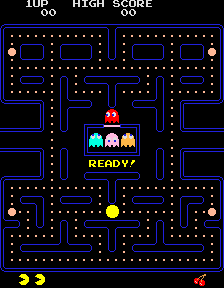
Ms. Pac-Man (1981)
Ms. Pac-Man is a classic early-’80s arcade maze game that refined Pac-Man’s formula with multiple maze layouts, more varied ghost behavior, and a faster, more unpredictable flow—helping it become one of the most beloved coin-op sequels ever made.
Game Data
| Release Year | 1981 |
| Developer | General Computer Corporation / Midway |
| Publisher | Midway |
| Platform | Arcade |
| Genre | Maze / Arcade |
| Players | 1–2 (alternating) |
| Original Media | Arcade Cabinet |
Gameplay:
Clear each maze by eating pellets while avoiding the four ghosts. Power pellets let you turn the tables
briefly and eat ghosts for big points, while fruit bonuses add risk/reward routes through the maze.
Story:
There’s no deep narrative—Ms. Pac-Man’s “story” is the arcade challenge itself: survive longer, score higher,
and master increasingly fast, unforgiving patterns.
Trivia:
Multiple maze layouts and less predictable ghost movement made it feel fresher and more replayable than many
contemporary sequels, helping cement its long-term arcade popularity.
Ms. Pac-Man is often remembered as the “perfect sequel”: it keeps the instantly readable Pac-Man core, but adds variety and unpredictability that rewards both routing skill and improvisation.


Screenshots / Media


Timeline / Versions
Why Ms. Pac-Man Was Historically Important
Ms. Pac-Man proved that smart iteration could outperform the original: varied maze layouts, tighter pacing, and more dynamic ghost behavior turned a familiar concept into a deeper, longer-lasting arcade staple—one that helped define what players wanted from sequels.