- Retail escalation: it takes the Wolfenstein formula and stretches it into one longer, more premium-feeling campaign.
- Mythic mood: the stolen holy relic gives the whole game a darker, stranger identity than basic Nazi-bunker action.
- More bosses, more push: it leans harder into endgame confrontation, special encounters, and one-way momentum.
- Historical position: it is one of the clearest stepping stones between Wolfenstein 3D’s breakthrough and Doom’s coming revolution.
“Not the shockwave itself — but the sharpened echo right before Doom.”
Less revolutionary than Wolfenstein 3D, yet more concentrated as a retail-grade refinement of the same violent grammar.
The Wolfenstein Follow-Up That Feels Like a Darker Ritual
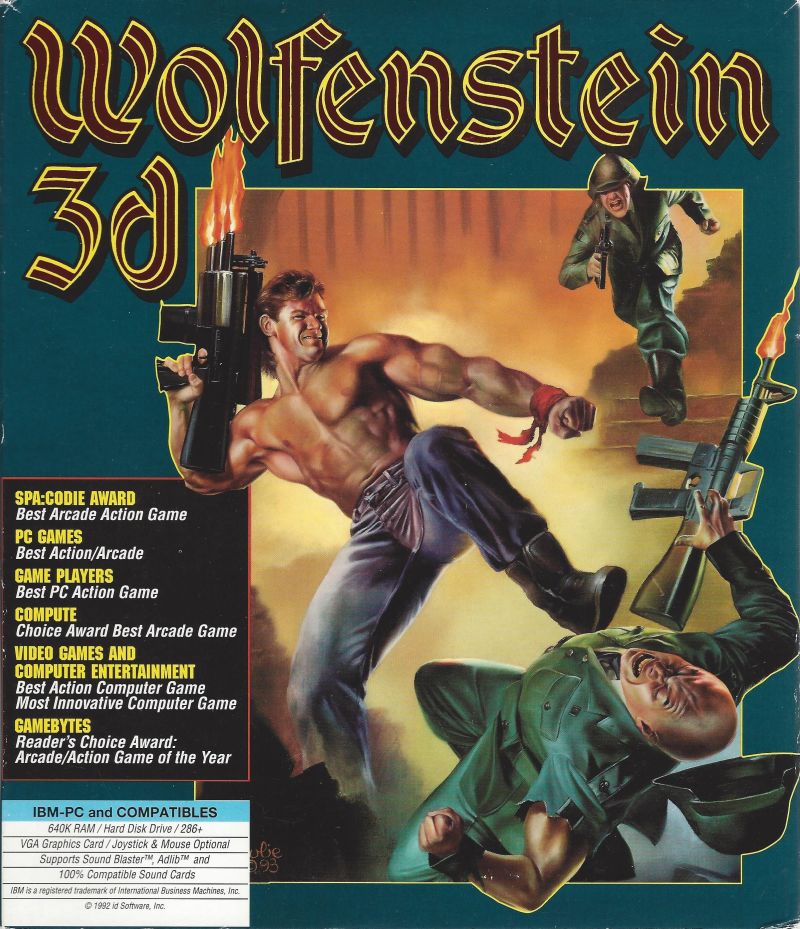
Spear of Destiny is easy to treat as “more Wolfenstein,” but that undersells what makes it interesting. It is not simply another round of corridor shooting. It is id Software testing what happens when the same engine, same basic rules, and same forward drive are pushed into a more commercial, more mythic, and slightly more theatrical shape. The result is a game that still feels raw, fast, and readable — but also more deliberate about boss escalation, relic-movie atmosphere, and the sense that the player is entering a single extended descent instead of hopping through clean shareware episode structure.
Game Data
| Title | Spear of Destiny |
| Release Year | 1992 |
| Developer | id Software |
| Publisher | FormGen |
| Platform | MS-DOS |
| Genre | First-person shooter |
| Players | Single-player |
| Original Format | Commercial retail floppy release |
| Core Loop | Clear floors, hunt secrets, grab keys, survive bosses, reclaim the Spear |
Fast corridor combat, key-gated progression, hidden pushwalls, treasure runs, one-long-episode structure, and heavier boss emphasis than the shareware Wolfenstein format.
During World War II, B.J. Blazkowicz infiltrates the Nazi stronghold to recover the Spear of Destiny — the relic believed to make Hitler unstoppable while it remains in enemy hands.
Unlike Wolfenstein 3D’s familiar multi-episode structure, Spear of Destiny is framed as one longer commercial campaign — a retail push toward something broader and more climactic.
Review / Why It Still Has Teeth
Spear of Destiny still makes its case quickly because the core Wolfenstein grammar remains so brutally legible. You move fast. You open doors. You react. You push walls. You survive or you do not. That clarity is still one of the game’s biggest strengths. It does not need long explanation or mechanical clutter to create tension. The entire experience is built from speed, angle-reading, and plain violent momentum.
WHAT MAKES IT DIFFERENT FROM WOLFENSTEIN 3DThe biggest difference is not just “more levels.” It is shape. Spear of Destiny feels like a more directed descent. The relic framing gives the campaign a stronger central objective, and the progression feels more like a mounted assault toward something cursed, protected, and increasingly unstable. That change gives the game an identity beyond simple expansion.
THE VALUE OF THE LONGER CAMPAIGNBecause it is structured as one larger retail run, Spear of Destiny has a slightly different emotional rhythm than Wolfenstein 3D. It feels less like an array of missions and more like one extended operation. That helps the bosses land harder and gives the later stages a stronger sense of build. The game is still mechanically simple, but it uses that simplicity with more commercial confidence.
WHERE IT SHOWS ITS AGEIt is still bound by the same technical walls that Wolfenstein 3D could never escape: flat planes, narrow environmental language, limited enemy behavior, and repetition that later shooters would demolish. If you come to it from Doom, Duke 3D, Quake, or modern retro shooters, Spear of Destiny can feel like a lane rather than a landscape. But inside that lane, it still pushes with real conviction.
FINAL VERDICTSpear of Destiny remains worth playing because it is not just a historical add-on. It is a useful, still-playable expression of how quickly id Software was refining the first-person shooter in 1992. It may not be the seismic event that Wolfenstein 3D was, but it is a sharper, stranger, more purposeful companion piece — and a very revealing one.
Why Historically Important
Spear of Destiny matters historically because it shows how quickly the early FPS was moving from breakthrough novelty toward commercial consolidation. Wolfenstein 3D had already proved that the form could explode. Spear of Destiny shows what came next: a retail product, a longer structure, a stronger central premise, and a willingness to push the same engine toward a more premium-feeling campaign.
It also matters as one of id Software’s final major exercises in the Wolfenstein framework before Doom changed the ceiling completely. You can feel the studio stretching against its own current limits: more emphasis on confrontation, stronger endgame drama, more identity in the framing. The engine is still restrictive, but the design ambition is already pushing toward something bigger.
That makes Spear of Destiny one of the clearest “bridge” games in FPS history. It sits between the raw popularization of Wolfenstein 3D and the total redefinition of Doom. It may not have rewritten the language on its own, but it documents the genre gaining mass, confidence, and retail shape in real time.
Timeline / Key Milestones
Wolfenstein 3D explodes into the PC scene and establishes the fast first-person action template that Spear of Destiny will immediately build on.
id Software develops Spear of Destiny as a commercial prequel, reusing the engine but pushing the structure toward a longer single-campaign format.
Spear of Destiny launches for DOS through FormGen as the first big retail companion to Wolfenstein 3D.
Doom follows the year after, making Spear of Destiny feel even more clearly like the immediate pre-Doom evolutionary step.
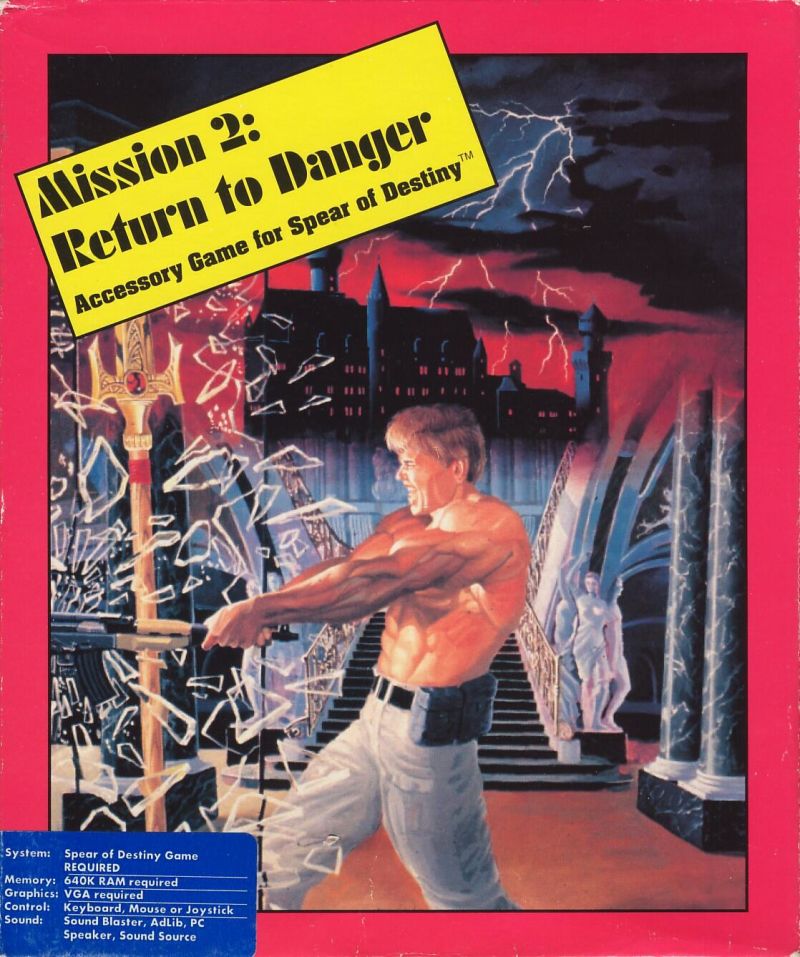
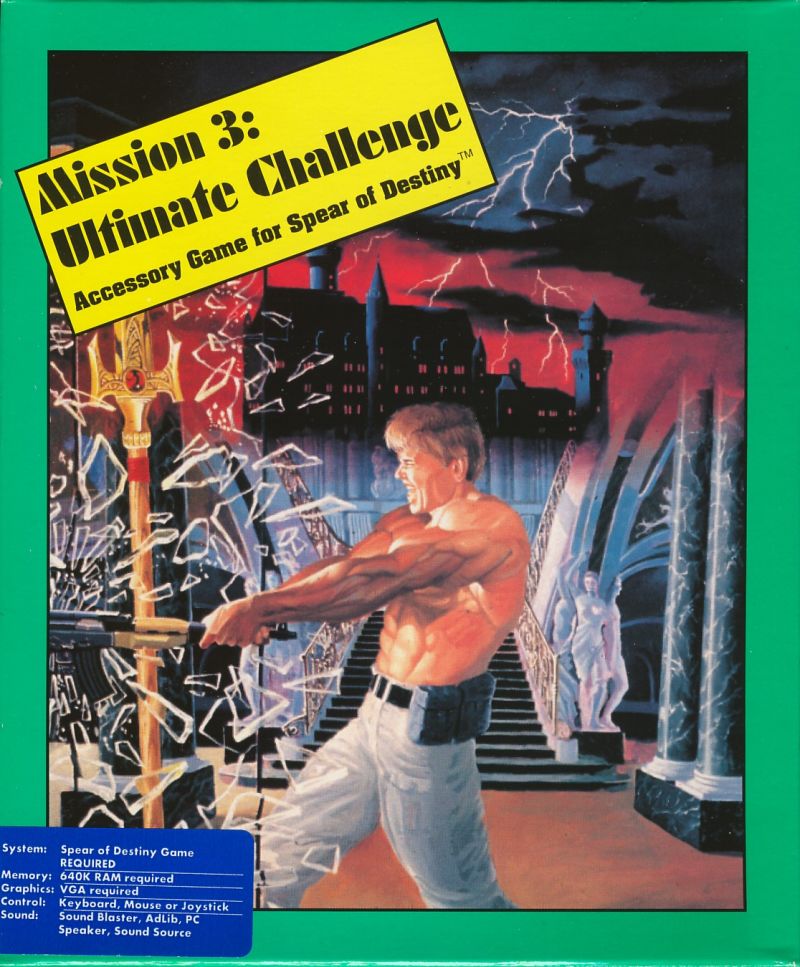
Return to Danger and Ultimate Challenge extend the Spear branch with official accessory missions that keep the engine alive a little longer.
Modern reissues and preservation bundles keep Spear of Destiny accessible as part of the broader Wolfenstein DOS lineage.
It survives as one of the most revealing companion pieces in FPS history: not the revolution, but the sharpened step right before it.
Where to Play / Collect Today
Modern PC bundle / re-release
The easiest way to play today is usually through the modern Wolfenstein 3D package on PC, where Spear of Destiny is commonly bundled alongside the base game.
MAIN VERSIONPlay after Wolfenstein 3D
Even though Spear of Destiny is framed as a prequel, it lands best historically after Wolfenstein 3D because you can feel the exact refinement from one to the next.
START THEREAdd the mission packs
Return to Danger and Ultimate Challenge are the natural follow-up for players who want the full Spear branch and not just the main 1992 release.
SEE FULL BRANCH