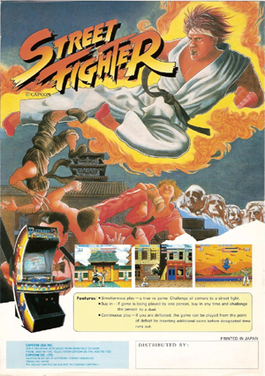
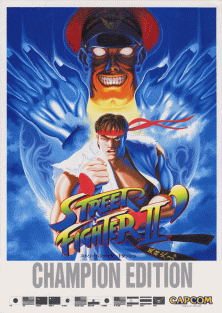
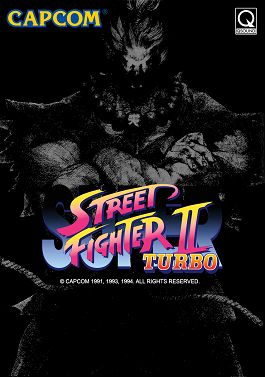
- Genre-defining leap: Street Fighter II did not just improve the fighter — it made the modern fighting game commercially real.
- Roster power: eight distinct playable fighters gave arcades personality, rivalry, and repeat experimentation.
- Mechanical clarity: the six-button layout and special-move grammar made the game deep without feeling inaccessible.
- Historical force: few games in any genre so clearly reset player expectations, arcade culture, and competitive play.
“The moment fighting games stopped being a concept and became a worldwide language.”
Street Fighter II is not just a classic sequel — it is one of the cleanest genre takeovers in video game history.
The Arcade Shockwave of Competitive Fighting
Street Fighter II still feels important before you even begin measuring its legacy. Pick a character, hear the music, see the versus screen, and the game immediately communicates identity. Ryu does not feel like Chun-Li. Guile does not feel like Zangief. Dhalsim does not feel like anyone else in arcade history at that moment. That distinctiveness is a huge part of why the game detonated so hard. It was not merely a better sequel. It was a system that generated rivalry, discovery, local legends, and the feeling that every cabinet could become its own little sporting arena.
Game Data
| Title | Street Fighter II: The World Warrior |
| Release Year | 1991 |
| Developer | Capcom |
| Publisher | Capcom |
| Original Platform | Arcade |
| Arcade Hardware | Capcom CP System (CPS-1) |
| Later Ports | SNES, DOS, Amiga, Atari ST, C64, Game Boy and more |
| Genre | 2D fighting |
| Players | 1–2 players |
| Original Format | Arcade cabinet / PCB |
| Core Loop | Learn character, win rounds, build matchup knowledge, dominate locally |
Six-button controls, special-move execution, spacing, anti-airs, throws, footsies, character mastery, and a two-out-of-three-round structure that stays readable under pressure.
Ryu, Ken, Chun-Li, Guile, Blanka, E. Honda, Dhalsim, and Zangief formed one of the most iconic playable rosters in game history, followed by Balrog, Vega, Sagat, and M. Bison as boss characters.
Street Fighter II’s combo logic was famously discovered by players and later embraced by the genre as a defining competitive mechanic.
Review / The Game That Makes Rivalry Feel Physical
Street Fighter II makes a huge impression because it marries simplicity and depth in a way that still feels almost surgical. The immediate rules are clear: deplete the opponent’s life bar, win two rounds, learn your moves. But the moment two humans face each other, the game expands. Suddenly every jump is a question, every fireball a test, every crouch a threat. That transformation from obvious rules to emergent mind game is why the cabinet became magnetic.
THE GENIUS OF THE CASTThe character design is one of the great masterstrokes here. Street Fighter II does not offer minor palette changes disguised as variety. It offers radically different rhythms. Guile controls horizontal space. Zangief terrifies at close range. Dhalsim warps distance itself. Chun-Li introduces speed and elegance. Ryu feels like the clean universal baseline. Even before balance becomes a deeper conversation, the cast gives players a reason to choose a side and defend that identity.
WHY THE CONTROLS ENDUREDThe six-button layout is crucial because it creates nuance without clutter. Three punch strengths and three kick strengths make the difference between poking, punishing, and committing. Add command motions on top, and the game suddenly has a grammar that is mechanical, expressive, and easy to remember once it settles into muscle memory. The result is a design that feels rich without feeling noisy.
COMBOS, FOOTSIES, AND CULTUREStreet Fighter II’s accidental combo system matters not just as a mechanic, but as a cultural spark. Players discovered that some attacks linked into others in ways the developers had not fully foregrounded. That discovery opened the door to a deeper understanding of timing, pressure, and optimization. Alongside footsies, anti-airs, matchup knowledge, and local adaptation, it helped turn the game into a competitive study rather than a disposable quarter-eater.
WHERE AGE SHOWSThe original World Warrior is not the final form most competitive players settle on today. Later revisions refined speed, balance, and features. Certain characters and rules here are rougher, harsher, and less flexible than later updates. But that roughness is part of the historical picture. The original release matters precisely because it contains the shock of the first explosion before the tuning phases begin.
FINAL VERDICTStreet Fighter II remains essential because it is one of the rare games where historical significance and present-tense playability reinforce each other. It still teaches. It still provokes. It still creates arguments. More importantly, it still makes competitive play feel personal. That is a rare kind of permanence.
Why Historically Important
Street Fighter II is historically important because it transformed fighting games from a promising concept into a stable, massively popular form. It refined the special-move logic of the original Street Fighter, introduced a broader and more charismatic roster, formalized the six-button structure, and created a two-player competitive environment that arcades could instantly rally around.
It also helped revive arcade culture at a crucial moment. The cabinet was not simply successful; it was socially explosive. Spectators gathered. Local hierarchies formed. Rivalries became regular events. Winning a match against a real person mattered more than a score table, and that shift changed the energy of arcades. Street Fighter II helped move competitive play from chasing points to defeating people.
Just as importantly, the game set the template for the genre’s future. Character differentiation, matchup study, discovered combo depth, update revisions, home-port prestige, tournament culture — all of these became central pillars of fighting games after Street Fighter II. Even when later titles surpassed it in speed, balance, or technical complexity, they were still building inside a space that this game opened.
Timeline / Key Milestones
Street Fighter II: The World Warrior launches in arcades and quickly becomes one of the defining competitive and commercial phenomena of the early 1990s.
Champion Edition arrives and opens up the boss characters as playable fighters while introducing mirror matches, proving the revision model can keep the scene alive.
The Super Nintendo port becomes a landmark home conversion and helps push Street Fighter II from arcade giant to household obsession.
Speed and refinement continue through Hyper Fighting, while ports and derivatives spread the game’s influence across home systems and regional markets.
Super Street Fighter II Turbo gives the broader sub-series one of its most enduring competitive forms, cementing the revision lineage as a core part of fighting-game culture.
Whether through compilations, tournaments, or design history, Street Fighter II remains the genre’s most famous baseline and one of Capcom’s greatest landmarks.
Where to Play / Collect Today
Street Fighter 30th Anniversary Collection
The easiest modern route is the official anniversary compilation, which preserves the arcade legacy and packages Street Fighter II inside a broader historical context.
MODERN OPTIONOriginal arcade PCB / cabinet
For the truest historical experience, the original arcade hardware still delivers the exact cabinet energy, pacing, sound, and social pressure that made the game legendary.
COLLECTOR ROUTESNES cartridge route
As a home-era object, the Super Nintendo version remains one of the most famous arcade-to-console conversions ever made and a major piece of the game’s wider legacy.
SEE VERSION