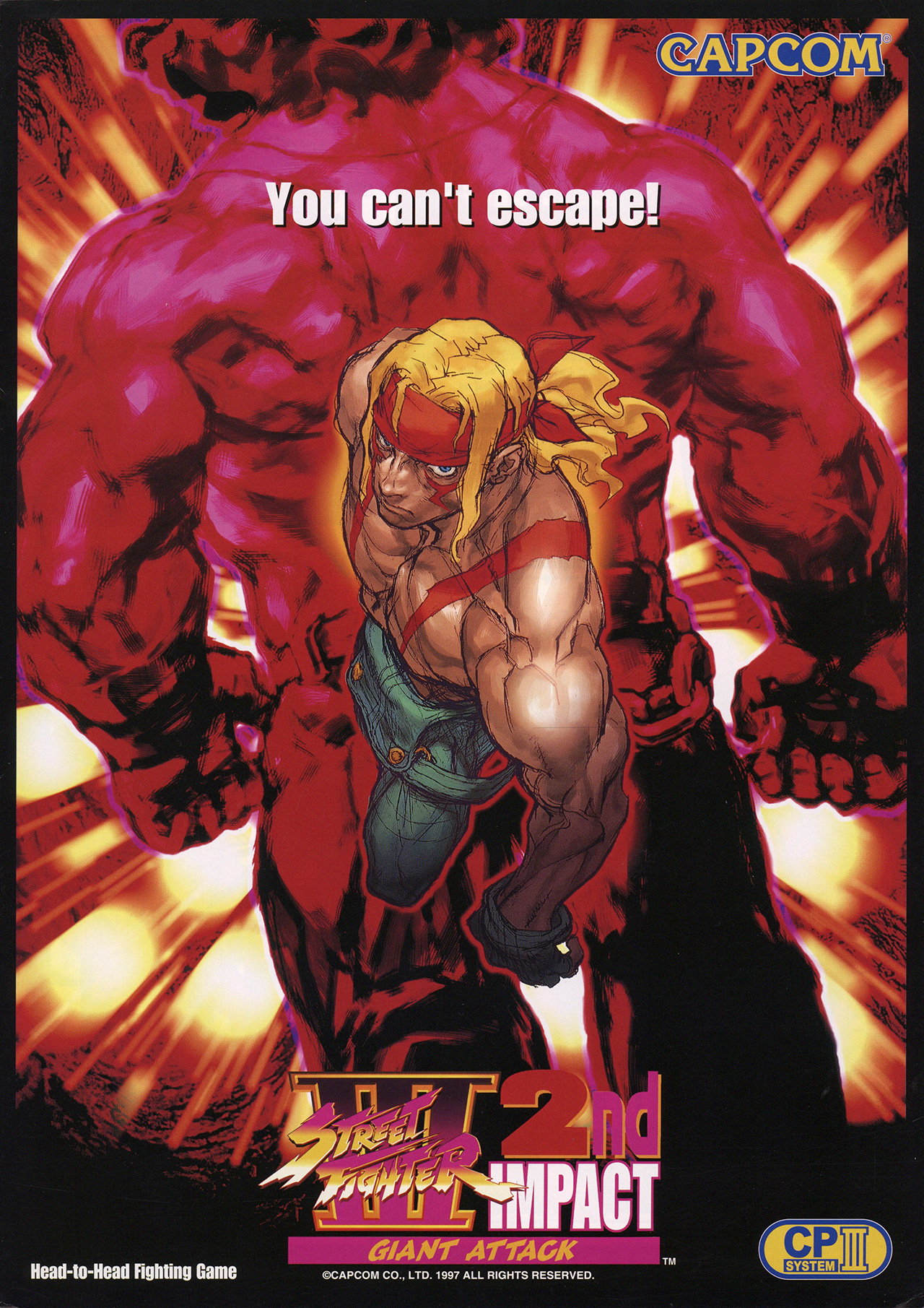
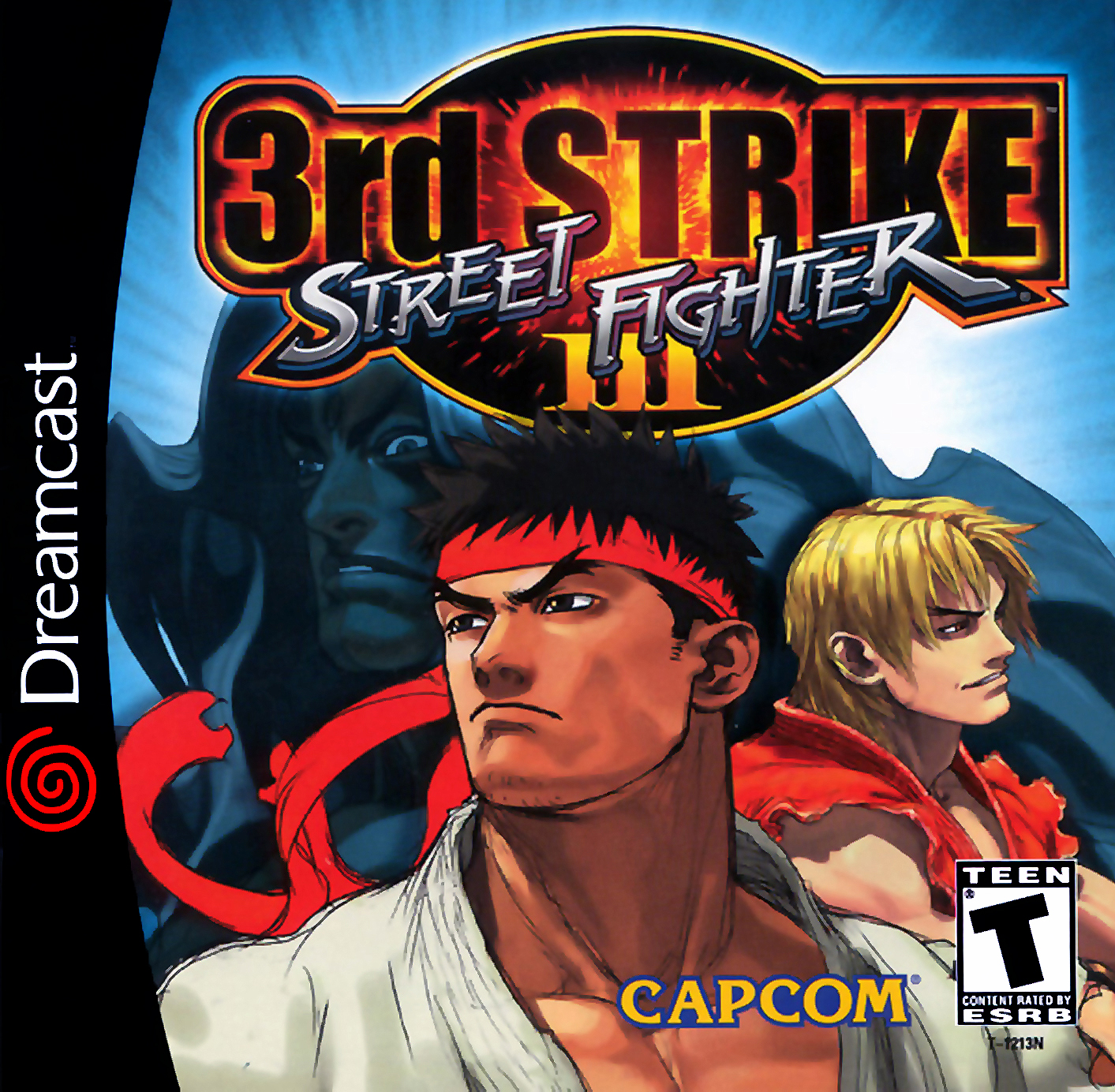
- Mechanical identity: parries instantly gave Street Fighter III its own risk-reward language.
- Sprite craftsmanship: the CPS III hardware let Capcom push beautiful, expressive 2D animation.
- Roster gamble: keeping only Ryu and Ken from the older cast made the game feel daring and divisive.
- Historical importance: New Generation was the first step toward the competitive mythology later associated with 3rd Strike.
“Less a safe sequel than a total declaration of style.”
It did not try to repeat Street Fighter II — it tried to replace the conversation.
The Risky Reinvention After Street Fighter II
Street Fighter III: New Generation is one of the most fascinating “break with the past” sequels in arcade history. Instead of leaning on the guaranteed comfort of Chun-Li, Guile, Zangief, and the rest of the world-famous cast, Capcom kept only Ryu and Ken, then built a new competitive identity around fresh characters, sharper animation, and a far more technical defensive idea: the parry. The result was not an instant populist smash, but it was a creative swing with real teeth — and one that still feels alive when played today.
Game Data
| Title | Street Fighter III: New Generation |
| Release Year | 1997 |
| Developer | Capcom |
| Publisher | Capcom |
| Platform | Arcade / Capcom CP System III |
| Genre | 2D fighting game |
| Players | 1–2 players |
| Original Format | Arcade board / cabinet release |
| Core Loop | Read, parry, punish, confirm into Super Arts |
Parrying, dashes and retreats, leap attacks, character-specific Super Arts, sharper spacing battles, and highly expressive sprite animation that communicates impact and vulnerability.
A new world tournament rises around the mysterious Gill and the shadow of the Illuminati. Alex becomes the central new face, while Ryu and Ken serve as the bridge between eras.
The game introduced parrying to the series and radically replaced the old cast, keeping only Ryu and Ken from the classic mainline lineup.
Review / Why It Still Feels So Distinct
The first thing that still lands is not even the roster change — it is the motion. New Generation looks expensive, deliberate, and alive in a way many 1990s fighters still do not. Characters do not merely attack; they shift weight, coil, snap, and recover with a sense of force that gives every exchange texture. Even before you begin to understand the deeper systems, the game sells its seriousness through animation quality alone.
THE PARRY EFFECTThe single most important reason this game still matters is parrying. Blocking is familiar; parrying is a statement. It asks the player to meet danger head-on, to read timing instead of simply absorbing pressure. That changes the mood of the match. Suddenly, certainty is fragile. A comfortable string can be turned around. A fireball can become bait. A safe jump can become a mistake. The mechanic gives Street Fighter III a permanent feeling of tension and possibility.
THE ROSTER GAMBLECapcom’s confidence was enormous here. Instead of building on a beloved crowd of icons, the game introduced Alex, Dudley, Elena, Ibuki, Necro, Oro, Sean, Yun, Yang, and Gill, while keeping only Ryu and Ken as anchors. That made the game feel genuinely new, but it also made it harder for some players to embrace immediately. In hindsight, that risk is part of the charm. New Generation feels authored. It has identity. It is not a committee sequel.
WHERE IT SHOWS ITS AGECompared with the later revisions, New Generation is the least complete form of the SFIII idea. It is rougher, less feature-rich, and not yet as fully tuned as 2nd Impact or especially 3rd Strike. Some players will always prefer the later versions because the formula grows more confident there. That is fair. But the first version has a purity and directness of its own: fewer comforts, more manifesto.
FINAL VERDICTStreet Fighter III: New Generation remains more than a prototype. It is already a great fighter in its own right: visually stunning, mechanically sharp, historically crucial, and bold enough to still feel confrontational decades later. It may not be the most famous SFIII revision, but it is the chapter where Capcom took the leap — and that leap still matters.
Why Historically Important
Street Fighter III: New Generation is historically important because it represents a major design pivot at exactly the moment when arcade fighting games were under pressure from both 3D rivals and their own past successes. Capcom answered that pressure not by simplifying the formula, but by refining it: more expressive 2D art, a riskier defensive system, and a willingness to reset audience expectations almost completely.
Its debut of parrying cannot be overstated. That system gave the series a more aggressive defensive vocabulary and helped define the Street Fighter III identity from its first version onward. It also created the kind of mechanic that competitive players could spend years exploring, arguing over, and mastering. Few fighting games gain that kind of long-term internal life.
Just as importantly, New Generation proved that lavish hand-drawn 2D could still feel premium in the late 1990s. The game did not follow the era’s dominant 3D trend; it doubled down on sprite work and animation craft. Even players who prefer later SFIII revisions still inherit the visual and mechanical statement first made here.
Timeline / Key Milestones
Street Fighter III: New Generation launches in arcades on Capcom’s CP System III hardware, introducing parries, Super Arts, and a mostly new cast.
Capcom rapidly iterates on the formula with Street Fighter III: 2nd Impact, confirming that SFIII is a platform for continued revision rather than a one-off experiment.
3rd Strike arrives and eventually becomes the most celebrated revision, but its foundations in art, pacing, and parry logic are already present in New Generation.
Street Fighter III: Double Impact brings New Generation and 2nd Impact together on Dreamcast, giving the early SFIII games a home-console route.
New Generation returns in Street Fighter 30th Anniversary Collection, helping preserve the full arc of the Street Fighter III trilogy for modern players.
While 3rd Strike carries the strongest tournament mythology, New Generation remains the brave first step that made the entire SFIII language possible.
Where to Play / Collect Today
30th Anniversary Collection
The cleanest modern legal route is Capcom’s anniversary compilation, which preserves the arcade original alongside the broader series timeline.
MODERN OPTIONOriginal CPS III arcade hardware
For the purest tactile experience, an original cabinet or dedicated arcade setup still delivers the game’s intended speed, sound, and visual punch.
COLLECTOR ROUTEDreamcast: Double Impact
Double Impact remains the key historical home release for early SFIII, packaging New Generation together with 2nd Impact for console players.
SEE VERSION4NERDS Collector Marketplace
A curated access point for players, collectors, and retro fans: original-market searches, modern related items, and future handmade display pieces — clearly marked as partner links where applicable.
Shop Street Fighter III originals
Browse current Street Fighter III: New Generation offers on eBay — ideal for arcade materials, Dreamcast-related releases, flyers, boards, manuals, import items, and collector-grade Capcom fighting artifacts.
- Arcade-era items, flyers, boards, and related releases
- Dreamcast / compilation variants and collector editions
- Condition and price comparison across sellers
Paid partner link / Werbung — availability, condition, seller terms, and pricing depend on eBay sellers.
Browse SFIII-related finds
Explore Amazon for Street Fighter III-related items: Capcom collections, arcade-history books, controllers, fight sticks, strategy material, merchandise, and modern retro-gaming accessories.
- Collections, books, merch, and accessories
- Fight-stick and controller browsing
- Capcom and Street Fighter-related extras
Paid partner link / Werbung — as an Amazon Associate, 4NERDS Gaming may earn from qualifying purchases.
Curated Etsy picks coming soon
Planned for handmade fighting-game art, display objects, shelf pieces, prints, and museum-style collector items that match the 4NERDS archive aesthetic.
- Wall art and display-focused pieces
- Handmade and fan-crafted style items
- Added once the setup is ready
Etsy affiliate integration will be added after the tracking setup is approved and tested.
Transparency note: 4NERDS Gaming does not sell these items directly. External shops, prices, stock, shipping terms, and seller conditions may change at any time. eBay and Amazon links in this section are sponsored / paid partner links. Etsy is currently shown as an upcoming integration and does not link out yet.