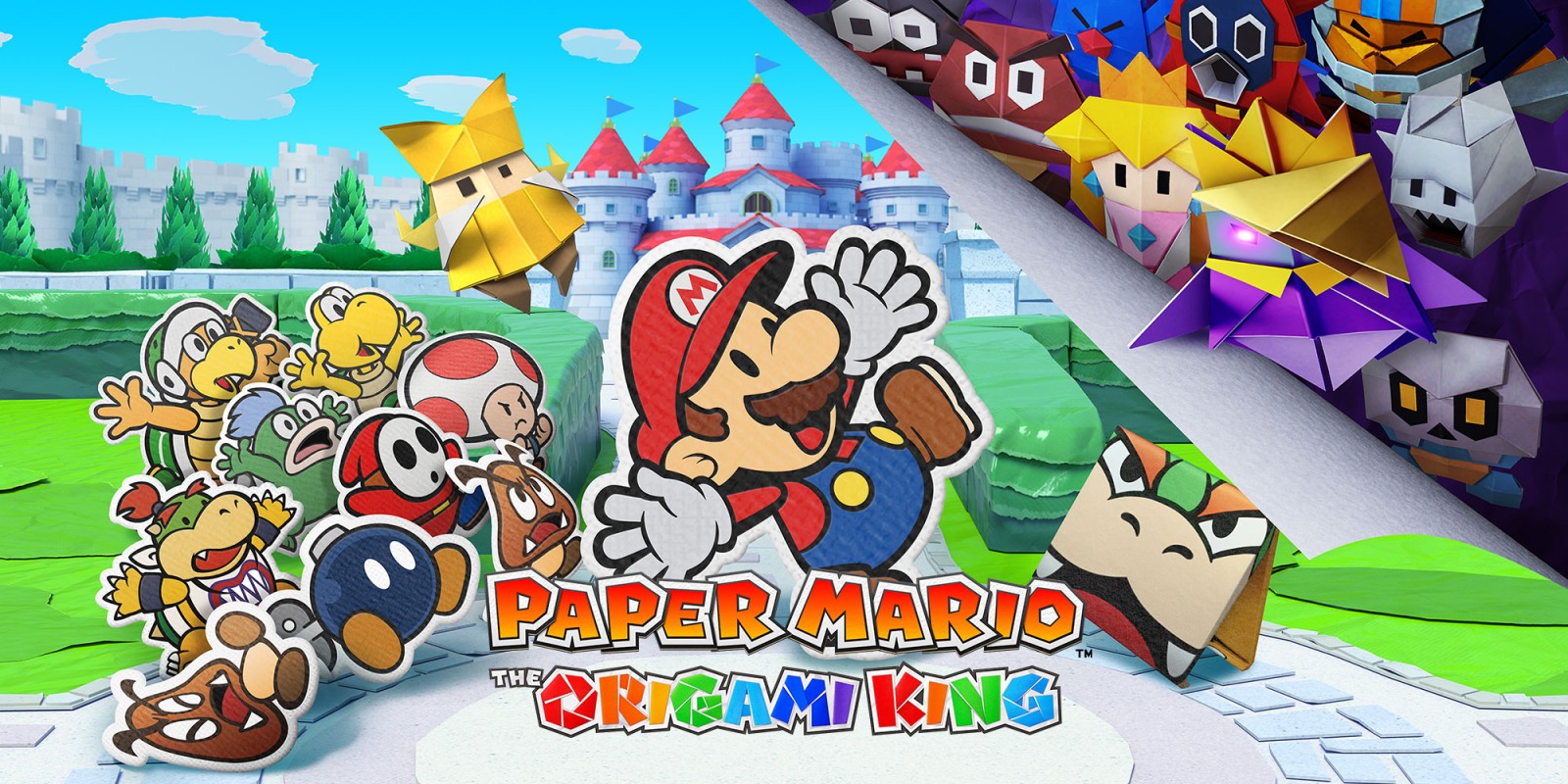
- Brilliant core hook: the 2D-to-3D flip mechanic still feels clever, readable, and full of discovery.
- Unusually strong writing: Count Bleck, Tippi, and the wider cast give the game an emotional weight rare for Mario.
- Series experiment: it abandons classic Paper Mario combat, but gains identity by becoming something stranger.
- Cult legacy: it remains one of the most debated and beloved “oddball” Mario games of the Wii generation.
“A Mario game about paper, perspective, and surprisingly real heartbreak.”
More experimental than comfortable — and that is exactly why people still remember it.
The Boldest Detour in the Paper Mario Line
Super Paper Mario is one of those Nintendo games that becomes more interesting with time. At launch, it confused some players because it moved away from the turn-based structure of the earlier Paper Mario titles. But that very break is what gives the game its identity. It is part platformer, part role-playing adventure, part puzzle toy, and part storybook tragedy. The result is uneven in places, but also unusually memorable — a Mario game that feels willing to be strange, sad, funny, and mechanically experimental all at once.
Game Data
| Title | Super Paper Mario |
| Release Year | 2007 |
| Developer | Intelligent Systems / Nintendo SPD |
| Publisher | Nintendo |
| Platform | Wii |
| Genre | Platformer, action RPG hybrid |
| Players | Single-player |
| Original Format | Wii optical disc |
| Core Loop | Run, flip, solve, level, read, advance |
Real-time platforming, 2D/3D dimension flipping, character-switching, Pixl abilities, puzzle solving, light RPG progression, and strong chapter-based world identity.
Count Bleck seeks to use the Chaos Heart to destroy the universe. Mario, Peach, Bowser, and Luigi travel across multiple worlds to gather the eight Pure Hearts and stop reality from collapsing.
This is the Paper Mario entry that replaced turn-based battles with side-scrolling action and made perspective itself the game’s main mechanic.
Review / Why It Still Feels So Unusual
The first thing that makes Super Paper Mario stand out is how different it feels from both mainline Mario and earlier Paper Mario. Movement is immediate and side-scrolling, but the structure around it is more narrative and more layered than a simple platformer. Within the first stretch, the game already signals that it wants to be playful with space, perspective, and genre expectations. You are not just crossing levels. You are entering a world designed around the idea that “flat” and “deep” can suddenly trade places.
THE FLIP MECHANICThe core hook still works because it is so conceptually clean. Press a button, rotate the world, and what looked like a wall becomes a hallway. A dead end becomes a secret path. A harmless stretch becomes a puzzle. The game gets an enormous amount of design value out of that single idea. It is intuitive enough to understand quickly, yet flexible enough to keep feeding discovery across the adventure. Even now, it remains one of Nintendo’s smartest “one-button concept” executions.
STORY, TONE, AND WRITINGWhat truly elevates Super Paper Mario is its writing. The script is funny in a Nintendo way, but it is also more reflective, more romantic, and more tragic than many players expect from a Mario game. Count Bleck is not memorable just because he is theatrical. He matters because the story gives him emotional context. Tippi, Nastasia, Dimentio, and the chapter-specific worlds all help create a tone that feels unusually literary for the franchise. This is one of the reasons the game has kept such strong cult affection.
WHERE IT DIVIDES PEOPLEThe biggest divide is easy to understand: if someone came in wanting another turn-based Paper Mario in the style of the first two games, this was never going to feel like a clean continuation. Combat is simpler, platforming sometimes dominates pacing, and the RPG layer is lighter than before. Some sections also lean hard on dialogue or on gimmick chapters that do not work equally well for every player. In other words, it is not the most balanced Paper Mario — it is the most willing to take risks.
FINAL VERDICTSuper Paper Mario remains one of the most distinctive Mario games of its generation because it refuses to behave like a safe sequel. It is clever, eccentric, emotionally richer than expected, and mechanically memorable thanks to its perspective-shifting core. It may not be the Paper Mario every fan wanted, but it absolutely became one of the Paper Mario games people still talk about most.
Why Historically Important
Super Paper Mario is historically important because it marks the moment the Paper Mario series stopped being easy to classify. Instead of repeating the first two games, Nintendo and Intelligent Systems pushed the brand into a hybrid space where platforming, puzzle design, role-playing systems, and unusually story-heavy writing could coexist. That made it controversial to some fans, but it also made it historically significant. It is one of the clearest examples of Nintendo choosing reinvention over comfort.
It also mattered as an early Wii-era Mario title. While other major Mario releases on the system represented pure polish or pure spectacle, Super Paper Mario represented experimentation. Its 2D/3D mechanic used spatial perspective as a central design language, and that gave the game a hook still easy to explain years later. Few Mario mechanics of the period are as instantly communicable.
Finally, the game’s reputation has grown because of its tone. Super Paper Mario showed that Mario storytelling could be funny, surreal, romantic, apocalyptic, and surprisingly sincere without collapsing under its own ambition. That mixture of mechanical experimentation and emotional ambition is exactly why the game still feels culturally alive instead of merely archived.
Timeline / Key Milestones
The project is initially associated with GameCube-era development before being shifted into the Wii launch window period.
Super Paper Mario launches on Wii and becomes the third major entry in the Paper Mario line.
Critics respond strongly to the flip mechanic, the story, and the originality, while some longtime fans debate the loss of traditional turn-based structure.
The game re-enters circulation under the Nintendo Selects label, extending its visibility in the Wii library.
A Wii U digital release helps preserve access and keeps the title part of Nintendo’s later archival ecosystem.
It stands as one of the most passionately discussed Paper Mario games — divisive at release, beloved in retrospect.
4NERDS Collector Marketplace
A curated access point for players, collectors, and Paper Mario fans: original Wii copies, boxed editions, manuals, current marketplace listings, related books, modern Nintendo extras, and future display pieces — clearly marked as partner links where applicable.
Shop original Wii copies
Browse current Super Paper Mario offers on eBay — useful for boxed Wii copies, manuals, disc-only variants, regional editions, Nintendo Selects releases, and collector-grade finds.
- Original Wii and Nintendo Selects versions
- Boxed copies, manuals, and disc-only listings
- Condition, region, and price comparison
Paid partner link / Werbung — availability, seller terms, shipping, and pricing depend on eBay sellers.
Browse related Paper Mario finds
Explore Amazon for Super Paper Mario-related items, retro gaming books, Nintendo accessories, Paper Mario-themed collectibles, and display-friendly extras for a wider Mario collection.
- Books, guides, accessories, and merch
- Gift ideas and modern Nintendo products
- Broader Paper Mario and Wii-era browsing
Paid partner link / Werbung — as an Amazon Associate, 4NERDS Gaming may earn from qualifying purchases.
Curated Etsy picks coming soon
Planned for handmade Paper Mario art, paper-craft inspired prints, Wii display pieces, shelf decor, and museum-style collectibles that match the 4NERDS archive aesthetic.
- Wall art and display-focused pieces
- Handmade and fan-crafted style items
- Added once the setup is ready
Etsy affiliate integration will be added after the tracking setup is approved and tested.