The Legend of Zelda:Breath of the Wild
The Zelda game that broke the series open: a vast, reactive Hyrule built around curiosity, chemistry, survival, and player-led discovery rather than rigid route-following.
Why it changed everything
- True freedom: the game trusts the player to set route, pace, priorities, and method.
- Systemic design: weather, fire, physics, metal, stamina, food, and terrain constantly interact.
- Exploration magic: nearly every hill, ruin, shrine, tower, and silhouette invites investigation.
- Historical weight: it redefined both modern Zelda and the wider open-world design conversation.
“A reinvention built not only on scale, but on player trust.”
Not just a landmark Zelda — one of the defining design statements of the 2010s.
The Open-Air Reinvention
Breath of the Wild feels historic because it does not merely expand Zelda — it rewrites the relationship between player and world. Instead of funneling you through a tightly gated sequence, it gives you a Hyrule that feels readable, dangerous, and full of possibility from the opening hour onward.
Mountains are not set dressing. Weather is not decoration. Fire is not a scripted effect. Almost everything belongs to one shared physical language, and that is what makes its freedom feel earned rather than cosmetic.
At a glanceBest experienced as both a masterpiece of exploration and a case study in how world design can become the game’s main reward loop.
Game Data
| Title | The Legend of Zelda: Breath of the Wild |
| Release Year | 2017 |
| Release Date | March 3, 2017 |
| Developer | Nintendo EPD |
| Publisher | Nintendo |
| Platform | Nintendo Switch / Wii U |
| Genre | Action-adventure / open-world |
| Players | 1 player |
| Original Format | Game card / disc / digital download |
| Core Loop | Observe, climb, improvise, survive, discover |
Gameplay pillars
Freeform exploration, climbing and gliding, shrine solving, systemic combat, environmental chemistry, survival management, memory recovery, and player-authored discovery.
Story
Link awakens after a century of ruin to a broken Hyrule still haunted by Calamity Ganon. He must recover lost memories, free the Divine Beasts, and decide how to confront a kingdom that has already learned to survive without him.
Most famous design fact
The Great Plateau is one of gaming’s strongest invisible tutorials, teaching survival, weather, climbing, combat, and nonlinearity without collapsing into explicit hand-holding.
Review / Freedom, Atmosphere, and Systems in Perfect Tension
The opening is extraordinary because it feels calm rather than desperate to impress. You step out of the Shrine of Resurrection, see the kingdom stretch beneath you, and realize the game’s biggest promise is not spectacle alone, but possibility.
That first reveal works because the world below is not fake scenery. It is the actual play space, and the game trusts you to read it.
Open-air HyruleHyrule succeeds because distance always means something. A strange ruin, a tower on a ridge, smoke in the distance, a dragon in the sky, a suspicious rock shape — the map constantly creates curiosity loops.
One of the game’s greatest strengths is that it prefers systems to fixed solutions. Fire spreads through grass. Metal attracts lightning. Stasis turns ordinary objects into improvised weapons.
Bombs, wind, food, clothing, cliffs, rivers, and temperature all matter. The result is that players do not simply solve authored problems — they invent approaches.
Where it divides opinionThe biggest tradeoff is that some traditional Zelda pleasures are softened. The Divine Beasts are clever, but they do not have the same visual individuality as the most beloved classic dungeons. Weapon durability remains divisive.
Final verdictBreath of the Wild is one of the rare games that changes the shape of its own series while also widening the language of its genre. It does not merely succeed as a Zelda title. It succeeds as a redefinition of how exploration can feel.
Why It Matters
Breath of the Wild is historically important because it pulled Zelda away from many of its own established habits. Instead of tightly gated progression built around a fixed item order, it leaned into a world driven by physics, climate, survival, traversal, and player-led experimentation.
It also mattered beyond Zelda. Breath of the Wild became one of the most influential open-world games of its era because it proved that a large map could feel exploratory again. Instead of drowning the player in checklist logic, it trusted terrain, silhouettes, systemic interactions, and environmental mystery.
Commercially and culturally, it was just as powerful. As a launch pillar for Nintendo Switch, it helped define the machine’s early identity and instantly joined the shortlist of must-play modern Nintendo games.
Why it mattered then
It gave Nintendo a modern open-world landmark and proved Zelda could reinvent itself without losing its mythic core.
Why it matters now
It remains a benchmark for environmental curiosity, systemic exploration, and player-trusting world design.
What it changed
It shifted Zelda from structured sequence to open-air possibility and influenced how later games approached freedom and discovery.
Timeline / Key Milestones
Nintendo begins showing a new Zelda with a much broader sense of scale, already hinting that the series is moving toward a freer structure.
Extended public demos reveal climbing, environmental chemistry, survival systems, shrines, and the game’s defining go-anywhere philosophy.
Breath of the Wild launches on Nintendo Switch and Wii U, immediately becoming one of the defining releases of the generation.
The Master Trials and The Champions’ Ballad expand the game with extra gear, challenge content, lore, and late-game mastery material.
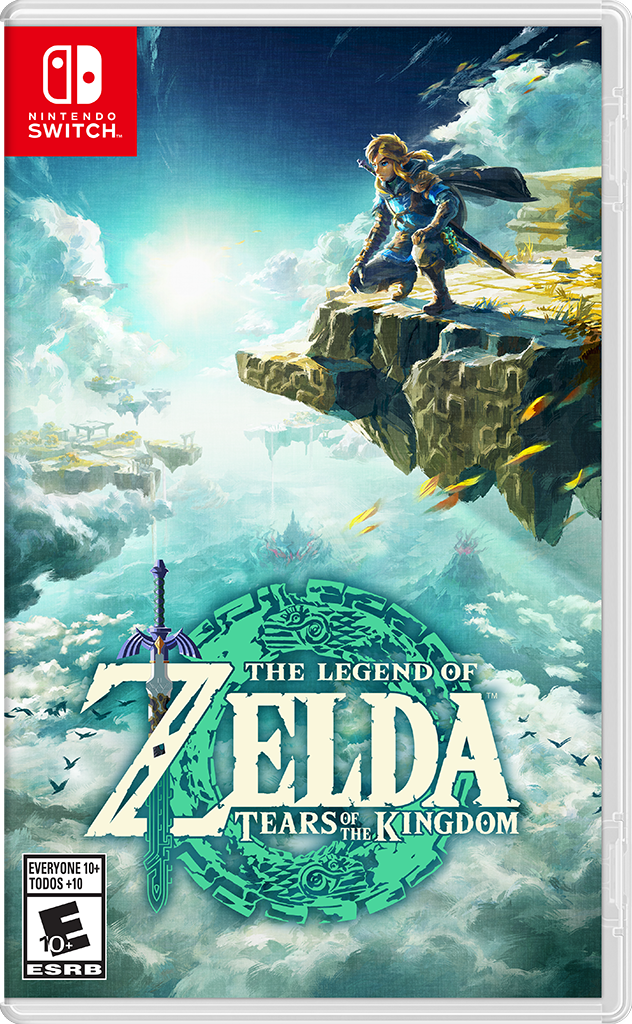
Its open-air philosophy carries directly into Tears of the Kingdom and remains one of the clearest reference points in modern world design.
It remains one of the defining open-world games of its era and a core reason the Switch launch became historically memorable.
The wild horizon changed Zelda — but the Switch box, Wii U edition, guides, amiibo, and launch-era memory are the artifacts.
Breath of the Wild belongs in the collector lane because it connects Nintendo Switch launch history, Wii U end-of-era significance, physical Zelda collecting, amiibo culture, special editions, and one of the most important redesigns in modern Nintendo history.
Where to Play / Collect Today
A modern Zelda landmark with major collector appeal.
For collectors, Breath of the Wild is appealing because it bridges Nintendo Switch launch history, Wii U late-era collecting, a massive Zelda reinvention, special-edition material, and long-term cultural importance.
Amazon notice: As an Amazon Associate I earn from qualifying purchases.
A curated access point for Breath of the Wild fans: Switch copies, Wii U editions, special editions, amiibo bundles, guides, books, accessories, display pieces, and broader Hyrule collector finds.
Shop BOTW collector listings
Browse current Breath of the Wild offers on eBay — useful for Switch copies, Wii U editions, special editions, amiibo bundles, guides, and collector-grade condition comparison.
- Switch and Wii U physical editions
- Special editions, guides, and collector items
- Condition and price comparison
Paid partner link / Werbung — availability, condition, pricing, and shipping depend on individual eBay sellers.
Browse Zelda BOTW finds
Explore Amazon for Breath of the Wild-related items, Zelda books, guides, themed accessories, Nintendo products, and broader Hyrule-inspired extras.
- Books, guides, merch, and accessories
- Gift ideas and modern Zelda products
- Broader Nintendo-themed browsing
Paid partner link / Werbung — as an Amazon Associate, 4NERDS Gaming may earn from qualifying purchases.
Curated Etsy picks coming soon
Planned for handmade Zelda-inspired art, display objects, shelf pieces, prints, and museum-style collector items that match the 4NERDS archive aesthetic.
- Wall art and display-focused pieces
- Handmade and fan-crafted style items
- Added once the setup is ready
Etsy affiliate integration will be added after the tracking setup is approved and tested.