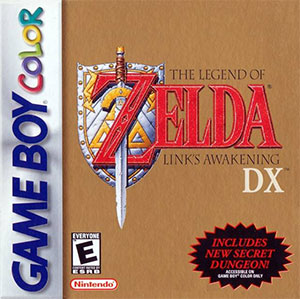
- Portable breakthrough: it proved Zelda could feel complete, rich, and substantial on a handheld.
- Compact brilliance: Koholint Island is dense, memorable, and wonderfully efficient in how it unfolds.
- Emotional texture: beneath the bright surface is one of the series’ most quietly haunting moods.
- Historical weight: it became the template for how big Nintendo adventures could be miniaturized without feeling diminished.
“Small screen, huge heart, unforgettable aftertaste.”
Link’s Awakening is one of the strongest examples of portable design becoming its own art, not just a reduced copy.
A Handheld Zelda That Never Felt Small
Link’s Awakening remains one of Nintendo’s sharpest acts of compression. It takes the structure, mystery, and dungeon-driven rhythm of larger Zelda adventures and condenses them into something tighter, stranger, and often more intimate. Koholint Island feels personal in a way many bigger worlds do not: a place of odd villagers, recurring melodies, portable routines, and a mood that shifts from playful to quietly unsettling without ever breaking its spell.
Game Data
| Title | The Legend of Zelda: Link’s Awakening |
| Release Year | 1993 |
| Developer | Nintendo |
| Publisher | Nintendo |
| Platform | Game Boy |
| Later Versions | Link’s Awakening DX (1998), Nintendo Switch remake (2019), Nintendo Classics / archival reissues |
| Genre | Action-adventure |
| Players | 1 player |
| Original Format | Cartridge |
| Core Loop | Explore island, solve dungeons, gather instruments, awaken the Wind Fish |
Top-down exploration, compact item-gated progression, puzzle-heavy dungeons, secret routes, trading-sequence charm, and carefully layered island backtracking.
After a storm wrecks his ship, Link washes ashore on Koholint Island. To escape, he must gather the eight Instruments of the Sirens and awaken the sleeping Wind Fish.
Link’s Awakening was the first full-sized Zelda adventure built for a handheld, and it established that portable entries could feel just as complete as console ones.
Review / Why Link’s Awakening Still Feels Special
The most impressive thing about Link’s Awakening is how quickly it feels complete. There is no sense of compromise in the opening stretch. The island has identity immediately, the movement and item use feel purposeful, and the adventure begins with the same clean Zelda promise as its console cousins: explore, understand, return stronger. Even now, that clarity is hard to beat.
WHY THE ISLAND WORKSKoholint is one of the strongest small overworlds Nintendo ever made. It is dense without feeling cramped and mysterious without becoming confusing. Because the map is so compact, every new item changes your relationship with the whole world. That gives progression a satisfying snap. You are not just walking further — you are seeing familiar spaces differently.
COMPRESSION AS A STRENGTHLink’s Awakening succeeds because it understands the handheld form instead of fighting it. Sessions can be short, but progress still feels meaningful. Dungeons are tight and memorable. NPC encounters are brief but distinct. The famous trading sequence adds texture and humor without bloating the structure. This is not a miniature epic pretending to be bigger; it is a carefully cut design that knows exactly what to keep.
THE ORIGINAL GAME BOY RHYTHMThe original version does show its hardware limits. Because the Game Boy only offered a small number of buttons, item swapping can be frequent, and that friction is real. But it also gives the game a specific portable tempo. You feel the act of managing a limited toolkit. Later versions smooth this out, yet the original’s interface rhythm remains part of its identity.
TONE AND AFTERTASTEWhat truly sets Link’s Awakening apart is mood. It can be cute, funny, and oddly playful, but it is also filled with a strange softness and unease. The music, the islanders, the recurring dream logic, and the emotional pull of Marin all give the game a texture very different from straightforward heroic fantasy. It is one of the most quietly memorable Zelda adventures because it feels personal rather than monumental.
FINAL VERDICTLink’s Awakening is not merely “great for a handheld.” It is great, full stop. It distilled Zelda into one of its purest and most portable forms while also becoming one of the series’ most distinctive tonal outliers. Compact, clever, and emotionally lingering, it still stands as one of Nintendo’s most elegantly designed adventures.
Why Historically Important
Link’s Awakening is historically important because it proved the Zelda formula could survive the move to handheld hardware without feeling reduced. Before it, portable versions of major console adventures still carried the risk of seeming secondary. Link’s Awakening erased that fear by delivering a real, substantial quest on the Game Boy — one with its own identity, its own tone, and its own lasting reputation.
It also mattered because it showed how much power there is in compression. The game does not try to imitate console scale point-for-point. Instead, it distills the pleasures of Zelda into a tighter island map, smaller but memorable dungeons, and highly efficient progression. That design lesson would echo through Nintendo’s portable philosophy for years.
Finally, Link’s Awakening is important because it gave Zelda one of its most unusual emotional registers. Koholint is not just a puzzle box; it is a place with a dreamlike sadness that separates this game from the series’ more conventional heroic arcs. Even later enhanced editions and remakes still orbit the power of that original mood.
Timeline / Key Milestones
Link’s Awakening arrives on Game Boy and immediately proves that a true, full-scale Zelda adventure can work on portable hardware.
The Game Boy Color enhancement adds color graphics and the exclusive Color Dungeon, giving the adventure a second major life.
The game’s reputation grows as one of the finest portable action-adventures ever made and a foundational Zelda for handheld fans.
Nintendo revisits the game on Switch with a toy-like visual style, modern conveniences, and renewed attention on Koholint Island.
Link’s Awakening remains one of the most cited examples of how to make a world feel rich, complete, and emotionally memorable within a small format.
Where to Play / Collect Today
Switch remake
The 2019 Nintendo Switch remake is the smoothest entry point for many players, with modern convenience, lovely presentation, and easier item management.
MODERN OPTIONNintendo Classics route
Nintendo’s Game Boy classics library keeps Link’s Awakening DX in circulation, making it one of the easiest ways to experience the enhanced portable version.
CLASSIC OPTIONOriginal hardware / Game & Watch route
Original Game Boy or Game Boy Color hardware remains the purest period route, while Nintendo’s Zelda Game & Watch offers a neat modern collector-friendly alternative.
COLLECTOR ROUTE