- Atmosphere first: few 16-bit games feel this gothic, moody, and musically complete from the first screen onward.
- Expanded control: the eight-direction whip and swinging mechanics make Simon more expressive than in the NES originals.
- SNES showpiece: Mode 7 tricks, layered backgrounds, and rich audio made it an early system flex with real substance.
- Historical weight: it remains one of the clearest “classicvania” high points and one of the easiest entry points into the old formula.
“A haunted-house rollercoaster where the whip finally feels like an instrument.”
Not just an upgrade in pixels — an upgrade in motion, tone, and confidence.
The 16-Bit Gothic Showcase
Super Castlevania IV is one of those early Super Nintendo games that still feels premium the moment it begins. It takes the bones of the original Castlevania and rebuilds them with broader movement, richer sound, more elaborate set-pieces, and a stronger sense of theatrical dread. The result is not merely “the same thing, but bigger.” It is a version of classic Castlevania that feels more alive, more inviting, and more cinematically confident without throwing away the series’ old-school backbone.
Game Data
| Title | Super Castlevania IV |
| Release Year | 1991 |
| Developer | Konami |
| Publisher | Konami |
| Platform | Super Nintendo Entertainment System / Super Famicom |
| Genre | Action platformer |
| Players | 1 player |
| Original Format | Cartridge |
| Core Loop | Advance, survive, master spacing, conquer the castle |
Eight-direction whip control, swinging traversal, sub-weapon management, trap reading, boss pattern study, and stage-by-stage atmospheric escalation.
In 1691, Simon Belmont once again marches toward Dracula’s resurrection in Transylvania, armed with the Vampire Killer and the grim certainty that peace has ended.
Simon can attack with the whip in eight directions and even swing from anchor points, making this one of the most flexible pre-Metroidvania Castlevania entries.
Review / Why It Still Plays So Well
The opening moments say almost everything. Candles flicker in the night, the bridge trembles, the music carries real menace, and Simon moves with a clarity the earlier games only hinted at. Super Castlevania IV does not merely present a spooky skin over an action game; it makes atmosphere part of the play. Every stairway, chain, ruined hall, and moonlit exterior feels arranged for mood as much as challenge.
THE WHIP IS THE STARThe most immediate improvement is the whip. Earlier Castlevania games built their tension around restriction: Simon was brave, but stiff. Here, the eight-direction attacks and swinging hooks transform the whip into a true multi-purpose tool. Combat becomes more expressive. Enemy placement feels more theatrical because you can answer from more angles. Traversal gains rhythm. It is still deliberate, but far less awkward, and that makes the whole game feel more generous without becoming soft.
AUDIOVISUAL CONFIDENCEThis is one of the SNES library’s great “sound and space” games. The soundtrack is dramatic, eerie, and memorable even by Konami standards, while the visual presentation uses the hardware not as a gimmick machine but as a stage device. Rotating rooms, layered backgrounds, looming architecture, and richer sprite detail all deepen the sense that you are moving through a cursed place rather than a string of abstract levels.
WHERE IT DIVIDES FANSSome long-time series devotees prefer the harsher edges of the NES trilogy, where movement is stricter and the danger more abrupt. Super Castlevania IV is smoother, more forgiving in motion, and more interested in cinematic mood. That shift is exactly why others consider it the peak of pre-Symphony Castlevania. It depends on whether you value cruelty and rigidity, or elegance and atmosphere. This page falls firmly on the latter side.
FINAL VERDICTSuper Castlevania IV remains one of the great action platformers of the 16-bit era because it understands how presentation and mechanical feel can reinforce each other. The whip is better, the rooms are better, the music is better, the pacing is better, and the entire game feels like a deliberate attempt to make classic Castlevania feel prestigious. It succeeded.
Why Historically Important
Super Castlevania IV matters because it is one of the clearest examples of how a 16-bit sequel could modernize a beloved 8-bit formula without discarding its identity. Rather than replacing classic Castlevania with something unrecognizable, it refined the old rhythm: heavier atmosphere, broader movement, richer audiovisual staging, and a more polished sense of pacing.
It also served as an early statement of SNES capability. The game’s use of Mode 7, layered backgrounds, dramatic sound, and painterly horror imagery helped make it feel like a prestige title for the system. Many games looked brighter or louder; fewer looked this controlled. Konami used the hardware to create dread, not just spectacle.
Just as importantly, it remains a landmark of the “classicvania” branch before the series later evolved into more exploration-heavy forms. For players trying to understand why old Castlevania became so beloved, Super Castlevania IV is one of the best gateways: traditional in structure, but refined enough to still feel generous and beautiful today.
Timeline / Key Milestones
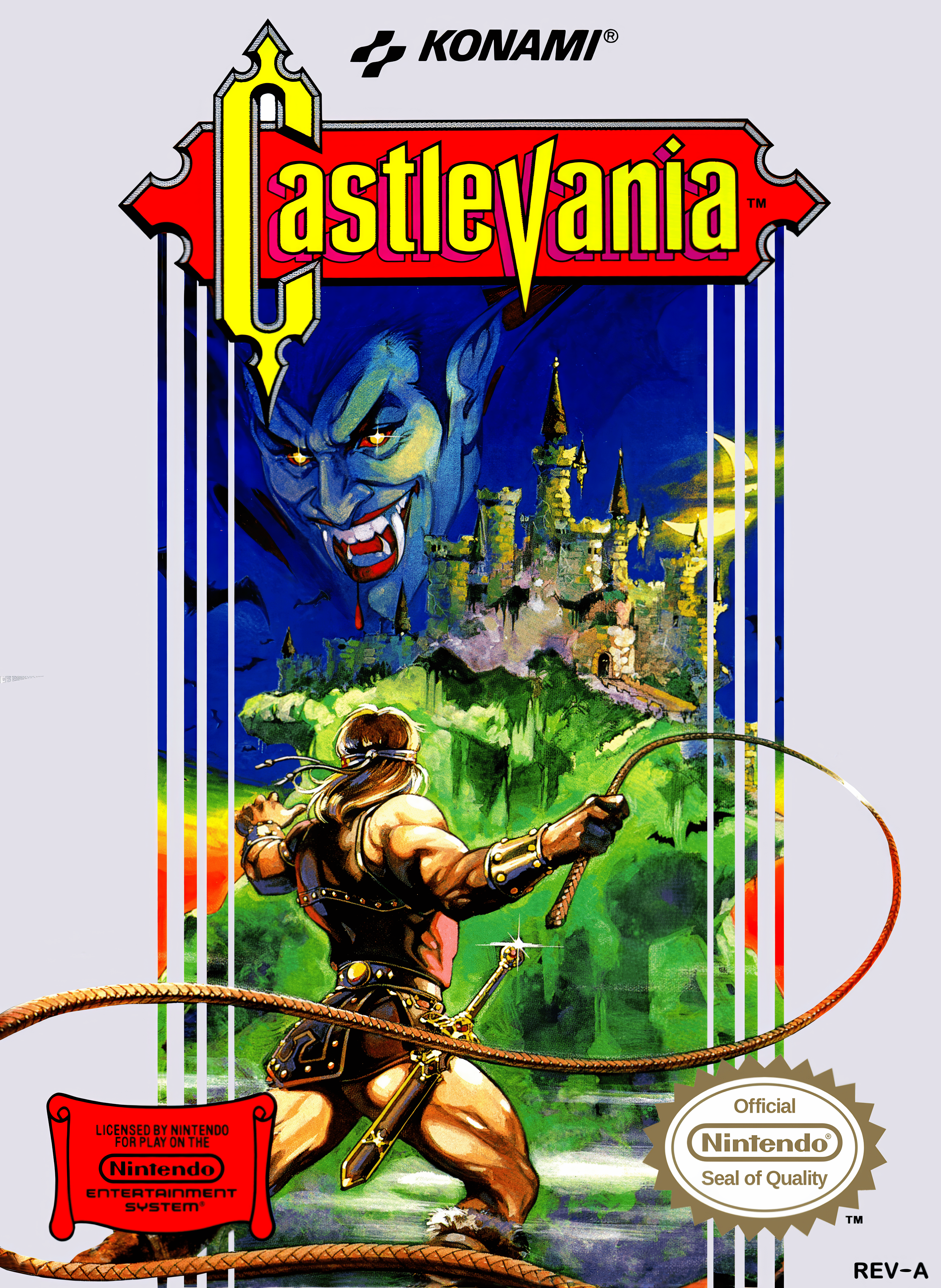
The first Castlevania establishes Simon Belmont, Dracula’s castle, and the stern action-platform template that Super Castlevania IV later reimagines.
Super Castlevania IV launches in Japan and then North America, bringing Simon’s quest into the 16-bit era with freer whip control, richer sound, and major presentation upgrades.
The game reaches Europe and becomes one of the most admired early horror-action titles on Nintendo’s 16-bit hardware outside Japan and North America as well.
Wii, Wii U, and New Nintendo 3DS re-releases help preserve the game for later generations and keep its reputation alive beyond cartridge collectors.
Its inclusion on the Super NES Classic Edition confirms its place among the system’s most iconic and enduring library staples.
Konami’s Castlevania Anniversary Collection gives modern players another official route to experience the game alongside the series’ foundational entries.
Where to Play / Collect Today
Castlevania Anniversary Collection
The cleanest modern legal route: a multi-platform Konami collection that packages Super Castlevania IV with several other foundational series entries.
MODERN OPTIONSuper NES Classic Edition
A strong “plug in and play” path for fans who want official hardware flavor without chasing original cartridges, CRTs, or aging console maintenance.
SEE VERSIONOriginal cartridge / CRT setup
For the sharpest period-authentic mood, original SNES hardware with a good CRT still gives the game’s darkness, sound, and animation their fullest character.
COLLECTOR ROUTE4NERDS Collector Marketplace
A curated access point for players, collectors, and retro fans: original-market searches, modern related items, and future handmade display pieces — clearly marked as partner links where applicable.
Shop original SNES copies
Browse current Super Castlevania IV offers on eBay — ideal for loose cartridges, boxed SNES versions, manuals, Super Famicom imports, collector-condition listings, and period-correct Konami shelf pieces.
- Original SNES / Super Famicom cartridge-era copies
- Boxed versions, manuals, inserts, and seller variety
- Condition and price comparison across listings
Paid partner link / Werbung — availability, condition, seller terms, and pricing depend on eBay sellers.
Browse Castlevania finds
Explore Amazon for Super Castlevania IV-related items: Konami collections, retro books, guides, soundtrack material, themed accessories, controllers, and modern Castlevania extras.
- Collections, books, guides, and accessories
- Retro-inspired hardware and controller browsing
- Broader Castlevania-themed gift and shelf items
Paid partner link / Werbung — as an Amazon Associate, 4NERDS Gaming may earn from qualifying purchases.
Curated Etsy picks coming soon
Planned for handmade gothic-retro art, vampire-hunter display objects, shelf pieces, prints, and museum-style collector items that match the 4NERDS archive aesthetic.
- Wall art and display-focused pieces
- Handmade and fan-crafted style items
- Added once the setup is ready
Etsy affiliate integration will be added after the tracking setup is approved and tested.
Transparency note: 4NERDS Gaming does not sell these items directly. External shops, prices, stock, shipping terms, and seller conditions may change at any time. eBay and Amazon links in this section are sponsored / paid partner links. Etsy is currently shown as an upcoming integration and does not link out yet.