- Wii done right: Smooth Moves is one of the clearest early examples of motion control used for humor, rhythm, and instant readability.
- Spectator magic: Nintendo was right — it is almost as entertaining to watch as it is to play.
- Form Baton genius: the pose-first structure makes every microgame feel like a joke with a wind-up and a punchline.
- Main limitation: solo longevity is weaker than the party energy, and some of the brilliance is situational by design.
“Smooth Moves turns the Wii Remote into a comedy prop, and that is exactly why it works.”
It is one of the most genuinely playful motion-control games Nintendo ever shipped.
When WarioWare Became a Physical Performance
WarioWare: Smooth Moves arrived at exactly the right moment: early in the Wii era, when a lot of games were still trying to figure out whether motion controls were a novelty, a gimmick, or a new design language. Smooth Moves gave one of the best answers. It made the controller itself part of the joke. Before each microgame, the player adopts a specific “Form,” braces for impact, and then survives a burst of absurd interaction that might involve slicing, flicking, balancing, poking, or humiliating themselves in front of the room. It is not subtle. It is not elegant in the traditional sense. It is brilliant because it understands that the Wii’s greatest strength was not realism — it was visible participation.
Game Data
| Title | WarioWare: Smooth Moves |
| Release Year | 2006 Japan / 2007 Europe & North America |
| Developer | Intelligent Systems / Nintendo SPD |
| Publisher | Nintendo |
| Platform | Nintendo Wii |
| Genre | Action / party / motion microgame compilation |
| Players | 1–12 players, alternating party play |
| Original Format | Wii optical disc |
| Core Loop | Assume the right Form, react instantly, survive the rush, pass the remote, repeat |
Form-based motion setup, microgames that last only seconds, spectator-friendly failures, rapid visual clarity, and pass-the-remote party escalation.
A Splunk steals Wario’s food, leading him to the Temple of Form and the mysterious Form Baton. From there, the game spirals into a chain of bizarre character episodes across Diamond City.
The defining mechanic is the “Form” system: before each microgame, the player holds the Wii Remote in a specific pose, turning anticipation itself into part of the gag.
The Wii Remote is the star of the show, but some content also uses the Nunchuk — making the game feel like a direct response to the full promise of the Wii launch concept.
Review / Why It Still Feels So Fresh
Smooth Moves makes an immediate impression because it refuses to treat motion control as a technical feature. It treats it as comedy timing. Before a microgame even begins, the player is already part of the visual joke: standing in a pose, preparing for nonsense, and waiting for the next ridiculous command to land. That tiny pause before action matters. It gives each challenge a setup, and the setup makes the release funnier whether the player succeeds or fails.
WHY THE FORM SYSTEM IS SO GOODThe Form Baton idea is what elevates the whole package. If the game had merely asked players to waggle, it would have been forgettable. Instead, it demands posture and anticipation. The player becomes an actor in a tiny ritual: pose, recognize, react. That rhythm gives the game structure and personality. It also makes even simple interactions memorable because the body is already committed before the actual task appears.
MICROGAMES AS PERFORMANCEWarioWare has always thrived on rapid absurdity, but Smooth Moves adds a new layer by turning every round into something that can be watched from across the room. The player is no longer hidden inside a controller scheme. They are visible. That makes embarrassment, overreaction, panic, and triumph all legible to everyone present. It is one of the reasons the game remains such a strong party title even now.
STYLE, SPEED, AND CONFIDENCEPresentation is exactly as loud and strange as it should be. The color, the character framing, the weird stage stories, and the aggressively silly transitions all sell the experience as something closer to a live cartoon variety show than a neat minigame collection. It never feels interested in polite design. That confidence helps it stand out from more generic Wii-era party releases.
WHERE IT IS LESS UNIVERSALThe same things that make Smooth Moves special also make it situational. You want space. You want people who are willing to participate. You want at least a little noise in the room. Alone, the game is still enjoyable, but its structure becomes easier to see through. The core brilliance remains, yet the explosive social layer is reduced. That is not a flaw so much as the price of its design priorities.
FINAL VERDICTWarioWare: Smooth Moves remains one of the clearest demonstrations that Nintendo’s best motion-control ideas were never about simulation. They were about expressiveness. It is silly, fast, theatrical, and built around the idea that the human response to a game can itself be part of the entertainment. That keeps it from feeling like a relic. It still feels like a very specific, very smart answer to what the Wii was supposed to be.
Why Historically Important
WarioWare: Smooth Moves matters because it is one of the most persuasive early arguments for the Wii as a design platform rather than merely a novelty machine. Many motion-controlled games of the period seemed satisfied to prove that the player could move. Smooth Moves proved that movement could become structure, expectation, and punchline all at once.
It also occupies an important place inside WarioWare history. The series had already mastered speed and absurdity on handhelds and traditional controllers, but Smooth Moves retranslated that logic into something larger, more public, and more theatrical. It showed that WarioWare could survive a massive interface change without losing its identity.
Beyond its own franchise, the game remains a revealing snapshot of Nintendo at one of its most experimental peaks. It understood that the best use of new hardware was not always fidelity or complexity. Sometimes it was clarity, weirdness, and a willingness to let the player look a little foolish. That design attitude gave the Wii many of its most memorable moments, and Smooth Moves is one of its purest examples.
Timeline / Key Milestones
Nintendo reveals Smooth Moves as one of the clearest demonstrations of how the Wii Remote could support fast, weird, room-readable play.
The game debuts in Japan and establishes itself as one of the Wii’s signature early motion-control experiences.
Smooth Moves reaches wider audiences and quickly earns a reputation as one of the Wii’s best party titles and strongest uses of the hardware.
The game is reintroduced in Europe through the Nintendo Selects line, extending its shelf life and legacy inside the Wii library.
A Wii U download release helps preserve access a little longer for later-era Nintendo players.
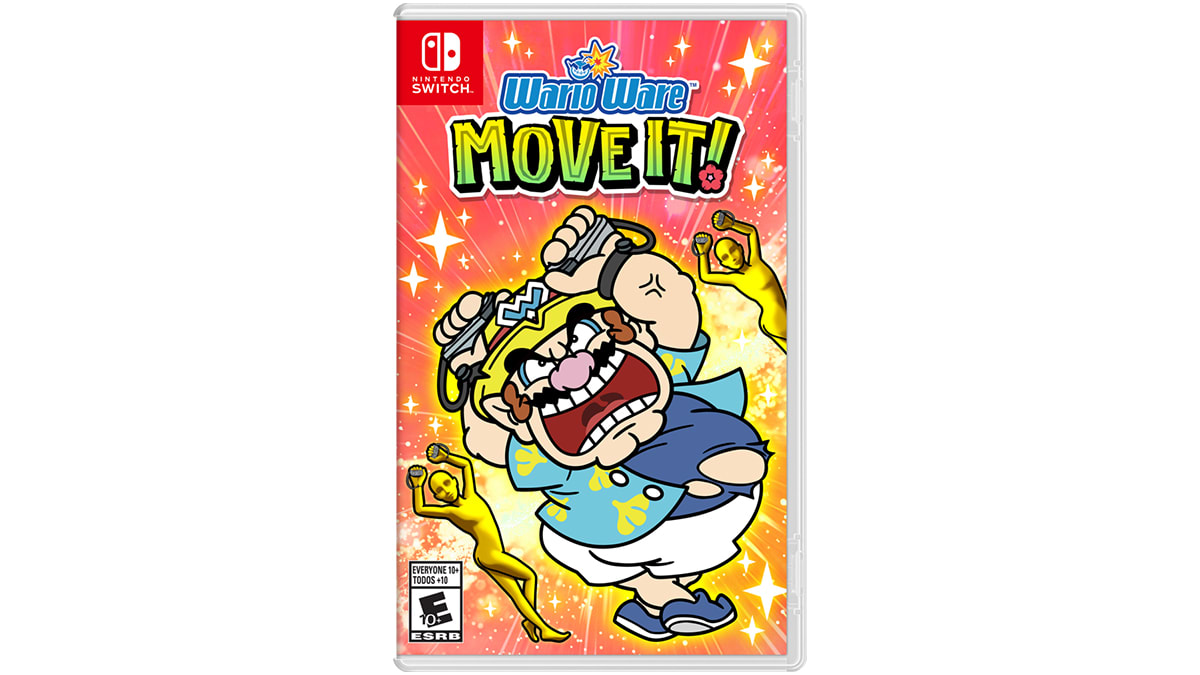
WarioWare: Move It! revives the motion-heavy branch of the series, effectively confirming Smooth Moves as one of the franchise’s key design ancestors.
Where to Play / Collect Today
Original Wii + disc copy
For most people today, the cleanest path is simply a second-hand Wii setup with the original disc and proper Wii Remote hardware.
WII ROUTERoom space + willing players
Smooth Moves is best on its own original turf: enough living-room space, a visible screen, and a group ready to lean into the ridiculous “Form” poses without hesitation.
PARTY SETUPComplete Wii shelf copy
As a collector piece, Smooth Moves is one of those unmistakably “Wii-era Nintendo” releases that instantly communicates the platform’s weird, social energy.
COLLECTOR COPY4NERDS Collector Marketplace
Advertising / Werbung: This section contains paid partner links. If you click through and make a purchase, 4NERDS Gaming may earn a commission at no additional cost to you.
Shop original Wii copies
Browse current WarioWare: Smooth Moves listings on eBay — ideal for loose discs, complete boxed copies, manuals, bundles, and Wii collector-grade finds.
- Original Wii disc copies
- Boxed versions and seller variety
- Condition and price comparison
Paid partner link / Werbung — availability and pricing depend on eBay sellers.
Browse related Wario finds
Explore Amazon for WarioWare-related items, Wii accessories, retro gaming products, books, guides, and Nintendo-themed collector extras.
- WarioWare and Nintendo-themed extras
- Wii accessory browsing
- Gift ideas and modern products
Paid partner link / Werbung — as an Amazon Associate, 4NERDS Gaming may earn from qualifying purchases.
Curated Etsy picks coming soon
Planned for handmade retro art, display objects, shelf pieces, prints, and museum-style collectibles that match the 4NERDS archive aesthetic.
- Wall art and display-focused pieces
- Handmade and fan-crafted style items
- Added once the setup is ready
Etsy affiliate integration will be added after the tracking setup is approved and tested.