- Mission variety: Zeewolf is not just about shooting — escorting, rescuing, transporting, and resource planning all matter.
- Late-Amiga ambition: the 3D engine, map layer, and large mission structure make it feel more expansive than many of its peers.
- Distinct identity: it sits somewhere between Desert Strike, Virus/Zarch, and its own chunkier military sandbox style.
- Historical weight: it is one of the standout late-era Amiga action games and a strong example of British microcomputer ambition.
“A helicopter war game built with arcade instincts and Amiga ingenuity.”
Zeewolf feels like a machine trying to punch above its class — and often succeeding.
One of the Amiga’s Great Late Combat Epics
Zeewolf is one of those games that tells you immediately what kind of era it belongs to: the phase when Amiga developers were trying to build bigger, moodier, more technically daring action games without giving up the immediacy of arcade play. You pilot a helicopter gunship across a series of combat missions that are not limited to simple destruction. Rescue work, transport duties, reconnaissance support, and resource management all feed into the fantasy. That is a big part of what makes the game memorable. It is not only about reflexes. It is about operating within a battlefield. The result is a game that feels like a bridge between straightforward shoot-‚em-up design and a more mission-driven military action structure.
Game Data
| Title | Zeewolf |
| Release Year | 1994 |
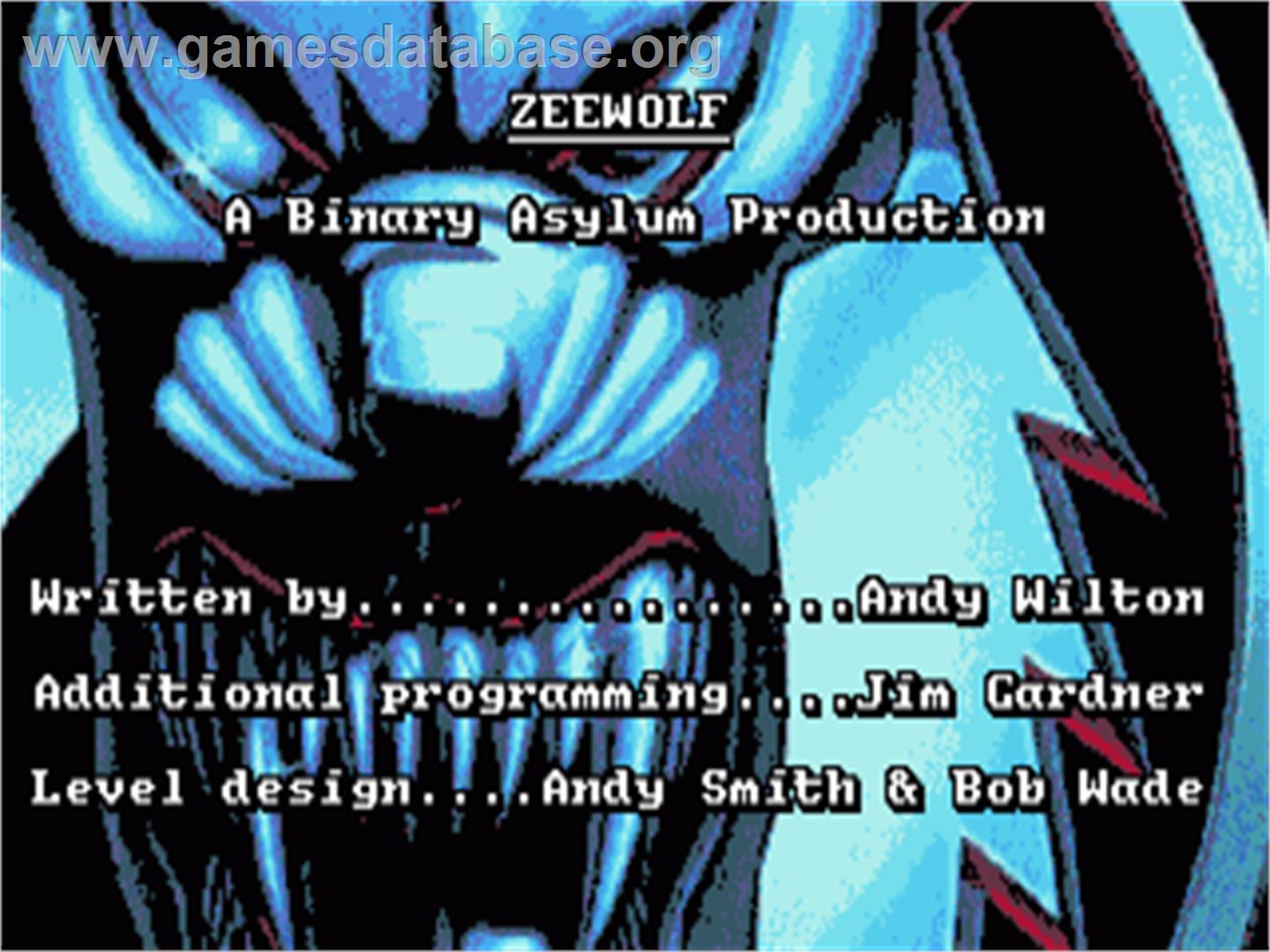
| Developer | Binary Asylum |
| Publisher | Binary Asylum |
| Platform | Amiga |
| Genre | 3D shooter / vehicular combat |
| Players | 1 player |
| Original Format | 3.5" floppy disk |
| Control Options | Joystick or mouse |
| Core Loop | Fly, fight, escort, rescue, refuel, adapt |
Helicopter combat, target elimination, rescue missions, transport tasks, map reading, ammunition and fuel awareness, and battlefield improvisation.
You command the Zeewolf helicopter gunship across a war zone full of enemy ground, sea, and air threats, completing 32 linked military objectives under pressure.
Zeewolf stood out for combining chunky real-time 3D helicopter action with a more tactical mission structure than many contemporary Amiga shooters.
Review / Why It Still Plays So Well
What hits first is the angle and the scale. Zeewolf does not look like a simple shooter. Its horizon is low, the terrain is stylized, and the battlefield feels like a rough little world instead of a narrow lane. That immediately gives it more personality than a lot of action games from the platform.
MORE THAN JUST DESTRUCTIONThe reason the game lasts in memory is that its objectives are broader than “blow up target, move on.” Zeewolf wants the player to think operationally. You escort, retrieve, support, rearm, and reposition. That extra layer gives the game a much stronger sense of campaign structure than a purely arcade shooter.
THE CONTROLS AND THE LEARNING CURVEThere is a brief adjustment period. Zeewolf is not instantly frictionless, and that is part of its character. But once the player settles into its rhythm, the helicopter starts to feel like a tool rather than an obstacle. Mouse support was especially distinctive and gave the game a more unusual control identity on Amiga hardware.
THE LATE-AMIGA TECH CHARMVisually, Zeewolf belongs to a very specific kind of beauty: low draw distance, solid polygons, chunky geometry, and a battlefield that suggests much more than the machine can literally render. That is not a weakness in historical terms. It is part of the magic. The player is constantly meeting the hardware halfway, and the result still feels vivid.
FINAL VERDICTZeewolf remains one of the most appealing examples of late-era Amiga ambition. It is not merely interesting because it is rare, nor only because it is technically clever. It is still compelling because it combines structure, action, atmosphere, and mission variety into something that feels genuinely authored. It is a cult favorite for good reasons.
Why Historically Important
Zeewolf is historically important because it captures a very particular moment in computer game history: when the Amiga scene was trying to keep pace with rising expectations for scale, 3D presentation, and cinematic action. Binary Asylum did not simply build a shooter. It built a mission-driven helicopter combat game that asked more of its world structure, and more of its player, than the simplest action designs of the period.
It also matters because it shows how regional computer development culture could still produce bold, distinctive work in the mid-1990s. Zeewolf feels unmistakably British in tone and design ambition — practical, challenging, mechanically dense, and a little rough in exactly the right places.
Finally, it remains an important cult artifact because it stands near the end of a platform’s creative maturity. The Amiga could not endlessly compete on brute force, but games like Zeewolf show how far style, structure, and clever design could stretch a machine’s identity.
Timeline / Key Milestones
Zeewolf launches on Amiga and quickly earns attention as one of the platform’s more ambitious late-era 3D action games.
Contemporary Amiga magazines rate it highly, reinforcing its reputation as a standout cult action title rather than just a technical curiosity.
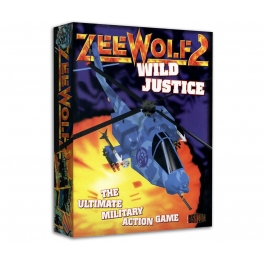
Zeewolf 2: Wild Justice follows, expanding the concept and confirming that the original had become a real mini-series for Binary Asylum.
A Mega Drive version is developed to an advanced state but never released, adding a layer of “what if?” mythology to the game’s history.
Zeewolf remains one of the best-remembered late Amiga action games for players who want more than simple nostalgia from the platform.
Where to Play / Collect Today
Amiga emulation route
For most players, the easiest way to experience Zeewolf today is through curated Amiga emulation, where saving states and configuration options smooth out the original friction.
MODERN OPTIONReal Amiga hardware
Zeewolf on actual Amiga hardware has a very specific rhythm and feel — the kind of experience retro computer enthusiasts will still value deeply.
COLLECTOR ROUTEPlay Zeewolf 2 afterward
The sequel is the natural comparison point if you want to see how Binary Asylum refined and expanded the core identity of the original game.
SEE SEQUEL