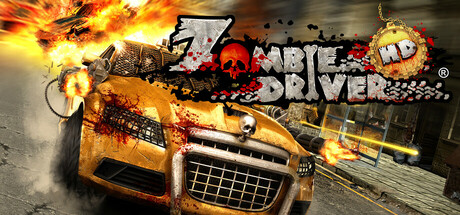
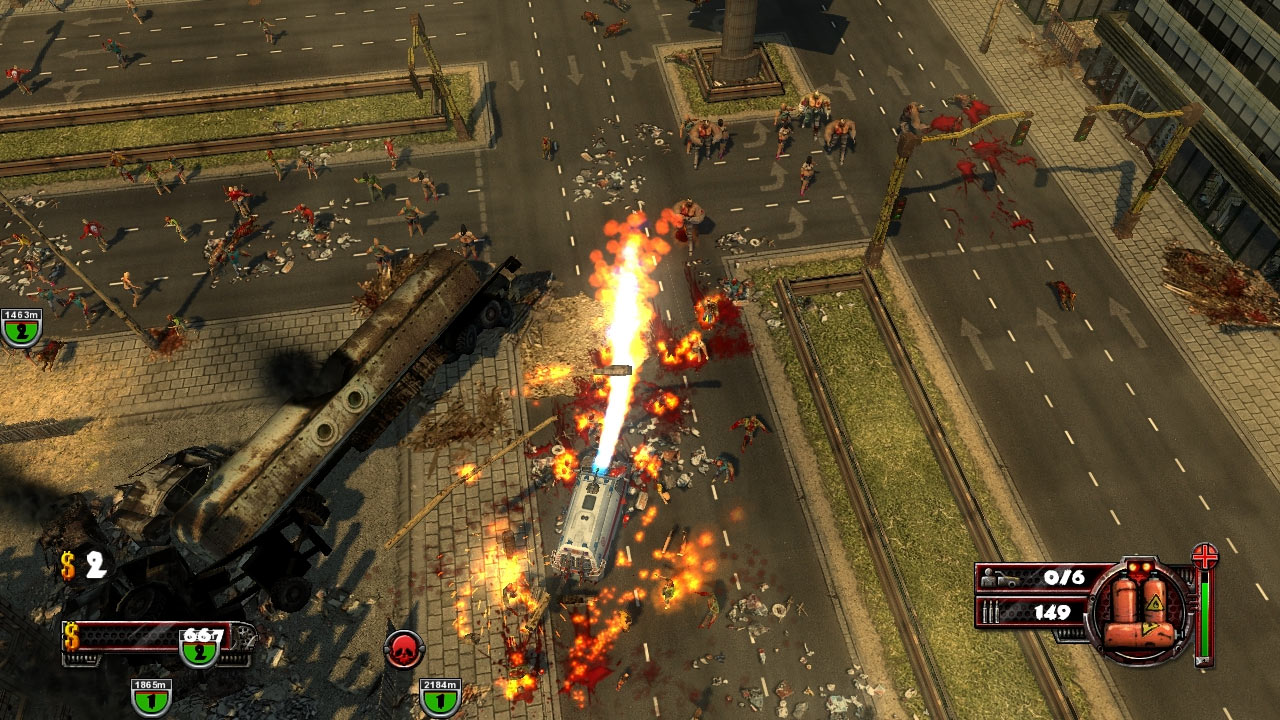
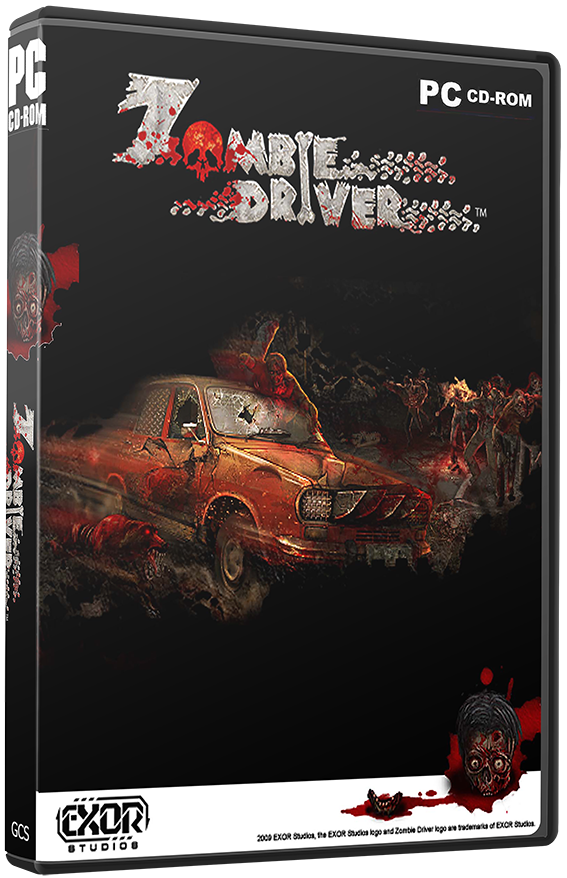
- Great hook: top-down car combat plus zombie swarms is an immediate, readable fantasy.
- Arcade momentum: speed, impact, combos, upgrades, and mission urgency keep the game moving even when it gets repetitive.
- Studio importance: this was EXOR’s first standalone game and a crucial foundation for the studio’s future.
- Cult texture: it feels like a compact 2009 PC experiment that accidentally found a lasting identity.
“A B-movie outbreak, played from behind the wheel.”
Not elegant, not subtle, and absolutely better because of it.
An Isometric Zombie Grinder With Real Personality
Zombie Driver belongs to a specific kind of late-2000s PC game: compact, idea-first, slightly rough around the edges, but sharp enough to carve out a memorable niche. The central loop is almost toy-like in its immediacy. You get a vehicle, a city full of undead, a list of survivors or objectives, and the freedom to turn streets into kinetic carnage. It is part driving game, part shooter, part outbreak panic simulator, and its simplicity is exactly what gives it staying power.
Game Data
| Title | Zombie Driver |
| Release Year | 2009 |
| Developer | EXOR Studios |
| Publisher | EXOR Studios |
| Platform | Windows PC |
| Genre | Vehicular combat / action driving shooter |
| Players | 1 player |
| Original Format | Digital download |
| Engine Base | Ogre3D + PhysX-era tech stack |
| Core Loop | Drive, rescue, smash, upgrade, repeat |
Isometric driving, zombie mowing, objective-based city runs, weapon pickups, vehicle upgrades, and a constant tradeoff between speed, control, and survival.
A chemical accident and secret-project disaster turn a city into an undead quarantine zone. You drive mission after mission through the chaos, rescuing survivors and forcing routes through the outbreak.
This was EXOR Studios’ first standalone game — a smaller project that helped establish the studio before its later, bigger releases.
Review / Why It Still Feels Good To Revisit
The first thing Zombie Driver gets right is that it understands velocity as entertainment. The car is not simply your movement tool; it is the entire tone of the game. The moment you begin fishtailing through alleyways, clipping crowds of zombies, scraping lamp posts, and barely squeezing a rescue run out of a collapsing route, the game’s identity is clear. It is not a survival horror in the classical sense. It is panic weaponized into momentum.
WHY THE LOOP CLICKSThe loop is basic in the best way. Rescue survivors. Reach a point. Clear a route. Hold out long enough to finish an objective. Because you are doing all of this inside fragile, upgradable, weaponized vehicles, even simple mission design becomes tense. You are always gauging whether to push harder, detour for pickups, or preserve your vehicle. That gives the game a nice arcade friction: reckless play is exciting, but smart play is what gets you through.
THE JOY OF IMPACTZombie Driver is also simply satisfying on a tactile level. The best moments are not strategic revelations — they are impacts. The angle of a drift into a crowd. The rhythm of building a combo. The sight of city streets filling with wreckage and gore. The game knows that destruction has to feel crunchy and immediate, and that instinct carries a lot of the experience.
WHERE IT THINS OUTThe limitations are obvious too. Mission types do not reinvent themselves endlessly, and the budget frame shows through in pacing and structure. There are stretches where the game relies more on its premise than on genuine escalation. But the strong central idea keeps dragging it forward. Zombie Driver does not need to become huge to become memorable. It only needs to keep finding new excuses to make the player drive badly in glorious ways.
FINAL VERDICTZombie Driver remains easy to like because it never loses sight of what makes it fun. It is lean, driven by one clear fantasy, and full of the kind of mid-budget sincerity that can be more charming than polish. In archive terms, it is a perfect cult artifact: not a giant landmark, but a game with a sharp face, a strong hook, and a lineage that mattered.
Why Historically Important
Zombie Driver matters less because it changed the entire industry and more because it clearly changed the path of the studio that made it. EXOR Studios identifies it as the company’s first standalone game, which gives it genuine historical value inside the studio’s own timeline. It was the project that proved the team could turn its technical and modding background into a commercial identity.
It also captures a very specific indie-PC design energy from 2009: narrow premise, immediate execution, low tolerance for wasted motion, and a strong willingness to let arcade spectacle do the heavy lifting. That sensibility feels distinct now. Zombie Driver does not spend time pretending to be something larger or more prestigious than it is. It picks a lane — cars versus zombies — and commits.
The game is also historically interesting because it did not stay frozen in its launch form. Slaughter mode, Blood Race, later DLC, HD overhaul, and Ultimate/Immortal editions gave the concept an afterlife that outlasted its initial scale. That extended lineage is part of its real significance. It is a good example of a compact original game growing into a full franchise branch by sheer stubbornness and clarity of concept.
Timeline / Key Milestones
EXOR reveals Zombie Driver as a single-player driving and shooting action game built as the studio’s next step after its modding roots.
Zombie Driver releases on Steam and other PC channels as EXOR’s first standalone game.
A major patch adds Slaughter mode, new arenas, and extra replay value beyond the original campaign structure.
Blood Race arrives as another major extension, pushing the game further into arcade competition and vehicle combat variety.
The DLC add-on extends the game’s post-launch life and reinforces that Zombie Driver is no longer just a one-and-done indie experiment.
The concept is reworked and expanded into Zombie Driver HD, carrying the original into a more complete and broadly visible form.
Ultimate Edition and later Immortal Edition keep the lineage alive across newer hardware and turn the original’s idea into a lasting multi-version package.
Where to Play / Collect Today
Original 2009 PC build
For archive purity, the original Windows release is the real artifact: leaner, rougher, and closer to the first form of the idea before later expansions and overhauls.
ORIGINAL CUTZombie Driver HD
The most practical version for many players is the HD edition, which reworks and expands the formula while keeping the original game’s core appeal intact.
PRACTICAL OPTIONUltimate / Immortal editions
Later versions are the most complete form of the Zombie Driver line and make sense if you want the whole idea in its most expanded, modernized package.
SEE LATER ERA