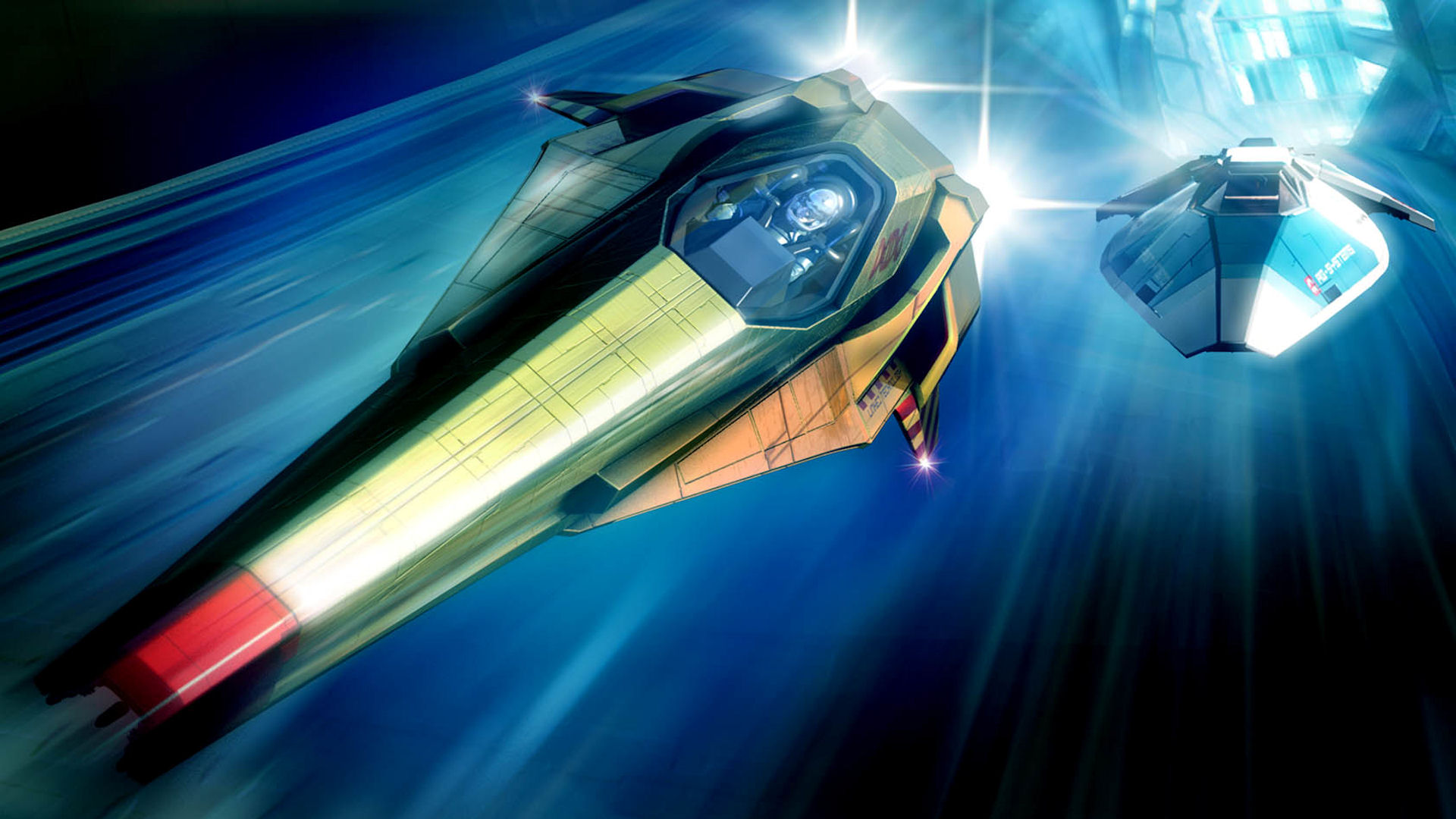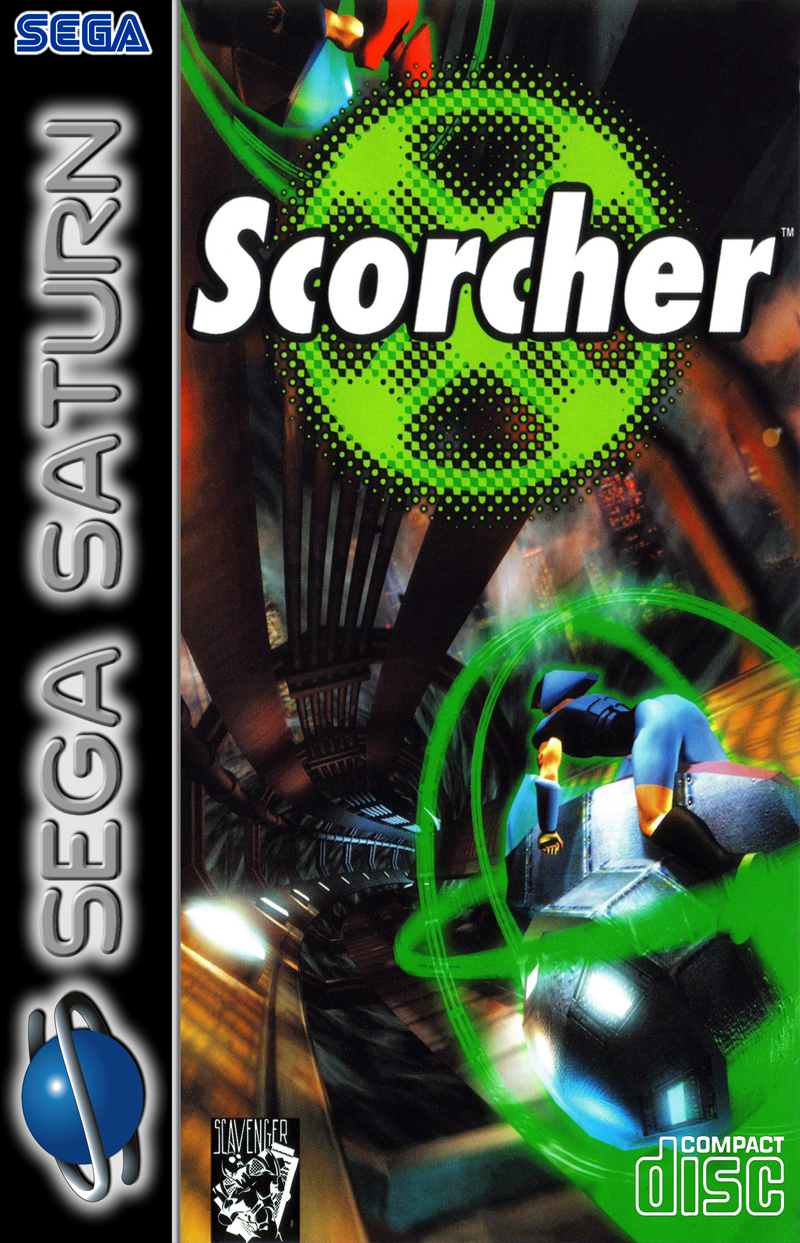
- Technical showpiece: Scorcher was admired for pushing striking 3D visuals on the Saturn.
- Distinct identity: its rolling-bike physics and obstacle-heavy tracks make it feel unlike standard arcade racers.
- Zyrinx legacy: this is the most obvious Saturn-era release connected to the studio name and the end point of their short but memorable run.
- Cult value: uneven as a game, but fascinating as a piece of experimental 1990s racing design.
“Beautiful, hostile, and just awkward enough to stay memorable.”
More interesting than comfortable — which is exactly why retro archives should keep it alive.
A Saturn Racer That Feels Like an Alternate Timeline
Scorcher is the kind of game that immediately tells you it came from a very specific technical culture. It is futuristic, bleak, and obsessed with motion. The vehicle feels less like a normal bike and more like a self-contained rolling shell hurtling through narrow industrial tracks, loops, tunnels, jumps, and vertical surfaces. That gives the game a strangely physical identity. It is not content to merely look fast. It wants speed to feel unstable, and that choice is both its greatest strength and its biggest problem.
Game Data
| Title | Scorcher |
| Saturn Release Year | 1997 |
| Developer | Zyrinx |
| Publisher | Scavenger / Sega Saturn regional publishing |
| Also Released On | DOS / Windows |
| Genre | Futuristic racing |
| Players | 1–2 players |
| Composer | Jesper Kyd |
| Original Working Name | Vertigo |
High-speed gravity racing, momentum management, jump timing, hazard-heavy track design, and learning how not to be thrown off the course.
A dystopian near-future where riders hurtle through brutal 3D environments on spherical, enclosed racing machines built for absurd speed.
Scorcher became known less for broad popularity and more for its technical reputation: a Saturn racer often cited by retro fans for looking more advanced than many expected from the hardware.
Review / Why It Is Respected and Resisted
Scorcher makes a strong first impression because it looks committed. The title screen, the cover art, the track surfaces, the harsh future-industrial mood — everything tells you this is not a cheerful arcade racer. It wants intensity. It wants velocity. And unlike many futuristic racers that glide elegantly, Scorcher feels aggressive and unstable right away.
WHY IT FEELS DIFFERENTThe game’s central identity comes from its sense of rolling momentum. Your vehicle is not treated like a clean hovering craft in the Wipeout mold. Instead, it behaves in a more awkward, heavy, physical way that makes each turn and jump feel like a risk. That gives Scorcher a personality many better-known racers simply do not have. It is less smooth and more dangerous.
THE BEAUTY AND THE PUNISHMENTThis is also where the divide begins. Many players admire the visual technology and atmosphere, but the controls and track design can make the game feel punishing rather than exhilarating. Narrow paths, awkward momentum, sudden falls, and the need to truly learn the route turn progression into a grind for anyone hoping for casual arcade pleasure.
WHY IT SURVIVESEven so, Scorcher survives in memory because it is not bland. It is one of those games where the flaws are inseparable from the identity. If it had been smoothed out into something safer, it might have disappeared into the long shelf of “competent futuristic racers.” Instead, it remains recognizably itself: a difficult, graphically impressive, slightly hostile machine.
FINAL VERDICTScorcher is not the best futuristic racer of its generation, but it may be one of the most archive-worthy. It captures a moment when a technically gifted studio tried to make speed feel physical and extreme on hardware that was not supposed to do this so convincingly. That ambition alone gives it lasting value.
Why Historically Important
Scorcher matters because it sits at the intersection of three useful histories: the Sega Saturn’s technical reputation, the demoscene-informed craftsmanship of Zyrinx, and the broader mid-1990s fascination with futuristic racing after titles like Wipeout made the genre feel culturally hot. Unlike the cleaner, cooler style of its more famous rivals, Scorcher gives that same futuristic obsession a harsher, more industrial, more physically awkward twist.
It also represents the end of something. Zyrinx had already built a reputation through visually ambitious Mega Drive work like Sub-Terrania and Red Zone, and Scorcher feels like the logical extension of that mindset into full 3D. In that sense, it is not just another racing game. It is a studio statement — the kind of title that tells you what its developers cared about.
For a museum-style database, that makes it valuable even beyond play quality. Scorcher is a record of late-1990s experimentation, Saturn-era bravado, and the strange beauty of games that aimed high even when they landed unevenly. Those are exactly the games worth preserving.
Timeline / Key Milestones
The project circulates in preview form under the name Vertigo, already selling itself as a technically aggressive future racer.
Scorcher first launches on DOS / Windows, establishing the game’s core identity before the Saturn version follows.
The Saturn edition arrives and becomes the version most strongly associated with Scorcher’s cult status and Zyrinx’s late-period legacy.
A Japanese Saturn version extends the game’s reach and adds to its collector interest.
Scorcher becomes remembered as the last major game associated with Zyrinx before the studio’s short but notable run closes.
It survives as a specialist favorite among players interested in overlooked Saturn racers, visual tech curiosities, and Zyrinx history.
Where to Play / Collect Today
Original Sega Saturn hardware
This is the strongest historical fit if you want Scorcher in its most archive-relevant form: original Saturn release, CRT-era feel, and full collector texture.
SATURN ROUTEPC original / archival setup
The earlier DOS / Windows release is often the easier route for raw access, especially for players more interested in studying the design than owning the Saturn disc.
PC OPTIONUS / Japanese Saturn editions
Boxed Saturn copies are the natural collector target, especially for anyone building a “technically interesting but imperfect” late-1990s Sega shelf.
COLLECTOR PATH4NERDS Collector Marketplace
Curated collector routes for Scorcher — original Saturn copies, PC editions, related Sega Saturn material, strategy guides, and future display pieces for a proper late-1990s future-racing shelf.
Shop original Scorcher copies
Best route for Sega Saturn discs, boxed copies, manuals, import variants, PC editions, condition comparison, and collector-grade listings.
Ideal for boxed Saturn copies, disc/manual sets, imports, and condition-based collector browsing.
Browse Saturn-era extras
Useful for browsing related Sega Saturn accessories, retro-gaming books, display options, and broader futuristic-racing or Saturn collector material.
Availability and pricing may vary by seller, region, edition, and current marketplace stock.
Custom archive display pieces
Future route for handmade Saturn shelf cards, future-racing prints, museum-style labels, and collector display pieces matching the 4NERDS archive aesthetic.
Placeholder card kept for the final 4NERDS marketplace layout and future partner expansion.