The Cold War Game That Lived Inside An Analog Computer
Hutspiel matters because it expands what “early game history” can mean. It was not designed as entertainment for a public consumer market. It was a military research simulation, a serious game before that term had cultural weight, and one of the earliest complex interactive computer games ever built. Two human players controlled opposing forces in a simulated European war theater while the analog computer continuously processed the consequences in accelerated real time. In museum terms, Hutspiel is not merely a program — it is a whole system of machine, interface, model, and doctrine.
Hardware Data / Technical Snapshot
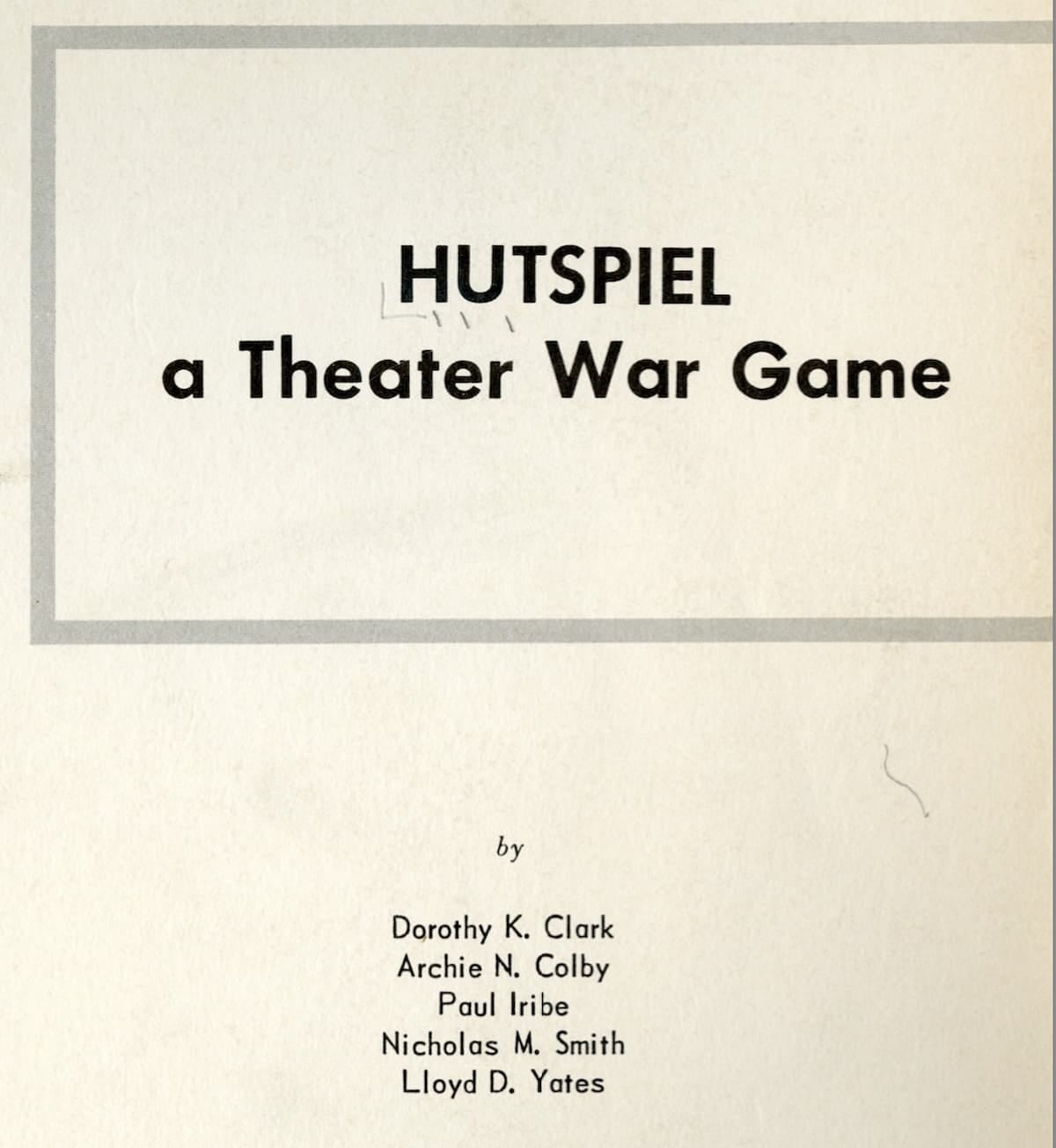
| Name | HUTSPIEL: A Theater War Game |
| Launch Window | 1955 |
| Institutional Context | Operations Research Office (ORO) |
| Associated Authors | Clark, Colby, Iribe, Smith, Yates |
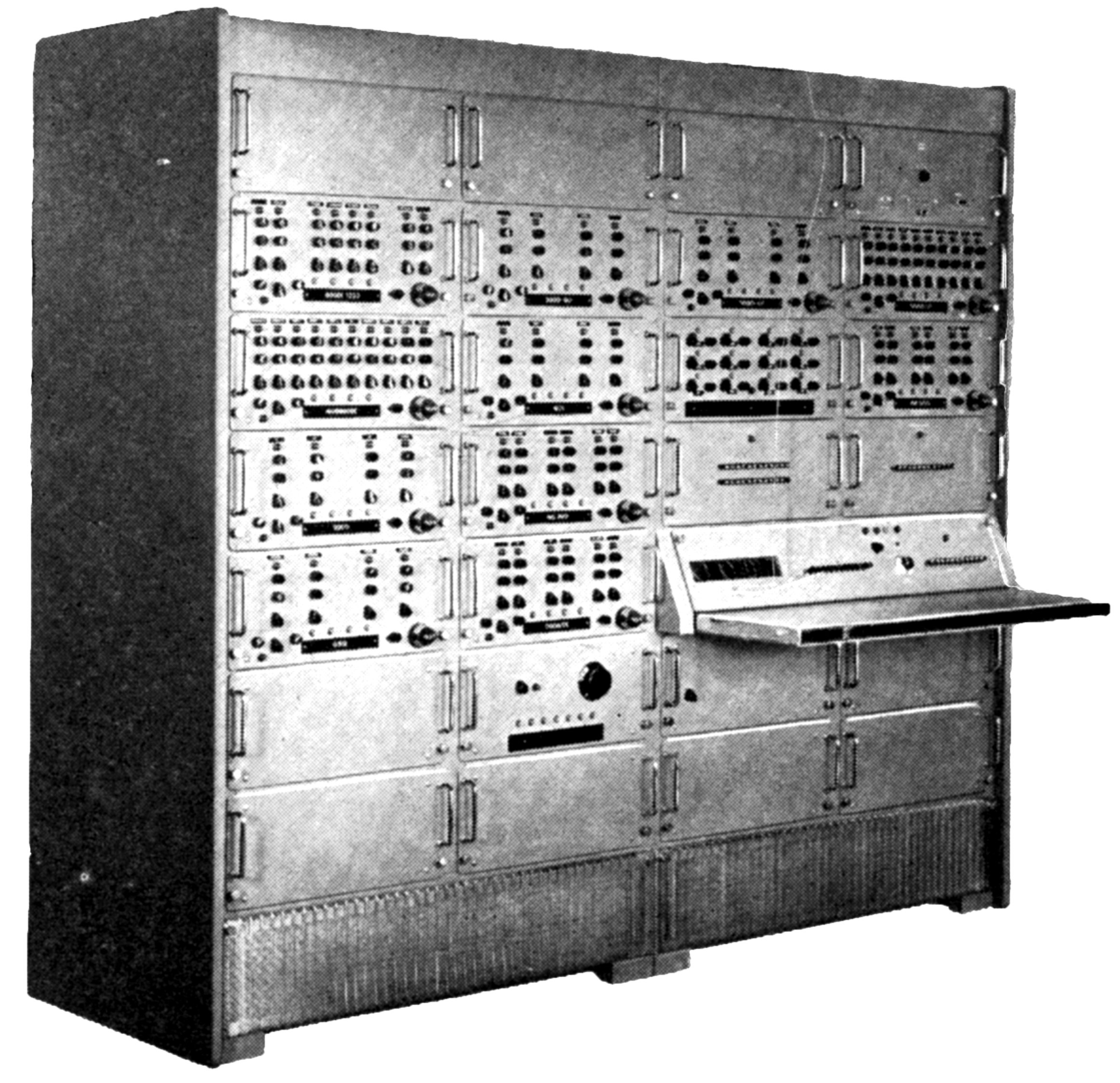
| Machine | Goodyear Electronic Differential Analyzer (GEDA) |
| Computer Type | Electronic analog computer |
| Simulation Level | Theater-level war game |
| Players | 2 players: Blue and Red |
| Scenario Focus | Western Europe, NATO defense vs Soviet offensive |
| Interaction Style | Real-time / accelerated-time with pause for issuing commands |
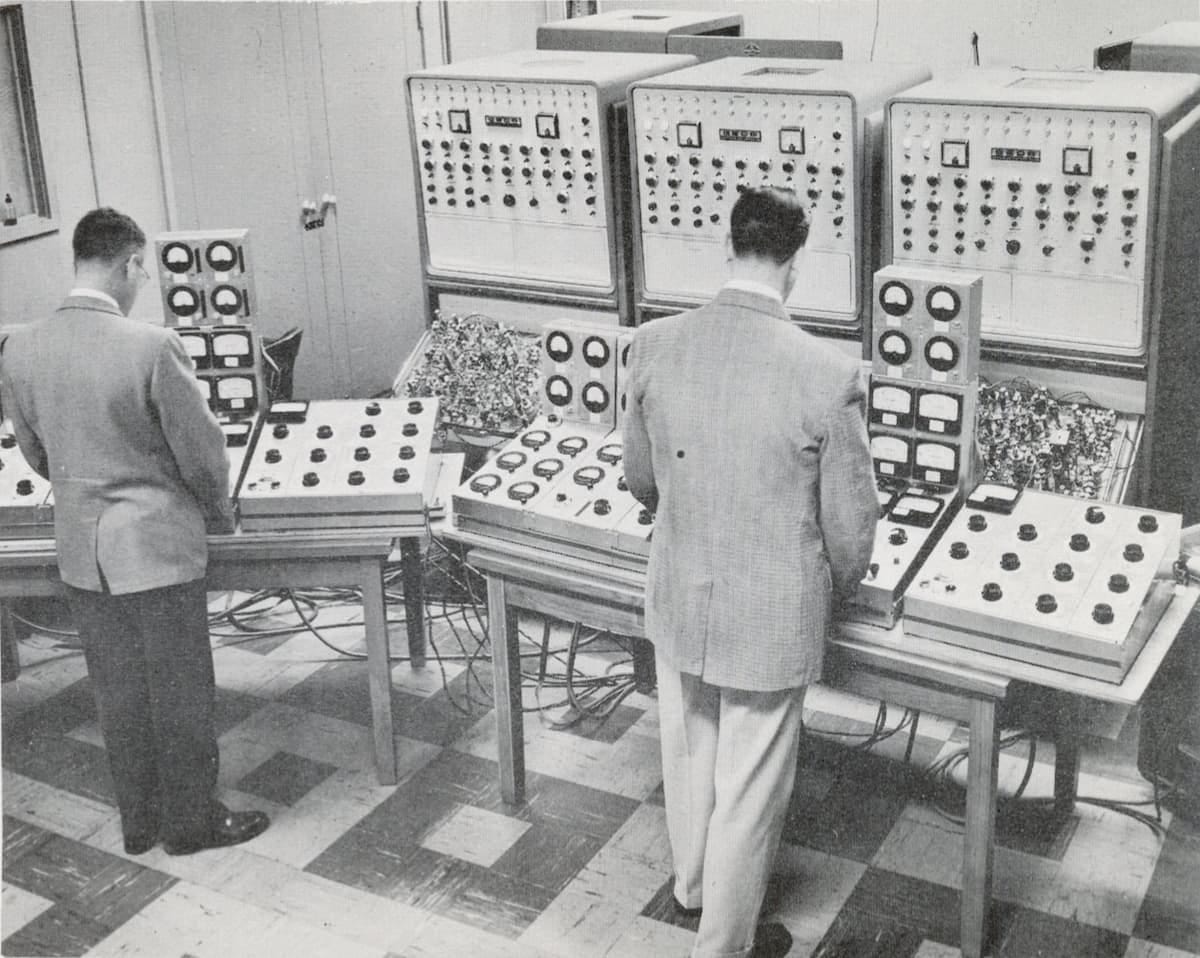
| Readout Method | Gauges, dials, control panels, analog outputs |
| Visual Presentation | No conventional raster game screen; diagrammatic / instrument-based simulation interface |
| Class | Analog computer war simulation / early serious game |
Hutspiel was built to model decision-making under pressure, not to entertain spectators. It treated warfare as a system of interacting variables — logistics, ground combat, air action, and atomic attack — all evolving inside an analog computational framework.
It allowed ongoing, live adjustment of a complex military model in a way many batch-driven computers of the era could not, giving the simulation a uniquely immediate quality.
Seen out of context, it can look like “just a room of control panels.” Without explanation, visitors may miss that this was one of the most conceptually advanced interactive game systems of its decade.
Simulation Legacy / Why Hutspiel Sits Between War Research And Game History
Hutspiel is historically powerful because it belongs to more than one lineage. It is part of analog computer history. It is part of Cold War military modeling. And it is part of game history — especially the branch that leads toward strategy, systems simulation, and human-computer interaction beyond purely recreational play.
That makes it a perfect museum bridge object. It connects pre-consumer computing to later videogame design, not through graphics or spectacle, but through dynamic systems, player agency, and machine-mediated outcomes.
In other words, Hutspiel belongs in the same broad historical conversation as early chess programs, Nimrod, and later digital war simulations — but it takes a radically different technical route to get there.
What Made Hutspiel Feel Like A Game Even Though It Was Built For Research
One of the most fascinating things about Hutspiel is that its “play space” is not a screen in the later sense. Instead, the game unfolds through control desks, gauges, switches, knobs, and the ongoing analog calculations of GEDA. This makes it feel closer to a command installation than to an entertainment machine.
BLUE AND REDThe structure is brutally simple and historically revealing. Two players take command roles: Blue and Red. They issue orders, pause the evolving simulation when necessary, and watch the consequences emerge through the machine’s readouts. What matters is not reflex speed but systemic judgment.
WHY ANALOG MATTERS HEREAnalog computing gives Hutspiel its identity. The machine is not stepping through a discrete visual map the way later digital strategy games would. It is modeling changing relationships continuously. That produces a different kind of tension — less about visible animation, more about live variable pressure.
TACTICAL NUCLEAR THINKING AS PLAYABLE MODELHutspiel is also deeply unsettling as a cultural artifact because it translates Cold War military theory into playable structure. Supply depots, trains, ground forces, planes, airfields, and atomic attack become manipulable elements in a systems model. That gives the machine a stark documentary power beyond most early games.
WHY IT STILL WORKS AS A DISPLAY PIECEIn a hardware museum, Hutspiel works because it makes visitors rethink what a game machine can be. It is not a toy, not a television console, and not a coin-op cabinet. It is a room-scale strategic instrument that nonetheless creates opposition, choice, timing, and outcome — all the ingredients of play, framed through military research.
Why Historically Important
Hutspiel is historically important because it sits in a rare overlap zone. It is one of the earliest complex interactive computer games, one of the strongest examples of analog computing being used as a game-like system, and one of the clearest ancestors of later computer wargaming and strategy simulation.
It also matters because it shows that game history did not begin only with public amusement machines. Some of the deepest roots of interactive simulation lie in research, command, and modeling environments that were never meant for a mass audience.
For a hardware archive, Hutspiel therefore acts as a threshold object. It marks the moment where a computer was not merely solving equations in the background, but actively mediating a contest between human decision-makers in real time.
Timeline / Key Milestones
Electronic analog computers such as GEDA become valuable tools for industrial, aerospace, and scientific simulation, creating the technical context in which Hutspiel becomes possible.
Hutspiel is developed as a theater war game around the Goodyear Electronic Differential Analyzer, bringing interactive strategic simulation into a machine-mediated form.
The system formalizes conflict through opposing human roles, real-time evolution, pause-based intervention, and analog readouts rather than screen graphics.
Hutspiel becomes part of a wider chain of military and research simulations that gradually move toward more digital, more explicit computer wargaming.
Later descendants and related research simulations carry the wargame concept forward as computer systems grow more powerful and more digitally oriented.
Hutspiel survives less as a playable consumer classic and more as a foundational artifact for the history of simulation, strategy computing, and serious games.
Why A Hardware Museum Needs Hutspiel In The Story
The strategy game before the genre existed
Hutspiel shows that live, competitive, systems-driven play existed long before modern RTS and grand-strategy design had names.
GAME VIEWAnalog computing as interactive medium
This is one of the best museum examples of an analog computer functioning not just as calculator, but as an active play-and-decision environment.
ANALOG ANGLECold War logic made tangible
The machine translates doctrine, logistics, and tactical nuclear planning into something players could manipulate, test, and confront directly.
COLD WAR VIEW