Storage Distribution
1976 → Today
How games and software traveled through time: from cassettes and floppies to CD-ROM empires, then to patch culture, digital storefronts, and finally cloud libraries. This page is not just about storage tech. It is about distribution power: how each medium changed pricing, piracy, updates, ownership, preservation, and ultimately what games were allowed to become.
TL;DR — The Distribution Meta
1976 → todayDistribution evolves through five pressures: cost per copy, capacity, speed to player, updateability, and control. Every era solves one problem and creates another. Cheap copying fuels creativity and piracy. Bigger capacity enables richer worlds but raises expectations. Digital delivery removes manufacturing but shifts power toward platforms, accounts, and policies.
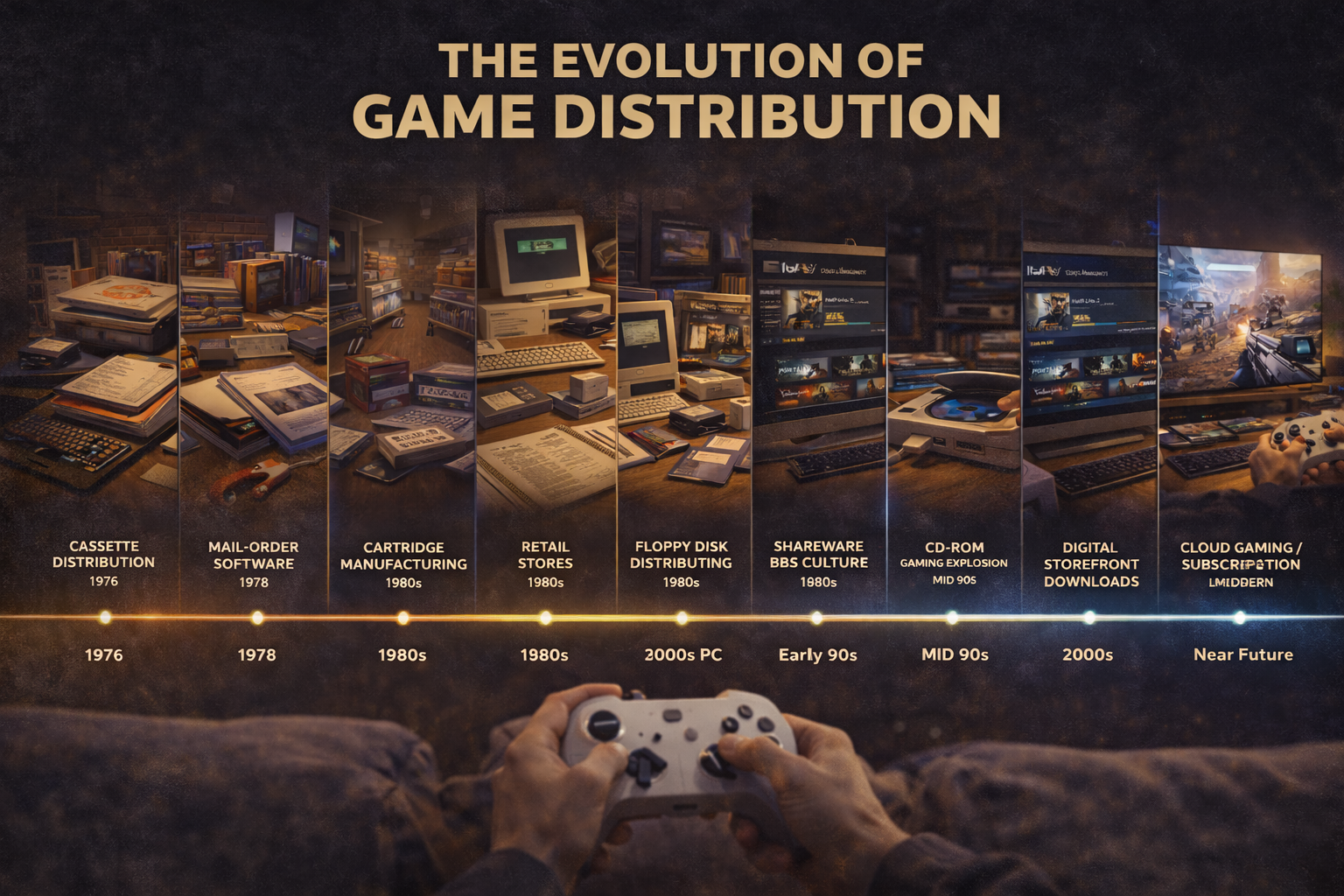
Museum Walk — Distribution Milestones
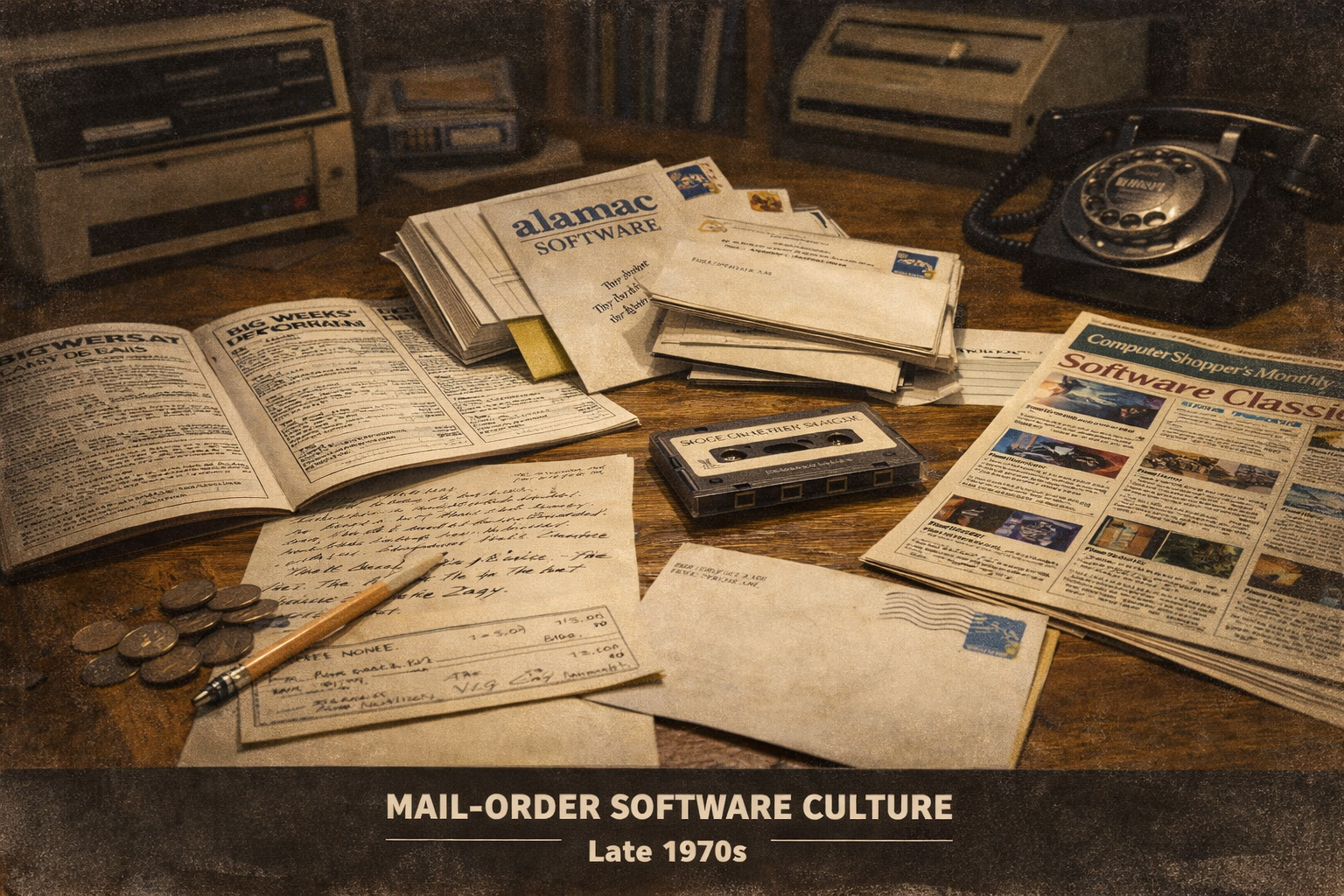
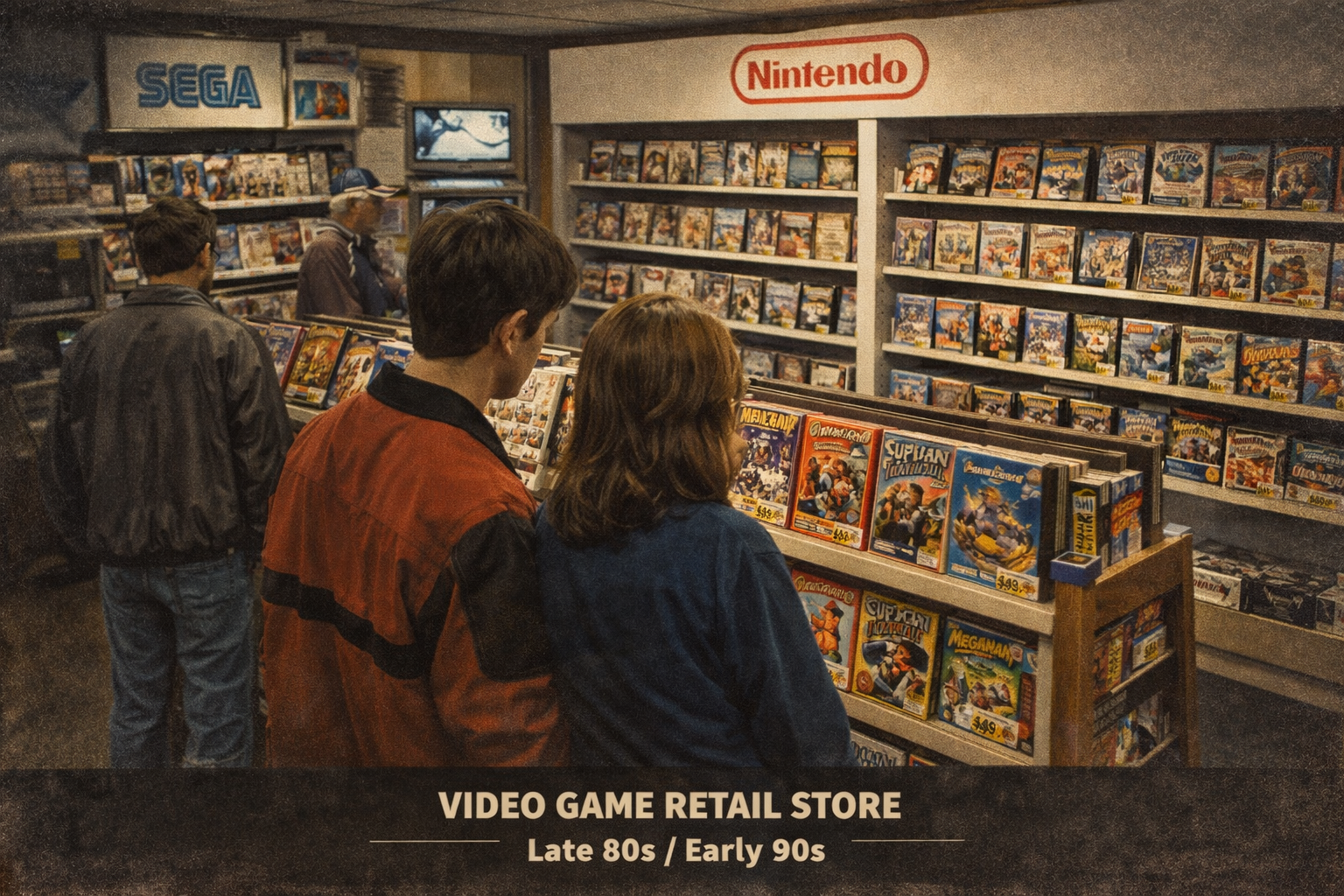
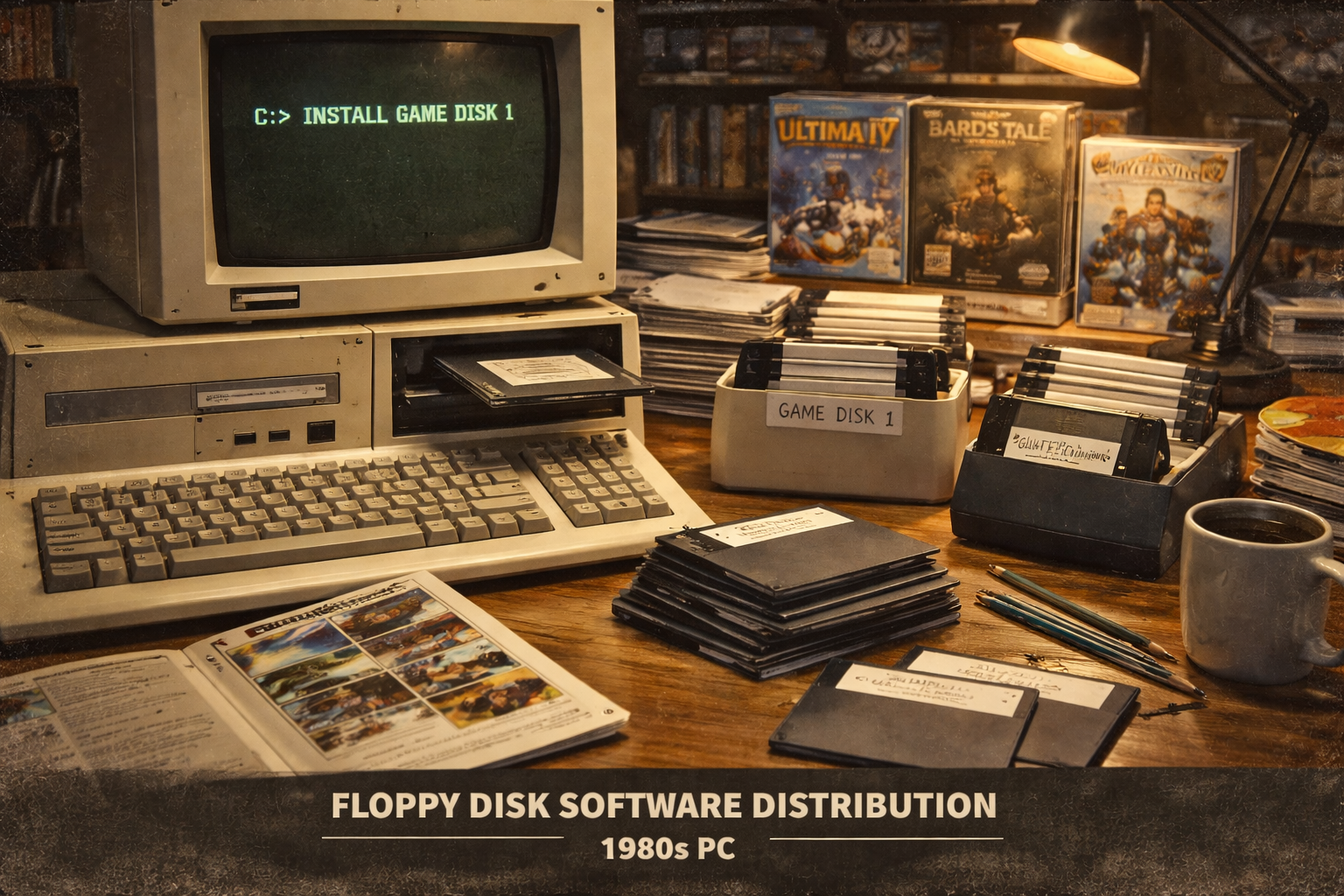
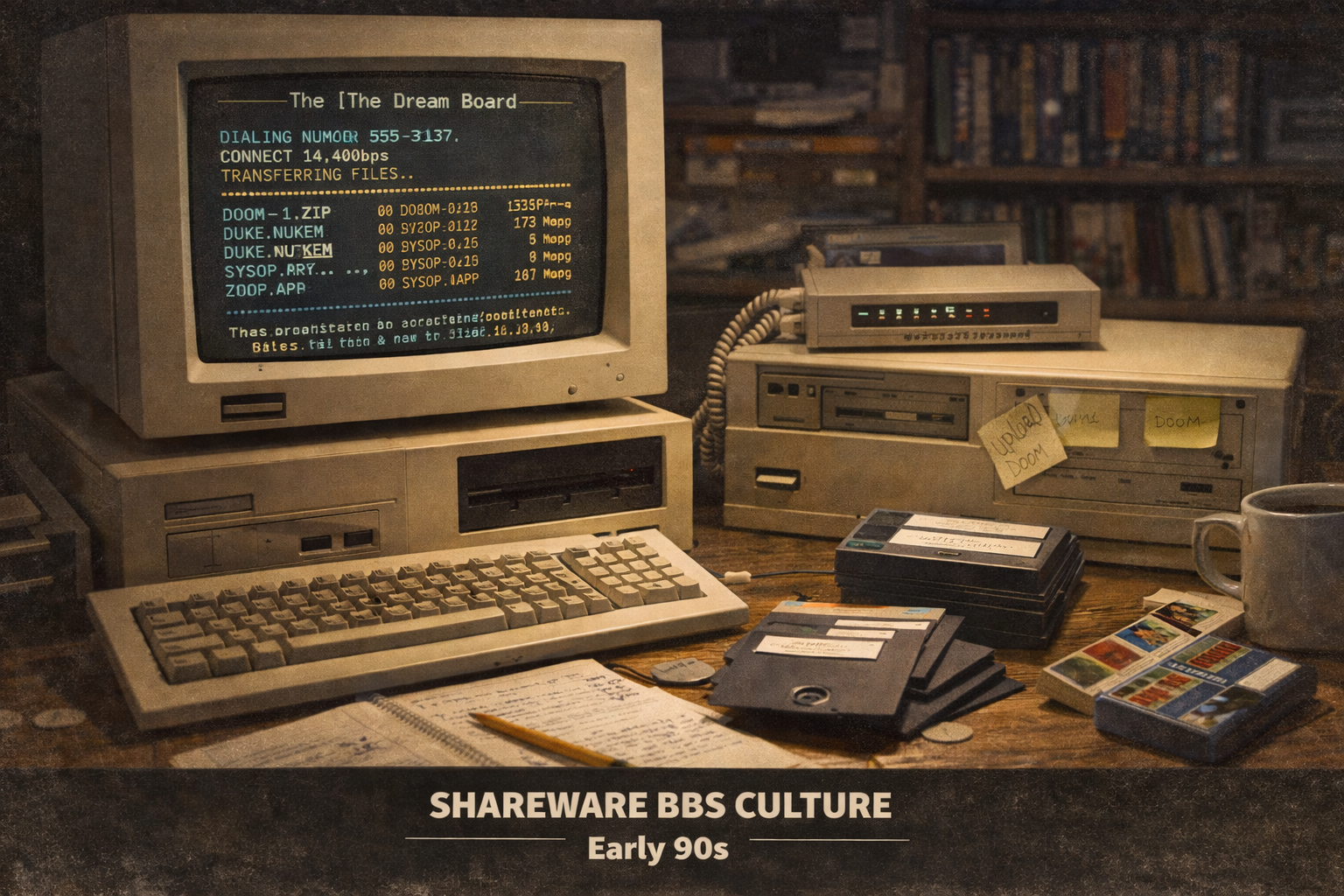
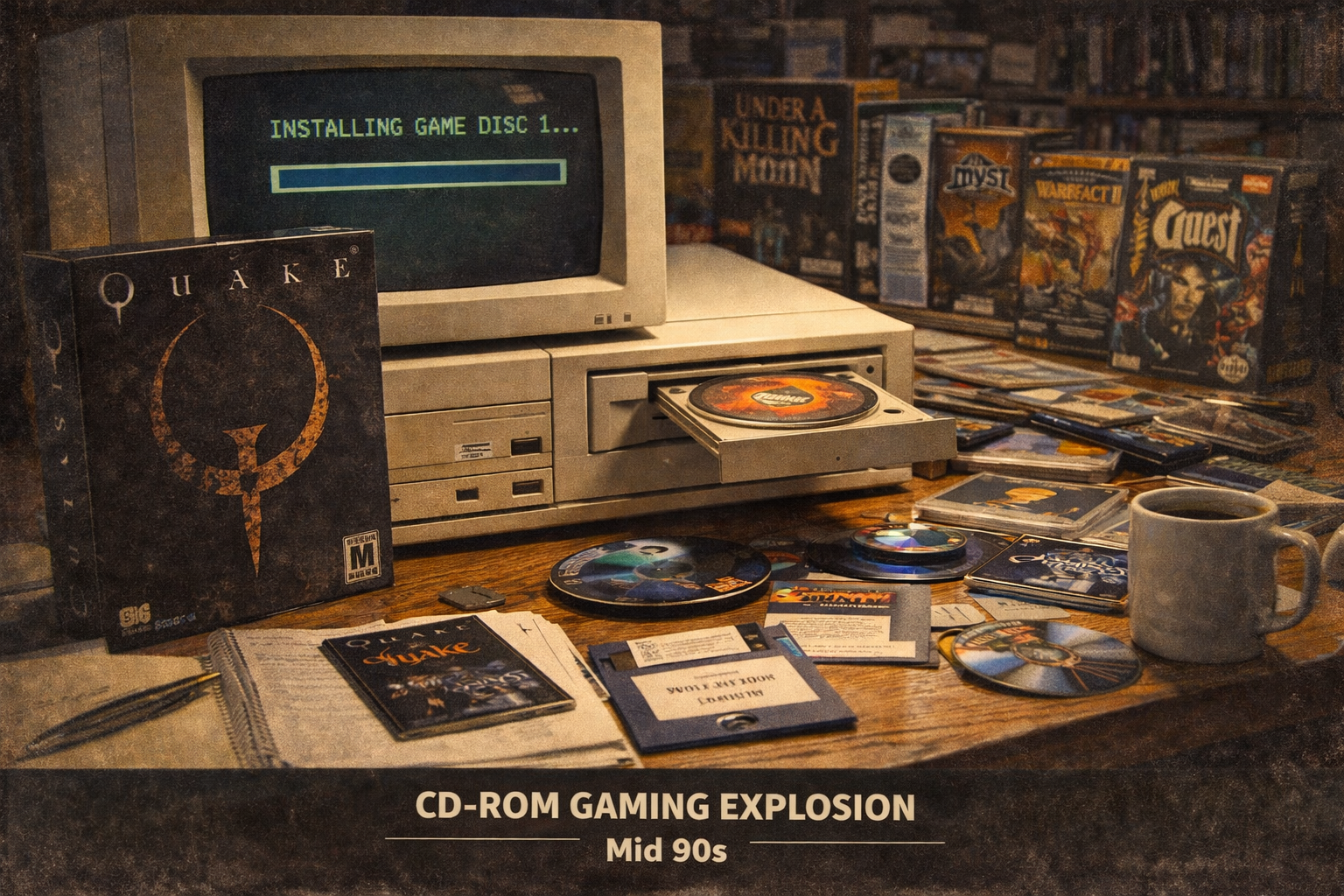
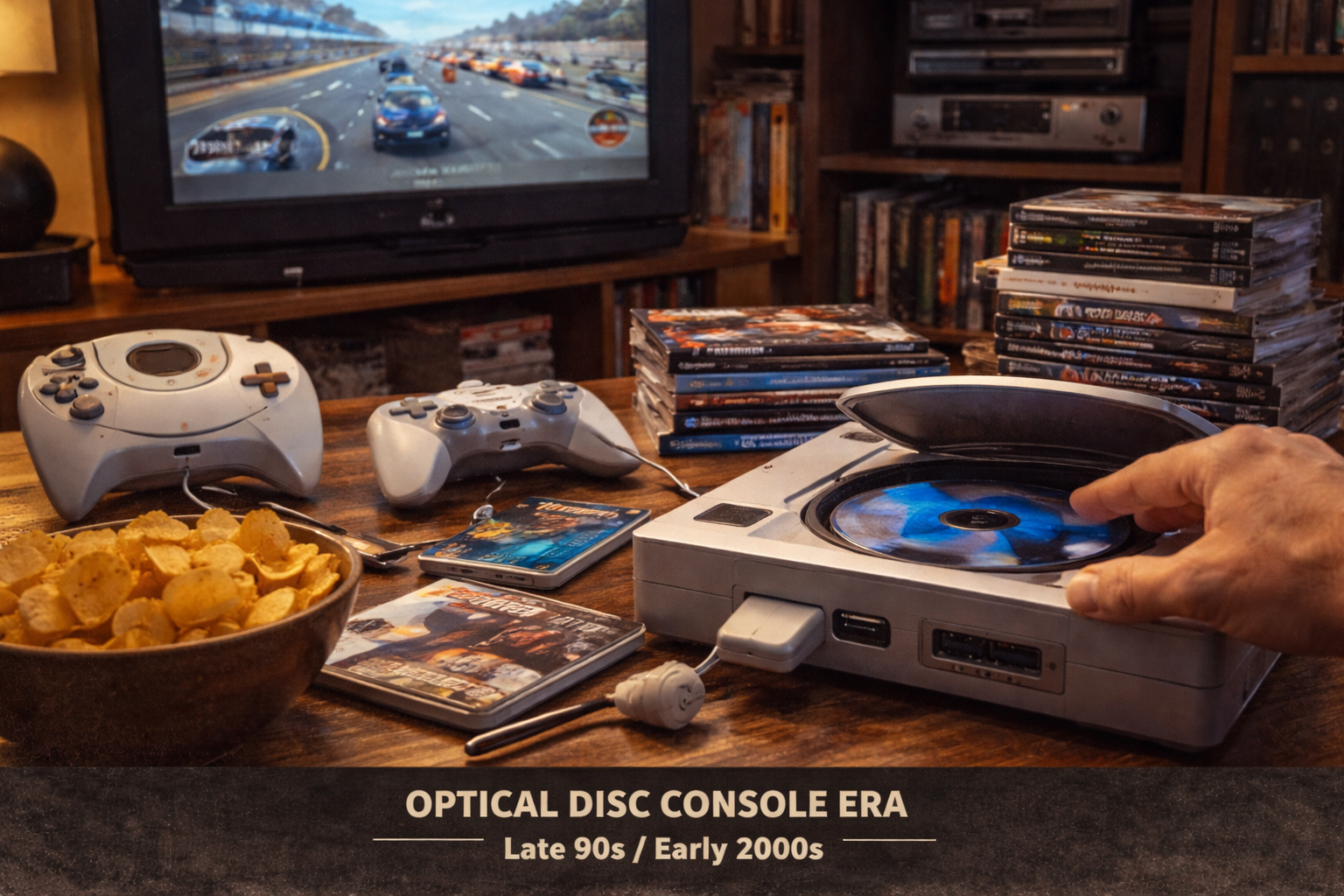
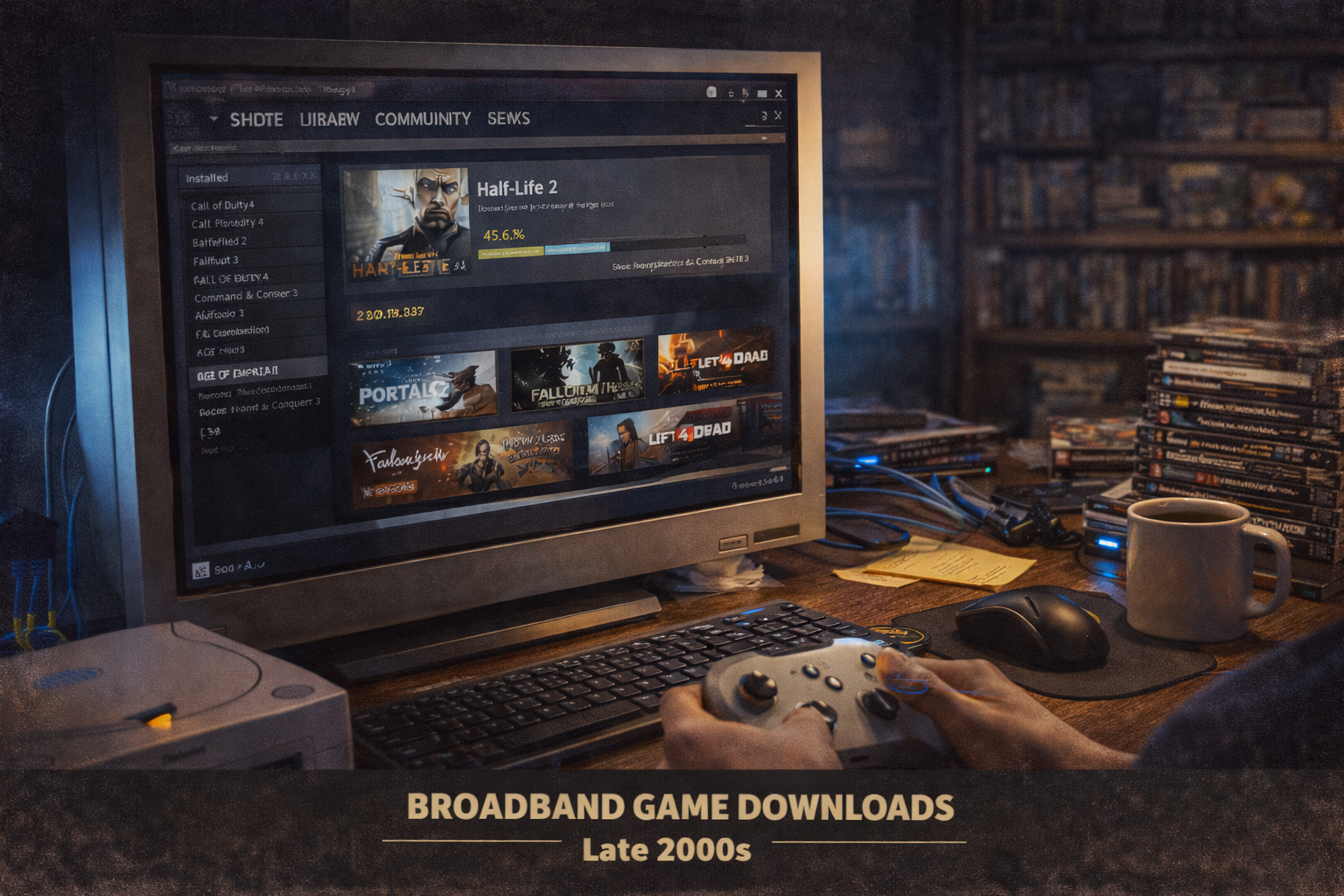
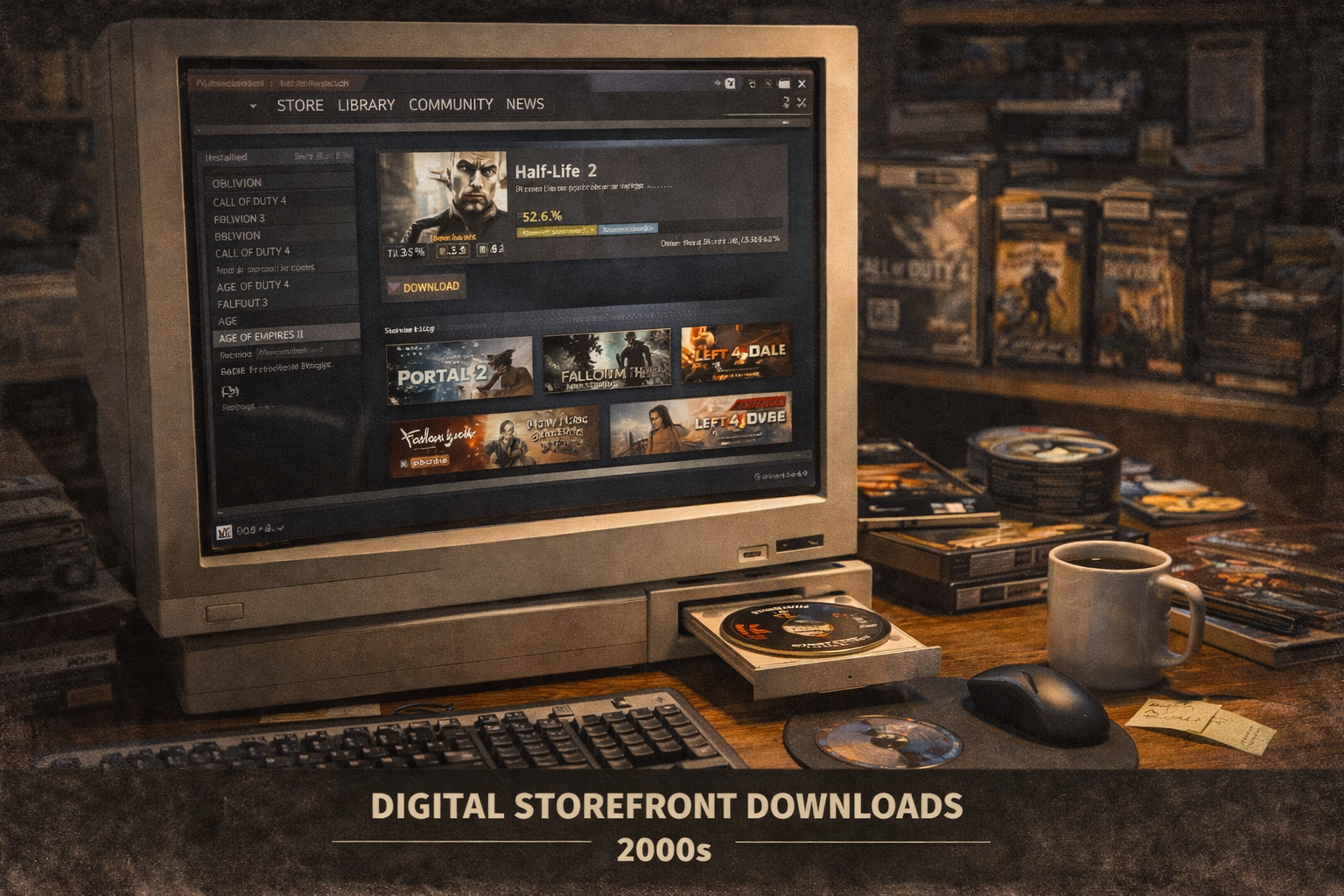
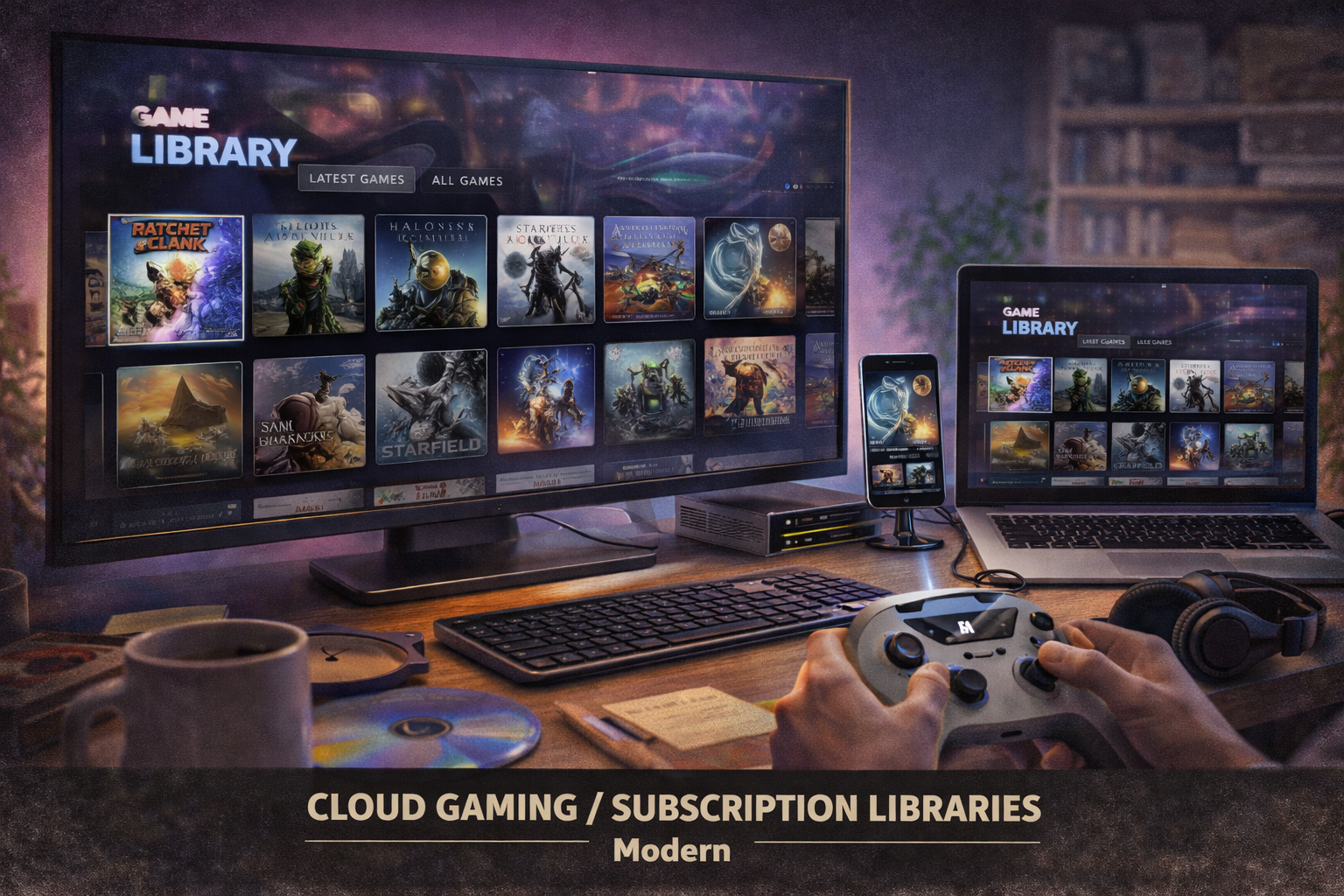
Each milestone explains the medium, the distribution loop, and the hidden power behind it: manufacturing, logistics, update systems, piracy pressure, and storefront control. Click the Tech-Leap chips to open the mini lexicon. The goal is not just to list formats, but to show how each era changed the rules of the business.

Distribution DNA — The Five Forces
Every distribution medium — from cassette to cloud — is shaped by the same five forces. Technology changes, but the trade-offs stay constant. This is the hidden framework behind the entire page.
💰 Cost per Copy
Cartridges were expensive. CDs were cheap. Downloads approach zero-cost duplication. Each shift changed who could publish games — and how risky experimentation felt.
📦 Capacity
Every jump in storage capacity rewrote design assumptions. CD-ROM enabled voice acting and FMV. DVD enabled cinematic scale. Today bandwidth sets the practical ceiling.
⚡ Speed to Player
Cassette loading took minutes. Discs felt fast. Digital downloads made waiting return at huge scale. Speed is never gone — it just changes form.
🔄 Updateability
Early games were frozen forever. Modern games mutate continuously through patches, balance changes, seasonal updates, and live-service pipelines.
🔐 Control
Whoever controls distribution controls visibility, rules, access, and preservation. Retail chains once held that power. Today platforms and ecosystems do.
Distribution Timeline Map — The Media Shifts at a Glance
This is the bird’s-eye view of the entire story: each era didn’t just change storage, it changed how players acquired software, how publishers priced risk, and how much control platforms could exert.
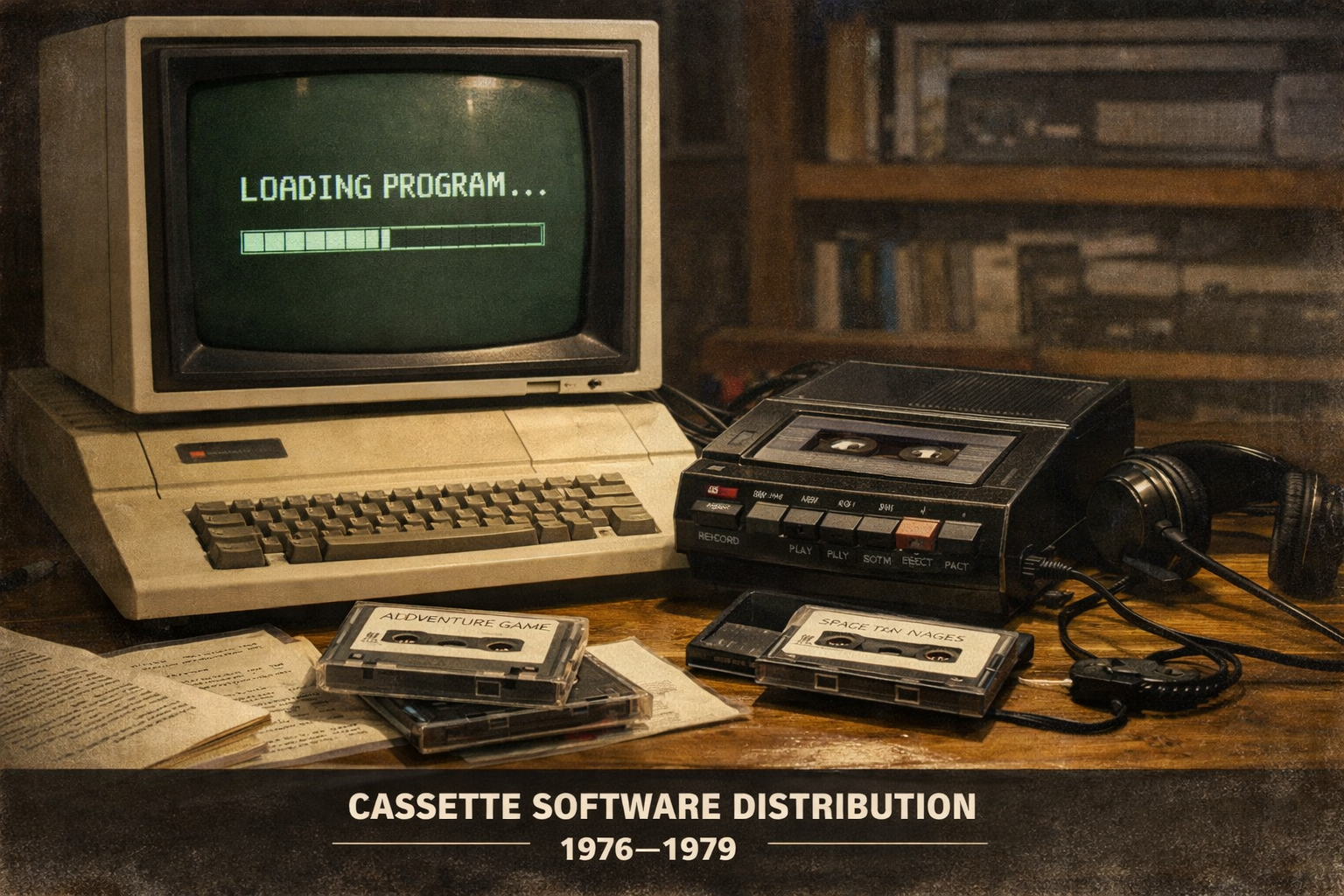
Cassette Era
The first great low-barrier medium. Cassettes were cheap enough to empower hobbyist software culture, but slow enough to make loading itself part of the user experience. They democratized duplication while making piracy almost inseparable from the format.
Distribution Flow — Who stands between developer and player?
Every era has a distribution chain. Sometimes it is physical and obvious. Sometimes it is invisible and digital. But there is always a pipeline — and every step can claim power, margin, or control.
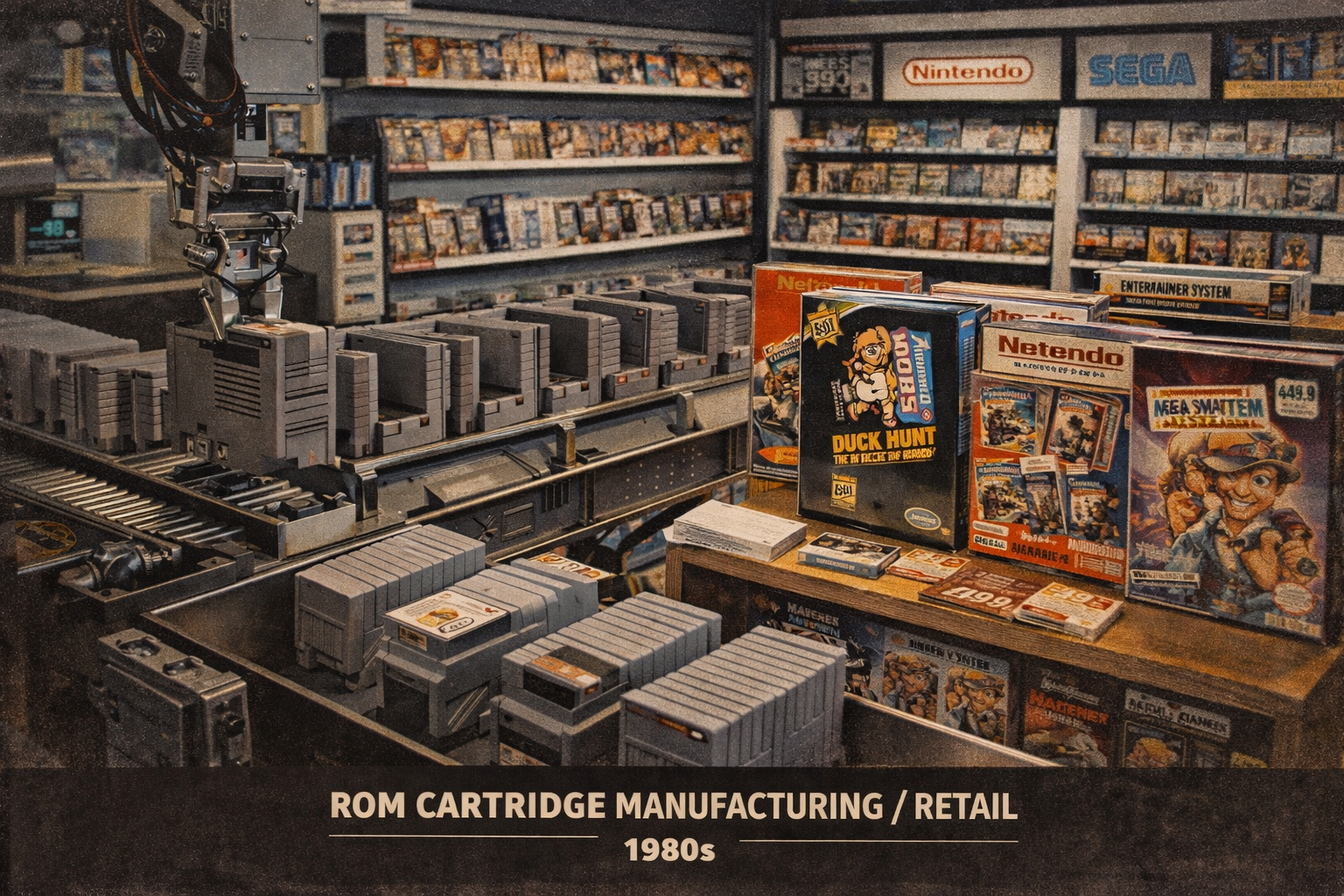
In the cartridge era, power sat in manufacturing and retail. In the storefront era, power sits in accounts, recommendation systems, and platform policy. The pipeline changed shape — but never disappeared.
The Slow Death of Physical Distribution
For decades the journey of a game was physical: manufacture it, ship it, stock it, hope it sells. Digital delivery did not just make that easier. It changed which costs mattered — and who had leverage.
For most of gaming history, distribution meant:
- manufacturing cartridges, tapes, disks, or discs
- shipping them to warehouses and retail chains
- negotiating shelf placement and regional timing
- managing overproduction, underproduction, and returns
This model favored bigger companies that could survive logistics risk. It also made games feel like durable objects — something bought, held, stored, and revisited physically.
Broadband changed the equation. Once delivery became digital, the costly physical chain collapsed. But retail gatekeepers were replaced by platform gatekeepers, not by pure freedom.
Platform Power — The New Gatekeepers
Digital storefronts removed printing and shipping, but introduced a new kind of control: software could now be delivered globally at near-zero cost — yet only inside systems owned by platforms.
Algorithms
Visibility is no longer about shelf placement. It is about recommendation systems, trending feeds, search ranking, and algorithmic discovery.
Revenue splits
Platforms take a cut of every sale. In exchange, they provide payment processing, hosting, patching, updates, and audience access — but that also centralizes power.
Account ecosystems
Games are increasingly not objects you own, but licenses attached to an account. Access is convenient — and deeply dependent on platform continuity.
Collector Sidebar — What still feels “real” in each era?
Collectors do not only preserve games. They preserve the material culture of distribution: boxes, manuals, tape labels, jewel cases, install discs, regional variations, and licensing oddities.
Physical media still prized today
- Large-box PC releases with manuals and maps
- Early cartridge variants and regional print runs
- Floppy originals with complete packaging
- CD/DVD jewel cases from transitional install eras
- Limited physical editions of otherwise digital-native games
Why collectors care
- Physical distribution leaves behind artifacts and context
- Packaging reveals how games were marketed and understood
- Variants document regional history and platform policy
- Manuals and inserts preserve knowledge that digital stores often erase
- Some physical versions outlive the platforms that sold them
The Preservation Problem
Physical media had limitations, but it also had permanence. A cartridge from 1985 can still function today. Modern distribution systems depend on servers, accounts, licenses, and authentication logic that may not survive.
This creates one of the deepest questions in game history:
Who preserves games when the platforms that distribute them disappear?
Collectors, museums, archivists, and preservation communities increasingly fill that role — especially for software that was never designed to survive beyond the lifecycle of a store, launcher, or subscription catalog.
Preservation Index — Which formats survive best?
Not every distribution era ages equally well. Some are easy to archive and replay. Others are deeply fragile because access depends on online verification, ecosystem continuity, or disappearing services.
More preservation-friendly
- Cartridges with no online dependency
- Floppies and discs when imaging/emulation is possible
- Installers and patches preserved outside closed storefronts
- Physical releases with manuals, maps, and complete packaging
More preservation-fragile
- Always-online games tied to server logic
- Subscription-only libraries with rotating catalogs
- Store-locked digital purchases without offline longevity
- Streaming-native access models with no local software copy