GoldenEye 007The Console FPS That Changed the Room
Rare’s Bond masterpiece made the console shooter feel smart, cinematic, and gloriously social: stealth-objective missions, unforgettable gadgets, split-screen chaos, and a campaign structure that still feels more considered than most licensed games ever dared to be.
Why GoldenEye still hits
- Mission design: objectives, stealth, alarms, gadgets and difficulty-specific goals make the campaign unusually rich.
- Console breakthrough: GoldenEye proved first-person shooters could thrive in the living room, not only on PC.
- Multiplayer legend: four-player split-screen turned dorm rooms, family TVs and sleepovers into permanent war zones.
- Cultural weight: few licensed games ever escaped their film origins so completely and became classics in their own right.
“The movie game that stopped being just a movie game.”
GoldenEye 007 is remembered not as a curiosity from 1997, but as one of the console shooter’s real turning points.
The Console FPS That Changed the Room
GoldenEye 007 remains one of the rare blockbuster licenses that earned a second life as pure game design history. It took the 1995 Bond film, stretched its structure into a globe-spanning objective shooter, and built something deeper than anyone reasonably expected from a movie tie-in.
You sneak, plant bugs, rescue hostages, photograph evidence, sabotage systems, survive ambushes, and then spend the evening with friends in split-screen revenge matches. That combination — cinematic single-player plus endlessly replayable local multiplayer — is why GoldenEye became more than a hit. It became a ritual.
At a glanceBest experienced as both a historic campaign shooter and one of the great social multiplayer artifacts of the late 1990s.
Game Data
| Title | GoldenEye 007 |
| Original Release | 1997 |
| Original Platform | Nintendo 64 |
| Developer | Rare |
| Publisher | Nintendo |
| Director | Martin Hollis |
| Design Team | Duncan Botwood, David Doak and Rare team |
| Music | Graeme Norgate, Grant Kirkhope, Robin Beanland |
| Source Material | Based on the 1995 James Bond film GoldenEye |
| Genre | First-person shooter / objective-based FPS |
| Modes | Single-player campaign; 2–4 player split-screen multiplayer |
| Difficulty System | Agent, Secret Agent, 00 Agent, unlockable 007 Mode |
| Modern Access | Nintendo Switch Online + Expansion Pack; Xbox / Game Pass route; original N64 hardware |
| Core Loop | Infiltrate, complete objectives, improvise, replay, unlock |
Gameplay pillars
Objective-driven missions, stealth and alarm management, gadget use, weapon variety, analog-stick aiming adaptation, difficulty-layered objectives, and endlessly customizable local multiplayer.
Story / setup
James Bond investigates the Janus syndicate, General Ourumov, and the GoldenEye satellite weapon, uncovering a conspiracy tied to betrayed fellow 00-agent Alec Trevelyan.
Most famous design fact
Higher difficulty levels do not just make enemies tougher — they add extra mission objectives, turning replay into genuine mastery rather than simple repetition.
Review / Why GoldenEye Still Matters So Much
The opening Dam mission still explains the game’s strength immediately. You are not just a gun with legs. You destroy alarms, sneak through guard routes, plant equipment, and finish with a bungee jump that feels far grander than what most late-1990s shooters were trying to do.
Why the campaign stands outThe single-player campaign is where the game remains more sophisticated than many remember. Objectives shift by difficulty, levels hide smart route decisions, and missions often ask for control rather than chaos. Facility, Bunker, Frigate, Train, Jungle and Cradle are not just places to clear. They are spaces to solve.
The controls — then and nowModern players will feel the age of the original control scheme. The N64 pad was never going to behave like modern dual analog, and GoldenEye asks a lot from one stick, auto-aim assistance, and button-based compromises. But that should not be mistaken for design failure. It is better understood as a remarkably smart adaptation to limited hardware.
Then there is the mode people still talk about in the language of family folklore. Split-screen GoldenEye was loud, unfair, hilarious, and endlessly reconfigurable. License to Kill, proximity mines, Slappers Only, Facility duels, arguments over Oddjob — tiny rules became huge memories.
Why it enduresPlenty of older shooters are historically significant without remaining enjoyable. GoldenEye is more fortunate than that. Some elements are undeniably dated, but the mission structure, pacing, music, atmosphere, and split between stealth and action still give it real bite.
Final verdictGoldenEye 007 is not just “good for a movie game” or “good for an early console FPS.” It is a genuinely major work in the history of home action games: clever, atmospheric, surprising, and socially explosive. The hardware dates it. The design saves it.
Why It Matters
GoldenEye 007 helped prove that first-person shooters did not belong exclusively to PCs. Earlier shooters had obviously existed on consoles, but GoldenEye made the format feel properly at home: mission-based, cinematic, accessible enough for living-room play, and mechanically rich enough to keep players coming back.
It also changed expectations for licensed games. Instead of simply reenacting a film scene by scene with shallow action, GoldenEye expanded the Bond universe into a larger campaign structure and used difficulty levels to deepen the experience. That was unusually ambitious for a movie tie-in.
Then there is the multiplayer legacy. Four-player split-screen on one television helped define an era of social gaming before universal online play. Later console shooters would become bigger, smoother, and more advanced, but the living-room template was already here.
Why it mattered then
It gave the Nintendo 64 one of its most important mature-audience hits and helped make the console FPS commercially undeniable.
Why it matters now
It remains a playable lesson in objective-based level design, difficulty layering, licensed-game ambition, and social multiplayer chemistry.
What it changed
It pushed shooters on consoles toward cinematic missions, local multiplayer obsession, and smarter non-PC design ambitions.
Timeline / Key Milestones
Rare starts work on a Bond game that gradually evolves from a film-license experiment into one of the defining releases of the N64 era.
GoldenEye 007 launches on Nintendo 64 and quickly becomes a critical and commercial phenomenon, praised for campaign depth and four-player split-screen multiplayer.
Awards, massive sales, and endless word-of-mouth cement GoldenEye as far more than a successful tie-in: it is now part of the console shooter canon.
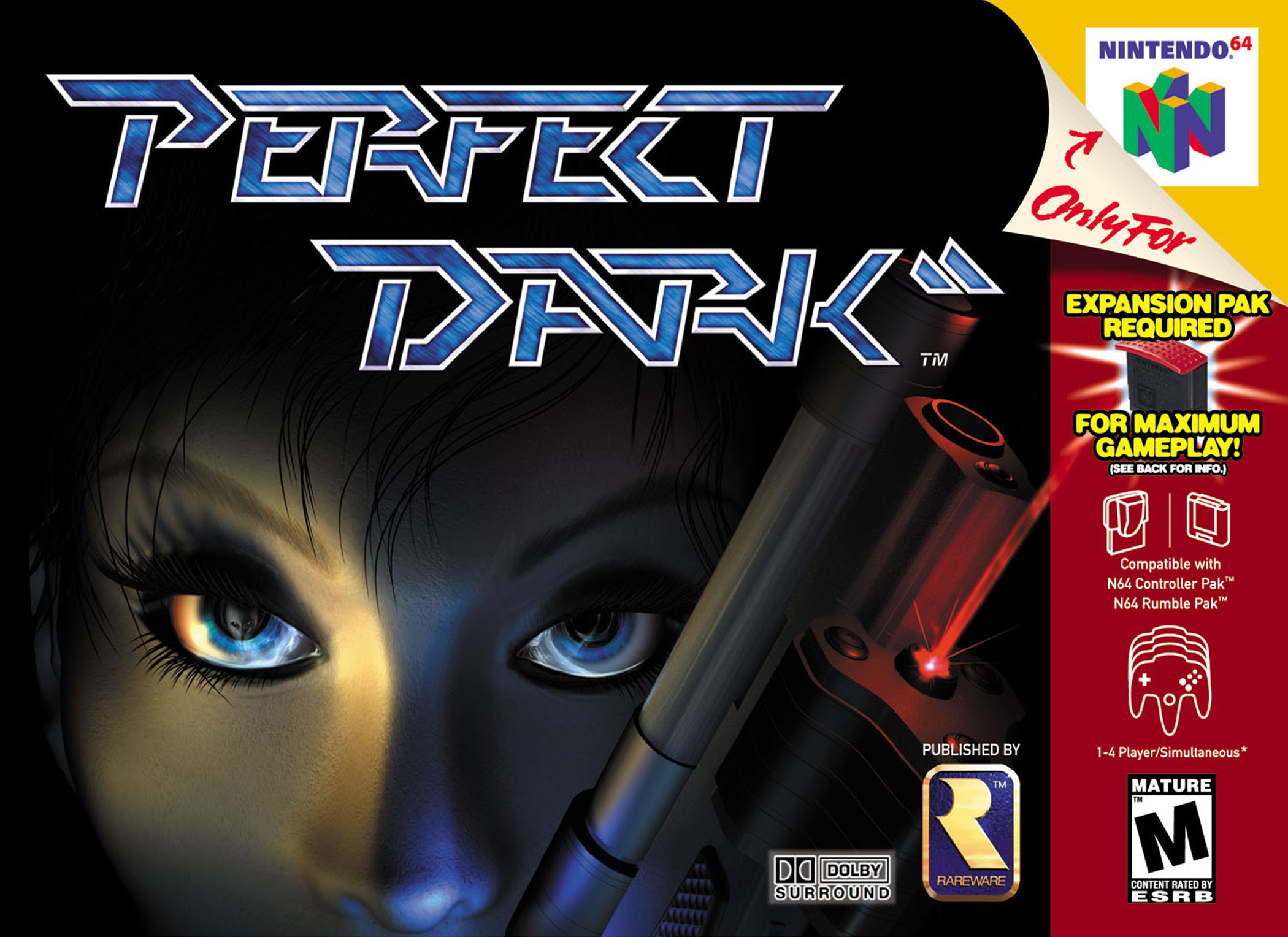
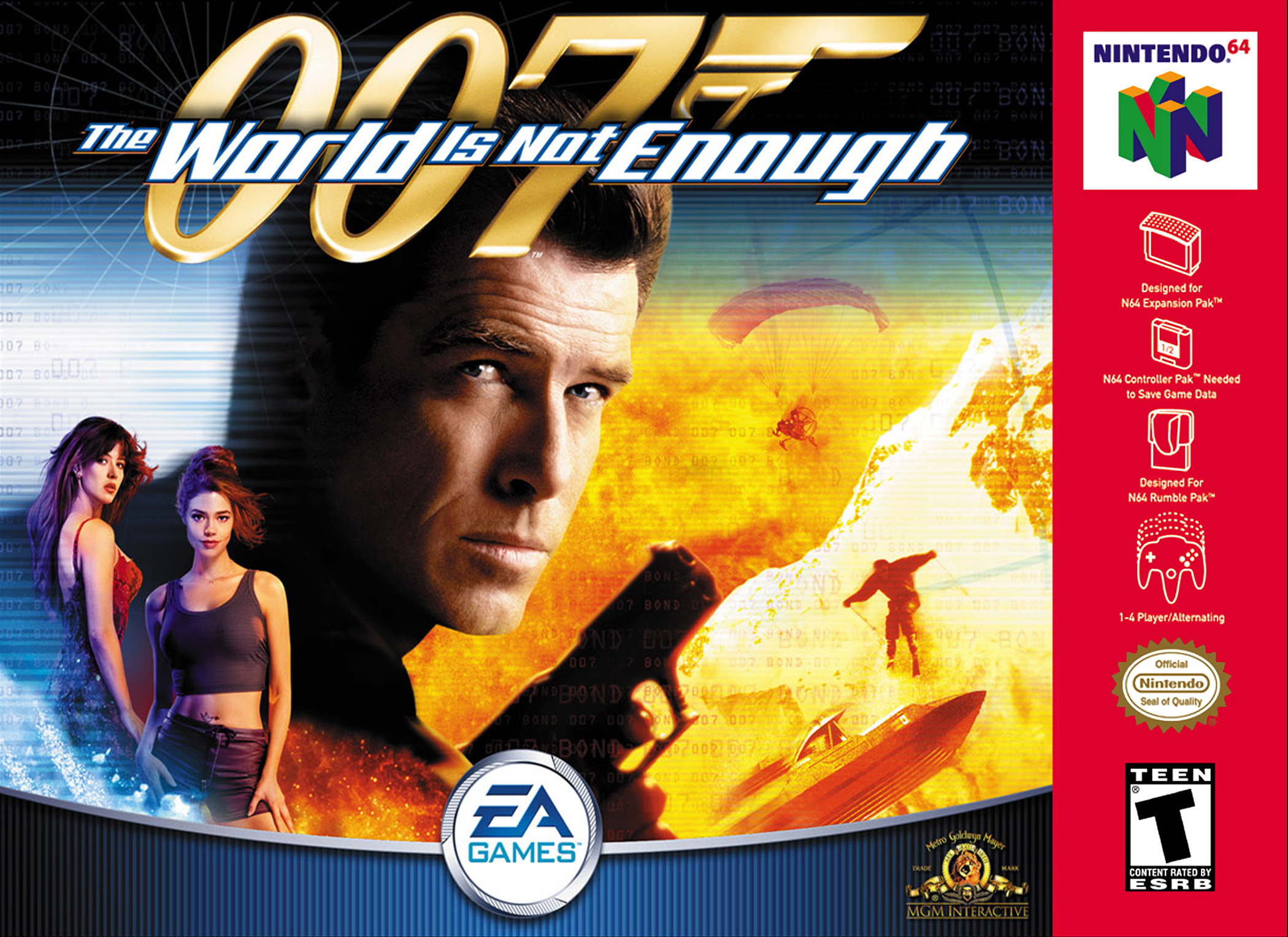
Perfect Dark pushes many of GoldenEye’s ideas further, while The World Is Not Enough continues the Bond-on-N64 mission-shooter lineage.
The original game officially returns through Nintendo Switch Online + Expansion Pack and an Xbox release, introducing it to a new generation through modern access routes.
GoldenEye 007 enters the World Video Game Hall of Fame, confirming what players had argued for decades: its influence was permanent.
GoldenEye remains a shorthand for objective-based console shooting, living-room multiplayer, and the moment a licensed game became genre history.
The Dam opening, Facility speedruns, stealth objectives, alarm systems, Q gadgets, watch menu, proximity mines, Slappers Only, Oddjob arguments, split-screen chaos, Perfect Dark lineage, Switch Online return, Xbox modern route, and Hall of Fame recognition became the memory — but the cartridges, boxes, manuals, controllers, consoles, guides, posters, ads, and modern releases are the artifact trail.
GoldenEye belongs in the collector lane because it is more than a famous license: it is one of the clearest examples of one cartridge becoming a living-room ritual.
Where to Play / Collect Today
Collecting GoldenEye means collecting one of the Nintendo 64’s defining social artifacts.
Strong collector routes include original N64 cartridges, complete-in-box copies, PAL / NTSC variants, manuals, inserts, strategy guides, Nintendo 64 controllers, Expansion Pack-era console setups, promotional ads, Perfect Dark context pieces, Switch Online access, Xbox / Rare Replay ownership routes, and display pieces for the classic Bond-on-N64 shelf.
A curated starting point for GoldenEye collectors: original Nintendo 64 material first, box and manual variants second, then controllers, guides, modern access routes, display supplies, and Rare / Bond shooter lineage pieces.
eBay Collector Search
The strongest route for physical GoldenEye collecting: cartridges, complete-in-box copies, manuals, guides, controller bundles, regional variants, Nintendo 64 console lots, and Rare / Perfect Dark lineage pieces.
- Best chance for N64 carts, CIB copies, manuals, guides, PAL / NTSC variants, controllers, and console bundles.
- Search GoldenEye 007 N64 CIB, GoldenEye manual, GoldenEye strategy guide, GoldenEye cartridge, N64 controller, and Rare N64 lot separately.
- Check region, label condition, cartridge shell, manual presence, box wear, save functionality, controller stick condition, and seller photos carefully.
4NERDS collector search for GoldenEye 007 N64 carts, CIB copies, manuals, guides, controllers, and Rare / N64 lots.
Amazon Search
Useful for N64 cartridge protectors, game box protectors, display stands, controller replacement parts, retro storage, Bond / game-history books, HDMI adapters, and shelf organization around a GoldenEye / Rare collection.
- Better for accessories, protectors, display supplies, controller parts, storage, and books than original carts.
- Good for game cases, shelf stands, dust covers, N64 controller maintenance, and modern display organization.
- Use as a secondary route after eBay collector searches.
Replace YOURAMAZONTAG-20 once the final approved Amazon Associates tag is ready.
Etsy Collector Route
Potentially useful later for GoldenEye-style shelf labels, N64 mission-card dividers, split-screen nostalgia plaques, retro shooter collection signage, and Bond-era display objects.
- Better suited for display objects than preservation-grade collecting.
- Keep separate from original carts, boxes, manuals, guides, hardware, and verified official releases.
- Ready to activate once the Etsy strategy is finalized.
Placeholder route kept disabled until a final Etsy affiliate or curated shop strategy is available.