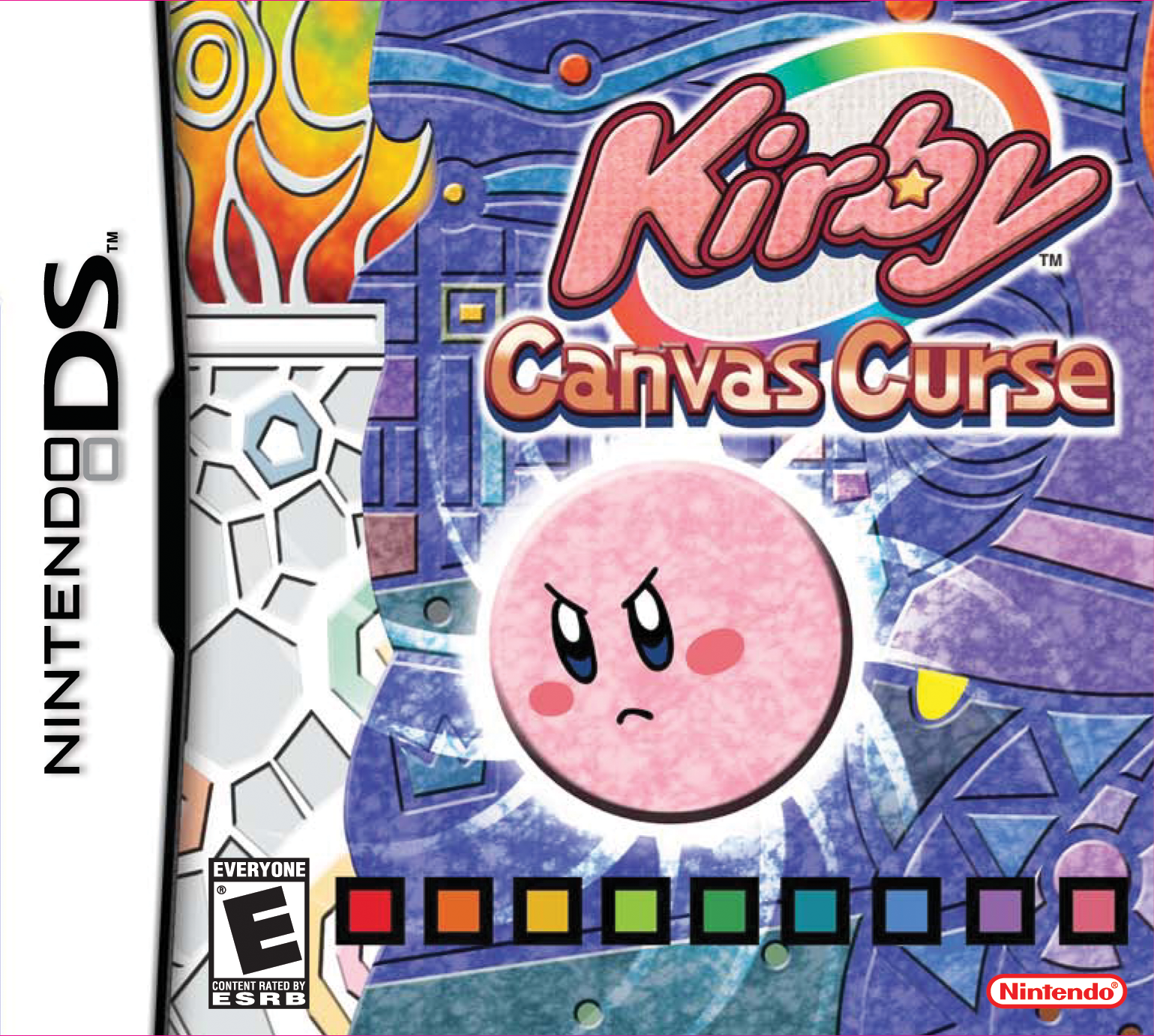
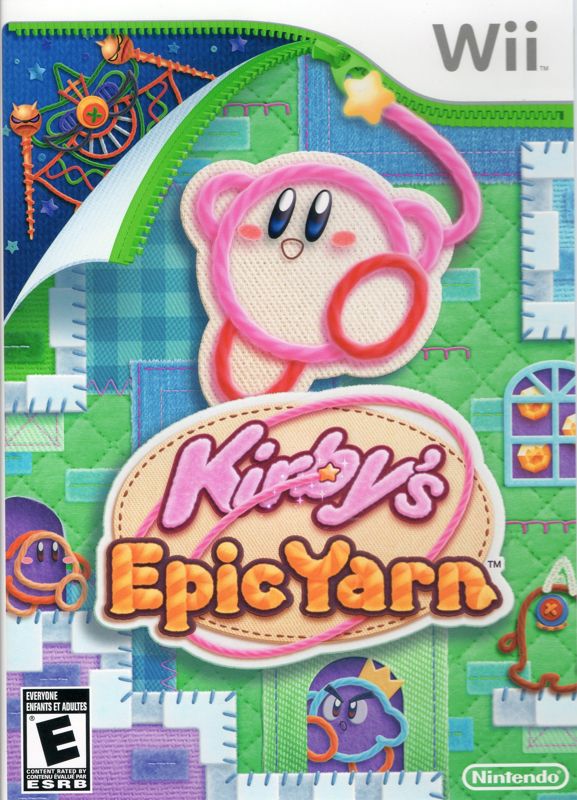
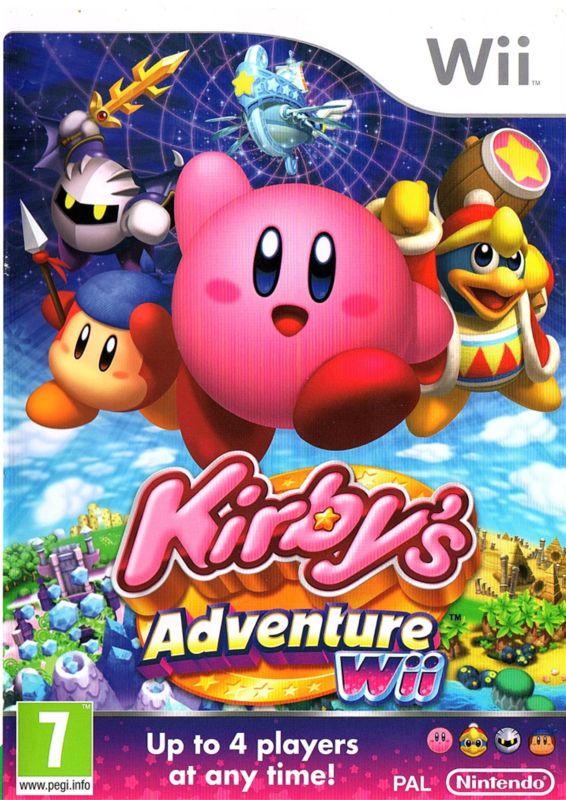
- Fresh control concept: stylus-only play turns Kirby into a crowd-management platformer instead of a standard action game.
- Great central hook: building from one Kirby to ten creates visible momentum, strategy, and spectacle.
- Excellent DS identity: it feels designed for the hardware instead of merely adapted to it.
- Series curiosity value: it is one of the boldest Kirby experiments, moving away from Copy Abilities toward group command.
“Part puzzle swarm, part platformer, all Kirby.”
A portable spin-off that finds real invention in the simple idea that more Kirby means more possibilities.
A Kirby Game About Commanding a Pink Swarm
Kirby Mass Attack is one of those Nintendo experiments that feels odd for about thirty seconds and then completely makes sense. Instead of controlling Kirby directly with buttons, you guide him with the DS stylus. Then another Kirby joins. Then another. Before long, the game stops being about one adorable hero and becomes a miniature strategy-platformer about momentum, numbers, timing, and touch-based command. It still looks and sounds like Kirby, but its brain is wired differently. That is exactly what makes it memorable.
Game Data
| Title | Kirby Mass Attack |
| Release Year | 2011 |
| Developer | HAL Laboratory |
| Publisher | Nintendo |
| Platform | Nintendo DS |
| Genre | Platformer / touch-controlled action |
| Players | 1 player |
| Original Format | Nintendo DS Game Card |
| Core Loop | Guide, gather, swarm, solve, attack, recover |
Stylus-only control, directing Kirbys via stars and taps, fruit collection to grow the squad, enemy swarming, puzzle gates requiring headcount, and light secret-hunting for medals and extras.
Kirby is split into tiny versions of himself by the villain Necrodeus. With only a fraction of his normal power, he must rebuild his numbers and defeat the threat by working as a group.
Copy Abilities are largely set aside here. The central idea is not “what power does Kirby have?” but “how many Kirbys can you control at once, and what can that crowd do together?”
Review / Why It Still Feels So Clever
The first thing Mass Attack asks you to do is stop thinking like you are playing a normal Kirby platformer. You are not steering one character with a pad. You are sketching intention across the screen. Tap here, gather there, flick a Kirby forward, drag the swarm upward, send the whole group toward an obstacle. This sounds less precise on paper than it feels in motion. In practice, the game becomes readable quite quickly because it ties every action to simple touch gestures and clear screen feedback.
WHY THE MULTI-KIRBY IDEA WORKSThe main pleasure is that your power is visual and physical. One Kirby feels vulnerable. Five feel capable. Ten feel hilarious and unstoppable. You do not just level up statistically — you watch your little army grow, bunch together, scramble over slopes, and crash into enemies as a pink wave. That is satisfying on a very direct level, and it gives the game an identity few Kirby titles can match.
PUZZLES THROUGH HEADCOUNTWhat really gives the game structure is that numbers matter. Some doors require more Kirbys. Some hazards thin your group. Some enemies are trivial with a crowd but awkward with only one or two survivors. That means the game is constantly asking a small strategic question: how much of your swarm can you preserve, and what opportunities open if you do? It is a platformer, but also a quiet resource-management game.
THE LIMITSIt is not a perfect fit for everyone. Players who love Kirby primarily for Copy Abilities and direct movement may find the spin-off logic a little detached. The stylus can also feel slightly hectic in messier situations. But that tension is part of the game’s identity. Mass Attack is not trying to outdo the mainline entries at being classic Kirby. It is trying to discover an entirely different route through the same universe.
FINAL VERDICTKirby Mass Attack remains one of the most successful “what if?” entries in the series. It takes a single mechanical twist — many Kirbys instead of one — and builds a whole adventure around it with clarity, charm, and real design intelligence. Late in the DS era, it proved Nintendo and HAL could still find new grammar in one of their friendliest franchises.
Why Historically Important
Kirby Mass Attack matters because it is one of the clearest examples of HAL Laboratory refusing to let Kirby become mechanically predictable. Rather than simply polishing the standard template again, the team built a game around an input method and a group-control idea that would have made little sense on traditional hardware. That makes it a very “Nintendo DS” game in the best possible way.
It also shows how flexible Kirby is as a character platform. Copy Abilities, inhaling, and direct movement are set aside, yet the game still feels recognizably Kirby: colorful, welcoming, funny, toy-like, and full of expressive animation. That is a sign of a strong franchise identity. The character can survive meaningful design mutation.
Historically, it also stands as one of the last major Kirby experiments on the DS and a late portable showcase for stylus-native thinking. It belongs in the same conversation as other Nintendo touch-era experiments, not just as a side curiosity, but as a real demonstration of how alternate control schemes can reshape genre structure.
Timeline / Key Milestones
Kirby Mass Attack releases for Nintendo DS and stands out immediately for its stylus-only, up-to-ten-Kirbys control concept.
The game arrives late in the DS lifecycle, helping define the final phase of the hardware as one of Nintendo’s most experimental handheld eras.
The game later reaches Wii U Virtual Console, giving it a second official life outside its original cartridge release.
New Wii U and 3DS eShop purchases end, making physical copies and previously purchased digital versions the main official access paths.
It remains one of the Kirby series’ most unusual and most respected side experiments — a portable oddity that still feels genuinely smart.
Where to Play / Collect Today
A curated access point for Kirby collectors, DS fans, and handheld archive readers: original Nintendo DS copies, related Kirby items, books, accessories, and future handmade display pieces — clearly marked as partner links where applicable.
Shop original DS copies
Browse current Kirby Mass Attack offers on eBay — ideal for Nintendo DS game cards, complete-in-box copies, manuals, regional variants, bundles, and collector-grade finds.
- Original Nintendo DS physical copies
- Complete-in-box and manual listings
- Condition and price comparison
Paid partner link / Werbung — availability and pricing depend on eBay sellers.
Browse Kirby & DS finds
Explore Amazon for Kirby items, Nintendo books, DS accessories, themed collectibles, display supplies, and modern related products around Kirby Mass Attack.
- Books, accessories, and Kirby extras
- Gift ideas and modern products
- Broader Nintendo-themed browsing
Paid partner link / Werbung — as an Amazon Associate, 4NERDS Gaming may earn from qualifying purchases.
Curated Etsy picks coming soon
Planned for handmade retro art, Kirby-inspired shelf pieces, prints, display objects, and museum-style collectibles that match the 4NERDS archive aesthetic.
- Wall art and display-focused pieces
- Handmade and fan-crafted style items
- Added once the setup is ready
Etsy affiliate integration will be added after the tracking setup is approved and tested.