- Fresh series twist: instead of treating you like a floating cursor, it makes you directly control Wario and friends inside the chaos.
- Party strength: local co-op and Variety Pack give it far more couch-energy than a “small games collection” label suggests.
- Smart friction: character-specific abilities add strategy, personality, and comedy to even the dumbest microgames.
- Real trade-off: not every character feels equally intuitive, so solo play is more uneven than the series’ most immediately readable entries.
“The brilliant idea here is simple: WarioWare stops being a cursor game and becomes a character game.”
That one decision changes the feel of nearly every joke, failure, and comeback.
Microgame Chaos, Rebuilt Around Characters
WarioWare: Get It Together! takes one of Nintendo’s strangest and most instantly recognizable series and finds a genuinely fresh angle for it. The microgames are still rapid-fire, absurd, and over almost before your brain has fully named them — but now each one is filtered through the quirks of playable characters. That sounds small on paper. In practice, it changes the rhythm of the entire experience. What used to be pure reaction now also includes quick adaptation: who are you controlling, what can they do, and how do you solve the same ridiculous problem with a different body, different attack, or different movement arc?
Game Data
| Title | WarioWare: Get It Together! |
| Release Year | 2021 |
| Developer | Intelligent Systems |
| Publisher | Nintendo |
| Platform | Nintendo Switch |
| Genre | Action / party / microgame compilation |
| Players | 1–4 players on a single system, depending on mode |
| Original Format | Game card / digital download |
| Core Loop | React, adapt to character abilities, survive the rush, chase cleaner runs |
Lightning-fast microgames, character-specific movement, fast visual reads, local co-op chaos, unlock-driven progression, and score-chasing replay.
Wario and his crew get sucked into their company’s latest game, where “game bugs” have thrown everything into disorder. To escape, they must clear a mountain of microgames from the inside.
This entry’s defining hook is that, for the first time in the series, you directly control Wario and his friends inside the microgames rather than simply pointing, tapping, or button-reacting in a more abstract way.
Review / Why It Hits, and Where It Wobbles
The first few minutes make a strong impression because the game understands exactly what WarioWare is supposed to feel like: a sequence of jokes delivered at panic speed. The instructions are blunt, the timer is rude, and the visual style is so exaggerated that even confusion becomes part of the comedy. The game still delivers that familiar WarioWare shock-to-response rhythm, but it immediately introduces a new variable: the character you are controlling is not just a skin, but a rule set.
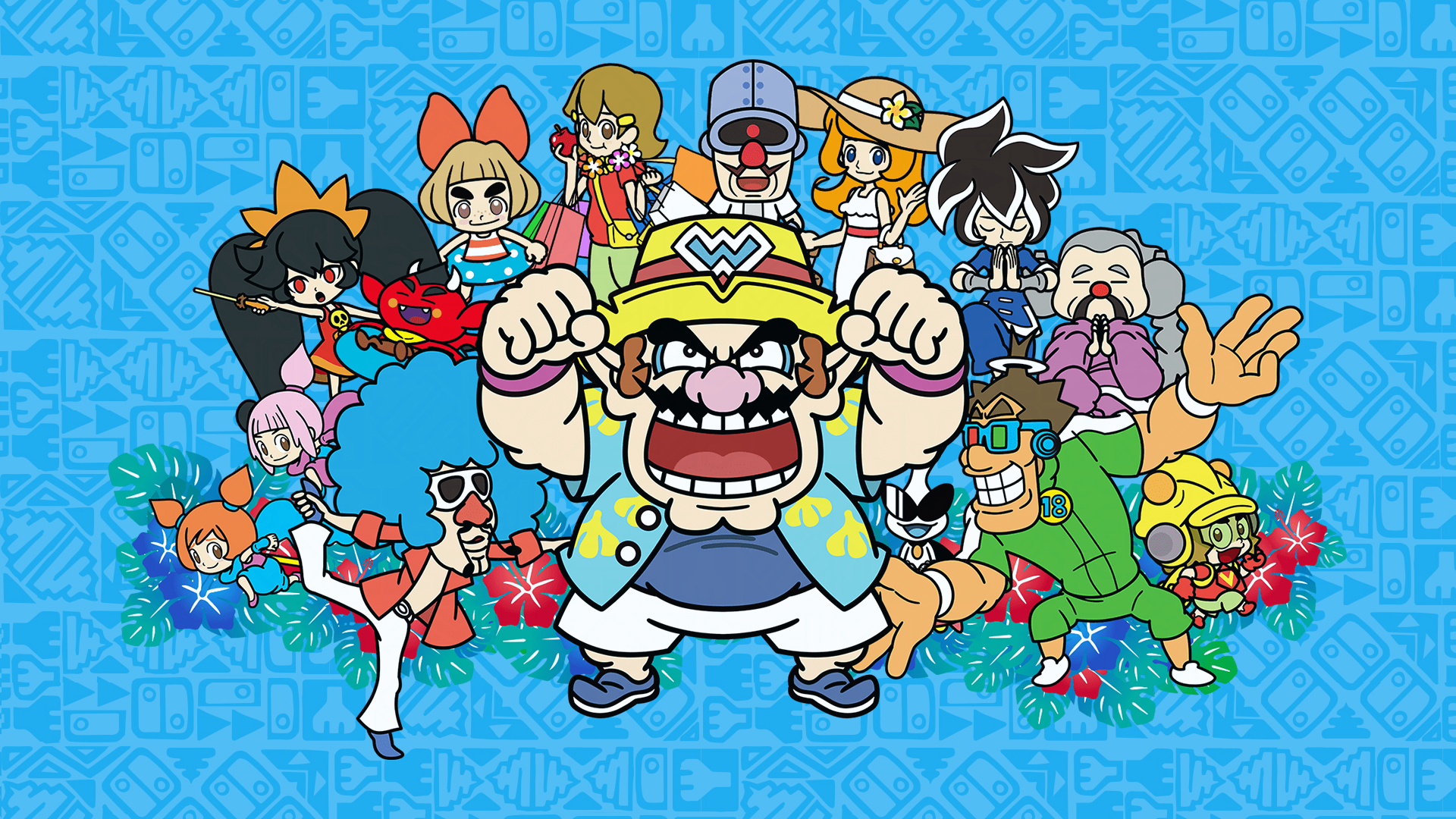
THE BIG TWISTThat twist is what makes this entry more than just “another pile of microgames.” Wario dashes and bumps things. Ashley casts spells from a broom. 18-Volt fires from a distance. Mona zips around on her scooter. Because the same microgame can feel slightly different depending on who you are using, the game gains a layer of improvisation that older entries did not need. Sometimes that is clever in a satisfying way; sometimes it is gloriously stupid. Usually it is both.
WHY CO-OP WORKS SO WELLThe design comes alive in co-op. WarioWare has always been funny, but this particular entry is funnier because the character systems create miscoordination, rescue moments, and tiny arguments in real time. One player drifts off target, the other bails the situation out, and suddenly a microgame that lasts only seconds has produced a complete social story. That is where Get It Together! feels most at home: not just as a reflex test, but as a compact engine for laughter.
WHERE IT STUMBLESThe same mechanical richness that makes the game fresh also makes it slightly less frictionless than the most instantly readable WarioWare entries. Some characters are easier to love than to use. Some microgames feel better suited to certain move sets than others. If you prefer the pure, almost musical directness of older WarioWare design, this entry can occasionally feel like it is adding just a touch too much texture to something that once thrived on total immediacy.
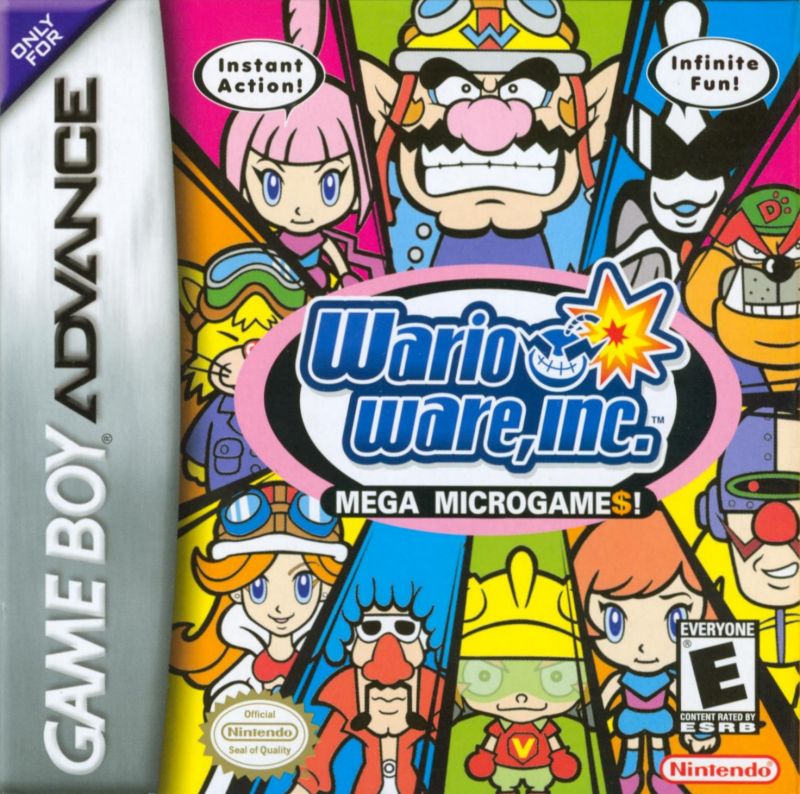
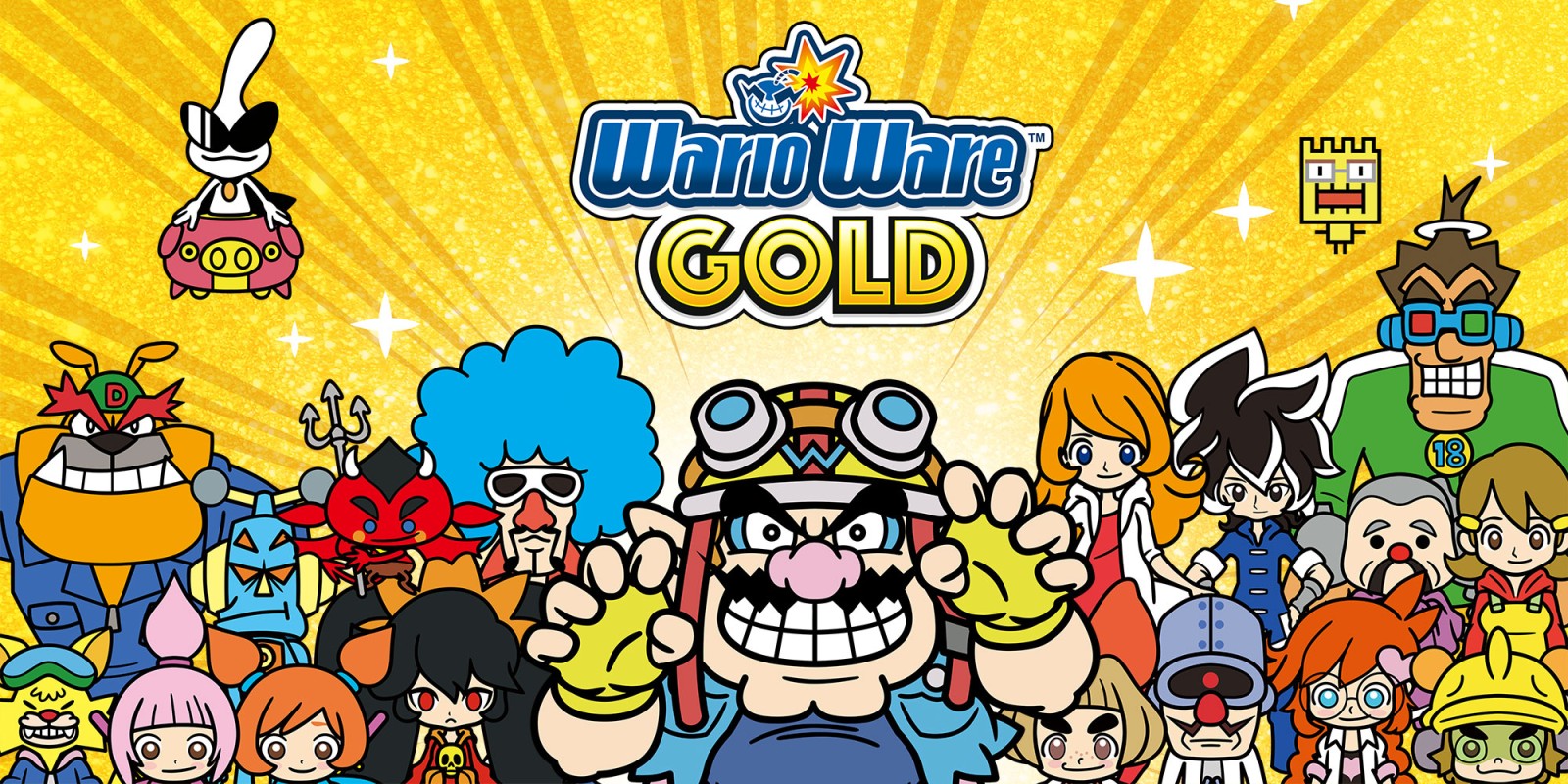
STYLE, RHYTHM, AND ENERGYPresentation does a huge amount of work. The character art is sharp, loud, and unmistakably WarioWare — somewhere between toy-box nonsense, pop-art noise, and cartoon anti-polish. Menus are snappy, the humor is obnoxious in the right way, and the game never lets its identity flatten into generic minigame packaging. Even when individual challenges blur together, the overall vibe never does.
FINAL VERDICTWarioWare: Get It Together! is not the simplest WarioWare, nor the most universally smooth in solo play, but it is one of the most interesting. It earns its place by taking a long-running formula and actually asking what else that formula could be. The result is a game that is messier than the series at its purest, but also livelier, more social, and more mechanically distinctive than a safe sequel had any right to be.
Why Historically Important
WarioWare: Get It Together! matters because it is one of those rare late-series entries that actually changes the grammar of its franchise. WarioWare had long built its brilliance on immediacy: read the situation, do the one obvious thing, survive the next absurd demand. This game keeps the speed and silliness, but adds a new design layer by making each microgame depend on the body and ability set of whichever character you are currently controlling.
That shift makes it historically important within the series itself. It proves that WarioWare is flexible enough to evolve without losing its identity. Instead of padding the concept with more modes alone, it rethinks what “playing a microgame” can mean. That is a more meaningful contribution than a mere content expansion. It is a structural change.
It also stands as an important Switch-era Nintendo release because it shows the company still willing to let one of its strangest brands remain genuinely strange. The game is louder, rougher, and more chaotic than a polished party product usually dares to be. That refusal to sand down its personality is part of why it still feels memorable. Get It Together! is not just another WarioWare — it is a series experiment that actually landed.
Timeline / Key Milestones
WarioWare returns on Nintendo Switch with a major structural twist: direct control of Wario and friends inside the microgames themselves.
WarioWare: Get It Together! releases and positions itself as both a solo microgame rush and a louder local-multiplayer comedy machine.
Story Mode, Variety Pack, and Wario Cup define the game’s structure: campaign progression, couch-play absurdity, and score-chasing challenge loops.
The game builds a reputation as one of the Switch’s most eccentric local multiplayer releases — quick to start, easy to laugh at, and hard to fully predict.
It is remembered as one of the franchise’s boldest mechanical pivots: not a side note, but a real alternate way of thinking about WarioWare design.
Where to Play / Collect Today
Nintendo Switch digital route
The simplest modern way in is the Switch eShop version: immediate access, no setup friction, and ideal for spontaneous local sessions.
DIGITAL OPTIONPhysical Nintendo Switch release
If you want the clean collector route, the boxed release is the better fit — bright cover art, easy pickup-and-play energy, and a solid modern Nintendo shelf piece.
PHYSICAL COPYSame-couch chaos with friends
More than many party games, this one improves when the room gets louder. Short rounds, comic failure, and character confusion make it ideal for group play.
PARTY ROUTE4NERDS Collector Marketplace
Advertising / Werbung: This section contains paid partner links. If you click through and make a purchase, 4NERDS Gaming may earn a commission at no additional cost to you.
Shop physical Switch copies
Browse current WarioWare: Get It Together! listings on eBay — useful for boxed copies, loose game cards, collector-condition listings, bundles, and price comparison.
- Original Nintendo Switch game cards
- Boxed versions and seller variety
- Condition and price comparison
Paid partner link / Werbung — availability and pricing depend on eBay sellers.
Browse related Wario finds
Explore Amazon for WarioWare: Get It Together!, Nintendo Switch accessories, Wario-themed items, gaming gifts, and modern Nintendo collector products.
- Switch game and accessory browsing
- WarioWare and Nintendo-themed extras
- Gift ideas and modern products
Paid partner link / Werbung — as an Amazon Associate, 4NERDS Gaming may earn from qualifying purchases.
Curated Etsy picks coming soon
Planned for handmade retro art, display objects, shelf pieces, prints, and museum-style collectibles that match the 4NERDS archive aesthetic.
- Wall art and display-focused pieces
- Handmade and fan-crafted style items
- Added once the setup is ready
Etsy affiliate integration will be added after the tracking setup is approved and tested.