History – Data storage

Data Storage – From 1725 to the Cloud Age | 4NERDS

The Story of Data Storage

From Basile Bouchon’s punched paper tape (1725) to cloud-scale object storage — this is a museum walk through the upgrades that quietly reshaped civilization: encoding, random access, density, reliability, speed, and the true hidden hero: error correction.

TL;DR – What you’ll get

1725 → today

Each milestone shows what changed, what it enabled, and what problem it solved. Tap Tech-Leap chips for quick definitions — or hit Read Article to open a full encyclopedia deep dive with a table of contents and reading progress.
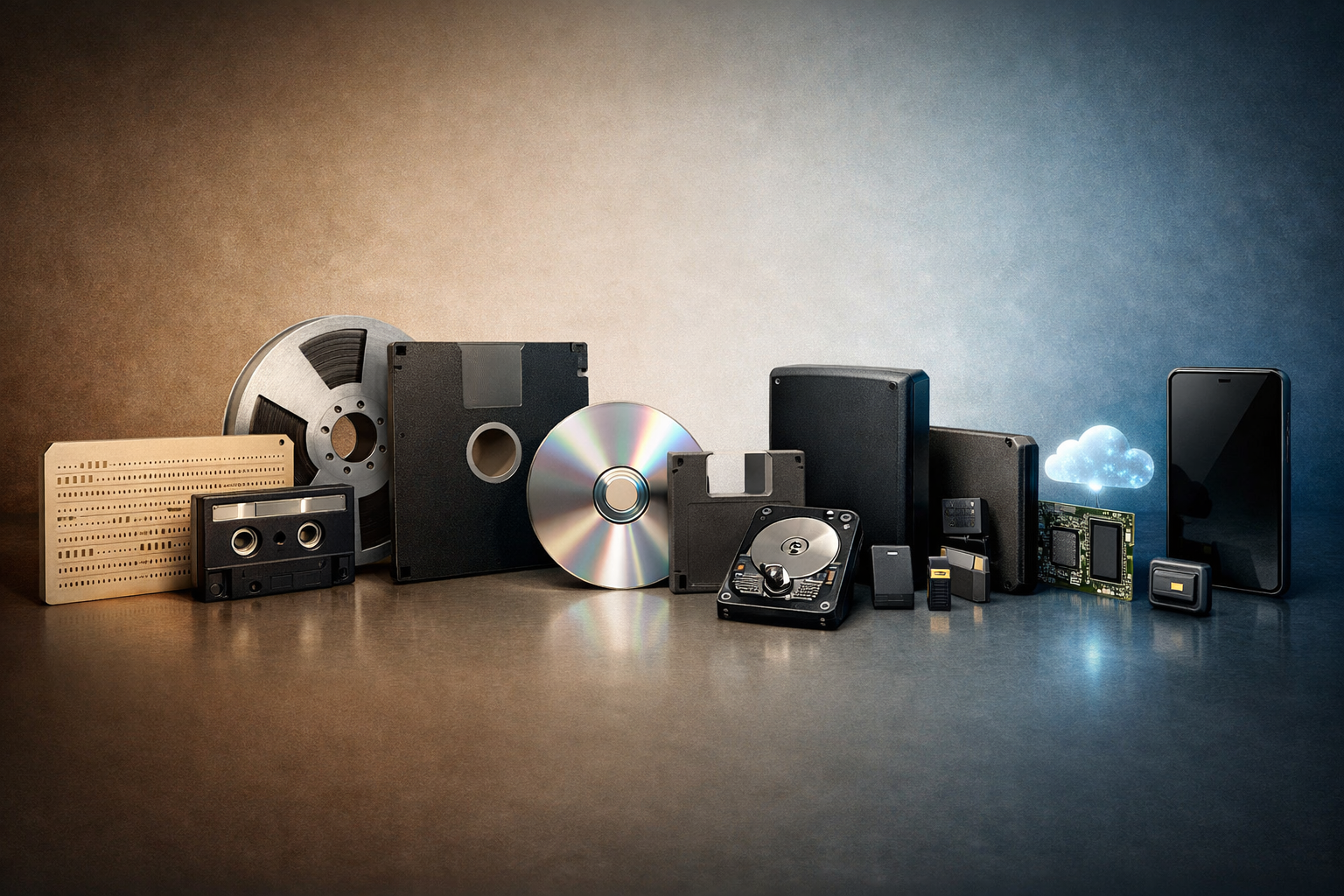
Data storage across eras (punch cards to cloud)
One line summary Marks → magnetism → optics → electrons → distributed durability
0 visible 💡 Suggest

Timeline & Milestones

A museum walk through storage. Click images for the viewer — click Tech-Leaps for the mini lexicon — and hit Read Article to open the full “encyclopedia” deep dive per milestone.

PUNCHED MEDIA • 1725 → early 1900s

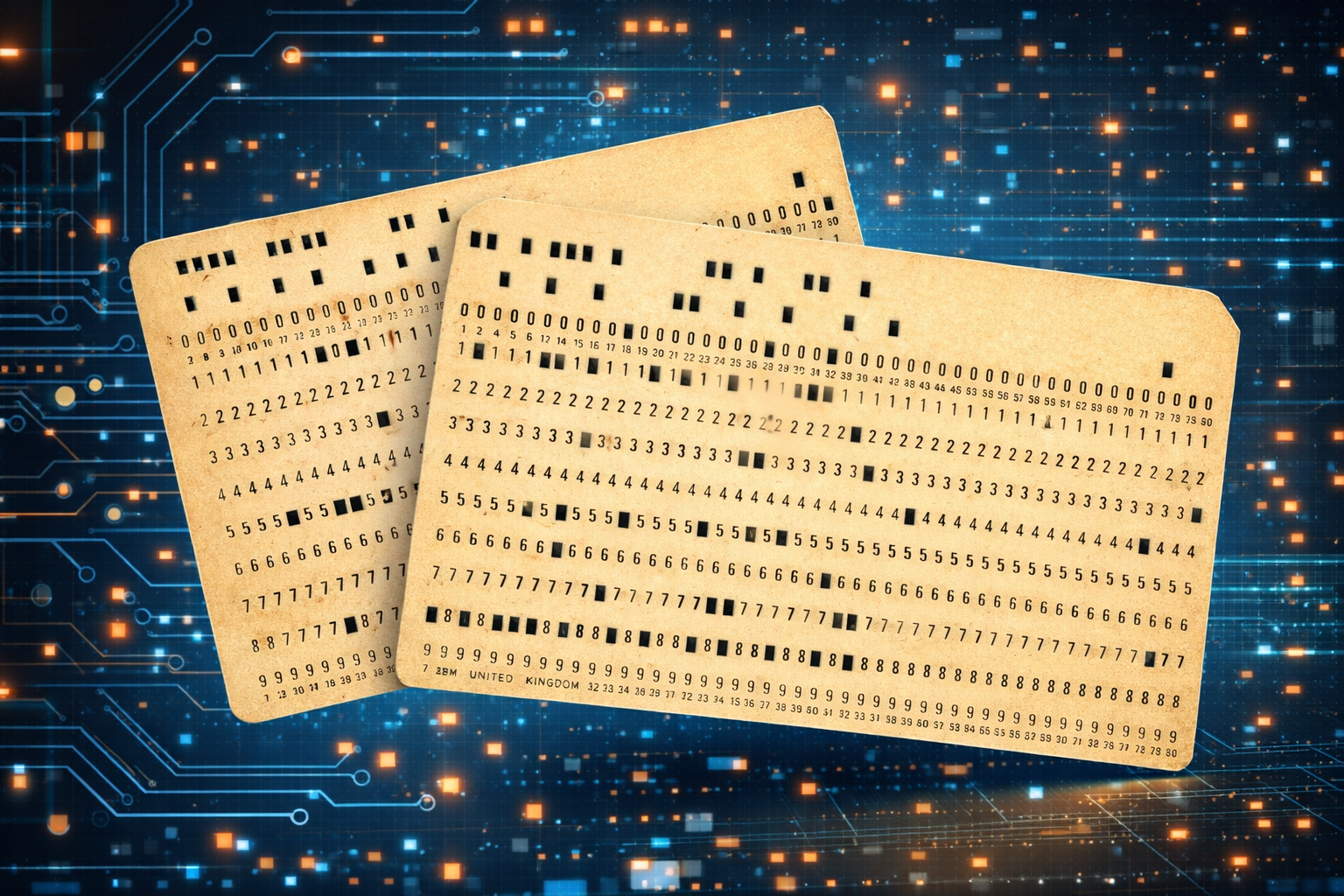
The idea is deceptively simple: store meaning as a pattern a machine can read. Holes aren’t “computing” yet — but they are the moment information becomes a repeatable artifact.
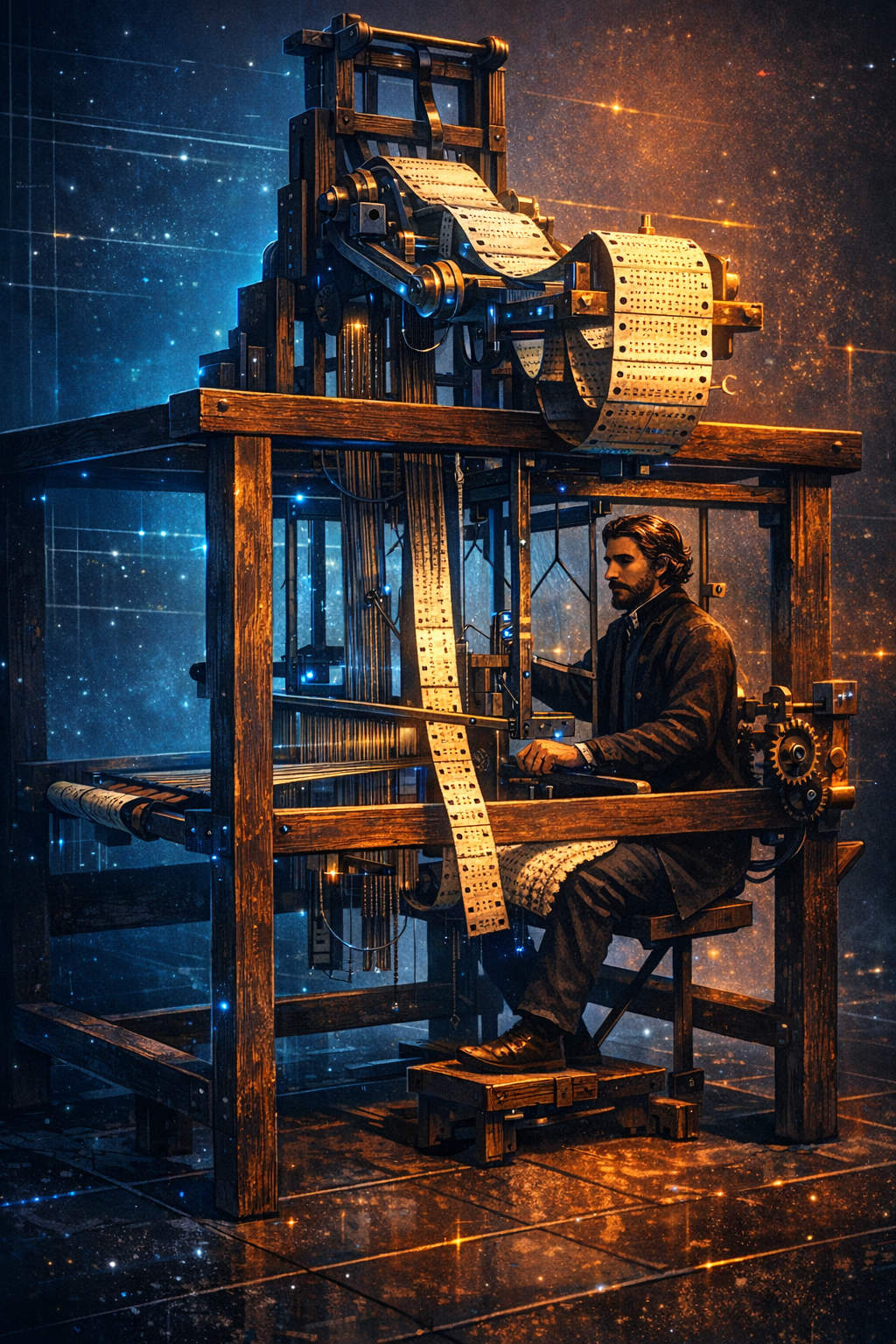
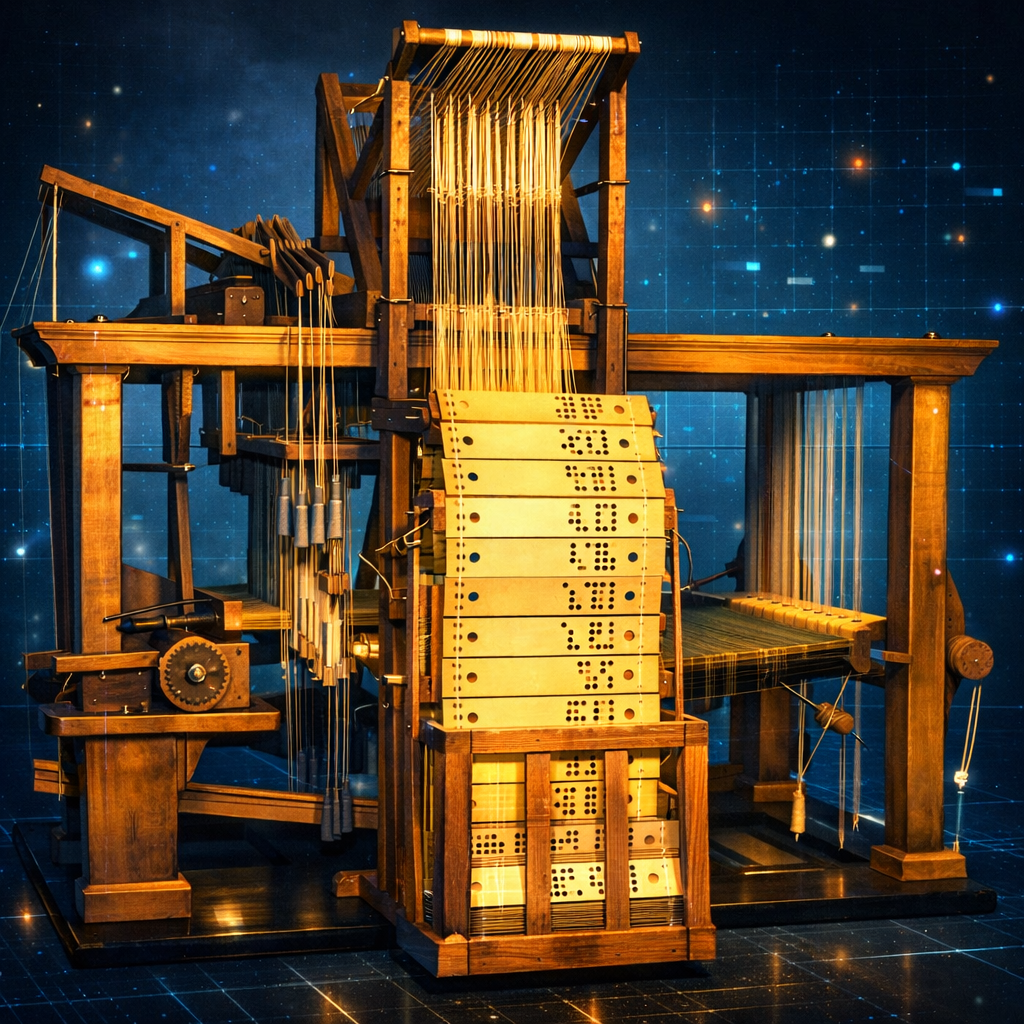
Basile Bouchon punched tape
1725 ✓ Read
Punched Encoding Automation

Bouchon’s punched paper tape

Storage as a physical pattern you can “read” mechanically.
What changed

Information becomes a reproducible medium: the same tape can drive the same pattern again and again.

Access sequential Strength repeatability Weakness editing
Jacquard punched cards
1801 ✓ Read
Punched Modular Programs

Jacquard punched cards

The “program” becomes a stack of physical data blocks.
What changed

Modularity: cards can be rearranged, repeated, archived — and copied. This is storage thinking.

Access sequential-ish Strength modular decks Legacy “program as data”
Hollerith punched cards
1890 ✓ Read
Punched Scale Industry

Hollerith data cards

Not just storage — a full data workflow emerges.
What changed

Standardized records: you can sort, count, tabulate, and archive information reliably.

Access batch Strength standard records Impact data industry

MAGNETIC ERA • 1930s → today (yes, still)

Magnetism turns data into invisible states. And suddenly storage becomes rewritable: archives, backups, disks, file systems, and the first real “random access” moment.
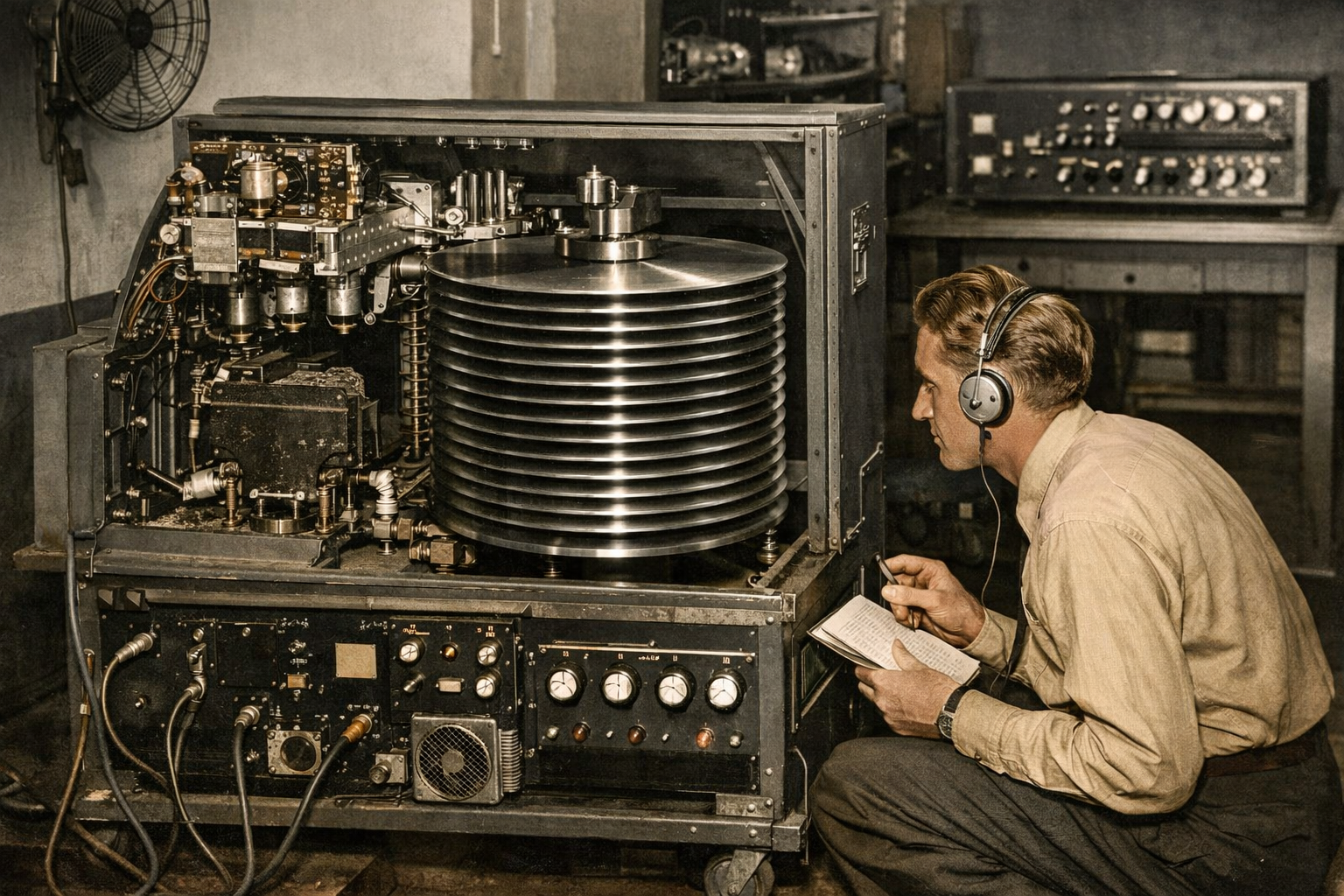
Magnetic recording
1930s–1950s ✓ Read
Magnetic Bits Physics

Magnetic recording becomes digital

Storage is no longer “holes” — it’s invisible states.
What changed

Rewritable storage arrives. You can record, erase, and reuse the same medium — the economy changes.

Access sequential → mixed Strength rewrites Trade-off noise & drift
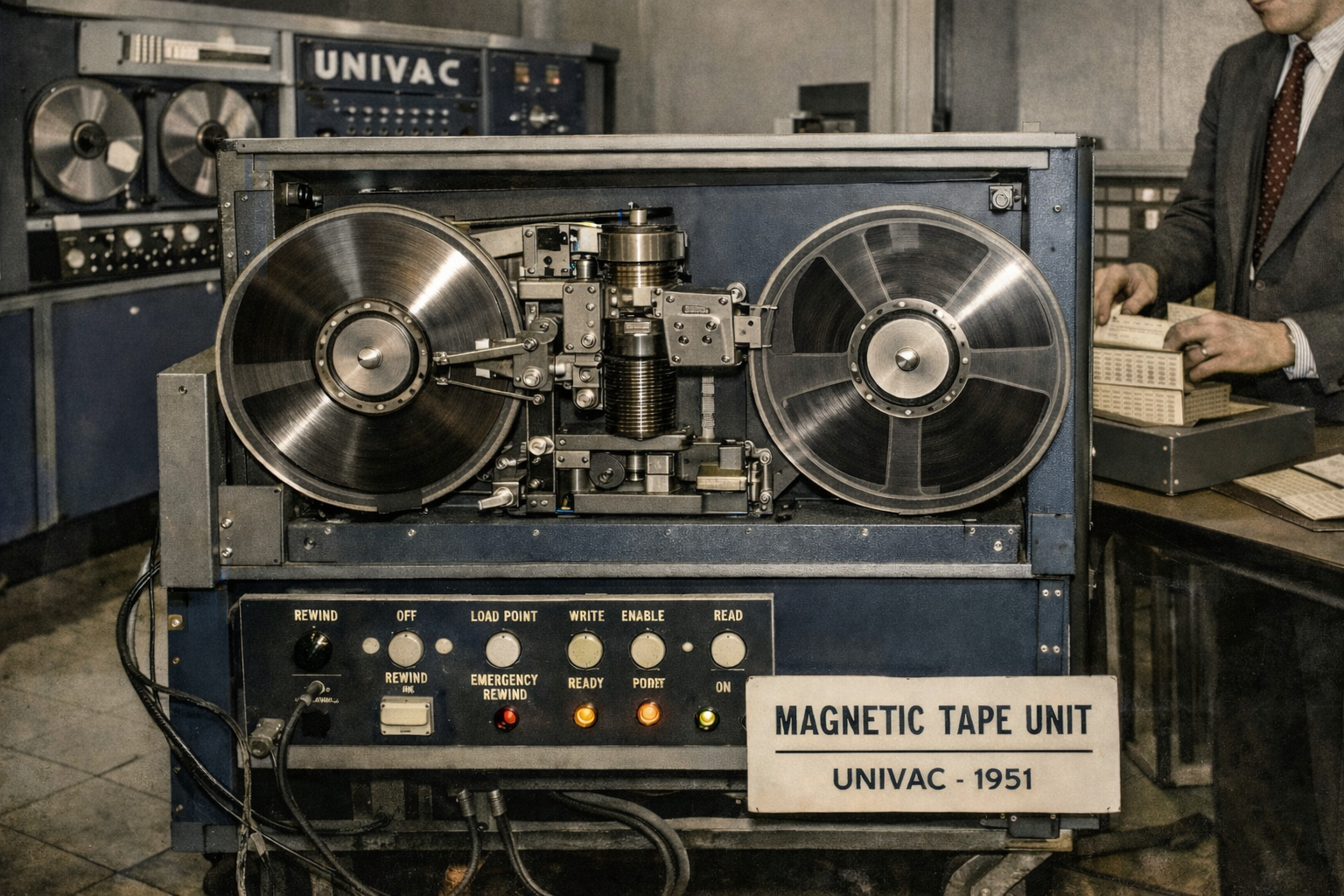
Magnetic tape for computers
1951 ✓ Read
Magnetic Archive Sequential

Magnetic tape enters computing

Big data before “big data” had a name.
What changed

Capacity at scale: you can store massive datasets — but you must read them in order.

Access sequential Best for backups Vibe “rewind”
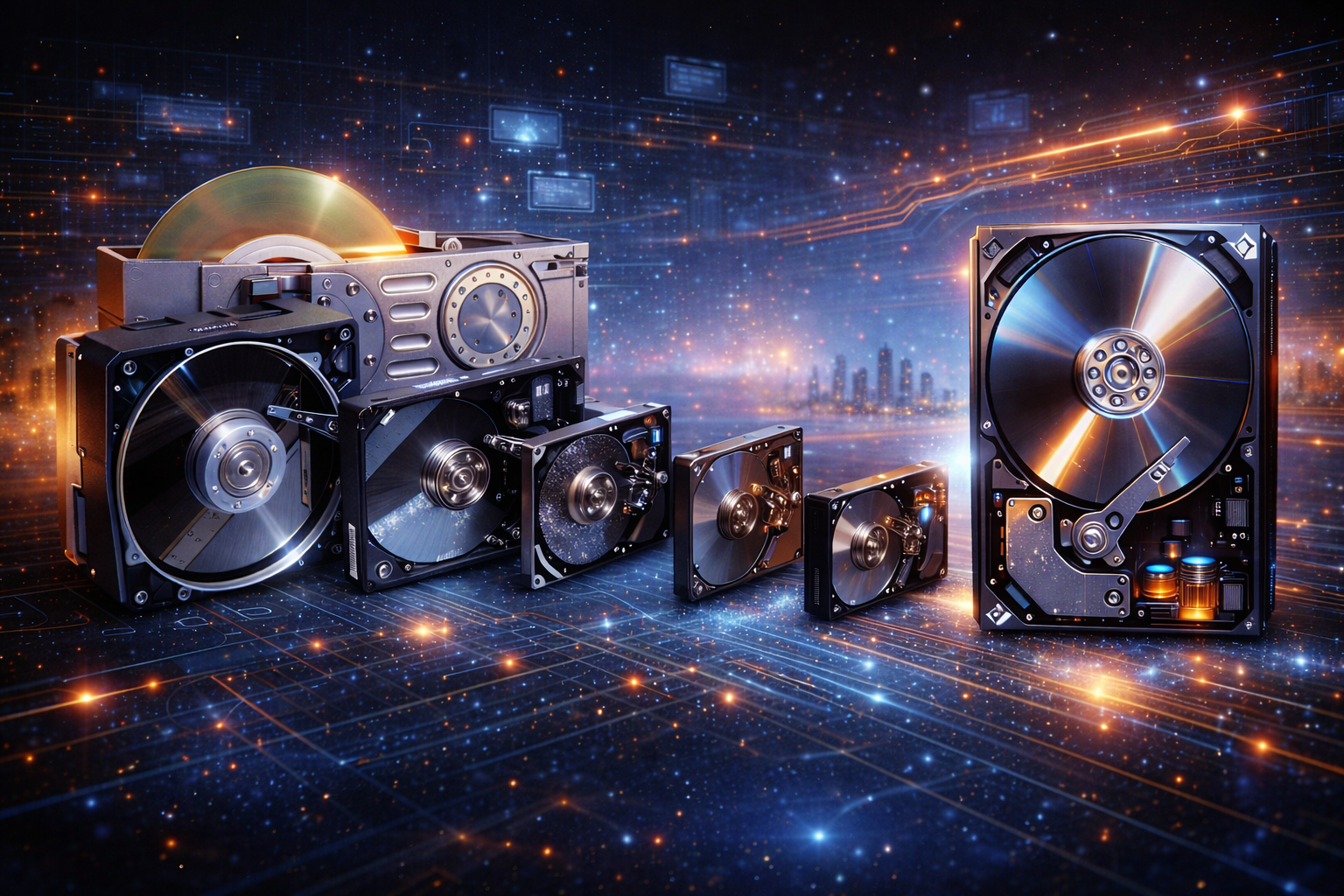
First hard disk drive
1956 ✓ Read
Magnetic Random access Disks

Hard disk drives (HDD)

Stop rewinding. Start seeking.
What changed

Random access: data becomes addressable. This unlocks databases, file systems, and interactive computing.

Access random Strength cheap capacity Weakness seek latency

PERSONAL & REMOVABLE • 1970s → 1990s

Storage becomes something you can hold, trade, and lose in a drawer. This era is culture: demos, shareware, school projects, and games that travel from friend to friend.
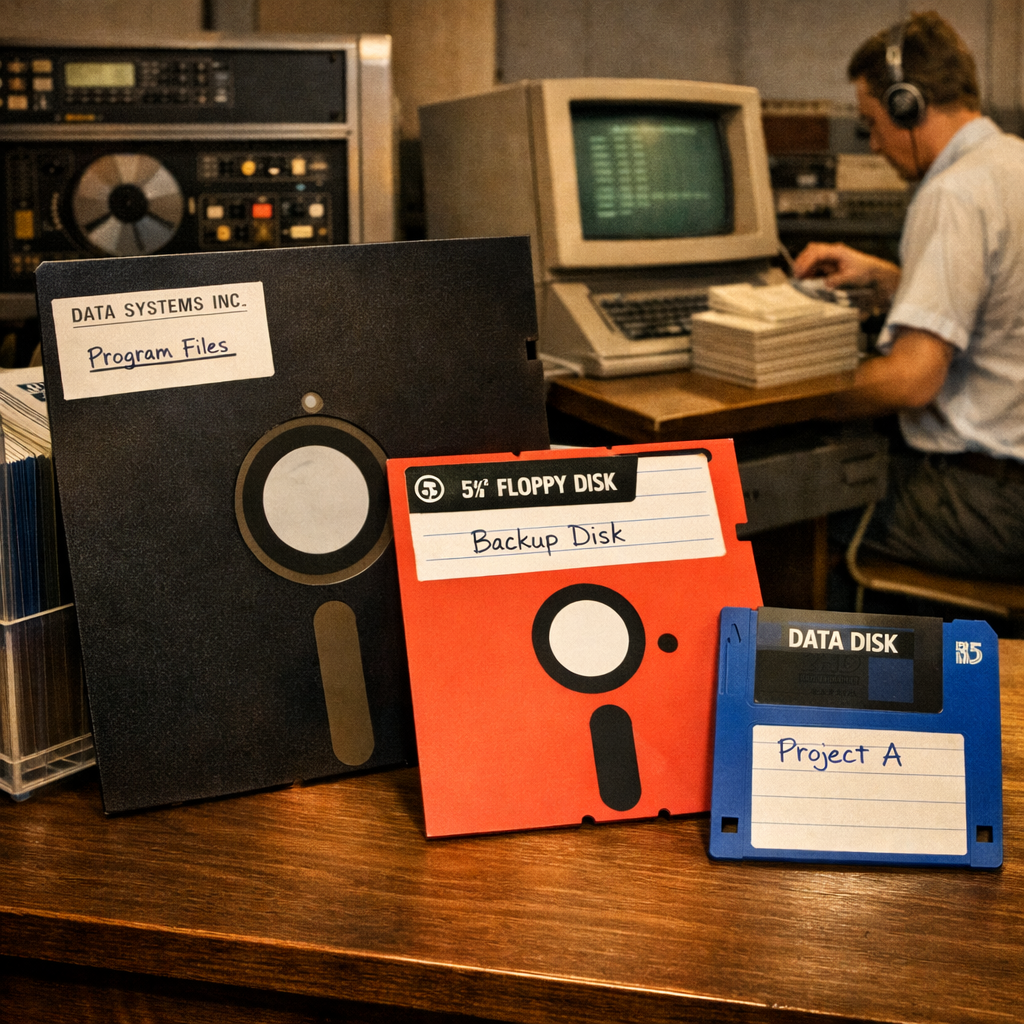
Floppy disk
1971 ✓ Read
Personal Removable Distribution

Floppy disks

Software can travel.
What changed

Portability: data and programs become something you can hand to a friend (or a co-worker).

Access random-ish Strength portability Weakness fragility
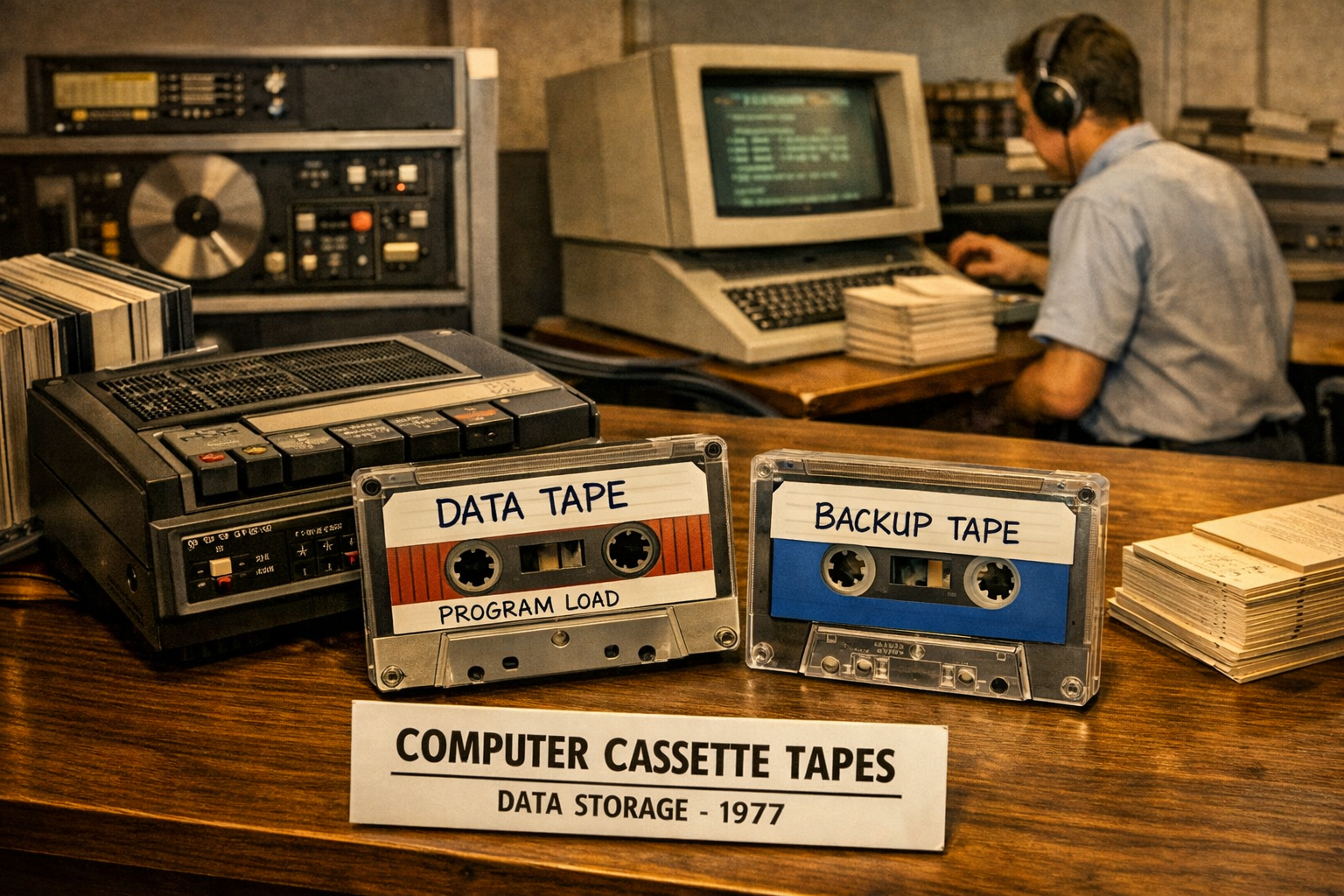
Cassette tapes as data
1977–1986 ✓ Read
Personal Cheap Slow

Cassette tapes as data

Because affordability beats elegance.
What changed

Home access: storage becomes cheap enough for kids’ bedrooms — and gaming culture explodes.

Access sequential Strength affordability Vibe “WAIT…”

OPTICAL • 1982 → 2000s

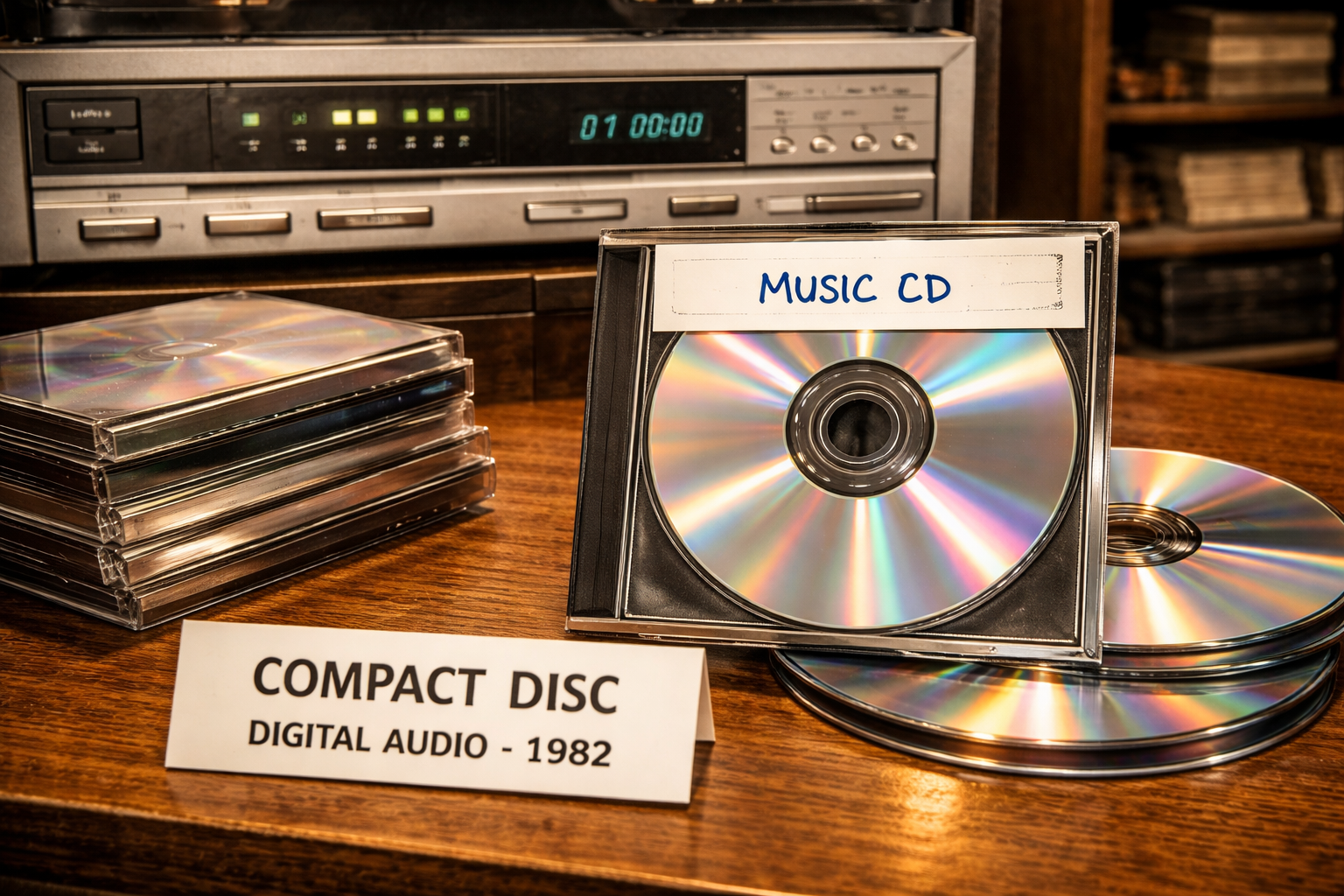
A laser reads microscopic terrain. The magic isn’t only the disc — it’s the math: error correction that turns scratches into “still playable”.
Compact Disc
1982 ✓ Read
Optical Distribution Laser

Compact Disc (CD)

Storage becomes a mass-produced artifact.
What changed

Replication: you can press millions of identical copies cheaply — software becomes “shippable at scale”.

Access random Strength replication Hero ECC
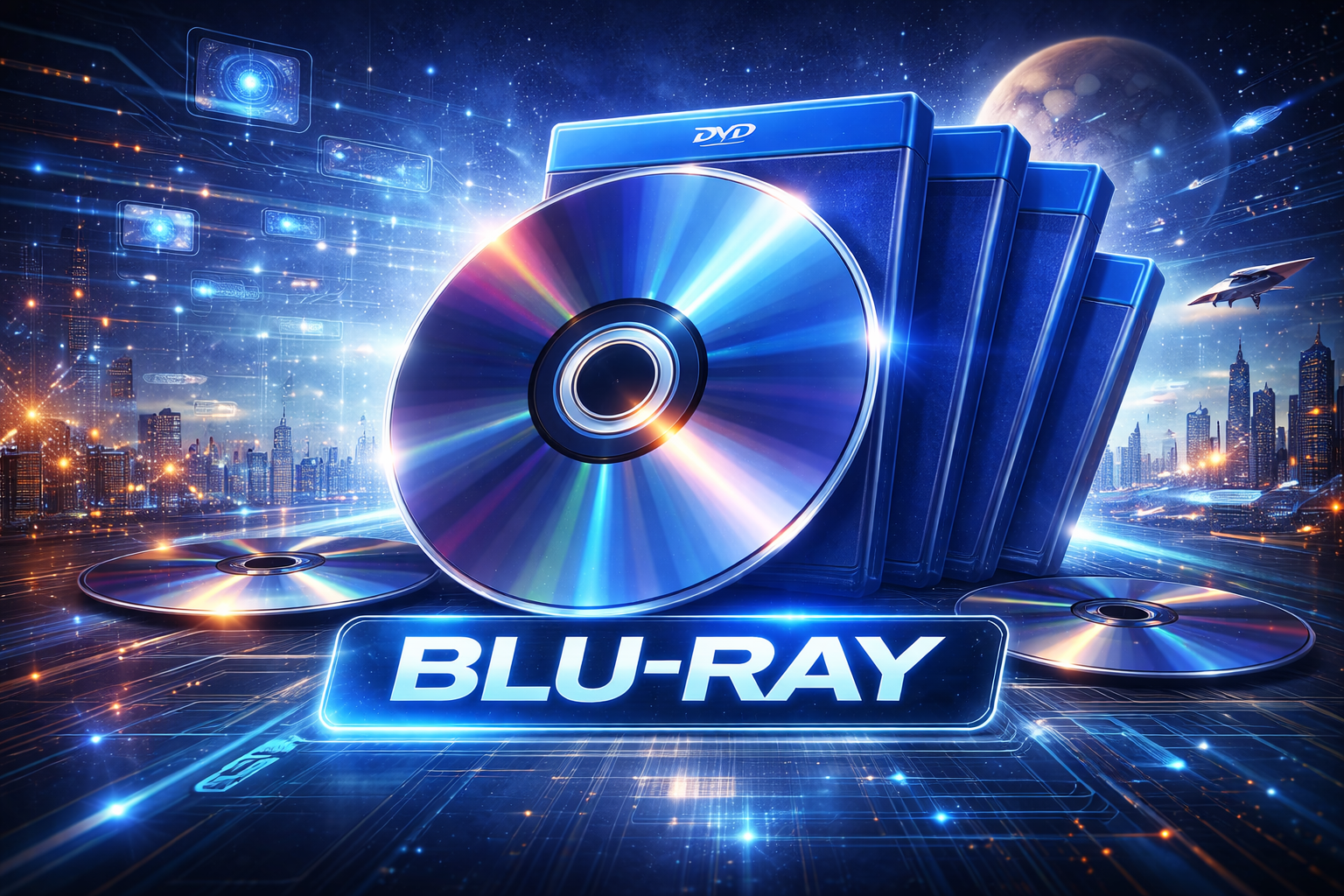
DVD and Blu-ray
1995–2006 ✓ Read
Optical Capacity Media

DVD & Blu-ray

More bits = more ambition.
What changed

Higher density storage pushes games and media into bigger assets, better audio, more video.

Access random Strength density Side-effect installs

FLASH & SSD • 1990s → now

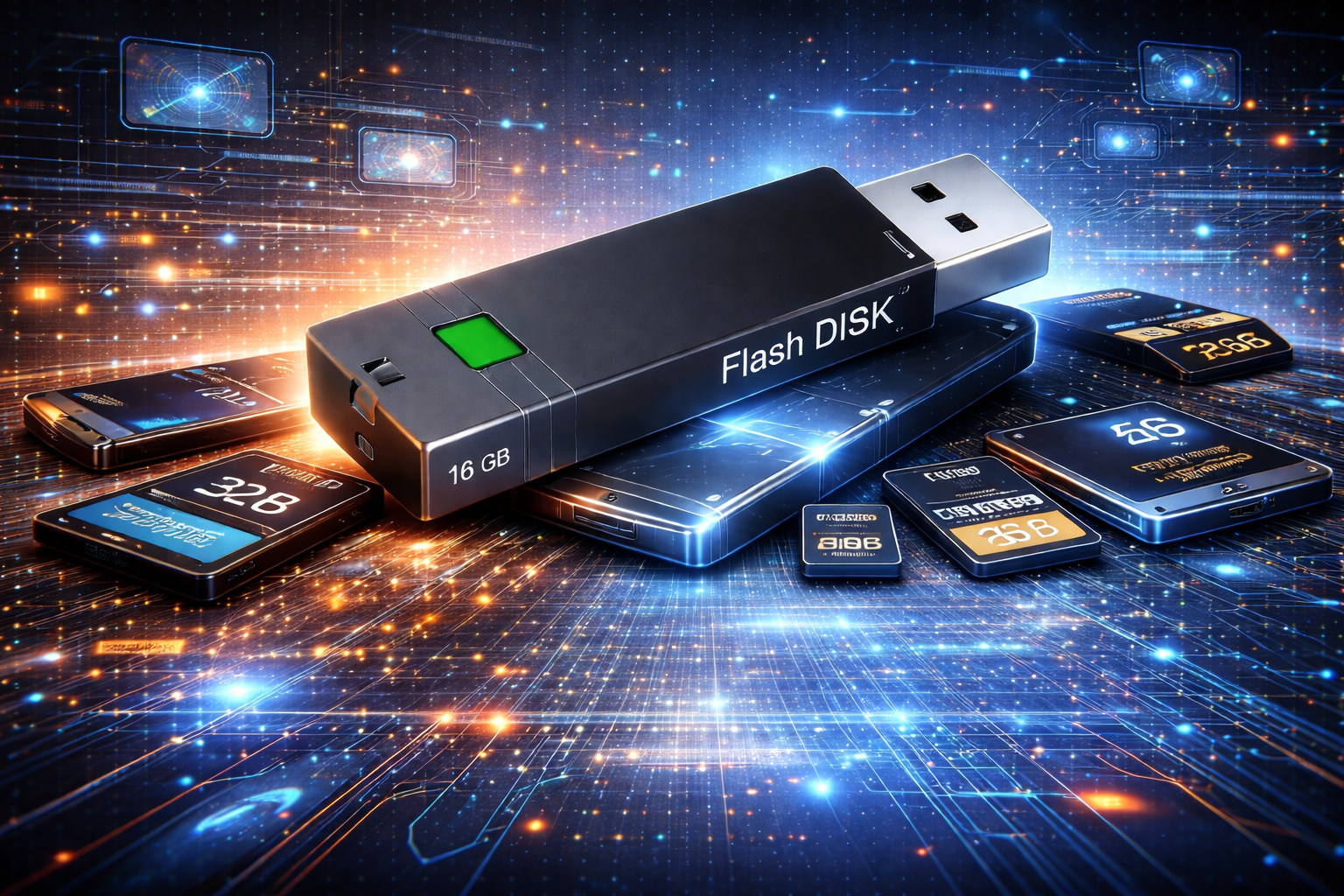
No moving parts. That one change reshapes everything: laptops become quiet, phones become possible, and “storage” starts to feel like instant memory.
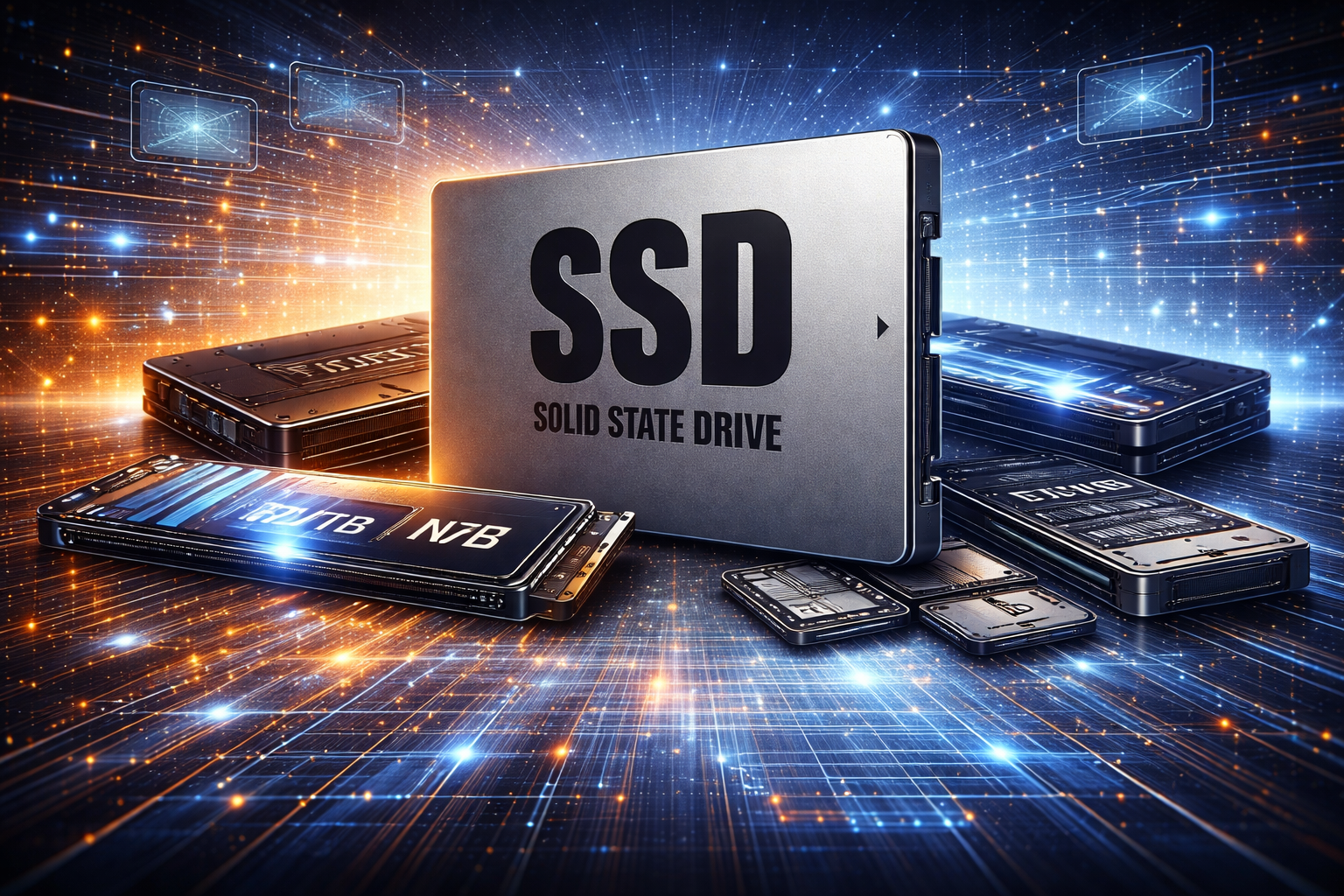
Flash memory era
1990s–2000s ✓ Read
Flash Portable Solid-state

Flash memory era

No spins. No seeks. Just electrons.
What changed

Shock resistance + low power make modern mobile devices possible — and storage goes everywhere.

Access random Strength low power Weakness wear
Solid State Drives
2006+ ✓ Read
Flash Speed Latency

Solid State Drives (SSD)

Storage becomes fast enough to feel like memory.
What changed

Latency collapse: small files and random reads become dramatically faster, changing UX and game loading.

Access random Strength latency Interface NVMe

CLOUD & DISTRIBUTED • 2006 → now

Data stops living on your device and starts living in systems built to survive failure. The secret becomes durability math, replication strategy, and the difference between “safe” and “available”.


Cloud storage
2006+ ✓ Read
Cloud Distributed Durability

Cloud storage (object era)

Storage becomes infrastructure, not hardware you own.
What changed

Durability through redundancy: the system expects failure constantly — because failures are normal.

Access API objects Strength durability Trade-off latency
Hybrid storage
2010s–today ✓ Read
Cloud Sync Streaming

Hybrid storage

Local speed + cloud safety (and sometimes: cloud dependency).
What changed

Convenience becomes the product: sync, backups, versioning, and streaming reshape ownership and access.

Access cached Strength convenience Risk lock-in
Modern hard drive tech
2010s–today ✓ Read
Magnetic Density Engineering

HDDs keep evolving

Spinning disks refuse to die — because cheap TB matters.
What changed

Density tricks keep HDDs competitive for archives: more bits per platter, smarter layout, new physics.

Access random Strength cost/TB Trick density

How to expand this page like a “living museum”

Add more milestones (e.g., RAID, databases, 3D NAND, tape libraries, cold tiers, distributed file systems). The pattern stays readable because the deep-dives keep visitors in-flow: learn without leaving.

Next epic step: add a “Storage Stats” row per milestone with typical capacity, throughput, and latency ranges for that era.

Nach oben scrollen