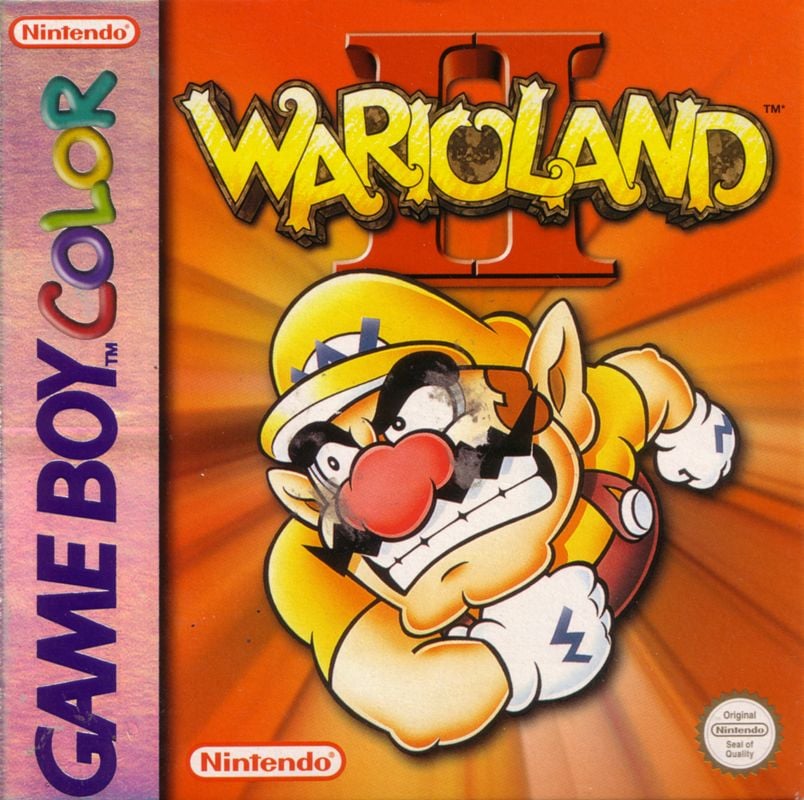
- Birth of playable Wario: this is where Wario fully becomes a lead character instead of a villain footnote.
- Different platforming rhythm: heavier movement, shoulder charges, grabbing, throwing, and treasure logic give it its own identity.
- Portable exploration done right: branching paths, secret rooms, keys, and multiple endings make it richer than a straight run-to-goal platformer.
- Series pivot point: it closes the Super Mario Land line while opening the entire Wario Land branch.
“Greed became game design, and it worked.”
Not just Mario with a palette swap — a slower, meaner, more treasure-obsessed platformer that gave Nintendo a new kind of mascot lead.
The Portable Birth of Wario as a Real Nintendo Star
Wario Land: Super Mario Land 3 is one of Nintendo’s smartest identity shifts. It begins inside the Mario framework, but almost immediately rewrites the feel of the experience. Wario is heavier than Mario, greedier than Mario, and less elegant on purpose. He barges, throws, hoards, and hunts. The game turns that personality into mechanics: treasure rooms matter, coins matter, alternate exits matter, and even the ending is shaped by how well you loot Kitchen Island. That is why the game still feels so distinctive. It is not just a spinoff. It is a character design manifesto in platformer form.
Game Data
| Title | Wario Land: Super Mario Land 3 |
| Release Year | 1994 |
| Developer | Nintendo R&D1 |
| Publisher | Nintendo |
| Platform | Game Boy |
| Genre | 2D platformer |
| Players | Single-player |
| Original Format | Cartridge |
| Core Loop | Explore, smash, grab, throw, find treasure, cash out for a better ending |
Heavier movement, shoulder charge attacks, enemy grabbing and throwing, treasure-room hunting, branching routes, map progression, and multiple ending outcomes.
After his defeat in Super Mario Land 2, Wario decides he wants a castle even grander than Mario’s. He travels to Kitchen Island to steal the Brown Sugar Pirates’ treasure and ultimately clash with Captain Syrup.
This is the first game where Wario is the actual playable star, and the whole design is built around greed, strength, and treasure rather than heroic rescue logic.
Review / Why Wario’s Heavier Style Works So Well
The first few minutes tell you everything important. Wario is heavier. He does not dance across the screen with Mario’s quick grace. He lands harder, charges harder, and interacts with enemies in a more physical way. That alone changes the emotional texture of the game. It feels less like a precision sprint and more like a compact treasure raid.
WHY THE DIFFERENT MOVEMENT MATTERSThe brilliance of Wario Land is that its slower feel is not a flaw to be apologized for. It is the point. Wario is built around force and acquisition. You do not just avoid enemies; you often bully them, pick them up, weaponize them, or break through obstacles to get what you want. That makes the game’s physics feel character-driven in a way many mascot platformers never quite achieve.
TREASURE AS MOTIVATIONOne of the game’s smartest ideas is that the ending depends on your greed. Secret treasure rooms are not decorative extras. They feed directly into the fantasy of Wario as a selfish adventurer who wants a better castle than Mario. That means exploration is not just there for completionists — it is tied to the story joke and to the entire identity of the game.
PORTABLE DESIGN WITH DEPTHDespite the limitations of the original Game Boy, the game feels surprisingly broad. World themes are memorable, the map structure gives progress shape, and the multiple exits and hidden spaces create a much richer rhythm than a simple left-to-right action game. It remains one of the strongest examples of Nintendo using compact hardware constraints to sharpen design instead of shrink it.
FINAL VERDICTWario Land: Super Mario Land 3 is one of the most important Game Boy platformers because it gets the hard part right: it turns a supporting villain into a fully playable identity. The result is not just good for a spinoff. It is great in its own right — funny, distinctive, mechanically smart, and foundational for everything Wario Land would become afterward.
Why Historically Important
Wario Land: Super Mario Land 3 matters because it performs two major Nintendo transitions at once. It is the final major stop in the Super Mario Land lineage on Game Boy, and it is the first true step into the Wario Land series. That means it does not merely continue an established formula. It hands the portable platform spotlight from Mario to Wario and proves that the transfer works.
It is also a strong example of character-led game design. Wario’s greed, bulk, and roughness are not surface traits layered onto a generic platformer. They become mechanical rules: how he moves, how he attacks, what he values, and what the player is encouraged to chase. That is why the game still feels like a beginning rather than a side-note.
Beyond series continuity, the game helped establish that Nintendo’s handheld platformers did not need to simply imitate console Mario design. On Game Boy, Wario Land found a slower, more secret-heavy, more materially motivated structure. That difference gave the Wario branch its own long-term reason to exist.
Timeline / Key Milestones
Super Mario Land 2: 6 Golden Coins introduces Wario as Mario’s greedy rival and sets up the character’s portable identity.
Wario Land: Super Mario Land 3 launches on Game Boy in Japan and immediately reframes the former villain as a playable lead.
The game reaches western markets and becomes one of the key late-era Game Boy platform releases of the monochrome handheld period.
The success of the title helps confirm Wario as a viable Nintendo star with his own platform sub-series rather than a one-off antagonist.
A digital re-release on Nintendo 3DS makes the Game Boy original newly accessible and reinforces its place as the first true Wario Land game.
It is remembered as both a Game Boy standout and the essential starting point for understanding how Wario became more than “anti-Mario.”
Where to Play / Collect Today
Original Game Boy hardware
On original hardware, the game’s weight, screen space, and deliberate pacing feel exactly as intended — compact, readable, and deeply portable.
ORIGINAL ROUTENintendo 3DS Virtual Console
The 3DS release became one of the cleanest official ways to revisit the game in digital form and remains important in the title’s preservation story.
DIGITAL / COLLECTOR OPTIONPlay after Super Mario Land 2
The character transition lands even better if you already know Wario as the antagonist of Mario’s previous Game Boy adventure.
START EARLIER4NERDS Collector Marketplace
Advertising / Werbung: This section contains paid partner links. If you click through and make a purchase, 4NERDS Gaming may earn a commission at no additional cost to you.
Shop original Wario Land copies
Browse current Wario Land: Super Mario Land 3 offers on eBay — ideal for loose cartridges, boxed editions, manuals, regional variants, and collector-grade finds.
- Original Game Boy-era copies
- Boxed versions and seller variety
- Condition and price comparison
Paid partner link / Werbung — availability and pricing depend on eBay sellers.
Browse related Wario finds
Explore Amazon for Wario Land-related items, retro gaming accessories, guides, Nintendo-themed products, and collector-adjacent extras.
- Books, merch and accessories
- Gift ideas and modern products
- Broader Wario-themed browsing
Paid partner link / Werbung — as an Amazon Associate, 4NERDS Gaming may earn from qualifying purchases.
Curated Etsy picks coming soon
Planned for handmade retro art, display objects, shelf pieces, prints, and museum-style collectibles that match the 4NERDS archive aesthetic.
- Wall art and display-focused pieces
- Handmade and fan-crafted style items
- Added once the setup is ready
Etsy affiliate integration will be added after the tracking setup is approved and tested.