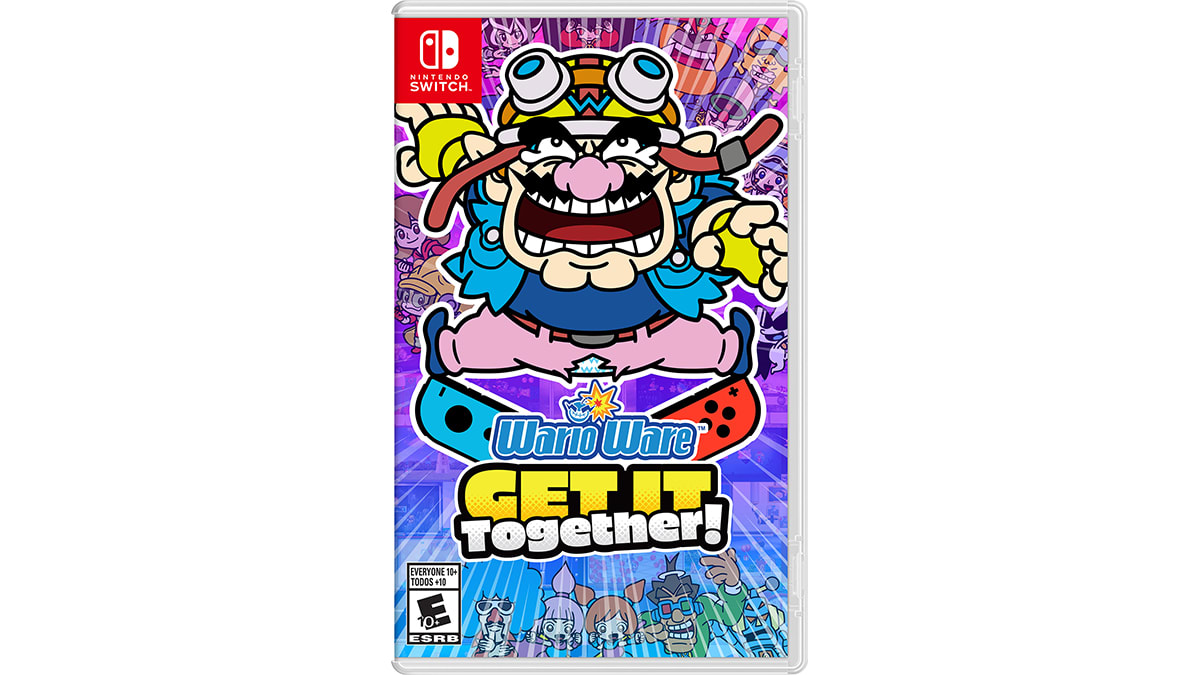
- Physical comedy: this is one of those rare party games where watching other people fail is almost as good as playing.
- Series fit: motion controls do not feel bolted on — they feel perfectly matched to WarioWare’s chaotic identity.
- Room energy: few modern Nintendo games turn a couch session into instant noise and laughter this quickly.
- Main trade-off: it is less relaxed and less universally smooth than a button-based entry, especially if players are tired, cramped, or shy.
“Move It! is WarioWare at its most shamelessly physical: half microgame collection, half party dare.”
It is designed for the exact moment where confusion turns into laughter.
The Series Goes Full Living-Room Chaos Again
WarioWare: Move It! takes the fast-cut absurdity of the franchise and points it directly at the body. Instead of merely asking you to read a tiny scenario and hit the correct input, it asks you to pose, mimic, swing, pump, wiggle, lean, and generally make a fool of yourself in the most efficient way possible. That sounds like a thin gimmick until you actually play it. Then the design logic becomes obvious: WarioWare has always been about instant panic and comic timing, and motion control turns that panic into something visible, social, and far funnier in a room full of people.
Game Data
| Title | WarioWare: Move It! |
| Release Year | 2023 |
| Developer | Nintendo |
| Publisher | Nintendo |
| Platform | Nintendo Switch |
| Genre | Action / party / motion microgames |
| Players | 1–4 players on a single system |
| Original Format | Game card / digital download |
| Core Loop | Strike the right pose, react instantly, survive the rush, out-laugh the room |
Motion-driven microgames, “Form” poses, split-second visual reads, couch co-op chaos, party competition, and post-story high-score challenge modes.
Wario and the gang head to a tropical island getaway, stumble into mysterious Form Stones, and end up dragged into another escalating pile of ridiculous trouble.
The central idea is not just “use motion controls,” but “prepare your body in the correct pose first,” turning each microgame into a tiny joke about anticipation, posture, and panic.
Review / Why It Feels So Alive in a Room
Move It! makes a strong first impression because it wastes almost no time explaining itself. Like the best WarioWare entries, it trusts the player to be thrown into confusion and discover the joke on impact. The difference here is that the joke now involves your full posture. You are not just reading a command — you are bracing for a pose, then scrambling to translate that pose into a physical action before the game moves on to the next absurd demand.
WHY THE MOTION HOOK MATTERSPlenty of motion-controlled games feel like they are compensating for a lack of better ideas. Move It! does not. WarioWare has always thrived on tiny bursts of tension, nonsense, and surprise, and motion control amplifies all three. It makes the player’s body part of the punchline. A wrong flick, a delayed pose, a badly timed lean — these are not just mistakes, they are comedy beats. That makes the game feel unusually alive when played with others.
FORMS AS COMEDY DESIGNThe “Form” system is the smartest detail in the whole package. By asking the player to assume a specific stance before the action begins, the game creates a miniature rhythm of setup and release. You see the pose, the room reacts, the challenge lands, and then someone either nails it or completely collapses under the pressure. It is theatrical in a way most minigame collections never are.
WHERE THE GAME IS STRONGESTThis is absolutely a local multiplayer game first. Co-op story sessions, party rounds, and spectator laughter are where Move It! becomes memorable. The game’s energy multiplies when each round produces a visible human response. Watching someone desperately flap, crouch, twist, or overcommit to a movement is exactly the point. In that sense, the audience is part of the design.
WHERE IT LOSES A LITTLE SHINEThe obvious limitation is that the game is more situational than a button-based WarioWare. It asks for space, mood, willingness, and a certain social temperature. If the room is quiet, cramped, or self-conscious, some of the magic drops away. Solo play also reveals the underlying structure more quickly; what feels explosive in a group can feel merely “good” when you are playing alone on a normal afternoon.
FINAL VERDICTWarioWare: Move It! is not the most universally convenient entry in the series, but it is one of the clearest examples of Nintendo understanding exactly how to let a concept serve a brand. This is not motion control as novelty garnish. It is motion control used to turn microgames into performance, panic into spectacle, and a party game into a room-wide event.
Why Historically Important
WarioWare: Move It! matters because it shows that the series can still reinvent its delivery method without losing its identity. WarioWare has always been built on extremely short challenges, immediate comedy, and aggressive pacing, but this entry proves that those foundations can survive a major physical reinterpretation. Instead of reducing the formula, it expands it into something more performative.
It also stands as an important Switch-era reminder that Nintendo still knows how to build games around embodied play rather than treating motion as a leftover novelty from the Wii years. Move It! does not simply revive that older idea — it reframes it through the microgame structure in a way that feels deliberately social and self-aware.
Within WarioWare history, it sits in a useful line beside Smooth Moves and Get It Together! as one of the entries that genuinely bends the formula. That matters. Long-running series often survive by content expansion alone. WarioWare survives by periodically changing the language through which its chaos is delivered.
Timeline / Key Milestones
Nintendo unveils WarioWare: Move It! as a new motion-focused entry for Switch, immediately framing it as a physical party follow-up in the series.
The game releases on Nintendo Switch and establishes its identity around over-the-top “Forms,” motion microgames, and local group play.
Story Mode, 2-player co-op support, and Party Mode help define the game as both a campaign-like microgame rush and a social rotation title.
Additional post-story modes and score-driven variations reinforce that the game is meant to be returned to, not just finished once.
It stands as one of the system’s strangest local multiplayer releases — proudly silly, physically expressive, and unmistakably WarioWare.
Where to Play / Collect Today
Nintendo Switch digital route
The simplest path is the Switch digital version: easy to launch, easy to demo to friends, and ideal for quick party sessions without setup friction.
DIGITAL OPTIONPhysical Nintendo Switch edition
The boxed version works especially well as a modern collector piece because the cover art instantly communicates the game’s loud, playful personality.
PHYSICAL COPYOpen space + willing players
This is a game that improves when people commit. Give it room, give it noise, and let everyone lean into the sheer stupidity of the poses.
PARTY ROUTE4NERDS Collector Marketplace
Advertising / Werbung: This section contains paid partner links. If you click through and make a purchase, 4NERDS Gaming may earn a commission at no additional cost to you.
Shop physical Switch copies
Browse current WarioWare: Move It! listings on eBay — ideal for boxed copies, used cartridges, collector-condition listings, bundles, and price comparison.
- Original Nintendo Switch game cards
- Boxed versions and seller variety
- Condition and price comparison
Paid partner link / Werbung — availability and pricing depend on eBay sellers.
Browse related Wario finds
Explore Amazon for WarioWare: Move It!, Nintendo Switch accessories, Joy-Con-related extras, Wario-themed items, and modern Nintendo collector products.
- Switch game and accessory browsing
- WarioWare and Nintendo-themed extras
- Gift ideas and modern products
Paid partner link / Werbung — as an Amazon Associate, 4NERDS Gaming may earn from qualifying purchases.
Curated Etsy picks coming soon
Planned for handmade retro art, display objects, shelf pieces, prints, and museum-style collectibles that match the 4NERDS archive aesthetic.
- Wall art and display-focused pieces
- Handmade and fan-crafted style items
- Added once the setup is ready
Etsy affiliate integration will be added after the tracking setup is approved and tested.