Castle Smash (2002)
Castle Smash is a small-scale real-time strategy “gamelet” by Hamumu (Mike Hommel). It’s designed for two players on the same PC: you place walls to claim land, build structures that convert peasants into specialized roles, and try to overwhelm the opposing castle. The twist: you don’t micromanage units—your strategic building choices and terrain control drive everything.
Game Data
| Release Year | 2002 |
| Developer | Hamumu (Mike Hommel) |
| Publisher | Hamumu |
| Platform | Windows (PC) |
| Genre | Strategy / RTS (Indirect Control) |
| Players | 2 (Local multiplayer) |
| Original Media | Digital download |
Gameplay:
Build walls to claim territory, then place buildings (school, barracks, guild) that automatically turn peasants into
money-makers, attackers, or defenders. Add bridges to cross water and push lanes toward the enemy keep.
Story:
Minimal setup: two armies are at war—smash the opponent’s keep before yours falls.
Trivia:
Built for a fast-paced game-jam style contest, Castle Smash is notable for its “indirect interaction” RTS approach—strategy
without unit micromanagement.
Castle Smash is “RTS, but without that pesky controlling of your guys.” You influence the battle by shaping the economy and unit types through buildings and territory—then watch the little war machine run.

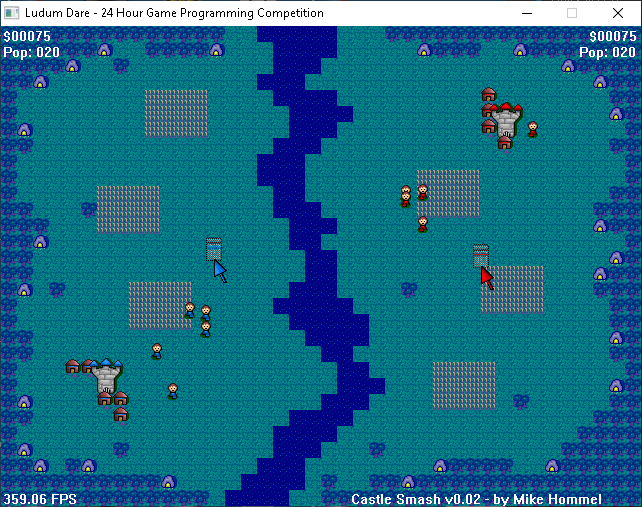
Screenshots / Media

Timeline / Versions
Why Castle Smash Was Historically Important
Castle Smash is a neat early example of “indirect-control” strategy design: it keeps the real-time pressure of an RTS, but removes unit micromanagement. That makes the cause-and-effect of economy, territory, and production chains easier to read—an idea you still see in modern auto-battlers, management-heavy RTS variants, and systems-driven strategy games.

