- Unusual structure: Kirby trades a straight march for an interconnected mirror-world map full of loops, branches, and revisits.
- Great gimmick: the cell-phone summon mechanic makes the four-Kirby idea feel playful instead of cosmetic.
- Handheld density: short rooms, hidden chests, boss shards, and ability puzzles keep the pacing tight.
- Cult reputation: it remains one of the most discussed “different” Kirby games for good reason.
“Kirby goes maze-like, and somehow it works.”
Not the easiest Kirby to read at first — but one of the most memorable once its structure clicks.
The Kirby Game That Refused to Be Linear
Kirby & the Amazing Mirror feels unusual even now because it bends the series into a more exploratory shape without abandoning Kirby’s softness, speed, or copy-ability play. Instead of moving through neatly packaged stages, you wander through the Mirror World, unlock pathways, revisit older routes, hunt mirror shards, and slowly understand how this glittering labyrinth is stitched together. That change gives the game a different emotional texture: less “one more level,” more “what’s behind that route I couldn’t reach earlier?”
Game Data
| Title | Kirby & the Amazing Mirror |
| Release Year | 2004 |
| Developer | HAL Laboratory / Flagship / Dimps |
| Publisher | Nintendo |
| Platform | Game Boy Advance |
| Genre | Platform adventure / non-linear platformer |
| Players | 1–4 players |
| Original Format | Game Boy Advance cartridge |
| Core Loop | Explore, unlock, summon help, collect shards, master routes |
Interconnected world exploration, copy-ability routing, hidden chest hunting, mirror travel, boss shard collection, and four-Kirby coordination.
Dark Meta Knight shatters the Dimension Mirror and splits Kirby into four colored Kirbys. To save Meta Knight and restore the Mirror World, the Kirbys must gather the scattered mirror shards across a sprawling maze of themed regions.
This is the Kirby game where you can literally call the other Kirbys on a cell phone, turning multiplayer identity into an in-world mechanic instead of a menu option.
Review / Messier Than Classic Kirby, More Fascinating Too
The first striking thing about Amazing Mirror is that it feels slightly wrong if you expect ordinary Kirby pacing. You do not simply move from world to world in a neat line. Instead, the game opens outward. Paths split. Doors loop back. Some routes clearly want an ability or movement solution you do not have yet. That tiny feeling of disorientation is deliberate, and once you accept it, the game becomes far more interesting than a standard sequel.
WHY THE STRUCTURE CHANGES EVERYTHINGIn most Kirby games, copy abilities are fun tools inside levels. Here, they also become route-solvers. Because the world is interconnected, every discovered shortcut or ability-dependent detour feels more meaningful. The map itself becomes part of the challenge. That is why Amazing Mirror has such a strong long-term memory in fans’ heads: people do not just remember boss fights or songs, they remember how the world folded in on itself.
FOUR KIRBYS, ONE GOOD GIMMICKThe four-Kirby concept could have been a surface-level marketing trick, but the game sells it beautifully. Calling your other Kirby copies by cell phone is weird, funny, and mechanically useful. It gives the game identity. Even in solo play, it makes the adventure feel social and slightly chaotic, which suits the mirror-dimension mood. In multiplayer, it becomes one of the GBA’s more charming cooperative curiosities.
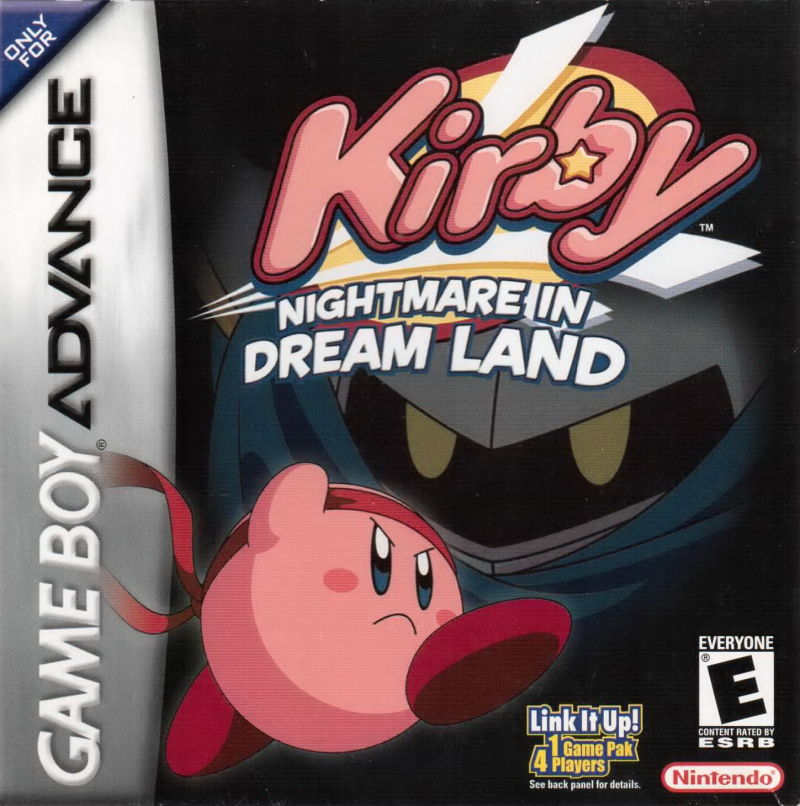
WHERE IT PUSHES BACKAmazing Mirror is not as instantly legible as Kirby Super Star or Nightmare in Dream Land. The map can feel tangled, and the sense of direction is not always elegant. Some players will prefer the cleaner forward motion of more traditional Kirby games. That criticism is fair. But it is also the price of ambition. The game gains mystery, replay value, and personality precisely because it is willing to be a little less tidy.
FINAL VERDICTKirby & the Amazing Mirror remains one of the most distinctive games in the series because it takes Kirby’s friendly mechanics and drops them into a more exploratory framework. It is not the purest Kirby comfort food — it is stranger than that. And that is exactly why it lasts. Few Kirby games feel this specific, this curious, or this willing to let the player get pleasantly lost.
Why Historically Important
Kirby & the Amazing Mirror matters because it represents one of the boldest structural experiments the series ever attempted. Rather than polishing the familiar stage-by-stage formula, it pushed Kirby into an interconnected world that rewarded curiosity, memory, and route knowledge. That made it feel different not only from earlier Kirby games, but from much of Nintendo’s handheld platform output at the time.
It also matters as a multiplayer idea. Four simultaneous Kirbys, each color-coded and summonable through an in-world phone gimmick, gave the game a strange and immediately recognizable identity. Even people who have not finished it often remember that exact hook. That is a sign of strong game personality, and Amazing Mirror has a lot of it.
Over time, the game’s reputation has grown because it now reads as a cult favorite rather than a confusing detour. Players came back to it and realized it was doing something few Kirby games dared to do: asking exploration to matter as much as copy ability spectacle. That makes it historically useful, not just nostalgic. It shows how flexible the Kirby series could be on handheld hardware.
Timeline / Key Milestones
Kirby & the Amazing Mirror debuts on Game Boy Advance in Japan and immediately stands apart as a more maze-like Kirby adventure.
The game reaches Europe in July and North America in October, giving the GBA another late-era Kirby experiment with a much stronger exploration focus.
The game reappears through the Nintendo 3DS Ambassador Program, helping preserve it for a small but dedicated slice of Nintendo’s audience.
Amazing Mirror becomes more broadly available again on Wii U, giving players another chance to revisit one of the series’ most unusual entries.
Nintendo adds the game to the Game Boy Advance library on Nintendo Switch Online + Expansion Pack, giving it its strongest modern rediscovery route.
It is now widely remembered as the “open” Kirby game — a beloved detour whose reputation has only improved with time.
4NERDS Collector Marketplace
A curated access point for Kirby fans, GBA collectors, handheld-era Nintendo players, and retro archive builders: original cartridges, boxed copies, manuals, modern related items, books, display pieces, and future handmade finds — clearly marked as partner links where applicable.
Shop Kirby cartridges & boxes
Browse current Kirby & the Amazing Mirror offers on eBay — ideal for loose GBA cartridges, boxed copies, manuals, regional variants, and collector-grade handheld finds.
- Original Game Boy Advance copies
- Loose cartridges, manuals, and boxed listings
- Condition, region, and price comparison
Paid partner link / Werbung — availability, seller terms, shipping, and pricing depend on eBay sellers.
Browse related Kirby finds
Explore Amazon for Kirby-related items, Nintendo collectibles, guide books, themed accessories, handheld gaming extras, and retro-inspired display pieces for a broader collection setup.
- Kirby books, merch, and accessories
- Gift ideas and Nintendo-themed products
- Broader handheld-retro browsing
Paid partner link / Werbung — as an Amazon Associate, 4NERDS Gaming may earn from qualifying purchases.
Curated Etsy picks coming soon
Planned for handmade retro art, Kirby-inspired display pieces, framed GBA-era prints, shelf decor, and museum-style collectibles that match the 4NERDS archive aesthetic.
- Wall art and display-focused pieces
- Handmade and fan-crafted style items
- Added once the setup is ready
Etsy affiliate integration will be added after the tracking setup is approved and tested.