ArkanoidBreakout Reborn
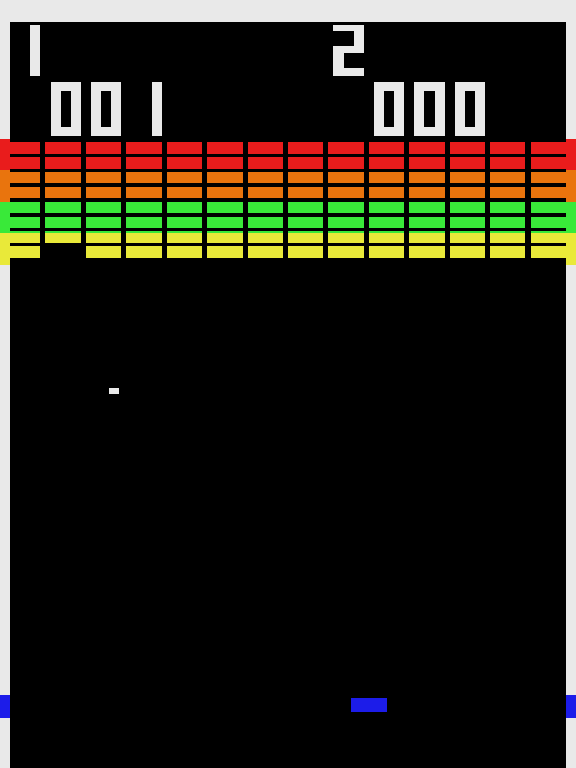
The game that took Breakout’s clean paddle-and-ball idea and rebuilt it as a full arcade spectacle: power-ups, enemy interference, sharper audiovisual flair, escalating layouts, and a sleek science-fiction frame that made brick-breaking feel modern, aggressive, and unmistakably Taito.
Why this block-breaker still feels definitive
- Elegant evolution: Arkanoid keeps Breakout’s simple readability but adds power-ups, enemies, stage variation, and arcade spectacle.
- Perfect tension loop: every capsule is a temptation, because collecting it can improve your odds or destroy your positioning.
- Control identity: the spinner-style arcade feel and later Vaus controller versions made precision part of the object’s identity.
- Historical force: it became the brick-breaker reference point for the post-Breakout era and shaped how the genre would be remembered.
“Not just a better Breakout — a full rebirth of the form.”
Arkanoid does not merely polish a classic template. It gives it speed, danger, style, and a reason to keep chasing one more stage.
The Arcade Game That Re-Energized Breakout
Arkanoid is one of the clearest examples of how an old concept can suddenly feel new again when the right developer touches it. On paper, the premise is almost brutally simple: keep the energy ball alive, break the wall, survive the stage. In motion, Taito transforms that simplicity into something faster, brighter, and far more theatrical.
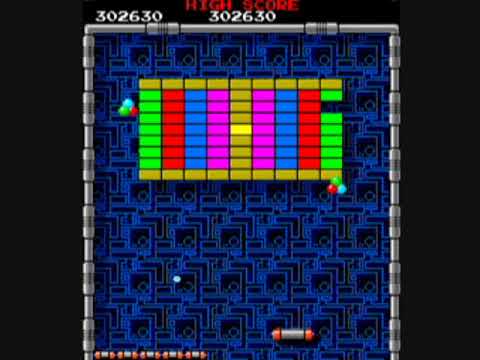
The paddle becomes the Vaus. Capsules fall from broken blocks with risk and promise. Enemies drift through the playfield, disrupting what should have been clean geometry. The stage is no longer just an abstract wall; it is a hostile arcade machine of angles, timing, and recovery.
At a glanceBest experienced as a masterclass in arcade iteration: a familiar foundation radically improved through pacing, power-ups, control precision, audiovisual style, and escalating pressure.
Game Data
| Title | Arkanoid |
| Arcade Release | 1986 |
| Developer | Taito Corporation |
| Arcade Publisher | Taito in Japan; Romstar in North America |
| Home Versions | NES, home computers, and multiple later releases / reissues |
| Genre | Block breaker / arcade action |
| Players | 1–2 players, alternating depending on version |
| Original Format | Arcade cabinet / conversion kit |
| Modern Access | Arcade Archives / Arcade Archives 2 releases by Hamster |
| Core Loop | Deflect the ball, break blocks, collect capsules, manage angle control, survive each round |
Gameplay pillars
Paddle precision, angle control, falling capsule risk-reward, enemy interference, special blocks, multi-hit obstacles, and late-stage recovery under pressure.
Story
Humanity’s mothership Arkanoid is attacked, and the small craft Vaus is drawn into a strange region of floating blocks and hostile forces. The player breaks through this barrier field in search of survival and escape.
Most famous design fact
Arkanoid is the brick-breaker most people think of when they imagine the genre modernized: power-up capsules, vivid audiovisual identity, and a more dramatic arcade feel than many earlier clones.
Review / Why Arkanoid Still Feels So Sharp
Arkanoid impresses quickly because its clarity is immediate. The paddle response is clean, the ball reads sharply, and the block formations are bright enough to be understood at a glance. But the game also feels more aggressive than the older brick-breakers it descends from.
Once capsules begin dropping and enemies begin interfering, the screen stops being a simple puzzle board. It becomes a living threat field. The player is not just returning a ball; the player is choosing when to move, when to risk position, when to catch a bonus, and when to stay disciplined.
Why the power-ups matterThe great trick of Arkanoid is that its bonuses are not merely gifts. They are temptations. To catch a falling capsule, you may need to abandon ideal ball positioning. That means improvement is never passive. Every bonus asks a question: do you want more power, or do you want to preserve rhythm?
Arkanoid towers above many clones because it feels authored rather than generic. The colorful wall formations, the sleek Vaus craft, the power-up capsules, and the science-fiction frame all transform abstraction into a world. Breakout was elegant minimalism. Arkanoid is elegant minimalism with stage presence.
Where it pushes backLate Arkanoid can be punishing. Some layouts demand patience, ball control, and a willingness to rebuild from almost nothing. But the difficulty usually feels tied to the same skill the game has been teaching from the start: read the angle, trust the paddle, and do not panic.
Final verdictArkanoid remains one of the great examples of arcade reinvention. It did not invent the paddle-and-ball structure, but it made that structure feel urgent again. It is a sequel in spirit to an older idea — and, for many players, the definitive form of that idea.
Why It Matters
Arkanoid matters because it proved that an old arcade grammar could be revitalized without being overcomplicated. Taito did not throw away Breakout’s clarity. It amplified it. The result was a game that felt familiar and new at the same time.
It also helped define how later players and developers imagined the brick-breaker genre. Power-ups, enemy disruption, special blocks, level progression, and science-fiction framing became part of the language that many later block-breakers either borrowed from or reacted against.
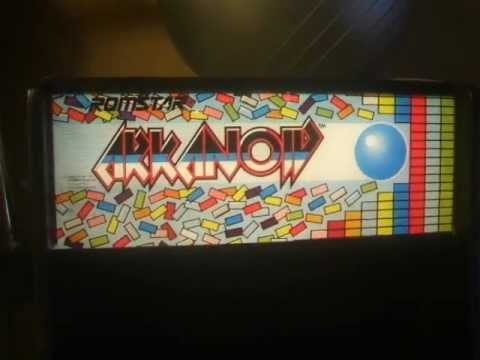
Historically, Arkanoid also has collector importance because it exists across several interesting physical lanes: arcade cabinet material, marquees and control panels, NES boxes and carts, special Vaus controllers, and later preservation releases. Few games this mechanically simple have such a rich object history.
Why it mattered then
It made the block-breaker feel like a premium arcade event again at a time when the basic concept was already a decade old.
Why it matters now
It remains the cleanest example of how power-ups, pacing, and presentation can transform a minimalist design into a classic.
What it changed
It became the dominant reference point for the modern brick-breaker formula and shaped decades of clones, sequels, and reinterpretations.
Timeline / Key Milestones
Atari’s Breakout establishes the basic paddle-and-ball grammar that Arkanoid would later expand into a richer arcade system.
Taito releases Arkanoid in arcades, with Romstar handling the North American arcade market. The formula gains power-ups, enemies, block types, and a science-fiction frame.
Arkanoid moves onto home platforms, with the NES version becoming especially memorable because of the dedicated Vaus controller.
The sequel continues the Arkanoid formula and confirms the original as more than a one-off arcade revival.
Arkanoid’s power-up-driven brick-breaker structure becomes the dominant template for later clones and reinterpretations.
Hamster brings Arkanoid into modern Arcade Archives / Arcade Archives 2 circulation, helping preserve the arcade version for contemporary platforms.
The paddle became the memory — but the cabinet, marquee, control panel, NES box, Vaus controller, cart, flyer, and modern Arcade Archives release are the artifacts.
Arkanoid belongs in the collector lane because it connects arcade hardware feel, Taito cabinet design, home-console packaging, special controller history, and one of the most important mechanical upgrades ever made to a classic arcade formula.
Where to Play / Collect Today
Collecting Arkanoid means collecting both arcade precision and home-console ritual.
The arcade side is about cabinet material, control panels, flyers, marquees, and spinner feel. The home side is about NES cartridges, boxes, manuals, and the special Vaus controller. For collectors, completeness and condition matter greatly because many listings separate the controller from the box.
A curated starting point for Arkanoid collectors: NES copies and Vaus controllers first, arcade flyers and cabinet material second, and modern Arcade Archives releases for playable preservation.
eBay Collector Search
The strongest route for original NES carts, boxed copies, manuals, Vaus controllers, arcade flyers, marquees, control panels, and cabinet-related collector material.
- Best chance for complete physical Arkanoid items.
- Search controller bundles separately from cartridge-only listings.
- For arcade pieces, verify photos and dimensions carefully.
4NERDS collector search for Arkanoid, NES Vaus material, and arcade-era artifacts.
Amazon Search
Useful for broader retro-arcade books, protective cases, storage, controller accessories, and modern context material around Taito and classic arcade design.
- Better for context and storage than rare original items.
- Good for display, protection, shelves, and arcade books.
- Use as a secondary route after eBay collector listings.
Replace YOURAMAZONTAG-20 once the final approved Amazon Associates tag is ready.
Etsy Collector Route
Potentially useful later for handmade arcade-room décor, custom cartridge displays, neon block-breaker shelf labels, and Taito-inspired collector presentation pieces.
- Better suited for display objects than original game media.
- Keep separate from preservation-grade collecting.
- Ready to activate once the Etsy strategy is finalized.
Placeholder route kept disabled until a final Etsy affiliate or curated shop strategy is available.