Captain America and the AvengersData East’s Comic-Book Beat ’em Up
A loud, colorful pre-modern Marvel arcade event: Captain America, Iron Man, Hawkeye, and Vision battling through Data East’s side-scrolling chaos, comic-book villains, projectile-heavy brawling, co-op spectacle, and wonderfully quotable early-1990s superhero energy.
Why this Marvel brawler still works
- Comic-book identity: big sprites, loud colors, direct hero silhouettes, and a villain lineup that immediately feels Marvel.
- Co-op spectacle: the arcade version’s four-player setup is the purest way to experience the game’s superhero crowd energy.
- Arcade personality: projectile-heavy action, boss theatrics, voice samples, and Data East weirdness make it unforgettable.
- Pre-MCU charm: it captures Marvel games before superheroes became default blockbuster culture.
“Not elegant, not subtle — but gloriously comic-book loud.”
Captain America and the Avengers survives because it sells pure superhero momentum with total conviction.
A Marvel Beat ’em Up from Before Superheroes Became the Default
Captain America and the Avengers belongs to a very specific and lovable era: the moment when comic-book games were loud arcade machines rather than cinematic franchise extensions. It is not trying to be subtle. It wants to be a cabinet full of heroes, villains, speech samples, energy blasts, shield throws, and co-op chaos.
The arcade original arrived in 1991, but the 1993 home versions helped carry the game into bedrooms, rental shelves, handheld memories, and console nostalgia. That dual identity matters: in the arcade, it was a public superhero event; at home, it became a rougher but still recognizable Marvel memory.
At a glanceBest experienced as a comic-book arcade crowd-pleaser: messy in spots, hugely charming in motion, and full of the pre-modern Marvel game personality that later superhero titles would polish into something very different.
Game Data
| Title | Captain America and the Avengers |
| Arcade Debut | 1991 |
| 1993 Focus | SNES / Game Gear home-release era |
| Arcade Developer | Data East |
| Arcade Publisher | Data East |
| 1993 Home Publisher | Mindscape |
| 1993 Port Work | Realtime Associates / Ironwind Software depending on platform records |
| Genre | Side-scrolling beat ’em up / superhero brawler |
| Players | Arcade up to 4 players; home versions vary by platform |
| Playable Heroes | Captain America, Iron Man, Hawkeye, Vision |
| Core Loop | Advance, punch, throw, blast, call assists, survive bosses, stop Red Skull |
Gameplay pillars
Side-scrolling crowd control, superhero projectiles, co-op chaos, boss encounters, flying shooter-style segments, and constant comic-book escalation.
Story
Red Skull launches a world-threatening campaign with a lineup of major villains, forcing the Avengers into a globe-spanning counterattack filled with heroic one-liners and arcade set pieces.
Most famous design fact
The game stands out because it blends classic brawling with projectile-heavy superhero combat and one of the most fondly quoted voice presentations in retro Marvel gaming.
Review / Why It Still Has So Much Retro Marvel Appeal
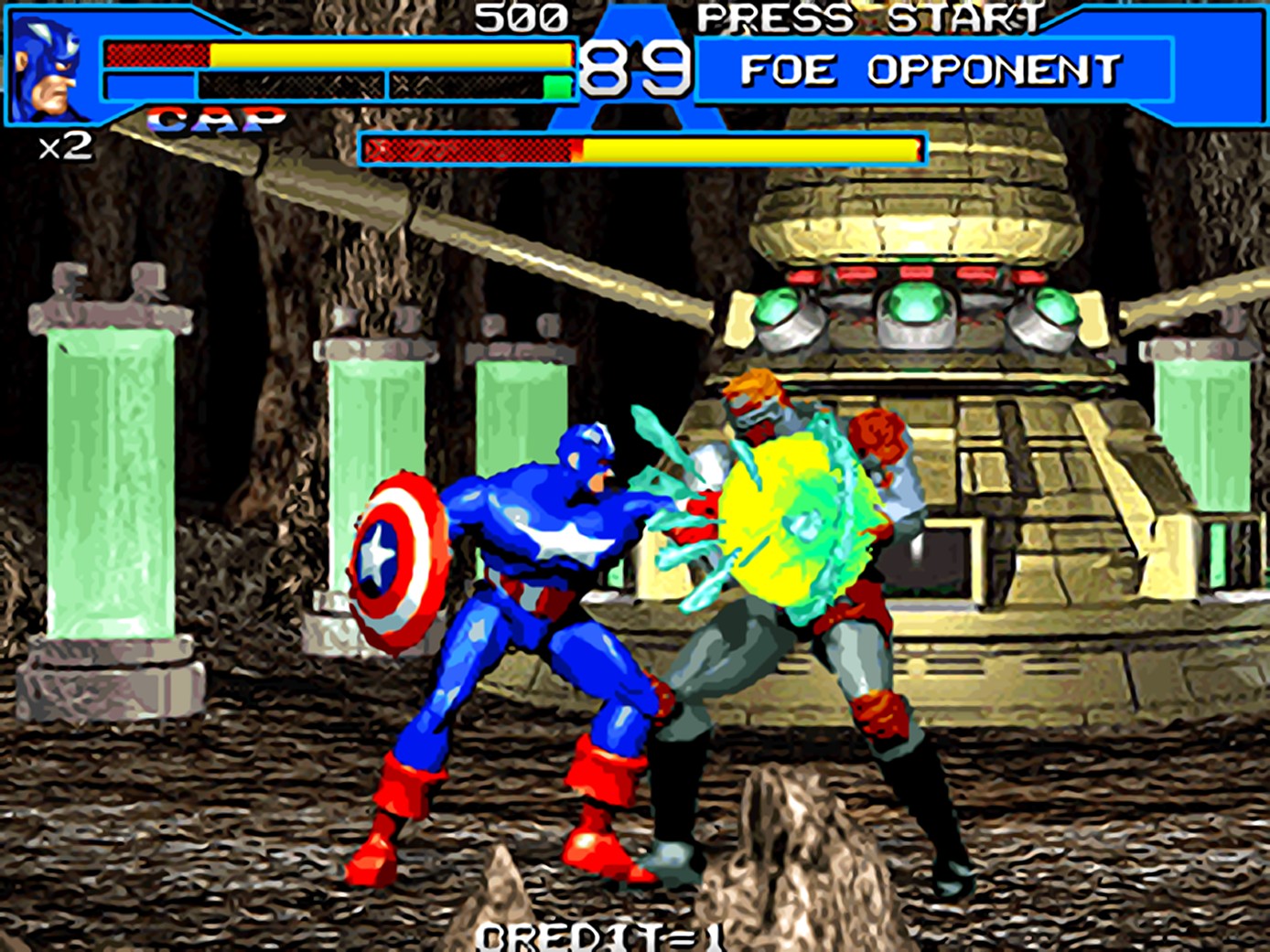
The first thing the game gets right is its tone. It does not act embarrassed to be a superhero game. Captain America throws his shield. Iron Man blasts across the screen. Hawkeye fires arrows. Vision phases into the action with silver comic-book confidence. Everything is pitched toward immediate recognition.
The brawling itselfMechanically, Captain America and the Avengers is not the deepest or most graceful beat ’em up of the early 1990s. But it compensates with flavor. The combat is broad, readable, and built for spectacle. The projectile-heavy rhythm makes it feel different from purely fist-based brawlers.
Why the license worksWhat lifts the experience is how completely the Marvel identity saturates it. The villain roster, heroic silhouettes, exaggerated attacks, and constant sense of comic-book confrontation make the game feel like an actual Avengers arcade machine rather than a generic brawler with a license attached.
Part of the game’s long afterlife comes from its roughness. The voice clips, the delivery, the tone, the bright enemy waves, and the sheer early-1990s confidence give it texture. It is not “perfect,” but it is deeply memorable.
Home-era memoryThe 1993 ports matter because they changed the game’s audience. The arcade version is the purest form, but the SNES and handheld-era releases helped the game become a rental-store and bedroom-console memory for players who never saw the cabinet.
Final verdictCaptain America and the Avengers remains important because it captures a transitional moment in licensed action design: arcade-first, comic-book loud, and refreshingly unashamed of its source material. Even with its imperfections, it still feels like an event — and that is exactly what an Avengers game should feel like.
Why It Matters
Captain America and the Avengers matters historically because it belongs to the pre-modern age of superhero dominance, when comic licenses were still proving themselves as arcade and console spectacle. It helped demonstrate that a Marvel team game could work not just as branding, but as a multiplayer action event.
It also matters as a bridge object. The arcade original arrived in 1991, but the broader 1993 home-release window gave the game a second life and helped move it beyond the arcade floor into bedroom-console memory. For many players, “Avengers” in game form first meant this era of bright side-scrolling superhero chaos.
Beyond the license, it remains valuable as a document of how early-1990s brawlers adapted major intellectual properties: through readable silhouettes, color-coded heroes, oversized bosses, simple expressive combat, and constant audiovisual insistence.
Why it mattered then
It brought a major Marvel team into the arcade action space with real multiplayer spectacle and immediate visual recognition.
Why it matters now
It remains one of the clearest playable windows into pre-MCU Marvel game culture and early licensed brawler design.
What it represents
A moment when superhero games were cabinet-driven, loud, direct, and built around instant comic-book identity.
Timeline / Key Milestones
Captain America and the Avengers launches as a Data East arcade beat ’em up built around four-player Marvel co-op spectacle.
The game begins spreading to home hardware, extending its reach beyond the arcade and strengthening its identity as a recognizable Marvel game.
SNES and Game Gear-era releases help define the game’s 1993 console footprint and broaden its audience for players who missed the cabinet years.
The game develops a retro reputation powered not only by gameplay, but by its unforgettable camp presentation and voice acting.
It remains one of the most frequently remembered pre-modern Marvel action games and a defining superhero brawler for retro players.
The superhero co-op memory became the legend — but the cabinet, flyer, marquee, control panel, PCB, SNES box, Game Gear version, and Genesis port are the artifacts.
Captain America and the Avengers belongs in the collector lane because its story is split between arcade spectacle and home-console nostalgia. The cabinet tells the public co-op story; the 1993 home releases tell the rental-shelf memory.
Where to Play / Collect Today
Collecting this game means balancing arcade spectacle with 1993 console nostalgia.
Original arcade hardware, flyers, marquees, control panels, and PCBs are the premium preservation route. Boxed SNES, Game Gear, Genesis / Mega Drive, and Game Boy releases form the more accessible home-collector path. Condition, completeness, and version clarity matter strongly here.
A curated starting point for Captain America and the Avengers collectors: arcade originals, boxed home versions, Marvel-era packaging, and display material that supports the game’s pre-MCU superhero history.
eBay Collector Search
The strongest route for original arcade flyers, cabinet parts, marquees, control panels, PCBs, boxed SNES copies, Game Gear copies, Genesis / Mega Drive versions, and manuals.
- Best chance for original Data East and 1993 home-release material.
- Search arcade, SNES, Genesis, Game Gear, flyer, marquee, and PCB terms separately.
- For cartridges and boxes, verify label, manual, insert, region, and condition photos.
4NERDS collector search for arcade artifacts and boxed home-version material.
Amazon Search
Useful for Marvel game history context, retro-gaming books, cartridge protection, comic/game display supplies, and collector storage accessories.
- Better for context, books, and storage than rare originals.
- Good for shelf protection and display support.
- Use as a secondary route after eBay collector searches.
Replace YOURAMAZONTAG-20 once the final approved Amazon Associates tag is ready.
Etsy Collector Route
Potentially useful later for custom arcade-room signage, superhero-era shelf labels, retro brawler display objects, and cabinet-style presentation pieces.
- Better suited for display objects than preservation-grade collecting.
- Keep separate from original arcade and cartridge artifacts.
- Ready to activate once the Etsy strategy is finalized.
Placeholder route kept disabled until a final Etsy affiliate or curated shop strategy is available.