Captain ComicBefore the PC Platform Boom
Michael Denio’s early DOS side-scroller is rough, ambitious, exploratory, and historically revealing: a shareware-era missing link where IBM-compatible PCs were still learning how to host platform adventures with items, backtracking, shields, tools, and a connected world.
Why Captain Comic still matters
- PC pathfinder: one of the early IBM-compatible side-scrollers that helped prove the platform genre could work on DOS.
- Exploration-first design: tools, items, backtracking, shields, and environmental gates give it an almost proto-Metroid texture.
- Shareware prehistory: Captain Comic belongs to the pre-Commander Keen phase of PC platform evolution.
- Cult roughness: it is not polished like later icons, but its ambition and weirdness are exactly what make it memorable.
“A missing-link platformer from PC gaming’s experimental age.”
Captain Comic is fascinating less because it is flawless, and more because it shows what PC platforming looked like before the form truly settled.
Before Commander Keen, There Was Captain Comic
Captain Comic is one of those historically important games that can be easy to overlook if you judge it only by later platformer standards. Later DOS classics would scroll more smoothly, control more gracefully, and build stronger characters.
But Captain Comic got there early. It offered side-scrolling exploration, collectible tools, branching spaces, enemy hazards, shield points, projectile upgrades, and a real sense of forward discovery on MS-DOS at a time when that was still a daring proposition.
At a glanceBest approached as an early PC exploration-platformer and a serious shareware-era stepping stone: awkward in places, but deeply important as design evidence.
Game Data
| Full Title | The Adventures of Captain Comic |
| Original Release | 1988 on MS-DOS |
| Designer / Programmer | Michael Denio |
| Publisher | Michael Denio shareware release; Color Dreams for the unlicensed NES version |
| Platforms | MS-DOS, later NES |
| Genre | Platform adventure / exploratory side-scroller |
| Players | Single-player |
| Original Format | Shareware floppy distribution |
| Visual Context | EGA-era IBM-compatible PC platforming |
| Core Loop | Explore, collect tools, survive enemies, backtrack, recover treasures |
Gameplay pillars
Side-scrolling exploration, item-gated progression, shield-based survivability, projectile upgrades, environmental hazards, and route memory across a connected world.
Story
Captain Comic travels to the planet Tambi to recover three stolen treasures from the planet Omsoc: the Crown of the Ages, the Mystical Gems of Lascorbanos, and the Thousand Coins of Tenure.
Most famous design fact
Captain Comic is remembered as one of the early DOS side-scrollers that pointed toward the shareware platform wave of the early 1990s.
Review / Why It Still Feels Interesting
The first thing that stands out today is how unafraid Captain Comic is to ask the player to wander. This is not a tiny one-joke action game. It wants you to understand space, remember barriers, notice unreachable ledges, and gradually realize that the world opens through tools and persistence.
Why it feels differentCaptain Comic does not feel like a straight Mario-style platformer, even if its historical role is often discussed alongside Nintendo-influenced PC design. Its rhythm is slower, stranger, and more inventory-minded.
Exploration as identityYou are not simply running right toward a goal. You are building capability over time: collecting items, reading the world, surviving on limited shields, and returning to old spaces with new possibilities.
None of this means the game is effortless to love. Movement can feel stiff, enemy behavior can irritate, and the audiovisual presentation does not hit with the fluidity of the classics that followed it.
Why it still deserves respectThe reason to return to Captain Comic is not nostalgia alone. It is the chance to watch an important idea forming in real time: the IBM PC becoming a viable home for side-scrolling adventure and platform design.
Final verdictCaptain Comic is not the cleanest classic of its generation, but it is one of the most revealing. It shows the ambition, friction, and imagination of early DOS platform design before the genre fully matured.
Why It Matters
Captain Comic matters because it belongs to the early period when IBM-compatible PCs were still proving they could host convincing side-scrolling platform games at all. It is not the final answer to that challenge, but it is one of the important early attempts.
It also deserves attention for structure. Instead of behaving like a disposable one-screen action game, Captain Comic leans into exploration, item collection, tool-based progression, and revisiting earlier spaces with new capabilities.
Finally, Captain Comic sits in the prehistory of the shareware platform wave. Later games would become faster, smoother, and more commercially visible, but Captain Comic helped define the possibility space.
Why it mattered then
It helped show that side-scrolling adventure-platform games could exist on DOS hardware before the PC platform boom fully crystallized.
Why it matters now
It remains one of the clearest playable examples of the experimental bridge between early DOS action games and the later shareware platform era.
What it changed
It helped normalize the idea that PC platformers could be exploratory, item-driven, and structurally ambitious instead of merely imitating arcade loops.
Timeline / Key Milestones
The Adventures of Captain Comic releases for MS-DOS and becomes one of the notable early side-scrolling platform-adventure experiments on IBM-compatible PCs.
A Nintendo Entertainment System version appears through Color Dreams, giving the DOS oddity a second identity as an unlicensed console cartridge.
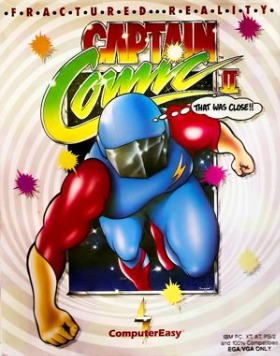
Captain Comic II: Fractured Reality follows with more refined movement ideas, four-way scrolling, and a stronger attempt to develop the original concept.
Later revisions of the DOS version adjust presentation details, including a well-known change to the title music in the final release line.
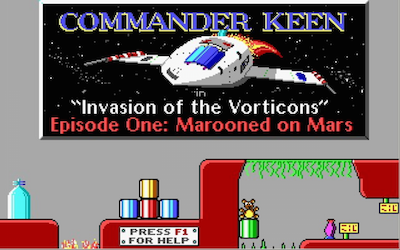
Commander Keen, Cosmo’s Cosmic Adventure, and other DOS platformers make the PC side-scroller smoother, brighter, and more commercially visible.
Captain Comic survives as a key archive object for anyone studying early PC platform design, shareware distribution, and exploratory side-scrolling on IBM-compatible machines.
The EGA landscapes, shield meter, item screen, tools, planet Tambi, Color Dreams NES cart, and pre-Keen DOS side-scrolling identity became the memory — but the shareware files, disks, manuals, boxed NES cartridge, sequel, and DOS preservation routes are the artifacts.
Captain Comic belongs in the collector lane because it is more than a rough old platformer: it is a museum piece for how PC platform adventures looked before the genre became polished and mainstream.
Where to Play / Collect Today
Collecting Captain Comic means collecting the prehistory of DOS platform adventures.
Strong collector routes include original shareware disks, DOS archive copies, period manuals or printouts, unlicensed Color Dreams NES cartridges, Captain Comic II material, EGA-era PC references, boxed NES variants, and comparison pieces from Commander Keen and other early shareware platformers.
A curated starting point for Captain Comic collectors: Color Dreams NES material first, DOS/shareware preservation second, then Captain Comic II, Commander Keen, Cosmo, and broader early PC platform context.
eBay Collector Search
The strongest route for physical Captain Comic material: unlicensed NES cartridges, Color Dreams boxes or manuals, Captain Comic II items, shareware disks, DOS lots, and early PC platformer context pieces.
- Best chance for NES cartridges, boxes, manuals, Color Dreams material, DOS shareware disks, and Captain Comic II items.
- Search Captain Comic NES, Captain Comic DOS, Color Dreams Captain Comic, Captain Comic II, and shareware disk separately.
- Check label condition, box authenticity, manual presence, disk readability, region, and reproduction listings carefully.
4NERDS collector search for Captain Comic NES, Color Dreams, DOS/shareware material, Captain Comic II, manuals, boxes, and early PC context.
Amazon Search
Useful for DOSBox-friendly accessories, retro PC books, storage supplies, display protection, USB controllers, and broader PC shareware-era shelf support.
- Better for modern accessories, books, storage, and display supplies than rare original Captain Comic artifacts.
- Good for building a DOS/shareware context shelf around Commander Keen, Cosmo, Apogee, and early PC gaming.
- Use as a secondary route after eBay collector searches.
Replace YOURAMAZONTAG-20 once the final approved Amazon Associates tag is ready.
Etsy Collector Route
Potentially useful later for Captain Comic-style shelf labels, DOS shareware display cards, EGA-inspired wall pieces, Color Dreams cartridge stands, and early PC platform archive signage.
- Better suited for display objects than preservation-grade collecting.
- Keep separate from original disks, carts, manuals, boxes, and verified Color Dreams material.
- Ready to activate once the Etsy strategy is finalized.
Placeholder route kept disabled until a final Etsy affiliate or curated shop strategy is available.